
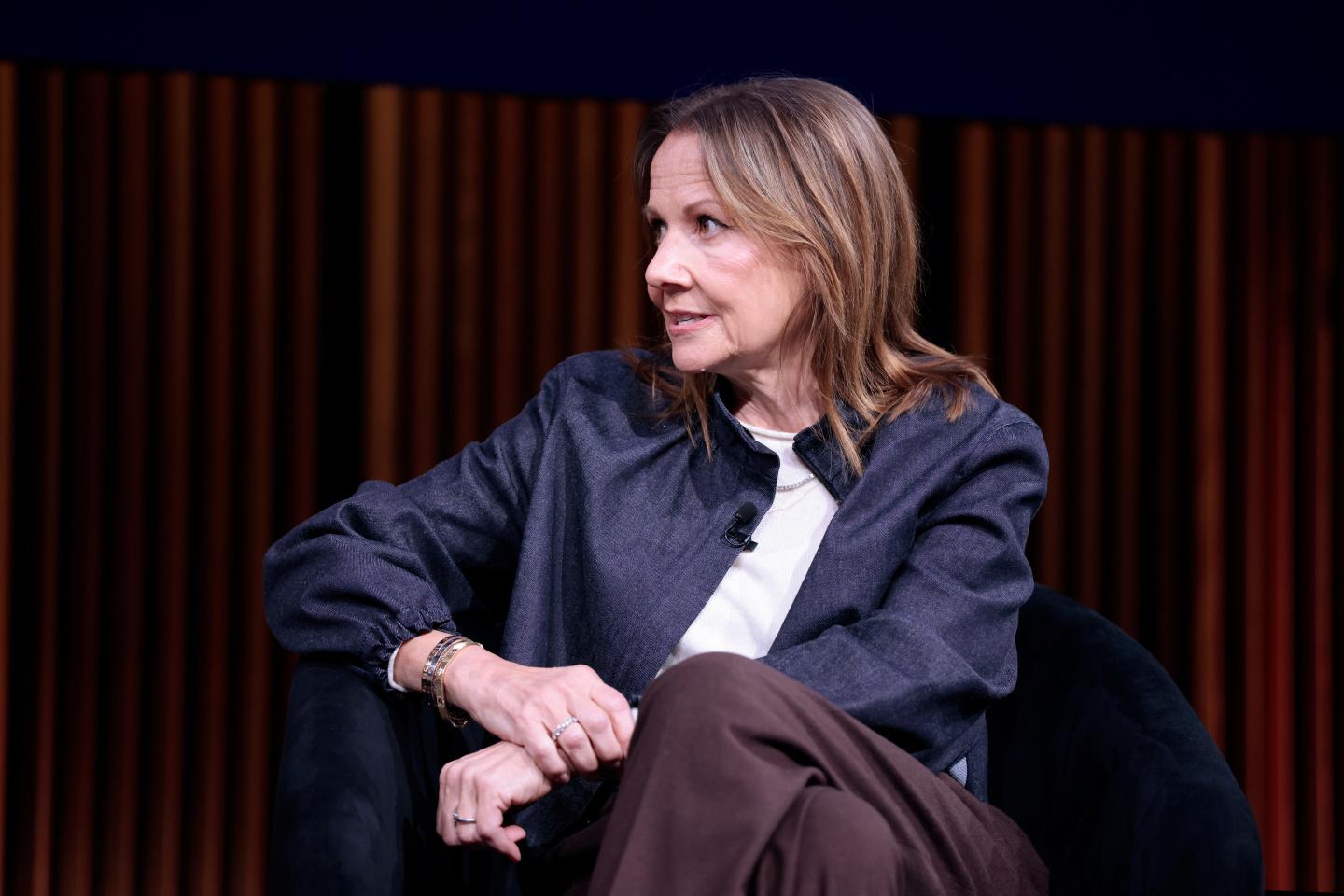
The 2026 edition of the Fortune 500 is out today—which means it’s time to take a look at the latest stats around women leading Fortune 500 businesses.
My colleague Sydney Lake dives into all the details in a new story for Fortune. A record 56 women lead Fortune 500 companies in 2026, 11.2% of the newest ranking of America’s largest businesses by revenue. That’s the highest share in the list’s 72-year history and the fourth consecutive year the figure has cleared double digits.
The share of Fortune 500 companies run by women has trended upward since 2020, when just 7.4% of the list was female-led. But growth was flat at 10.4% in both 2023 and 2024 before ticking up in 2025 and again this year.
That comes even after some notable exits last fall; in the span of weeks, the Fortune 500 lost multiple female CEOs, including SAIC’s Toni Townes-Whitley, Fannie Mae’s Priscilla Almodovar, and Oracle’s Safra Catz. New additions, meanwhile, include CEOs at Newmont, Textron, Murphy USA, and DTE Energy. And this count doesn’t include two incoming CEOs—Karen S. Carter at Dow (who will be one of three Black female CEOs in the Fortune 500) and Heidi O’Neill at Lululemon. Both have been named to their positions, but neither has officially started yet.
We explored many of these themes in the 2026 edition of the Fortune Most Powerful Women list, which published last week. Many—but not all!—of these Fortune 500 CEOs make that list.
What stands out to me about the Fortune 500 is movement at the top of the ranking. Last year, the highest-ranked Fortune 500 company run by a female CEO was GM, led by Mary Barra. GM was ranked at No. 18 on the 2025 Fortune 500.
This year, GM has fallen to No. 23 on the Fortune 500. That means that two companies with female CEOs now rank higher than GM on the Fortune 500. In the highest spot is Elevance Health, led by Gail Boudreaux. Elevance Health comes in at No. 18 on the Fortune 500 this year, with $199 billion in revenues. Next up was Centene, led by CEO Sarah London, which ranked No. 19 on the Fortune 500 with $195 billion in revenues. Note that both are health insurers.
But size—the metric of choice for the fairly straightforward Fortune 500—isn’t everything. (And the Fortune 500 ranks companies, while the Most Powerful Women list ranks people). Barra still came in at No. 2 on this year’s MPW list. Boudreaux stood at No. 81, and London No. 63. Both businesses have scale, but are in a sector grappling with a host of challenges.
Explore the full list of female Fortune 500 CEOs here.
Emma Hinchliffe
emma.hinchliffe@fortune.com
The Most Powerful Women Daily newsletter is Fortune’s daily briefing for and about the women leading the business world. Subscribe here.
ALSO IN THE HEADLINES
23andMe is back—as a nonprofit. Founder Anne Wojcicki bought the DNA test-kit business out of bankruptcy. It has 13 million users and she's looking to hit 100 million to be able to use AI to make discoveries about health.
Bras are powering Victoria's Secret. At the beginning of this year, I wrote a feature about Victoria's Secret's attempt at a comeback under new CEO Hillary Super. Bras were one pillar of that strategy—rebuilding authority VS had lost in that category. Well, it's working. In earnings yesterday, the company reported a 15% first-quarter sales gain and its stock soared 47%.
A sad path for women's magazines. At Condé Nast, Glamour recently cut most of its editorial staff as it pivots to shopping and affiliate content. The NYT reports on the trend: "The changes offer a stark example of how women’s magazines have declined in size and relevance in the digital era. And it could provide a glimpse of the direction more of the remaining women’s magazines take, as people seeking style tips and a knowing, sharp editorial voice increasingly turn to newsletters, social media platforms, or even chatbots."
A tough week at CBS News. Veteran correspondent Scott Pelley was just fired from 60 Minutes after he pushed back against CBS News leader Bari Weiss and new head of the show Nick Bilton, describing both as unqualified for their jobs. Weiss said that Pelley was fired because trust "was broken."
22.7% of board members are over 70. That's in the Russell 3000. Companies are holding onto older directors amid macro uncertainty, but are missing out on younger talent that knows more about AI.
ON MY RADAR
Why is the right so mad about Alex Cooper's pregnancy? NY Mag
At Interlochen, where Jeffrey Epstein's shadow still lingers NYT
Hailey Bieber is taking Rhode on a summer tour as it aims for $1 billion in sales Vogue Business
PARTING WORDS
"I can’t be a murdering psychopath while I’m making spaghetti, can I?"
— Actor Sophie Turner on why women don't have time to be method actors