
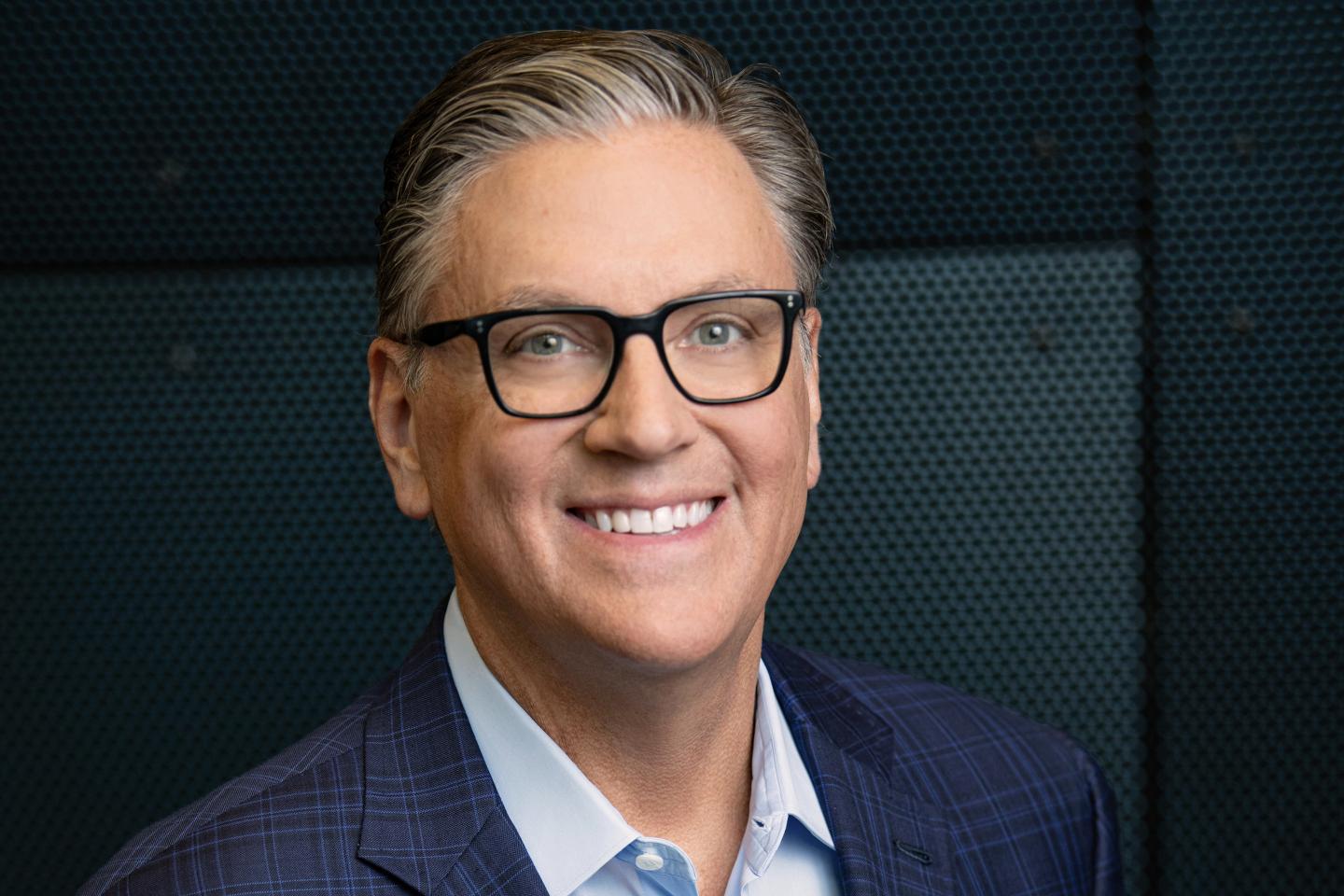
Good morning. A brand new Fortune 500 list is out this morning. Amazon eclipsed the $700 billion mark with a 12% jump in revenue in 2025 and took the No. 1 spot, ending Walmart’s historic 13-year run. And Amazon’s SVP and CFO Brian Olsavsky has led finance for over a decade with a front-row seat to the company’s rise on the list.
Amazon debuted on the Fortune 500 in 2002 at No. 492. That’s the same year Olsavsky joined the company. More than 20 years ago, the now tech giant was a fraction of Walmart’s size; today, its multi-engine model, spanning e-commerce, logistics, AWS, and a fast-growing advertising business. Walmart fell to No. 2 on the list for the first time since 2012.
At Amazon, led by CEO Andy Jassy, the result is not just a new revenue leader, but a reshaped definition of what a “retailer” looks like in the age of cloud computing and AI. As CFO, Olsavsky has been a strategic partner to Jassy throughout.
Central to that evolution has been Olsavsky’s own trajectory at the company. He became finance chief in June 2015, previously serving as VP of finance and CFO for the global consumer business. Before that, he was VP of finance for Amazon’s North America retail business unit and acquisitions, and he started at the company leading the finance departments for Amazon’s Worldwide Operations organization.
He spent much of his tenure under the leadership of Jeff Bezos, CEO of Amazon from the company’s founding in 1994 until 2021, when he stepped down and was succeeded by Jassy.
Over the past 20 years, Amazon has had several major ups and downs. It weathered the 2008 financial crisis, heavy investment cycles that depressed earnings and rattled investors in the early 2010s, a roughly 50% stock decline in 2022 amid inflation and post-pandemic pullback, and an AWS slowdown in 2022–2023. Through all of it, the long-term trajectory has been strongly upward.
As finance chief, Olsavsky has had to navigate changes and make tough decisions. An invaluable trait for CFOs is adaptability—and the best can maneuver quickly depending on fluctuating markets and company evolution, Scott Simmons, co-managing partner at executive search firm Crist Kolder Associates, told me.
“Olsavsky stands in a class of his own, in part given that Amazon has grown and evolved at warp speed,” Simmons said. “His remarkable 11-plus year run as CFO at Amazon shatters the average tenure for public company CFOs, which sits at just under five years.”
Simmons continued, “To me, it’s clear he built and strengthened his credibility over his first 13 years at Amazon before stepping into the CFO role in 2015.” In addition, Jassy is an insider and, therefore, knows Olsavsky well. “Though roughly half of new CEOs change out their CFOs in the first 12 months, I can see Olsavsky, who is only 61, staying on for as long as he wants,” Simmons said.
Amazon’s momentum continues into 2026. The company reached $181.5 billion in revenue in Q1 alone—a 15% increase year-over-year. AWS revenue grew 28%, the fastest the company has seen in nearly four years, and its custom chips business surpassed a $20 billion annual revenue run rate.
“Our AI revenue is growing triple digits year-over-year,” Olsavsky said on the April 29 earnings call.
Sheryl Estrada
sheryl.estrada@fortune.com
Leaderboard
Fortune 500 Power Moves
—Eva C. Boratto was appointed EVP and CFO of Cencora, Inc. (No. 10), effective June 29. Boratto succeeds James F. Cleary, who will be retiring from his role as previously announced. Cleary will serve in an advisory role through the end of 2026. Boratto brings financial and operational experience across the healthcare and consumer sectors. She most recently served as CFO of Bath & Body Works, Inc., and previously spent 12 years at CVS Health Corporation, where she held leadership roles, including CFO, and played a key role in the integration of the company's acquisition of Aetna.
—Ling Hai, president of Asia Pacific, Europe, Middle East and Africa at Mastercard (No. 141), will become CFO, effective Aug. 3. Hai brings broad operating experience across international markets, deep knowledge of customers and products, and a strong commercial perspective to the role. He succeeds CFO Sachin Mehra, who will move into a newly created role as chief business officer, responsible for country operations across the globe. Mehra will also be responsible for sales enablement, global partnerships, and digital commercialization under a single global go-to-market leadership structure.
Every Friday morning, the weekly Fortune 500 Power Moves column tracks Fortune 500 company C-suite shifts—see the most recent edition.
Big Deal
CFOs have the ambition to drive key investment and value creation decisions, but technology unpreparedness and skills gaps are holding them back, according to EY's latest Global DNA of the CFO survey.
The report, a follow-up to 2023's edition, draws on insights from more than 1,600 CFOs and senior finance leaders across 28 countries and 22 industries. It finds that while 60% of CFOs believe they should be involved in value creation, only about a quarter actually lead key investment decisions (26%) or front discussions on value drivers. Just 27% say their organizations view finance as a key partner in value creation.
AI readiness is a significant gap: fewer than 21% of CFOs rate their finance function's AI preparedness as leading or advanced, and fewer than 15% consider their teams highly adaptable or confident using new technologies. That lack of confidence appears to limit how CFOs use technology for high-value decisions — less than half see strong AI potential in data analysis (49%), growth forecasting (45%), or dynamic pricing (41%).
Finance chiefs who consider their teams more AI-ready are notably more optimistic: 71% of those who feel fully prepared believe AI can play a role in growth forecasting. Finance teams also cite several barriers to securing AI investment—data quality issues (61%), difficulty articulating benefits (51%), and insufficient skills or capacity (50%).
"CFOs, and finance teams in general, won't be able to lead the charge on value creation without a rethink in how value is measured," according to Myles Corson, EY global strategy and markets leader for Financial Accounting Advisory Services. As value creation grows more complex, traditional metrics are increasingly falling short. "Without a clear framework to measure value in all its forms, CFOs will find it harder to assess where it is truly being created," he said.
Going deeper
"Intel’s new CEO cut management layers in half. The stock is up nearly 500%" is a new Fortune feature by Jeff John Roberts.
Roberts writes: "The company brought on CEO Lip-Bu Tan and, in barely a year, became one of the hottest stocks on the market. The story of Intel’s ongoing turnaround could become the rebound story of the decade—one featuring bold leadership, tough decisions, and no small amount of luck." You can read more here.
Overheard
"All we're doing is widening the aperture to be able to add more premium into the mix. It doesn't mean we're trying to be Delta, because we don't think we need to be Delta to be successful."
—Tony Roach, Southwest Airlines' EVP and chief customer and brand officer, said at Fortune's COO Summit on Tuesday. Roach acknowledged the magnitude of the changes, comparing the shift away from open seating to "changing the engine in the car." Southwest has also pushed further upmarket, adding more premium offerings to compete for higher-spending travelers.