• Home
  • News
  • Fortune 500
  • Tech
  • Finance
  • Leadership
  • Lifestyle
  • Rankings
  • Multimedia
EnvironmentCarbon Emissions

Biden administration announces $6bn in funding for projects to slash industrial emissions, the largest-ever U.S. investment to decarbonize industry

By
Isabella O'Malley
Isabella O'Malley
,
Jennifer McDermott
Jennifer McDermott
and
The Associated Press
Down Arrow Button Icon
By
Isabella O'Malley
Isabella O'Malley
,
Jennifer McDermott
Jennifer McDermott
and
The Associated Press
Down Arrow Button Icon
March 25, 2024, 8:04 AM ET
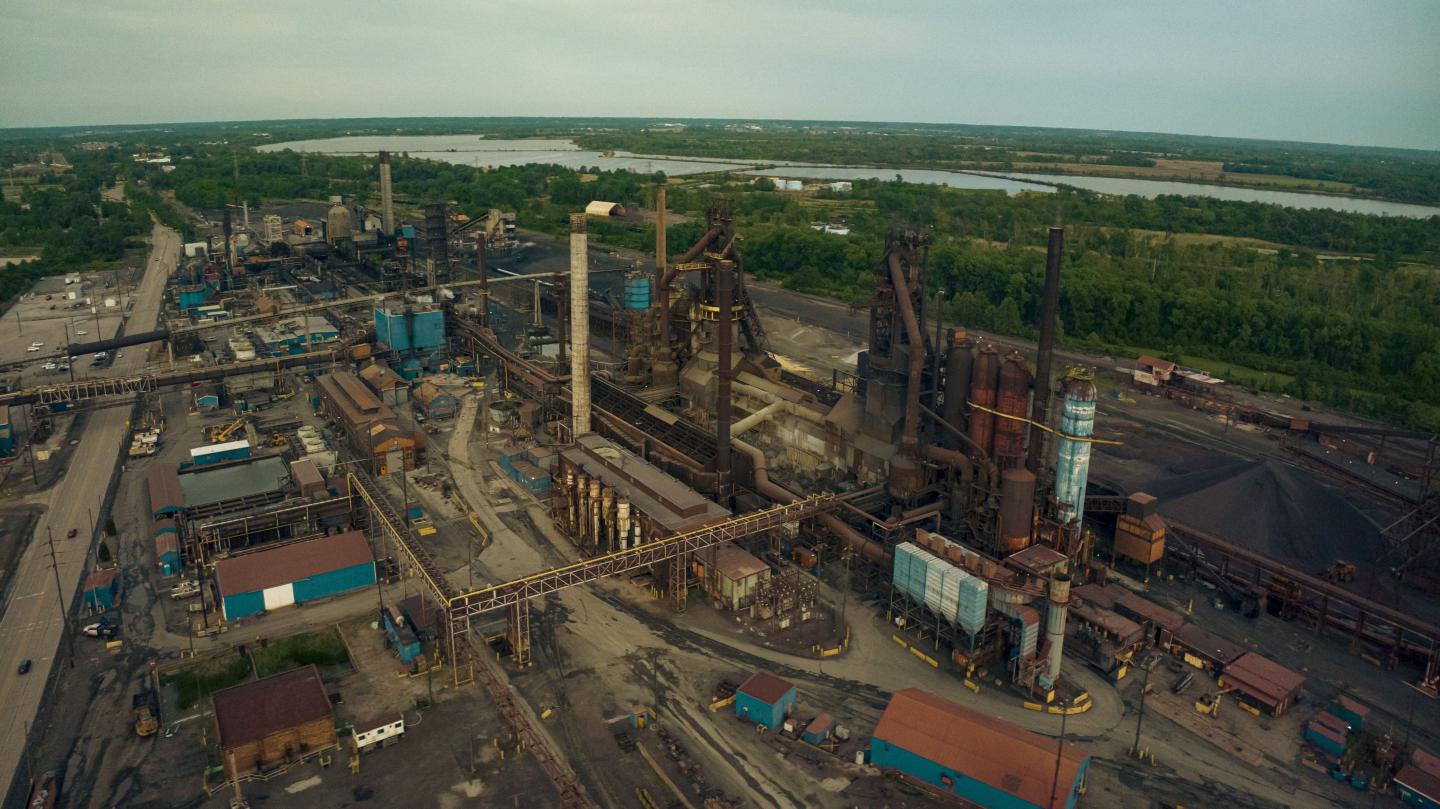
Aerial view of US Steel factory with smokestacks, Granite City, Ill.
Aerial view of US Steel factory with smokestacks, Granite City, Ill. Visions of America/Joseph Sohm/Universal Images Group via Getty Images

The Biden administration announced $6 billion in funding Monday for projects that will slash emissions from the industrial sector — the largest-ever U.S. investment to decarbonize domestic industry to fight climate change.

Recommended Video

The industrial sector is responsible for roughly 25% of all the nation’s emissions, and has proven difficult to decarbonize due to its energy-intense, large-scale operations.

Iron, steel, aluminum, food and beverage, concrete and cement facilities are some of those involved in this initiative. Recipients of the funding, which is coming from the Inflation Reduction Act and the Bipartisan Infrastructure Law, include 33 demonstration projects in more than 20 states.

Energy Secretary Jennifer Granholm said during a call with news media that the technologies being funded are “replicable,” “scalable,” and will “set a new gold standard for clean manufacturing in the United States and around the world.” White House climate adviser Ali Zaidi said this funding aims to eliminate 14 million metric tons of pollution each year, equivalent to taking about three million cars off the road.

Among the funded projects:

—Constellium in Ravenswood, West Virginia, is going to operate a first-of-its-kind zero-carbon aluminum casting plant and install low-emission furnaces that can use clean fuels such as hydrogen. The company produces aluminum for a range of products including cars and planes.

—Kraft Heinz will install heat pumps, electric heaters and electric boilers to decarbonize food production at 10 facilities, including in Holland, Michigan.

—Cleveland-Cliffs Steel Corporation in Middletown, Ohio, will retire one blast furnace, install two electric furnaces, and use hydrogen-based ironmaking technology. The project aims to eliminate 1 million tons of greenhouse gas emissions each year from the largest supplier of steel to the U.S. automotive industry.

—Heidelberg Materials US, Inc. will build a system that captures and stores carbon underground at its plant in Mitchell, Indiana. The project aims to capture at least 95% of the carbon dioxide released by the cement plant, which will prevent 2 million tons of carbon dioxide from entering the atmosphere each year.

“I think the United States can be a leader here,” said Mike Ireland, president and CEO of the Portland Cement Association, a non-profit that promotes cement and concrete. Ireland said the innovative cement and concrete technologies being scaled in the U.S. can be adopted by developing countries in the Global South to build highways and buildings in a more sustainable way.

There are not many U.S. plants that manufacture virgin steel, and even fewer make virgin aluminum, so tackling emissions at even just a few facilities could make an outsized contribution to reducing the country’s carbon footprint, said Todd Tucker at the Roosevelt Institute, the nonprofit partner of the Franklin D. Roosevelt Presidential Library and Museum. Once the methods for decarbonizing are proven, the technology could be exported globally for a more dynamic climate benefit, added Tucker, the think tank’s director of industrial policy and trade.

Decarbonizing the electricity and transportation sectors has been at the center of the climate conversation and there are generous federal subsidizes for the solutions, mainly using renewable energy for power generation and adopting electric vehicles, Tucker said.

But he noted it’s harder to cut emissions in heavy industries that rely on fossils fuels for creating the high heat and chemical reactions needed for their operations.

“Getting this off the ground with these first few projects is going to be really useful for convincing industry that this transition is possible, and also, importantly, convincing Wall Street that this transition is possible,” Tucker said. “The first trick is showing it’s viable in one project. Once you do that, then the private and public sectors can come up with strategies for the rest of the problem.”

The production of new aluminum in the U.S. has been precipitously declining in recent decades, especially the past few years, largely because of energy costs, said Annie Sartor, aluminum director at the green industry advocacy organization Industrious Labs. The process uses a tremendous amount of electricity that’s about 40% of the cost, Sartor said.

“These facilities have historically been located near cheap fossil energy. And today, 21st century coal, or coal and gas, are no longer cheapest,” she said. “These facilities that are reliant on fossil energy to operate can’t compete in the global market for aluminum. And they’re closing.”

Shifting to producing new aluminum with 100% clean energy could help the climate, stabilize the industry and create jobs, Sartor said.

Fortune Brainstorm AI returns to San Francisco Dec. 8–9 to convene the smartest people we know—technologists, entrepreneurs, Fortune Global 500 executives, investors, policymakers, and the brilliant minds in between—to explore and interrogate the most pressing questions about AI at another pivotal moment. Register here.
About the Authors
By Isabella O'Malley
See full bioRight Arrow Button Icon
By Jennifer McDermott
See full bioRight Arrow Button Icon
By The Associated Press
See full bioRight Arrow Button Icon

Latest in Environment

coal
EnvironmentCoal
‘You have an entire culture, an entire community that is also having that same crisis’: Colorado coal town looks anxiously to the future
By Brittany Peterson, Jennifer McDermott and The Associated PressDecember 6, 2025
17 hours ago
data center
EnvironmentData centers
The rise of AI reasoning models comes with a big energy tradeoff
By Rachel Metz, Dina Bass and BloombergDecember 5, 2025
2 days ago
Jaguar
EnvironmentArizona
‘This species is recovering’: Jaguar spotted in Arizona, far from Central and South American core
By Susan Montoya Bryan and The Associated PressDecember 5, 2025
2 days ago
Steve Jobs holds up the first iPod Nano
Big TechApple
Apple is experiencing its biggest leadership shake-up since Steve Jobs died, with over half a dozen key executives headed for the exits
By Dave SmithDecember 5, 2025
2 days ago
Paul Atkins
CommentaryCorporate Governance
Turning public companies into private companies: the SEC’s retreat from transparency and accountability
By Andrew BeharDecember 5, 2025
2 days ago
Four years ago, BKV started buying up the two Temple power plants in Texas—located between Austin and Dallas—which now total 1.5 gigawatts of electricity generation capacity—enough to power more than 1.1 million homes, or a major data center campus. There is room to expand.
Energypower
How a Texas gas producer plans to exploit the ‘megatrend’ of power plants for AI hyperscalers
By Jordan BlumDecember 5, 2025
2 days ago

Most Popular

placeholder alt text
AI
Nvidia CEO says data centers take about 3 years to construct in the U.S., while in China 'they can build a hospital in a weekend'
By Nino PaoliDecember 6, 2025
16 hours ago
placeholder alt text
Big Tech
Mark Zuckerberg rebranded Facebook for the metaverse. Four years and $70 billion in losses later, he’s moving on
By Eva RoytburgDecember 5, 2025
2 days ago
placeholder alt text
Real Estate
The 'Great Housing Reset' is coming: Income growth will outpace home-price growth in 2026, Redfin forecasts
By Nino PaoliDecember 6, 2025
21 hours ago
placeholder alt text
Economy
The most likely solution to the U.S. debt crisis is severe austerity triggered by a fiscal calamity, former White House economic adviser says
By Jason MaDecember 6, 2025
11 hours ago
placeholder alt text
Success
Nvidia CEO Jensen Huang admits he works 7 days a week, including holidays, in a constant 'state of anxiety' out of fear of going bankrupt
By Jessica CoacciDecember 4, 2025
3 days ago
placeholder alt text
Asia
Despite their ‘no limits’ friendship, Russia is paying a nearly 90% markup on sanctioned goods from China—compared with 9% from other countries
By Jason MaNovember 29, 2025
7 days ago
Rankings
  • 100 Best Companies
  • Fortune 500
  • Global 500
  • Fortune 500 Europe
  • Most Powerful Women
  • Future 50
  • World’s Most Admired Companies
  • See All Rankings
Sections
  • Finance
  • Leadership
  • Success
  • Tech
  • Asia
  • Europe
  • Environment
  • Fortune Crypto
  • Health
  • Retail
  • Lifestyle
  • Politics
  • Newsletters
  • Magazine
  • Features
  • Commentary
  • Mpw
  • CEO Initiative
  • Conferences
  • Personal Finance
  • Education
Customer Support
  • Frequently Asked Questions
  • Customer Service Portal
  • Privacy Policy
  • Terms Of Use
  • Single Issues For Purchase
  • International Print
Commercial Services
  • Advertising
  • Fortune Brand Studio
  • Fortune Analytics
  • Fortune Conferences
  • Business Development
About Us
  • About Us
  • Editorial Calendar
  • Press Center
  • Work At Fortune
  • Diversity And Inclusion
  • Terms And Conditions
  • Site Map

© 2025 Fortune Media IP Limited. All Rights Reserved. Use of this site constitutes acceptance of our Terms of Use and Privacy Policy | CA Notice at Collection and Privacy Notice | Do Not Sell/Share My Personal Information
FORTUNE is a trademark of Fortune Media IP Limited, registered in the U.S. and other countries. FORTUNE may receive compensation for some links to products and services on this website. Offers may be subject to change without notice.