• Home
  • News
  • Fortune 500
  • Tech
  • Finance
  • Leadership
  • Lifestyle
  • Rankings
  • Multimedia
EnvironmentScience

Chernobyl’s radiation-proof worms are unlocking a key field of cancer research

Marco Quiroz-Gutierrez
By
Marco Quiroz-Gutierrez
Reporter
Down Arrow Button Icon
Marco Quiroz-Gutierrez
By
Marco Quiroz-Gutierrez
Reporter
Down Arrow Button Icon
March 7, 2024, 9:11 PM ET
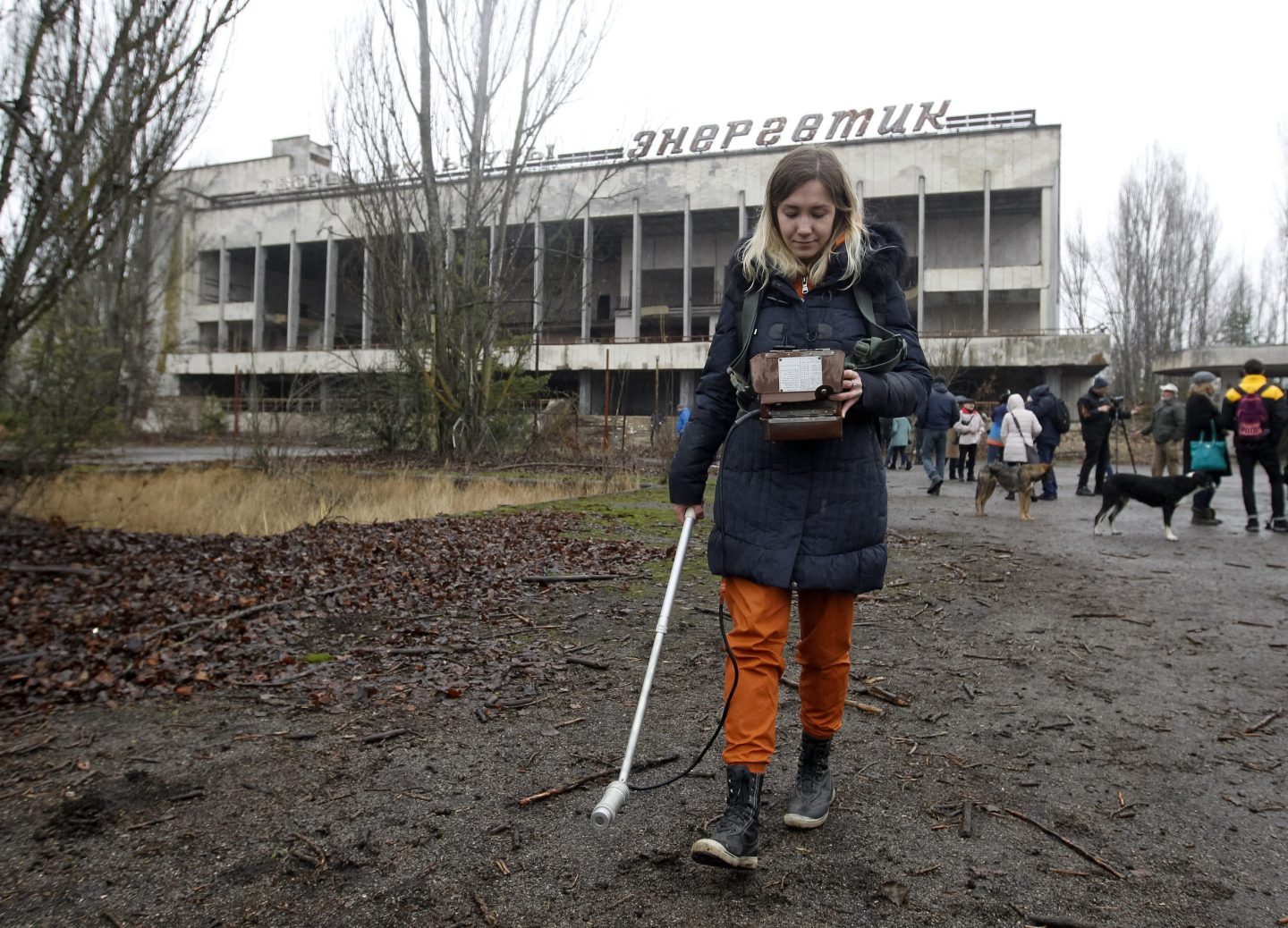
A visitor measures the level of radiation in the abandoned city of Pripyat, near Chernobyl, Ukraine, on Dec. 25, 2019.
A visitor measures the level of radiation in the abandoned city of Pripyat, near Chernobyl, Ukraine, on Dec. 25, 2019.STR/NurPhoto/Getty Images

The Chernobyl site in northern Ukraine has been filled with deadly radiation since the 1986 nuclear meltdown, but a new study shows that microscopic worms at the site seem to be unaffected by the environment—and further study about the worms’ tolerance to radiation could help the future of cancer research.

Recommended Video

In the study, published by the peer-reviewed journal Proceedings of the National Academy of Sciences, NYU researchers found that nearly 40 years after the disaster at Chernobyl, tiny worms called nematodes collected at the site of the disaster showed no discernible changes to their genetics. 

Through a series of tests, the researchers also found that the Chernobyl worms were no more or less likely to be tolerant of radiation than other non-Chernobyl worms of the same species, according to lead researcher and NYU postdoc Sophia Tintori.

Tintori cautioned that the type of tiny nematodes collected at the site (scientific name Oscheius tipulae) are pretty resilient to changes in environmental factors. Yet, by studying the range of resiliency to DNA damage in the worms, researchers can start to deduce why they differ and can then adapt those studies in the future to aid cancer research in humans. Long-term exposure even to low levels of radiation can slightly increase cancer risk in humans, according to the Environmental Protection Agency.

“We can better understand who’s at higher risk for certain types of cancers or who might be likely to respond to chemotherapies differently, and just have a better understanding of how that kind of risk works within a population,” Tintori told Fortune.

The NYU findings are also significant because researchers are still working to understand the full effects of the Chernobyl disaster. While scientists have conducted previous studies examining dogs, birds, and frogs from the area surrounding Chernobyl, those findings still don’t give us the full picture of the fallout in part because of the biological differences between animals.

The worms are particularly useful to understanding the effects of the Chernobyl disaster because they reproduce quickly, making it easier for researchers to test hypotheses, as they did for resilience to DNA damage, via multiple generations. Because the worms, which number in the millions, are essentially stuck in the conditions they were collected in thanks to cryopreservation, researchers can use them for tests for decades without worry, Tintori said.

“We can now start asking, What are the differences between those worms? What are the specific genetic differences that are allowing one to be more tolerant than the other? And what are the differences in the biology of these animals?” Tintori said.

In order to acquire the samples, Tintori and her research team traveled to Ukraine and at times donned PPE while they collected samples of decomposing fruit and other rotting organic material from both high and low radioactive sites around Chernobyl. 

Later, in the lab, the researchers put the samples in a piece of tissue paper within a closed funnel filled with some water. Overnight, the worms in the samples wiggled to the bottom and collected in the water.

To avoid the worst effects of high radiation, the researchers had to move fast to collect their samples. Because radiation can damage cells but isn’t visible to the naked eye, Tintori said at times she was on edge. 

“You can detect the radiation levels but you can’t detect what DNA is being damaged where in your body,” she said.

Fortune Brainstorm AI returns to San Francisco Dec. 8–9 to convene the smartest people we know—technologists, entrepreneurs, Fortune Global 500 executives, investors, policymakers, and the brilliant minds in between—to explore and interrogate the most pressing questions about AI at another pivotal moment. Register here.
About the Author
Marco Quiroz-Gutierrez
By Marco Quiroz-GutierrezReporter
LinkedIn iconTwitter icon

Role: Reporter
Marco Quiroz-Gutierrez is a reporter for Fortune covering general business news.

See full bioRight Arrow Button Icon

Latest in Environment

coal
EnvironmentCoal
‘You have an entire culture, an entire community that is also having that same crisis’: Colorado coal town looks anxiously to the future
By Brittany Peterson, Jennifer McDermott and The Associated PressDecember 6, 2025
2 hours ago
data center
EnvironmentData centers
The rise of AI reasoning models comes with a big energy tradeoff
By Rachel Metz, Dina Bass and BloombergDecember 5, 2025
21 hours ago
Jaguar
EnvironmentArizona
‘This species is recovering’: Jaguar spotted in Arizona, far from Central and South American core
By Susan Montoya Bryan and The Associated PressDecember 5, 2025
1 day ago
Steve Jobs holds up the first iPod Nano
Big TechApple
Apple is experiencing its biggest leadership shake-up since Steve Jobs died, with over half a dozen key executives headed for the exits
By Dave SmithDecember 5, 2025
1 day ago
Paul Atkins
CommentaryCorporate Governance
Turning public companies into private companies: the SEC’s retreat from transparency and accountability
By Andrew BeharDecember 5, 2025
1 day ago
Four years ago, BKV started buying up the two Temple power plants in Texas—located between Austin and Dallas—which now total 1.5 gigawatts of electricity generation capacity—enough to power more than 1.1 million homes, or a major data center campus. There is room to expand.
Energypower
How a Texas gas producer plans to exploit the ‘megatrend’ of power plants for AI hyperscalers
By Jordan BlumDecember 5, 2025
1 day ago

Most Popular

placeholder alt text
Economy
Two months into the new fiscal year and the U.S. government is already spending more than $10 billion a week servicing national debt
By Eleanor PringleDecember 4, 2025
2 days ago
placeholder alt text
Success
Nvidia CEO Jensen Huang admits he works 7 days a week, including holidays, in a constant 'state of anxiety' out of fear of going bankrupt
By Jessica CoacciDecember 4, 2025
2 days ago
placeholder alt text
Success
‘Godfather of AI’ says Bill Gates and Elon Musk are right about the future of work—but he predicts mass unemployment is on its way
By Preston ForeDecember 4, 2025
2 days ago
placeholder alt text
Big Tech
Mark Zuckerberg rebranded Facebook for the metaverse. Four years and $70 billion in losses later, he’s moving on
By Eva RoytburgDecember 5, 2025
1 day ago
placeholder alt text
Success
Nearly 4 million new manufacturing jobs are coming to America as boomers retire—but it's the one trade job Gen Z doesn't want
By Emma BurleighDecember 4, 2025
2 days ago
placeholder alt text
Real Estate
‘There is no Mamdani effect’: Manhattan luxury home sales surge after mayoral election, undercutting predictions of doom and escape to Florida
By Sasha RogelbergDecember 4, 2025
2 days ago
Rankings
  • 100 Best Companies
  • Fortune 500
  • Global 500
  • Fortune 500 Europe
  • Most Powerful Women
  • Future 50
  • World’s Most Admired Companies
  • See All Rankings
Sections
  • Finance
  • Leadership
  • Success
  • Tech
  • Asia
  • Europe
  • Environment
  • Fortune Crypto
  • Health
  • Retail
  • Lifestyle
  • Politics
  • Newsletters
  • Magazine
  • Features
  • Commentary
  • Mpw
  • CEO Initiative
  • Conferences
  • Personal Finance
  • Education
Customer Support
  • Frequently Asked Questions
  • Customer Service Portal
  • Privacy Policy
  • Terms Of Use
  • Single Issues For Purchase
  • International Print
Commercial Services
  • Advertising
  • Fortune Brand Studio
  • Fortune Analytics
  • Fortune Conferences
  • Business Development
About Us
  • About Us
  • Editorial Calendar
  • Press Center
  • Work At Fortune
  • Diversity And Inclusion
  • Terms And Conditions
  • Site Map

© 2025 Fortune Media IP Limited. All Rights Reserved. Use of this site constitutes acceptance of our Terms of Use and Privacy Policy | CA Notice at Collection and Privacy Notice | Do Not Sell/Share My Personal Information
FORTUNE is a trademark of Fortune Media IP Limited, registered in the U.S. and other countries. FORTUNE may receive compensation for some links to products and services on this website. Offers may be subject to change without notice.