Say what you like about Gen Z: They’re a generation that knows what they want—and they’re sticking to it. They prioritize work-life balance, build their communities online, and aren’t interested in hand-me-down societal pressures. While some of these priorities may prove to be a force for good, they also put businesses in a bind when trying to cater both to older, well-established consumers as well as this emerging new client base.
For the beverage industry in particular, this may prove a difficult balance to strike. A 2018 study from Berenberg Research found Gen Z drink 20% less per capita than millennials did in their late teens and early twenties, with 64% adding they expect to drink less in their adult life than older generations.
Meanwhile, the National Public Health Information Coalition reports 72% of boomers have had an alcoholic drink in the past month, compared with 65% of Gen Xers and 53% of millennials.
Some businesses, though, may have more of a problem than others.
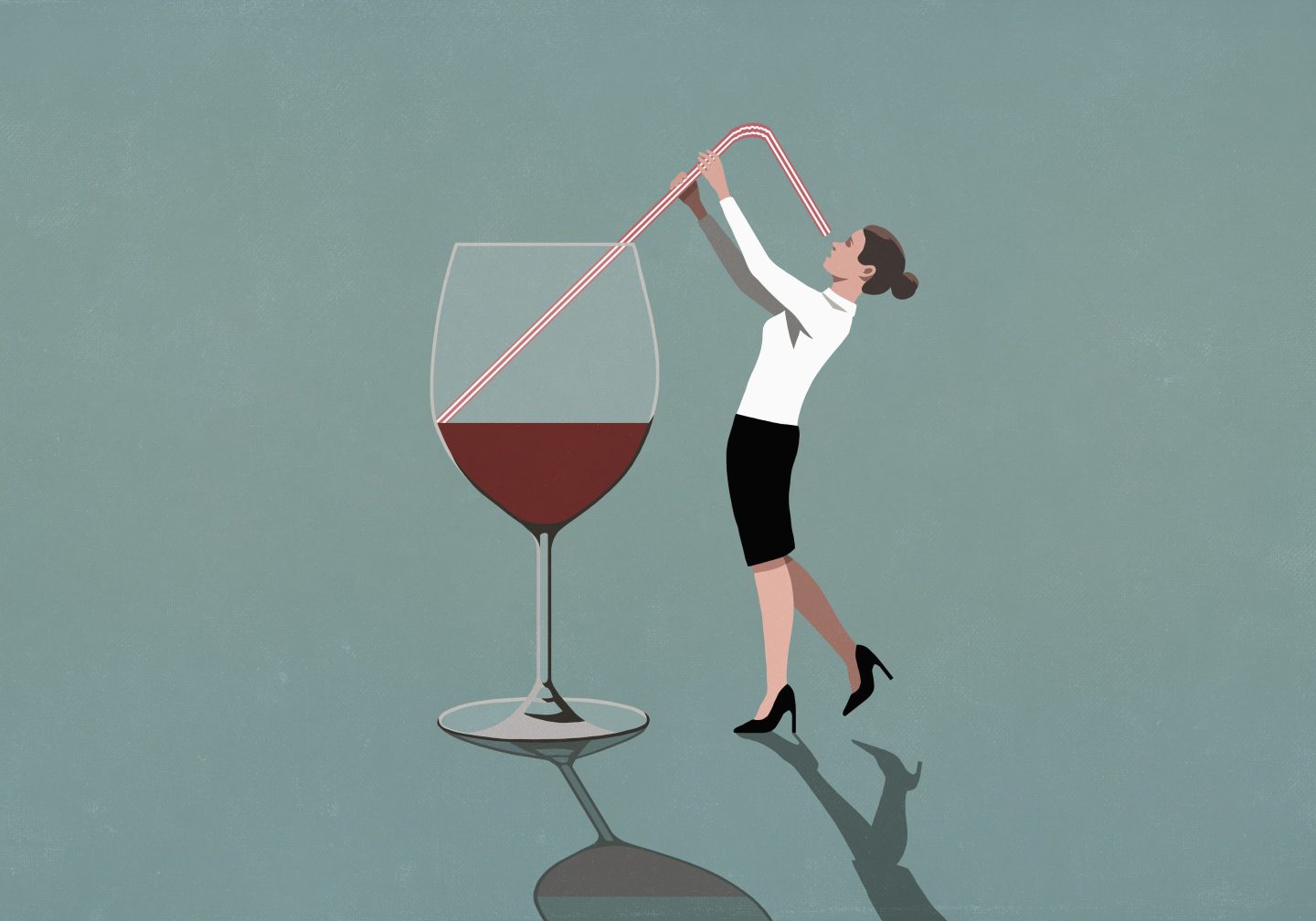
Silicon Valley Bank’s 2024 State of the U.S. Wine Industry report—which is largely viewed as one of the most comprehensive analyses of the industry available—shows 58% of consumers over the age of 65—essentially, the baby boomer generation—prefer wine to other alcoholic beverages.
All other demographics are nearly 30 points lower.
And while some projections have the alcohol industry growing from $2.1 trillion in 2022 to around $4 trillion by 2029, the growth of low- and non-alcohol alternative drinks is also steadily ramping up.
So how do alcohol brands cater to all their consumers? How do they balance research and development into NoLo (no and low) alternatives while investing in bestsellers? Is their survival even ensured?
It’s a task that’s being put at the feet of innovation directors and product junkies: Their role as Gen Z drink gurus is to figure out how legacy alcohol brands can entice the sober curious.
Gen Z finds binge cringe
There’s a raft of reasons younger people are choosing not to drink or aren’t drinking as much, ranging from health benefits to a curiosity about other products on the market—or, as Susie Goldspink puts it, stigma and embarrassment around how much older generations may drink.
The head of no and low alcohol at IWSR Drinks Market Analysis said Gen Z are more flexible in their approach to drinking than other demographics.
For example, they’re more likely to drink no-and-low alternatives but aren’t as likely as some older people to go to the extreme of teetotal.
“Older people are most likely to go all-or-nothing; younger people have this less extreme view,” Goldspink told Fortune.
She added while older people tend to look for like-for-like replacements between products with alcohol and without, younger people are more likely to experiment with things like adaptogen drinks, which claim to offer mood-boosting qualities.
It’s a sector singer Katy Perry and race car driver Lewis Hamilton are investing in, while other mainstay industries may fall behind.
In one example, Goldspink said NoLo wine is trailing behind hits like beer, but that she expects to see growth of around 7% year on year.
“Wine is at the beginning of its [no alcohol] journey,” Goldspink explained. “That’s because it’s quite hard to make, as so much of the body, mouthfeel, and flavor of the wine is in the alcohol. There’s also quite a lot of snobbery in the culture of wine, which can be hard to break through.”
Still, she notes, there’s motivation to work on it: “It needs to capture and engage younger generations—it’s a lovely drink to share, and if younger drinkers don’t discover it they’ll miss out.”
Cucumber beer, anyone?
There are benefits and shortfalls to being a smaller, independent brewer like British-based Adnams.
For more than 150 years the business has brewed beers, distilled spirits, and made wine—12 years ago launching a 0.5% version of its bestselling Ghost Ship pale ale—and frequently trials small batches of new launches with a two-month turnaround.
The historic brand’s significant investment in producing NoLo alcohol beer alternatives had been a signal both internally and to the wider market that Adnams was serious about creating a high-quality product, production director Fergus Fitzgerald tells Fortune.
“Ten years ago, the low-alcohol end of the spectrum were considered distress purchases. They were things people drank because they had to. That’s not a future for any product, particularly a sort of luxury product,” Fitzgerald said.
“Comparisons can become really easy. You can do side by sides very straightforwardly, so that really did drive us to put in the proper process to strip out the alcohol gently and keep all the flavors.”
On top of hefty investment, cycles within the alcohol industry are getting shorter.
For Adnams that’s meant simply repurposing existing assets for new products—such as move from popular bitter beers 25 years ago to pale ales—but it means brewers have to be prepared to move away from their favorite products.
“I don’t think the current beers that we do will still be here in the same volumes in 20 years, but that makes it quite interesting,” he said.
Even ever-curious Gen Z won’t be sold on some products, he added, meaning product masters will need to leave their ego at the door when it comes to innovation.
“We did a cucumber beer six years ago, which I thought was amazing, but only five other people did,” he said. “So that was probably a step too far at the time. But it was an interesting experiment and made people look at Adnams in a different way than maybe they did before.”
‘Less but better’
Quality over quantity has been the guiding principle for Bacardi, the business behind the eponymous rum brand, Grey Goose vodka, Breezer, Patrón tequila, Bombay Sapphire gin, and more.
Marine Rozenfeld, head of innovation for Western Europe, told Fortune that exclusive one-off drinks like a well-made cocktail is “key” to drawing a Gen Z audience, but added: “The younger generation will enjoy a drink across a range of different locations and occasions as much as they will traditional moments, which is a driver in the growth of ready-to-drink (RTD) cocktails in cans … The combination of convenience and a cocktail-led repertoire has really helped RTDs take off.”
This surge in interest in cocktails is also attributable to pandemic lockdowns, said Rozenfeld, when people began to learn how to make drinks in their homes.
For Gen Z, some of whom reached legal drinking age during lockdowns, it may be a trend that’s set to stay.
The brand is also balancing the demand for white spirits from younger drinkers with the need to prepare darker spirits for older, future customers—with bourbon and whiskey sometimes needing up to 20 years to mature.
Investing in current products as well as launching NoLo alternatives like spirit-equivalent Palette is a fairly safe bet, added Rozenfeld, as Bacardi is seeing increasingly mindful consumption across age categories.
She explained that consumers are making choices for a more balanced lifestyle. “It’s not just about what you eat, it’s a more holistic approach to life that also includes a different approach to drinking spirits,” she said. “And when you do drink, you want to enjoy more special experiences, more premium drinks, and then choose not to drink on some other occasions, and that’s where NoLo options come in.”
The ripple effect
Where Gen Z is choosing to spend their time and money is also changing, instigating a domino effect through other industries that have typically banked on alcohol sales to fund their overhead.
For example, while TV shows and films might portray a cliché college experience of blackout nights and hungover mornings, a 2020 study from the University of Michigan found approximately one in three 18- to 22-year-olds is abstaining from drinking alcohol, compared with around one in five college students two decades before.
Indeed a Mintel study of U.K. Gen Z customers found they’d rather go to a restaurant for dinner than to bars and pubs to drink.
Although around 35% of respondents said they still spend time in bars and pubs, this was also closely followed by online gaming and going to cafés.
As a result, establishments are being constantly asked to innovate, in recent years launching wider menus to attract a bigger customer base and balancing higher supply costs with an inflation-burdened consumer.
As Fitzgerald’s colleague Nick Attfield, director of hospitality and retail at Adnams, puts it, “adaptability is now the middle name” of those in the sector, and it’ll stay that way if it’s going to survive.
Across Attfield’s 11 hotels and pubs in England’s picturesque eastern coastal counties, the features behind the bar have shifted beyond recognition: crusty filter coffeepots have given way to professional-grade coffee machines, no-and-low alcohol bestsellers sit beside a wider range of beer pumps, while a drinks fridge stacked with everything from Cokes to kombucha sit beside. Flip over the drinks menu and you’ll find a list of mocktails.
For Attfield, the future of the independent group—and the sector—depends not on encouraging younger drinkers to embrace tradition, but on ushering in a new era.
“The role of pubs has fundamentally changed. Years ago if you ordered a coffee in a pub the staff would sneer at you—if that happened now they’d probably be fired.”