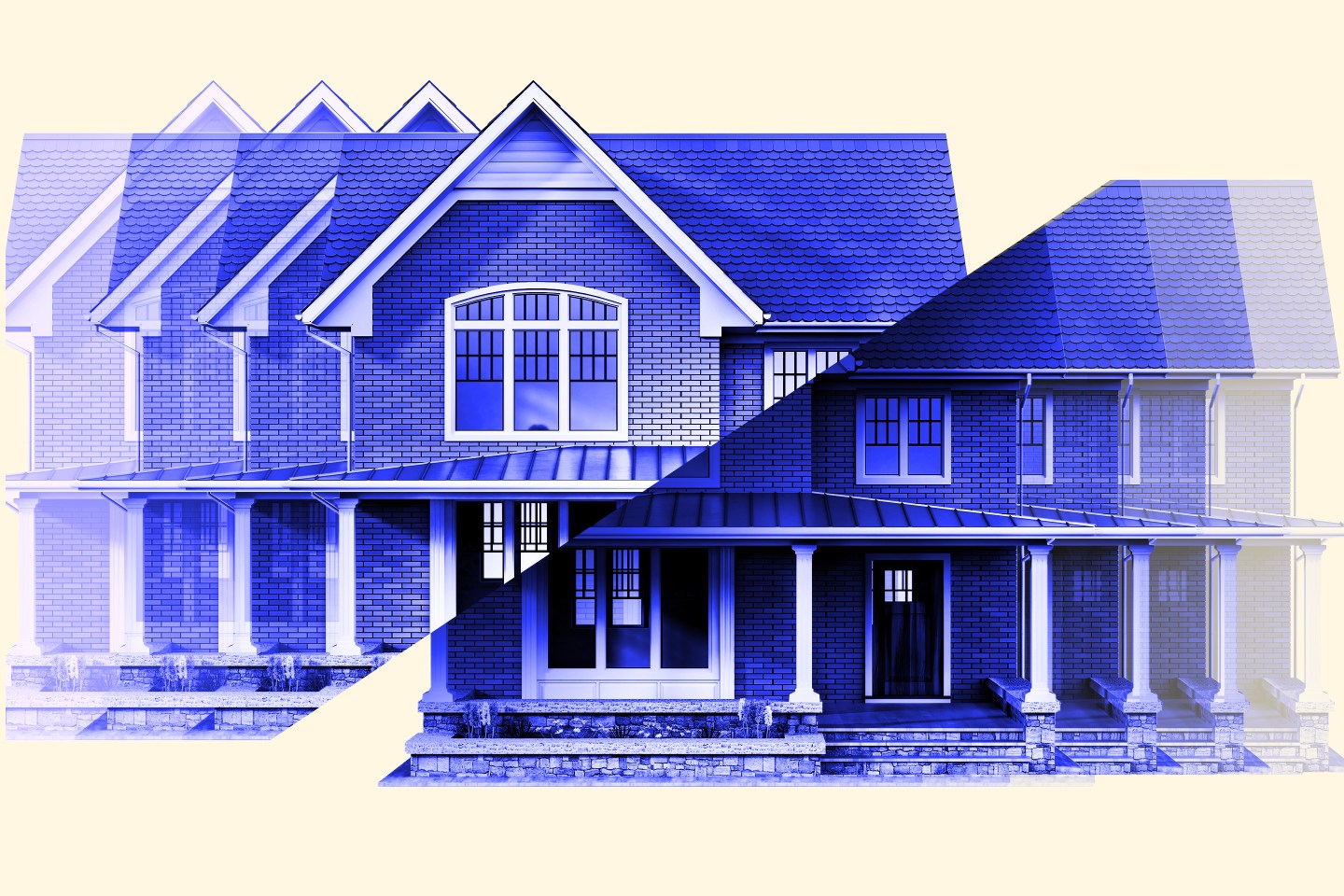
2023 was the year the housing market cracked: The stark divisions between housing haves and have-nots became more visible than ever before, even in America’s already-unequal society. How you made out in this upheaval likely comes down to whether you bought a home before or during the pandemic. If you did, you skipped the pain and craze of this year’s market, locked in a (fairly) low mortgage rate, and maybe saw your home value appreciate; if you didn’t, you might feel like you never will.
As home prices and mortgage rates climbed to formerly unthinkable heights, housing affordability deteriorated beyond levels experienced at the height of the housing bubble. And although mortgage rates have fallen from their recent peak, they are still high, and so are home prices. The housing market story is one of winners and losers, of haves and have-nots. Which one you are “depends on who you are, and where you sit in sort of the housing ecosystem,” First American’s deputy chief economist, Odeta Kushi, told Fortune.
For first-time homebuyers, she explained, this year presented a nearly impossible affordability environment. For homeowners, not so much. Homeowners are building equity, and in many cases, they’ve locked in historically low mortgage rates or don’t have a mortgage at all. While median home prices have risen about 7% from last year, as of October, the principal and interest payment for the existing median-priced home has gone up almost 80% over the past two years, Kushi said. That dynamic has fueled the so-called lock-in effect, given most homeowners with below-market mortgage rates don’t want to sell and get stuck with rates that are twice as high. That has constrained supply in an already underbuilt housing market, worsening affordability.
“Even if you could afford to buy, you can’t buy what’s not for sale, and there’s just not that many homes for sale in today’s market,” Kushi said.
With inventory cratering, existing-home sales fell to their lowest level in more than a decade. Still, the housing market could have done worse, Zonda’s chief economist, Ali Wolf, told Fortune. “We went into 2023 with the expectation that the housing market was going to crumble, and I would say on the existing-home side, it largely did.” However, she continued, housing avoided a 20% or 30% drop in home prices that many had expected, despite being “riddled with winners and losers.”
To understand this year’s housing market we have to go back to the pandemic. In the years leading up to the pandemic and throughout, Americans enjoyed historically low interest and mortgage rates. When the pandemic hit, it changed the way many people live and work: More and more people wanted more space, and a lot of them had a newfound ability to move wherever they wanted—a shake-up that sent home prices soaring. But last year it started to reverse. Inflation reached a four-decade high, and the Federal Reserve aggressively hiked interest rates, which sent mortgage rates soaring, with the 30-year fixed mortgage rate reaching a more than two-decade high earlier this year.
New-home and existing-home markets
Housing sales and market share of inventory, too, showed a split this year. Existing-home sales fell to their lowest level since 2010, when the housing market was reeling from the Great Financial Crisis, as sales of new-construction homes surged. Historically, new homes have made up just over 10% of the total homes for sale, Kushi said, but “in today’s market, it’s nearly 30% of all homes for sale.”
With five consecutive monthly declines until an unexpected rise in November, existing-home sales are still down more than 7% on an annual basis. Meanwhile, despite falling in recent months, coinciding with a peak in mortgage rates, new-home sales are up modestly, at more than 1% year over year.
As new homes are becoming more popular, they’re also closing the price gap with existing homes. In the nine years from 2010 to 2019, the average new home was 30% more expensive than the typical existing home, Wolf explained. But because there’s so little inventory, the price spread dropped down to 12% by the end of December, with most new-home projects today offering incentives, she said. The most popular of these are mortgage rate buydowns, which reduce a buyer’s mortgage rate either temporarily or for the lifetime of the loan.
Echoing her counterparts, Devyn Bachman, John Burns Research and Consulting’s senior vice president of research, told Fortune that the new-home market outperformed most expectations, including her own, for this year. New-home sales accounted for almost 14% of all home sales nationwide, which is nearly an all-time high, Bachman said.
While new-home sales as a percentage of all sales are approaching record highs, the existing-home market is frozen, the loser of the duo. The question is, will the gap between the two markets shrink next year, or remain?
Wolf suspects we’ll see somewhat of a “repeat of the tale of two housing markets in 2024.” Still, we could see more resale supply if interest rates come down slightly, or if the economy tumbles, or if homeowners who have put their lives on hold and refused to sell, waiting for the housing market to normalize, realize it’s not normalizing. But she expects the new-home market to surpass the existing-home market yet again next year, even though it may not be a blockbuster year.
Bachman stressed that that prediction “is completely contingent on what happens with the interest rate environment.” In an environment with lower interest rates, she later added, new homes may not be such a significant part of the market.
Homeowners, first-time homebuyers, and renters
But the mortgage market has also split into haves and have-nots, in Bachman’s words—and longtime homeowners are coming out on top. By one estimate, 98% of outstanding borrowers have locked in a below-market mortgage rate, while an all-time high of almost 40% don’t have a mortgage at all. “Those that own homes right now have seen that their wealth has gone up because their home prices, and just their assets, have gone up, and they have a fixed payment,” Wolf said. But the losers in this scenario extend beyond first-time homebuyers. Renters are losers too. The rental market has softened this year, but rents are still high after rising substantially during the pandemic, and “converting from renting to owning feels nearly impossible,” Wolf said, “not only because supply is tight, but also because affordability is so bad right now.”
Even within price tiers, there’s winners and losers, she said, pointing to luxury buyers versus entry-level buyers. All-cash buyers aren’t fazed by higher prices or higher interest rates, Wolf said, citing Redfin data, which show cash buyers at a nine-year high, but entry-level buyers are.
Still, next year doesn’t seem to be the year that closes the divide. “I don’t think we’ll see any kind of improvement on the gap between homeowners and renters for next year,” Wolf said.