• Home
  • News
  • Fortune 500
  • Tech
  • Finance
  • Leadership
  • Lifestyle
  • Rankings
  • Multimedia
FinanceBill Ackman

The man who named the bond vigilantes 40 years ago just crowned a new king as the bond market goes through a multitrillion-dollar wobble

Will Daniel
By
Will Daniel
Will Daniel
Down Arrow Button Icon
Will Daniel
By
Will Daniel
Will Daniel
Down Arrow Button Icon
October 25, 2023, 11:15 AM ET
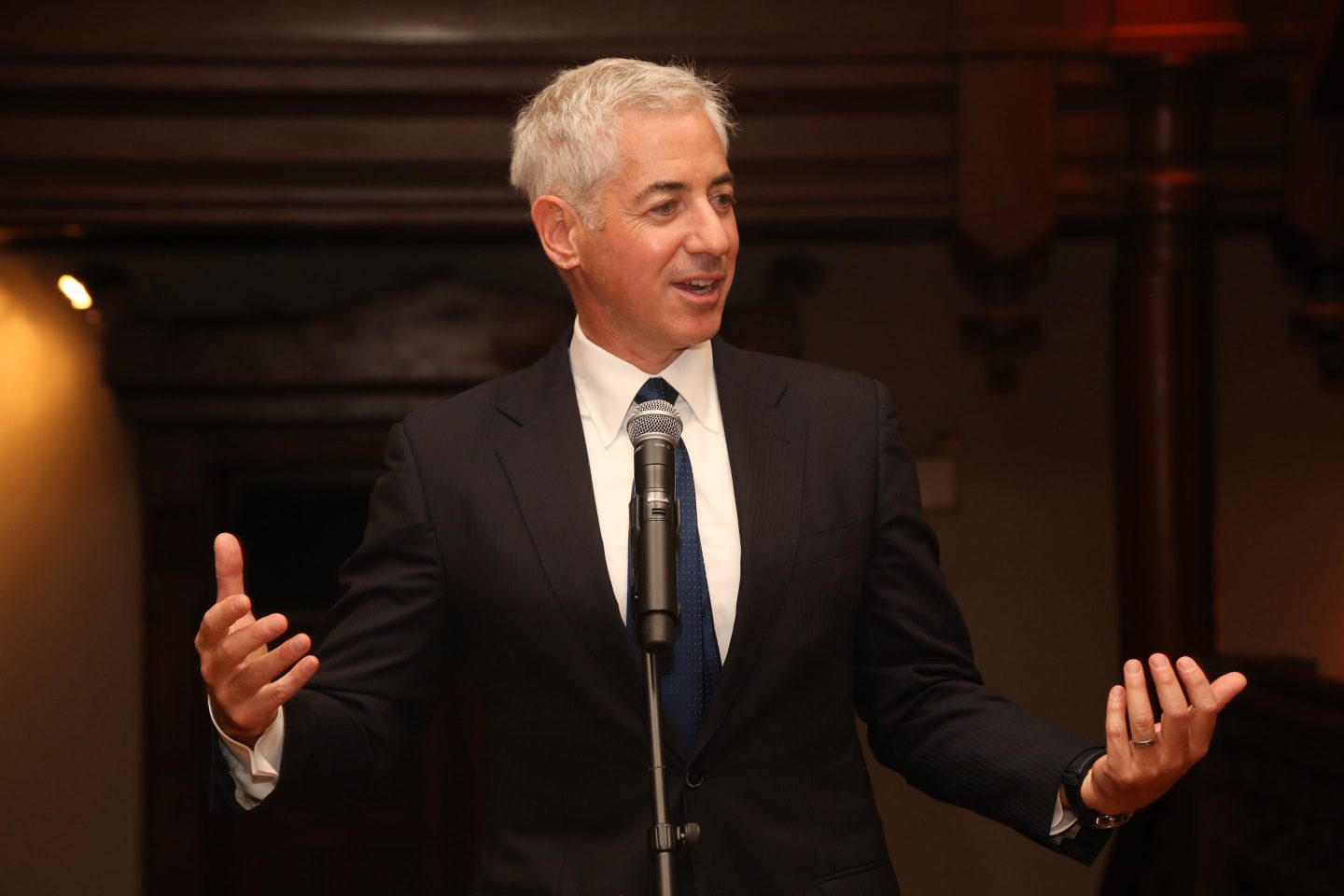
Bill Ackman attends the Legion of Honour Award Ceremony and Dinner for Olivia Tournay Flatto at the Park Avenue Armory on Oct. 19, 2022, in New York City.
Bill Ackman attends the Legion of Honour Award Ceremony and Dinner for Olivia Tournay Flatto at the Park Avenue Armory on Oct. 19, 2022, in New York City.Photo by Sylvain Gaboury/Patrick McMullan via Getty Images

When the government borrows at an unsustainable rate, sometimes it isn’t new faces in Congress that force a return to fiscal discipline, but “vigilantes” in the bond market. Investment banks, hedge funds, insurers, and other large investors will look to drive up government borrowing costs by selling their holdings of Treasuries, thereby increasing the interest rate that the federal government has to pay to service its debts.

Recommended Video

Ed Yardeni—an economist who spent decades on Wall Street at firms like Deutsche Bank and Prudential and now runs his own financial consulting firm, Yardeni Research—coined the term “bond vigilantes” in 1983 to describe these market-moving investors. 

In a July 1983 paper titled “Bond Investors Are the Economy’s Bond Vigilantes,” he explained:  “[I]f the fiscal and monetary authorities won’t regulate the economy, the bond investors will.”

Now, with the U.S.’s national debt and deficit both at historic highs, Yardeni believes bond vigilantes are once again out in force. And they have a new leader—the billionaire hedge funder Bill Ackman.

“Barron’s declared today that Ackman is the new Bond King. We think he is actually the King of the Bond Vigilantes,” Yardeni said in a Monday note to clients.

Ackman’s ‘brillant trade’

At the start of August, Ackman, who runs Pershing Square Capital Management, made a very public bet against 30-year Treasuries. He argued that rising federal deficits and gridlock in Washington, as well as “structural changes” to the global economy—including deglobalization, the green-energy transition, and increased worker bargaining power—would lead to an era of higher inflation and fiscal instability. And inflation and fiscal instability mean investors should require more compensation—in the form of higher yields—for the increased risks of holding U.S. debt.

To Ackman’s point, new data from the Treasury Department shows the national deficit rose almost 25% year over year to $1.7 trillion for the fiscal year 2023, which ended September 30. And increased spending has pushed the national debt up over $10 trillion in the past decade— from $22 trillion in 2013 to well over $33 trillion today.

That wasn’t so bad when interest rates were low, but now that bond vigilantes are out in force and the Fed has raised rates sharply to counter inflation, carrying a deficit is becoming costly. The interest expense on the national debt has soared 67% since the pandemic began, from $544 billion per quarter at the start of 2020 to $909 billion per quarter this summer.

Ackman first publicized his big bond short on Aug. 2 in a post on X, formerly Twitter, just a day after Fitch Ratings downgraded U.S. Treasuries’ credit rating from AAA to AA+. Between Aug. 2 and Oct. 23, when Ackman revealed he exited his short position due to a “slowing” economy and geopolitical risks, the 30-year bond yield soared from 4.11% to over 5%. 

When bond yields rise, bond prices fall—so this is a sign that his trade was profitable. “It was a brilliant trade,” Yardeni said of Ackman’s big short.

While it’s difficult to fully measure the impact that bond vigilantes are having on Treasury yields, the Fed does track the so-called “term premium” for the 10-year Treasury. The term premium measures the “extra” yield that investors require in order to hold longer-term Treasury bonds, instead of short-term notes or bills. The premium required was negative for many years when interest rates were held low in the mid-2010s, but in recent years it has risen, in a sign that vigilantes may be finally awakening again. Since its COVID-19 low, the term premium has soared from -0.9%, to over 0.37%.

Ackman and other big investors may be pushing for more fiscal responsibility by betting against Treasuries, but it’s a dangerous time to be a bond vigilante. If the economy begins to struggle or the long-predicted recession rears its head, that could lead the Fed to cut interest rates. This would cause long-term Treasury yields to fall, which, in turn, would lead long-term Treasury bond prices to rise. That wouldn’t be great news for the vigilantes betting against these Treasury bonds—and the danger could prevent them from running rampant, for now.

When Ackman exited his bet against Treasuries on Monday he argued that geopolitical tensions from the Israel-Hamas and Russia-Ukraine conflicts, along with data that shows the economy is slowing, are significant risks to his bet against bonds.

“We agree with Ackman,” Yardeni wrote. “There is too much outright danger in the current geopolitical environment. That favors risk-off trades over risk-on ones, for now.”

Fortune Brainstorm AI returns to San Francisco Dec. 8–9 to convene the smartest people we know—technologists, entrepreneurs, Fortune Global 500 executives, investors, policymakers, and the brilliant minds in between—to explore and interrogate the most pressing questions about AI at another pivotal moment. Register here.
About the Author
Will Daniel
By Will Daniel
LinkedIn iconTwitter icon
See full bioRight Arrow Button Icon

Latest in Finance

Hassett, Bessent
EconomyTariffs and trade
Tariffs and the $38 trillion national debt: Kevin Hassett sees ‘big reductions’ in deficit while Scott Bessent sees a ‘shrinking ice cube’
By Nick LichtenbergDecember 4, 2025
1 hour ago
Hassett
BankingFederal Reserve
Market doubts Hassett can deliver at Fed, PGIM’s Peters says
By Ruth Carson and BloombergDecember 4, 2025
2 hours ago
Ted Pick
BankingData centers
Morgan Stanley considers offloading some of its data-center exposure
By Esteban Duarte, Paula Seligson, Davide Scigliuzzo and BloombergDecember 4, 2025
2 hours ago
Zuckerberg
EnergyMeta
Meta’s Zuckerberg plans deep cuts for Metaverse efforts
By Kurt Wagner and BloombergDecember 4, 2025
2 hours ago
Pichai
Big TechAlphabet
Alphabet’s AI chips are a potential $900 billion ‘secret sauce’
By Ryan Vlastelica and BloombergDecember 4, 2025
2 hours ago
Jerome Powell, chairman of the US Federal Reserve, during the Hoover Institution's George P. Shultz Memorial Lecture Series in Stanford, California, US, on Monday, Dec. 1, 2025.
Economyfed interest rate
For Wall Street, pandemic-level bad news for jobs is good news for stocks—it pushes the Fed further into cutting territory
By Eleanor PringleDecember 4, 2025
3 hours ago

Most Popular

placeholder alt text
Economy
Two months into the new fiscal year and the U.S. government is already spending more than $10 billion a week servicing national debt
By Eleanor PringleDecember 4, 2025
7 hours ago
placeholder alt text
North America
Jeff Bezos and Lauren Sánchez Bezos commit $102.5 million to organizations combating homelessness across the U.S.: ‘This is just the beginning’
By Sydney LakeDecember 2, 2025
2 days ago
placeholder alt text
Economy
Ford workers told their CEO 'none of the young people want to work here.' So Jim Farley took a page out of the founder's playbook
By Sasha RogelbergNovember 28, 2025
6 days ago
placeholder alt text
North America
Anonymous $50 million donation helps cover the next 50 years of tuition for medical lab science students at University of Washington
By The Associated PressDecember 2, 2025
2 days ago
placeholder alt text
Economy
Scott Bessent calls the Giving Pledge well-intentioned but ‘very amorphous,’ growing from ‘a panic among the billionaire class’
By Nick LichtenbergDecember 3, 2025
1 day ago
placeholder alt text
AI
IBM CEO warns there’s ‘no way’ hyperscalers like Google and Amazon will be able to turn a profit at the rate of their data center spending
By Marco Quiroz-GutierrezDecember 3, 2025
1 day ago
Rankings
  • 100 Best Companies
  • Fortune 500
  • Global 500
  • Fortune 500 Europe
  • Most Powerful Women
  • Future 50
  • World’s Most Admired Companies
  • See All Rankings
Sections
  • Finance
  • Leadership
  • Success
  • Tech
  • Asia
  • Europe
  • Environment
  • Fortune Crypto
  • Health
  • Retail
  • Lifestyle
  • Politics
  • Newsletters
  • Magazine
  • Features
  • Commentary
  • Mpw
  • CEO Initiative
  • Conferences
  • Personal Finance
  • Education
Customer Support
  • Frequently Asked Questions
  • Customer Service Portal
  • Privacy Policy
  • Terms Of Use
  • Single Issues For Purchase
  • International Print
Commercial Services
  • Advertising
  • Fortune Brand Studio
  • Fortune Analytics
  • Fortune Conferences
  • Business Development
About Us
  • About Us
  • Editorial Calendar
  • Press Center
  • Work At Fortune
  • Diversity And Inclusion
  • Terms And Conditions
  • Site Map

© 2025 Fortune Media IP Limited. All Rights Reserved. Use of this site constitutes acceptance of our Terms of Use and Privacy Policy | CA Notice at Collection and Privacy Notice | Do Not Sell/Share My Personal Information
FORTUNE is a trademark of Fortune Media IP Limited, registered in the U.S. and other countries. FORTUNE may receive compensation for some links to products and services on this website. Offers may be subject to change without notice.