As the U.S. shifts away from fossil fuels to cleaner energy sources, thousands of coal, oil and gas workers will be looking for new jobs.
Many will have the skills to step into new jobs in the emerging clean energy industries, but the transition may not be as simple as it seems. New research published in the journal Nature Communications identifies a major barrier that is often overlooked in discussions of how to create a just transition for these workers: location.
We analyzed 14 years of fossil fuel employment and skills data and found that, while many fossil fuel workers could transfer their skills to green jobs, they historically have not relocated far when they changed jobs.
That suggests that it’s not enough to create green industry jobs. The jobs will have to be where the workers are, and most fossil fuel extraction workers are not in regions where green jobs are expected to grow.
Without careful planning and targeted policies, we estimate that only about 2% of fossil fuel workers involved in extraction are likely to transition to green jobs this decade. Fortunately, there are ways to help smooth the transition.
Many fossil fuel and green skills overlap
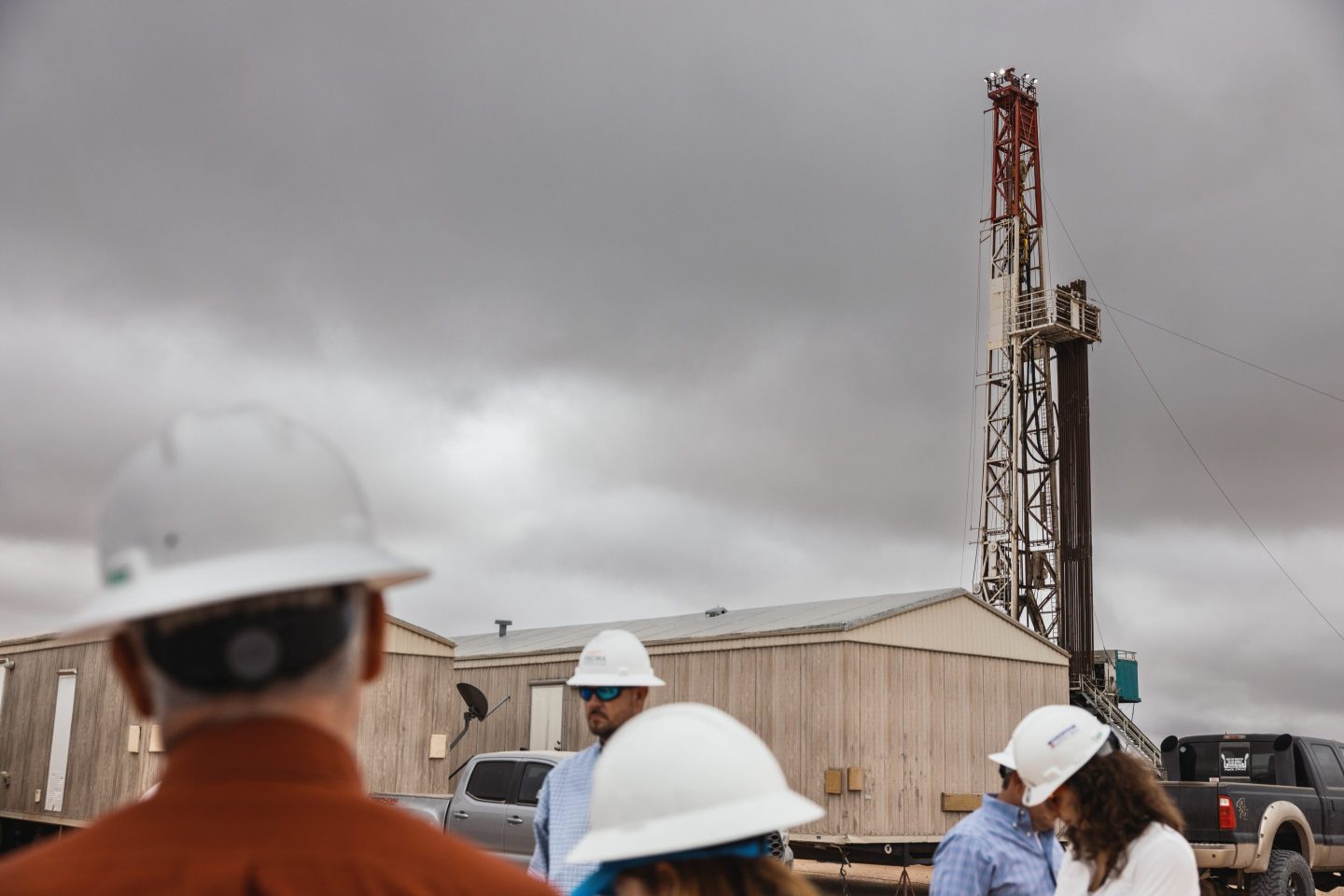
As of 2019, about 1.7 million people worked in jobs across the fossil fuels industry in the U.S., many of them in the regions from Texas and New Mexico to Montana and from Kentucky to Pennsylvania. As the country transitions from fossil fuel use to clean energy to protect the climate, many of those jobs will disappear.
Policymakers tend to focus on skills training when they talk about the importance of a just transition for these workers and their communities.
To see how fossil fuel workers’ skills might transfer to green jobs, we used occupation and skills data from the U.S. Bureau of Labor Statistics to compare them. These profiles provide information about the required workplace skills for over 750 occupations, including earth drillers, underground mining machine operators and other extraction occupations.
Overall, we found that many fossil fuel workers involved in extraction already have similar skills to those required in green occupations, as previous studies also found. In fact, their skills tend to be more closely matched to green industries than most other industries.
Job-to-job flow data from the U.S. Census Bureau showed that these workers historically tend to transition to other sectors with similar skills requirements. Thus, fossil fuel workers should be able to fill emerging green jobs with only minimal reskilling.
However, the data also shows that these fossil fuel workers typically do not travel far to fill employment opportunities.
The location problem
When we mapped the current locations of wind, solar, hydro and geothermal power plants using data from the U.S. Energy Information Administration, we found that these sites had little overlap with fossil fuel workers.
The U.S. Bureau of Labor Statistics’ projections for where green jobs are likely to emerge by 2029 also showed little overlap with the locations of today’s fossil fuel workers.
These results were consistent across several green employment projections and different definitions of “fossil fuel” occupations. That’s alarming for the prospects of a just transition.
How policymakers can intervene
Broadly, our findings point to two potential strategies for policymakers.
First, policymakers can explore incentives and programs that help fossil fuel workers relocate. However, as our analysis reveals, these populations have not historically exhibited geographic mobility.
Alternatively, policymakers could design incentives for green industry employers to build in fossil fuel communities. This might not be so simple. Green energy production often depends on where the wind blows strongest, solar power production is most effective and geothermal power or hydropower is available.
We simulated the creation of new green industry employment in two different ways, one targeting fossil fuel communities and the other spread uniformly across the U.S. according to population. The targeted efforts led to significantly more transitions from fossil fuel to green jobs. For example, we found that creating 1 million location-targeted jobs produced more transitions than the creation of 5 million jobs that don’t take workers’ locations into account.
Another solution doesn’t involve green jobs at all. A similar analysis in our study of other existing U.S. sectors revealed that construction and manufacturing employment are already co-located with fossil fuel workers and would require only limited reskilling. Supporting manufacturing expansion in these areas could be a simpler solution that could limit the number of new employers needed to support a just transition.
There are other questions that worry fossil fuel workers, such as whether new jobs will pay as well and last beyond construction. More research is needed to assess effective policy interventions, but overall our study highlights the need for a comprehensive approach to a just transition that takes into account the unique challenges faced by fossil fuel workers in different regions.
By responding to these barriers, the U.S. can help ensure that the transition to a green economy is not only environmentally sustainable but also socially just.
Morgan R. Frank is Assistant Professor of Informatics, University of Pittsburgh and Junghyun Lim is Assistant Professor of Political Science, University of North Carolina at Chapel Hill.
This article is republished from The Conversation under a Creative Commons license. Read the original article.