• Home
  • Latest
  • Fortune 500
  • Finance
  • Tech
  • Leadership
  • Lifestyle
  • Rankings
  • Multimedia
NewslettersImpact Report

Why the ‘altruistic company’ is the Holy Grail when it comes to impact

By
Peter Vanham
Peter Vanham
Editorial Director, Leadership
Down Arrow Button Icon
By
Peter Vanham
Peter Vanham
Editorial Director, Leadership
Down Arrow Button Icon
August 31, 2023, 10:34 AM ET
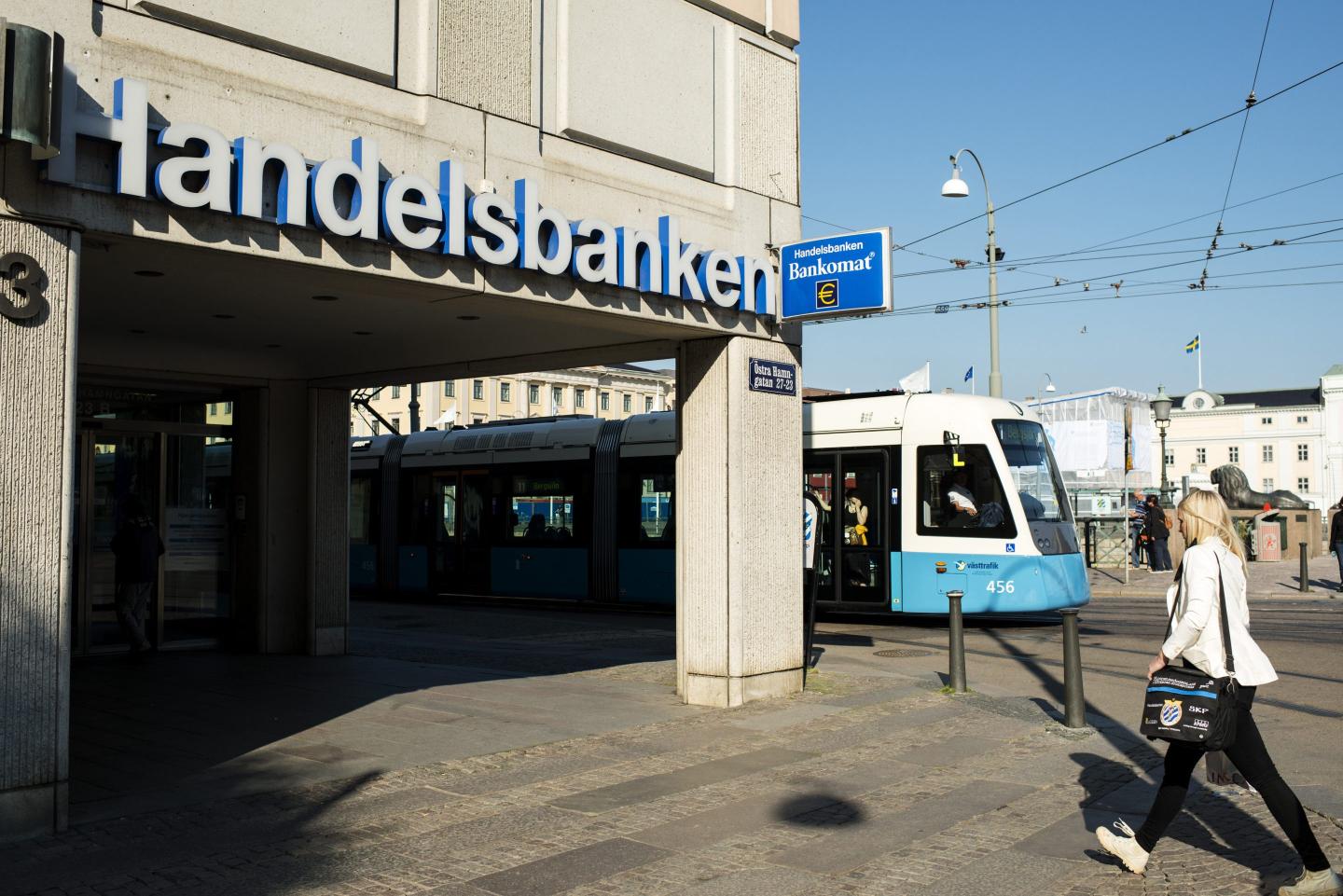
A public tram passes the offices of Svenska Handelsbanken AB in Gothenburg, Sweden. Sweden's biggest bank is seen as a model for its novel approach to banker compensation.
A public tram passes the offices of Svenska Handelsbanken AB in Gothenburg, Sweden. Sweden's biggest bank is seen as a model for its novel approach to banker compensation.Erik Abel—Bloomberg/Getty Images

How can a company best achieve social impact, while also being large and profitable?

Recommended Video

That question lies at the heart of what this newsletter is about. To date, I’d say, the right answer remains elusive. In my view, even companies that believe they have found a good model (such as Airbnb, which we covered last week) often fall short.* So will we ever see companies be the “greatest platform of change” in society, as Salesforce CEO Marc Benioff puts it?

I do believe so. But to get there, companies must first get unstuck from the inconsequential but dominant “do good” model of the past: that of “corporate philanthropy,” which is not integrated into the business model of the company, or “corporate social responsibility” (CSR), in which a company devotes a relatively small part of its activities to doing good.

According to Isaac Getz, a professor at French business school ESCP, there are other pitfalls keeping companies from living up to their greatest potential, to which even B Corps fall prey: to “chase too many rabbits at the same time,” and to get the order wrong between doing good and doing well. More on that later.

The Holy Grail, he believes, is for companies to pursue a social good without further ado, and without exception. These are what he calls “altruistic companies”—an eye-opening framing (disclosure: Getz serves as the advisor on my academic research).

Start with the basics. Since the dawn of industrialization, philanthropy has been the main way for companies to do good. It’s Anheuser-Busch holding a brewing competition that benefits its nonprofit partners, or Chevron empowering women in Latin America. Yes, it creates a social good. But as it’s relatively small and unrelated to the core business, it arguably does not affect a company’s overall impact.

The same is true for CSR, which is a step beyond philanthropy, as it often ties in with the company’s activities, like Anheuser-Busch advocating for recycling cans in sports stadiums where its beer is sold. It’s positive, and related to the business, but often insignificant as a source of revenue or impact.

“Creating shared value” goes yet one step further. It’s Nestlé, for example, investing in regenerative agriculture, to the benefit of all those involved: the farmers in its supply chain, itself, and its consumers. But since it’s also still only a part of the business impact of Nestlé—which also stretches into retail, packaging, consumption models, and so on—Getz still sees it as noncore.

Then there are B Corps, or stakeholder companies. It took me longer to understand their limitations. They pursue positive social and environmental impact in all they do, and consider all their stakeholders, while still pursuing profit. Isn’t that the perfect model?

No, says Getz. Sure, B Corps are about doing good in an all-encompassing way. But by going after environmental, social, and economic goals all at once, they “chase too many rabbits at the same time.”

Simple math, Getz argues, shows that adding a constraint (doing well) to a linear equation (doing good) will never yield as good an outcome as without the constraint. So ultimately, one is sacrificed at the expense of the other.

B Corps and stakeholder companies also get a cause-effect relationship wrong, Getz believes: They go after ESG and profit goals simultaneously, not understanding that doing well (making a profit) can or should be the result of doing good (having a positive social impact through ESG performance).

Enter the altruistic company. This is where everything comes together. These companies pursue a social good without thinking of profit first or at the same time. But by being so good at what they do, they often end up being extremely successful and profitable after all.

The problem with this category, Getz acknowledges, is that its members are few. (Making a comparison to the industrial revolution, Getz told the Financial Times’s Andrew Hill last year, that businesses are only at “the beginning of the 19th century” in adopting models like the altruistic enterprise.) The best known, perhaps, is Handelsbanken, a Swedish bank that branched out to the U.K. In the U.S., a good example is the FruitGuys, a healthy office snacks provider based in San Francisco.

Over the next few months, let’s find out if there are more good examples. And if you’re still contemplating attending Impact Initiative, Sept. 12–13, in Atlanta, social impact will be prominently on the agenda. You can still sign up to join us here.

More news below.

Peter Vanham
Executive Editor, Fortune
peter.vanham@fortune.com

*Airbnb took issue with how The Impact Report covered their model last week. We updated that edition to address their exceptions here.

This edition of Impact Report was edited by Holly Ojalvo.

ON OUR RADAR

Investors warn ‘fluffy’ ESG metrics are being gamed to boost bonuses (Financial Times)

Three-quarters of S&P 500 companies now use ESG metrics to help determine executive pay packages, the FT noted in a piece this week. But some of the investors it contacted are growing skeptical because ESG metrics are “very subjective, fluffy and easily gamed,” one investor was quoted as saying. Employee engagement scores are a particularly worrisome metric, another said. “We have frankly never seen a company ever score under median for employee engagement. These things can be gamed.” Should ESG metrics disappear from executive pay? My take: That would be a step back. But remuneration committees should actively ensure that ESG metrics don’t lead to cynicism.

This is the web version of Impact Report, a weekly newsletter on the latest ESG trends and news that are shaping the future of business. Sign up to get it delivered free to your inbox.
About the Author
By Peter VanhamEditorial Director, Leadership
LinkedIn icon

Peter Vanham is editorial director, leadership, at Fortune.

See full bioRight Arrow Button Icon

Latest in Newsletters

Finance
Lorem ipsum dolor sit amet, consectetur adipiscing elit, sed do eiusmod tempor incididunt ut labore et dolore magna aliqua. Ut enim ad minim veniam
By Fortune Editors
October 20, 2025
Finance
Lorem ipsum dolor sit amet, consectetur adipiscing elit, sed do eiusmod tempor incididunt ut labore et dolore magna aliqua. Ut enim ad minim veniam
By Fortune Editors
October 20, 2025
Finance
Lorem ipsum dolor sit amet, consectetur adipiscing elit, sed do eiusmod tempor incididunt ut labore et dolore magna aliqua. Ut enim ad minim veniam
By Fortune Editors
October 20, 2025
Finance
Lorem ipsum dolor sit amet, consectetur adipiscing elit, sed do eiusmod tempor incididunt ut labore et dolore magna aliqua. Ut enim ad minim veniam
By Fortune Editors
October 20, 2025
Finance
Lorem ipsum dolor sit amet, consectetur adipiscing elit, sed do eiusmod tempor incididunt ut labore et dolore magna aliqua. Ut enim ad minim veniam
By Fortune Editors
October 20, 2025
Finance
Lorem ipsum dolor sit amet, consectetur adipiscing elit, sed do eiusmod tempor incididunt ut labore et dolore magna aliqua. Ut enim ad minim veniam
By Fortune Editors
October 20, 2025

Most Popular

Finance
Lorem ipsum dolor sit amet, consectetur adipiscing elit, sed do eiusmod tempor incididunt ut labore et dolore magna aliqua. Ut enim ad minim veniam
By Fortune Editors
October 20, 2025
Finance
Lorem ipsum dolor sit amet, consectetur adipiscing elit, sed do eiusmod tempor incididunt ut labore et dolore magna aliqua. Ut enim ad minim veniam
By Fortune Editors
October 20, 2025
Finance
Lorem ipsum dolor sit amet, consectetur adipiscing elit, sed do eiusmod tempor incididunt ut labore et dolore magna aliqua. Ut enim ad minim veniam
By Fortune Editors
October 20, 2025
Finance
Lorem ipsum dolor sit amet, consectetur adipiscing elit, sed do eiusmod tempor incididunt ut labore et dolore magna aliqua. Ut enim ad minim veniam
By Fortune Editors
October 20, 2025
Finance
Lorem ipsum dolor sit amet, consectetur adipiscing elit, sed do eiusmod tempor incididunt ut labore et dolore magna aliqua. Ut enim ad minim veniam
By Fortune Editors
October 20, 2025
Finance
Lorem ipsum dolor sit amet, consectetur adipiscing elit, sed do eiusmod tempor incididunt ut labore et dolore magna aliqua. Ut enim ad minim veniam
By Fortune Editors
October 20, 2025
Fortune Secondary Logo
Rankings
  • 100 Best Companies
  • Fortune 500
  • Global 500
  • Fortune 500 Europe
  • Most Powerful Women
  • World's Most Admired Companies
  • See All Rankings
  • Lists Calendar
Sections
  • Finance
  • Fortune Crypto
  • Features
  • Leadership
  • Health
  • Commentary
  • Success
  • Retail
  • Mpw
  • Tech
  • Lifestyle
  • CEO Initiative
  • Asia
  • Politics
  • Conferences
  • Europe
  • Newsletters
  • Personal Finance
  • Environment
  • Magazine
  • Education
Customer Support
  • Frequently Asked Questions
  • Customer Service Portal
  • Privacy Policy
  • Terms Of Use
  • Single Issues For Purchase
  • International Print
Commercial Services
  • Advertising
  • Fortune Brand Studio
  • Fortune Analytics
  • Fortune Conferences
  • Business Development
  • Group Subscriptions
About Us
  • About Us
  • Press Center
  • Work At Fortune
  • Terms And Conditions
  • Site Map
  • About Us
  • Press Center
  • Work At Fortune
  • Terms And Conditions
  • Site Map
  • Facebook icon
  • Twitter icon
  • LinkedIn icon
  • Instagram icon
  • Pinterest icon

Latest in Newsletters

How ShopMy’s relentless focus on product-market fit turned the shopping disruptor into a $1.5 billion unicorn
NewslettersMPW Daily
How ShopMy’s relentless focus on product-market fit turned the shopping disruptor into a $1.5 billion unicorn
By Emma HinchliffeMay 4, 2026
3 hours ago
Frustrated job seeker on laptop
NewslettersFortune Workplace Innovation
Nearly 4 in 10 job candidates have bailed on a hiring round because it required an AI interview
By Emma BurleighMay 4, 2026
6 hours ago
The crypto industry is obsessed with conferences. The vibe at them is changing
NewslettersFortune Crypto
The crypto industry is obsessed with conferences. The vibe at them is changing
By Jeff John RobertsMay 4, 2026
7 hours ago
VC firm Ethereal has avoided the spotlight for 5 years—now it’s telling its story
NewslettersTerm Sheet
VC firm Ethereal has avoided the spotlight for 5 years—now it’s telling its story
By Jeff John RobertsMay 4, 2026
7 hours ago
Occidental Petroleum’s CEO transition puts a spotlight on the foreign post advantage
C-SuiteNext to Lead
Occidental Petroleum’s CEO transition puts a spotlight on the foreign post advantage
By Ruth UmohMay 4, 2026
8 hours ago
Spirit Airlines’ shutdown is a case study in what happens when a turnaround plan breaks
NewslettersCFO Daily
Spirit Airlines’ shutdown is a case study in what happens when a turnaround plan breaks
By Sheryl EstradaMay 4, 2026
8 hours ago

Most Popular

Diary of a CEO founder says he hired someone with 'zero' work experience because she 'thanked the security guard by name' before the interview
Success
Diary of a CEO founder says he hired someone with 'zero' work experience because she 'thanked the security guard by name' before the interview
By Emma BurleighMay 3, 2026
1 day ago
As economic despair mounts, Russian official admits the country has had enough of Putin's war on Ukraine. 'We can’t even take one region'
Economy
As economic despair mounts, Russian official admits the country has had enough of Putin's war on Ukraine. 'We can’t even take one region'
By Jason MaMay 3, 2026
22 hours ago
America got rich and got sad. A top economist says 2020 broke something that hasn't healed
Economy
America got rich and got sad. A top economist says 2020 broke something that hasn't healed
By Nick LichtenbergMay 3, 2026
1 day ago
Scott Bessent on financial literacy: 'it drives me crazy' to see young men in blue-collar construction jobs playing the lottery
Personal Finance
Scott Bessent on financial literacy: 'it drives me crazy' to see young men in blue-collar construction jobs playing the lottery
By Fatima Hussein and The Associated PressMay 1, 2026
3 days ago
I spent a decade selling homes to the ultra-wealthy. What I saw explains the housing market's nepo problem
Commentary
I spent a decade selling homes to the ultra-wealthy. What I saw explains the housing market's nepo problem
By Blake O'ShaughnessyMay 3, 2026
1 day ago
Sam Altman says the quiet part out loud, confirming some companies are ‘AI washing’ by blaming unrelated layoffs on the technology
AI
Sam Altman says the quiet part out loud, confirming some companies are ‘AI washing’ by blaming unrelated layoffs on the technology
By Sasha RogelbergMay 3, 2026
1 day ago

© 2026 Fortune Media IP Limited. All Rights Reserved. Use of this site constitutes acceptance of our Terms of Use and Privacy Policy | CA Notice at Collection and Privacy Notice | Do Not Sell/Share My Personal Information
FORTUNE is a trademark of Fortune Media IP Limited, registered in the U.S. and other countries. FORTUNE may receive compensation for some links to products and services on this website. Offers may be subject to change without notice.