• Home
  • Latest
  • Fortune 500
  • Finance
  • Tech
  • Leadership
  • Lifestyle
  • Rankings
  • Multimedia
NewslettersImpact Report

Airbnb created a nonprofit to do good. Is it a model to follow?

By
Peter Vanham
Peter Vanham
Editorial Director, Leadership
Down Arrow Button Icon
By
Peter Vanham
Peter Vanham
Editorial Director, Leadership
Down Arrow Button Icon
August 24, 2023, 11:40 AM ET
Eric Risberg—AP Photo

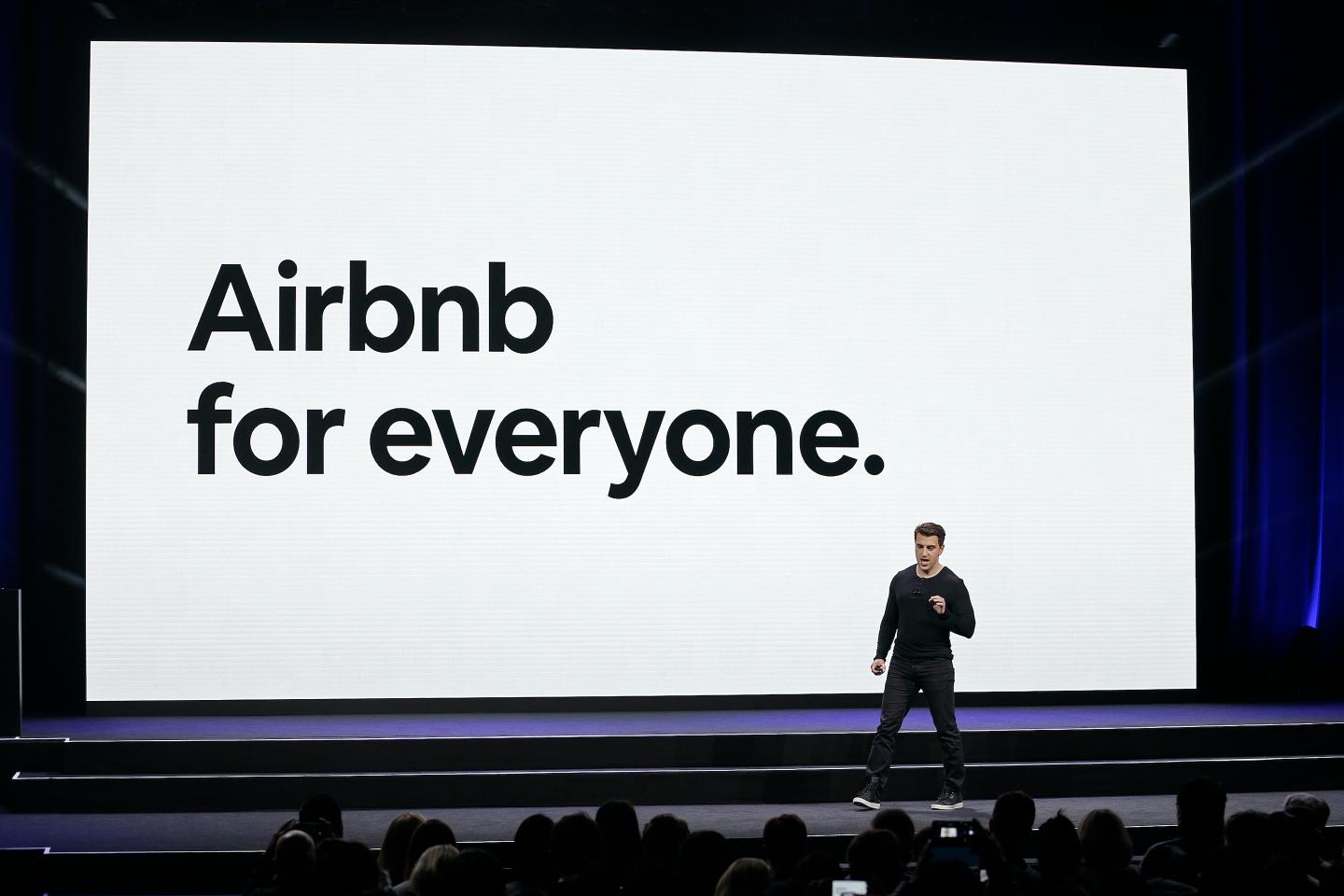
Can the real Airbnb please stand up?

Recommended Video

It has long seemed to me there are two Airbnbs. On one hand, it’s the online marketplace that created millions of places to stay for millions of guests. On the other, there is the “move fast, break things” disruptor that has been criticized for exacerbating housing crises from Barcelona to the Bay Area.

Inside the company, it turns out, Airbnb is also two different things. It started as a for-profit company, brokering the market for short- and long-term stays around the world, taking a commission on every booking made through its platform. Then, after Hurricane Sandy hit New York in 2012, Airbnb gained a second identity: as a nonprofit helping refugees and evacuees find temporary housing.

Of course, a company doing nonprofit activities adjacent to its core business model is nothing new. Just about every business today has a philanthropy or corporate social responsibility arm. But as social impact has become central to corporate identities, it surprised me that Airbnb went the opposite way, proudly separating its dotcom activities from those of Airbnb.org.

Why is that, and is it a model for others to follow?

Catherine Powell, the executive in charge of hosting at the for-profit Airbnb, said that after initially running the nonprofit initiatives in-house, they “wanted to scale,” but couldn’t. “We wanted to have…a nonprofit where we had clear and discrete relations with NGOs and governments, [and were] able to fundraise.”

That became much easier, she said, when Airbnb became both a dot-org and a dotcom. And some people who were hesitant to become hosts for Airbnb.com, the company found, were willing to open their doors for a nonprofit housing refugees. So the company set up its nonprofit as a separate legal entity.

Since Airbnb.org’s legal creation, its director Katherine Woo told me, the nonprofit has helped temporarily house over 300,000 people, including 200,000 refugees from countries like Ukraine, Afghanistan, and Venezuela. On the flip side, 91,000 hosts from just about every country in the world have signed up to welcome those who have been displaced from their own homes.

To generate this kind of impact, Woo said, Airbnb.org can lean on its for-profit parent in a variety of ways, including funding, brand recognition, access to the .com platform for its search and booking features, as well as shared office space, back-office functions, and employees.

The dot-org’s activities also flow back to the dotcom. One way the nonprofit’s donations are used, Woo said, is to provide “travel credits directly to refugees,” who can then use them to “book any stay on Airbnb.com” or elsewhere. (Airbnb, to be clear, does not collect fees on any Airbnb.org stays, regardless of how they are booked.)

It’s a reminder of the power technology can have when deployed for good and a testament to the goodwill and commitment of Airbnb’s founders.

But I’d hesitate to call it a model to follow.

For one thing, the “independent” nonprofit isn’t that independent. Its employee base, IP, offices, and support functions exist in the good graces of Airbnb. Its board counts several members with Airbnb ties, including Powell. (Its initial three board members were selected by Airbnb company founders and executives and included Joe Gebbia, Airbnb co-founder and dot-org founder, who still serves on the board. Currently, a majority of its seven-member board is independent, as a PR rep for Airbnb.com and Airbnb.org pointed out to me after publication.) That kind of dependence could pose problems and could blur the lines between the two brands, I’d say. 

Perhaps the bigger issue, though, is that by separating “doing well” from “doing good,” Airbnb.com may lose sight of its full societal impact.

Airbnb was a great business idea, and its founders’ idealism still trickles down. But whether its overall impact on society has been a net positive or negative remains, as I see it, debatable. The evidence I have read suggests Airbnb has almost certainly played a role in making certain housing markets unaffordable for residents. This week, the Financial Times was the latest to report on that topic, though Airbnb contested its analysis. Some also question the structure and transparency of the fees it charges.

But beyond the dispute on Airbnb’s role in specific housing markets, the deeper issue I see with the model of spinning off a nonprofit is that it could curtail efforts to make the pursuit of social good part and parcel of the core business model of a for-profit entity. (Academics like French business school professor Isaac Getz see this “altruistic enterprise” model as an ideal way for companies to create social impact.)

When I brought up the topic of Airbnb’s net social impact, Powell said they “don’t calculate” social impact in the way that I saw it. “It’s so integrated in the way we operate, we don’t break it out,” she said. If that were unequivocally the case, I’d argue, perhaps we’d see less debate about the nature of Airbnb’s role in societal domains core to its business, such as housing and tourism, and more consensus around its net positive effects.

Still, “We want to behave like a 21st-century company,” she insisted. “We take the needs of all of our stakeholders very seriously.” Airbnb teams regularly interact with governments about their concerns, she said, and the company’s revamped platform is explicitly redesigned to help travelers explore new destinations, rather than contributing to over-tourism.

Is it enough? Do you consider the dotcom-plus-dot-org structure to be a model? I’d be interested in hearing your thoughts.

Clarification, Aug. 24, 2023: This story was updated to make clearer that Airbnb does not charge any fees on any of its dot-org stays on any platform and to specify the current makeup of the Airbnb.org board.

Clarification, Aug. 25, 2023: This story was updated to make clearer the basis for the interpretation and assessment expressed in this edition of Impact Report, and to add source attribution.

Clarification, Aug. 29, 2023: This story was updated to clarify the section about the independence and makeup of the Airbnb.org board.

~~~

We’ll be welcoming Google chief sustainability officer Kate Brandt next Monday, Aug. 28, at 12 p.m. Eastern for our last “Sustainability 101” webinar. If you’d like to attend, you can sign up here. We’ll also discuss sustainability and social impact at our Impact Initiative conference, which takes place in Atlanta, Sept. 12-13. Sign up here.

Peter Vanham
Executive Editor, Fortune
peter.vanham@fortune.com

This edition of Impact Report was edited by Holly Ojalvo.

ON OUR RADAR

ESG Backlash Is Real and Growing. What to Know. (Barron’s)

As we’ve reported before, the ESG backlash is real and growing. But according to two researchers at the ESG center at The Conference Board, “Companies should view ESG backlash as an opportunity to clarify their strategy and communications.” Of the authors' five suggestions, these three stood out to me:

—Don’t just make a materiality analysis or sustainability report—integrate ESG into your overall corporate strategy.

—If “ESG” doesn’t resonate with your customers and employees, use terms like “sustainability” and “corporate responsibility.” But don’t let anti-ESG groups control the narrative.

—Where ESG criticism is constructive, do “not react emotionally to backlash but take this as an opportunity to have a candid, fact-based discussion about ESG.”

Have a full read of the piece here.

This is the web version of Impact Report, a weekly newsletter on the latest ESG trends and news that are shaping the future of business. Sign up to get it delivered free to your inbox.
About the Author
By Peter VanhamEditorial Director, Leadership
LinkedIn icon

Peter Vanham is editorial director, leadership, at Fortune.

See full bioRight Arrow Button Icon

Latest in Newsletters

Finance
Lorem ipsum dolor sit amet, consectetur adipiscing elit, sed do eiusmod tempor incididunt ut labore et dolore magna aliqua. Ut enim ad minim veniam
By Fortune Editors
October 20, 2025
Finance
Lorem ipsum dolor sit amet, consectetur adipiscing elit, sed do eiusmod tempor incididunt ut labore et dolore magna aliqua. Ut enim ad minim veniam
By Fortune Editors
October 20, 2025
Finance
Lorem ipsum dolor sit amet, consectetur adipiscing elit, sed do eiusmod tempor incididunt ut labore et dolore magna aliqua. Ut enim ad minim veniam
By Fortune Editors
October 20, 2025
Finance
Lorem ipsum dolor sit amet, consectetur adipiscing elit, sed do eiusmod tempor incididunt ut labore et dolore magna aliqua. Ut enim ad minim veniam
By Fortune Editors
October 20, 2025
Finance
Lorem ipsum dolor sit amet, consectetur adipiscing elit, sed do eiusmod tempor incididunt ut labore et dolore magna aliqua. Ut enim ad minim veniam
By Fortune Editors
October 20, 2025
Finance
Lorem ipsum dolor sit amet, consectetur adipiscing elit, sed do eiusmod tempor incididunt ut labore et dolore magna aliqua. Ut enim ad minim veniam
By Fortune Editors
October 20, 2025

Most Popular

Finance
Lorem ipsum dolor sit amet, consectetur adipiscing elit, sed do eiusmod tempor incididunt ut labore et dolore magna aliqua. Ut enim ad minim veniam
By Fortune Editors
October 20, 2025
Finance
Lorem ipsum dolor sit amet, consectetur adipiscing elit, sed do eiusmod tempor incididunt ut labore et dolore magna aliqua. Ut enim ad minim veniam
By Fortune Editors
October 20, 2025
Finance
Lorem ipsum dolor sit amet, consectetur adipiscing elit, sed do eiusmod tempor incididunt ut labore et dolore magna aliqua. Ut enim ad minim veniam
By Fortune Editors
October 20, 2025
Finance
Lorem ipsum dolor sit amet, consectetur adipiscing elit, sed do eiusmod tempor incididunt ut labore et dolore magna aliqua. Ut enim ad minim veniam
By Fortune Editors
October 20, 2025
Finance
Lorem ipsum dolor sit amet, consectetur adipiscing elit, sed do eiusmod tempor incididunt ut labore et dolore magna aliqua. Ut enim ad minim veniam
By Fortune Editors
October 20, 2025
Finance
Lorem ipsum dolor sit amet, consectetur adipiscing elit, sed do eiusmod tempor incididunt ut labore et dolore magna aliqua. Ut enim ad minim veniam
By Fortune Editors
October 20, 2025
Fortune Secondary Logo
Rankings
  • 100 Best Companies
  • Fortune 500
  • Global 500
  • Fortune 500 Europe
  • Most Powerful Women
  • World's Most Admired Companies
  • See All Rankings
  • Lists Calendar
Sections
  • Finance
  • Fortune Crypto
  • Features
  • Leadership
  • Health
  • Commentary
  • Success
  • Retail
  • Mpw
  • Tech
  • Lifestyle
  • CEO Initiative
  • Asia
  • Politics
  • Conferences
  • Europe
  • Newsletters
  • Personal Finance
  • Environment
  • Magazine
  • Education
Customer Support
  • Frequently Asked Questions
  • Customer Service Portal
  • Privacy Policy
  • Terms Of Use
  • Single Issues For Purchase
  • International Print
Commercial Services
  • Advertising
  • Fortune Brand Studio
  • Fortune Analytics
  • Fortune Conferences
  • Business Development
  • Group Subscriptions
About Us
  • About Us
  • Press Center
  • Work At Fortune
  • Terms And Conditions
  • Site Map
  • About Us
  • Press Center
  • Work At Fortune
  • Terms And Conditions
  • Site Map
  • Facebook icon
  • Twitter icon
  • LinkedIn icon
  • Instagram icon
  • Pinterest icon

Latest in Newsletters

Aerie built a brand based on ‘real.’ That’s at the heart of its ‘no AI’ promise
NewslettersMPW Daily
Aerie built a brand based on ‘real.’ That’s at the heart of its ‘no AI’ promise
By Emma HinchliffeMay 1, 2026
5 hours ago
The fruit fly cancer researcher who built his first prototype out of lollipop sticks and straws
NewslettersTerm Sheet
The fruit fly cancer researcher who built his first prototype out of lollipop sticks and straws
By Allie GarfinkleMay 1, 2026
10 hours ago
Apple CEO Tim Cook in Washington, D.C. on December 10, 2025. (Tom Williams/CQ-Roll Call/Getty Images)
NewslettersFortune Tech
Tim Cook’s advice for Apple’s next CEO
By Andrew NuscaMay 1, 2026
11 hours ago
Brian Niccol’s nascent Starbucks turnaround starts with treating workers better
NewslettersCEO Daily
Brian Niccol’s nascent Starbucks turnaround starts with treating workers better
By Phil WahbaMay 1, 2026
12 hours ago
Meta's Hyperion data-center site in Northeastern Louisiana.
NewslettersEye on AI
Big Tech will spend nearly $700 billion on AI this year. No one knows where the buildout ends
By Sharon GoldmanApril 30, 2026
1 day ago
The Tory Burch Foundation is almost halfway to its $1 billion goal for women entrepreneurs
NewslettersMPW Daily
The Tory Burch Foundation is almost halfway to its $1 billion goal for women entrepreneurs
By Emma HinchliffeApril 30, 2026
1 day ago

Most Popular

China dominates the world's lithium supply. The U.S. just found 328 years' worth in its own backyard
North America
China dominates the world's lithium supply. The U.S. just found 328 years' worth in its own backyard
By Jake AngeloApril 30, 2026
1 day ago
Scott Bessent on financial literacy: 'it drives me crazy' to see young men in blue-collar construction jobs playing the lottery
Personal Finance
Scott Bessent on financial literacy: 'it drives me crazy' to see young men in blue-collar construction jobs playing the lottery
By Fatima Hussein and The Associated PressMay 1, 2026
8 hours ago
The U.S. economy is booming — just not where 50 million Americans live
Commentary
The U.S. economy is booming — just not where 50 million Americans live
By Derek KilmerMay 1, 2026
13 hours ago
Accenture's Julie Sweet blew up 50 years of company history. She says the hardest part is still ahead
Conferences
Accenture's Julie Sweet blew up 50 years of company history. She says the hardest part is still ahead
By Nick LichtenbergApril 29, 2026
2 days ago
Apple cofounder Ronald Wayne—whose stake would be worth up to $400 billion had he not sold it in 1976—says that at 91, he has no regrets
Success
Apple cofounder Ronald Wayne—whose stake would be worth up to $400 billion had he not sold it in 1976—says that at 91, he has no regrets
By Preston ForeApril 27, 2026
4 days ago
Exclusive: America's largest Black-owned bank launches podcast with mission to unlock hidden shame holding back generational wealth
Banking
Exclusive: America's largest Black-owned bank launches podcast with mission to unlock hidden shame holding back generational wealth
By Nick LichtenbergApril 29, 2026
2 days ago

© 2026 Fortune Media IP Limited. All Rights Reserved. Use of this site constitutes acceptance of our Terms of Use and Privacy Policy | CA Notice at Collection and Privacy Notice | Do Not Sell/Share My Personal Information
FORTUNE is a trademark of Fortune Media IP Limited, registered in the U.S. and other countries. FORTUNE may receive compensation for some links to products and services on this website. Offers may be subject to change without notice.