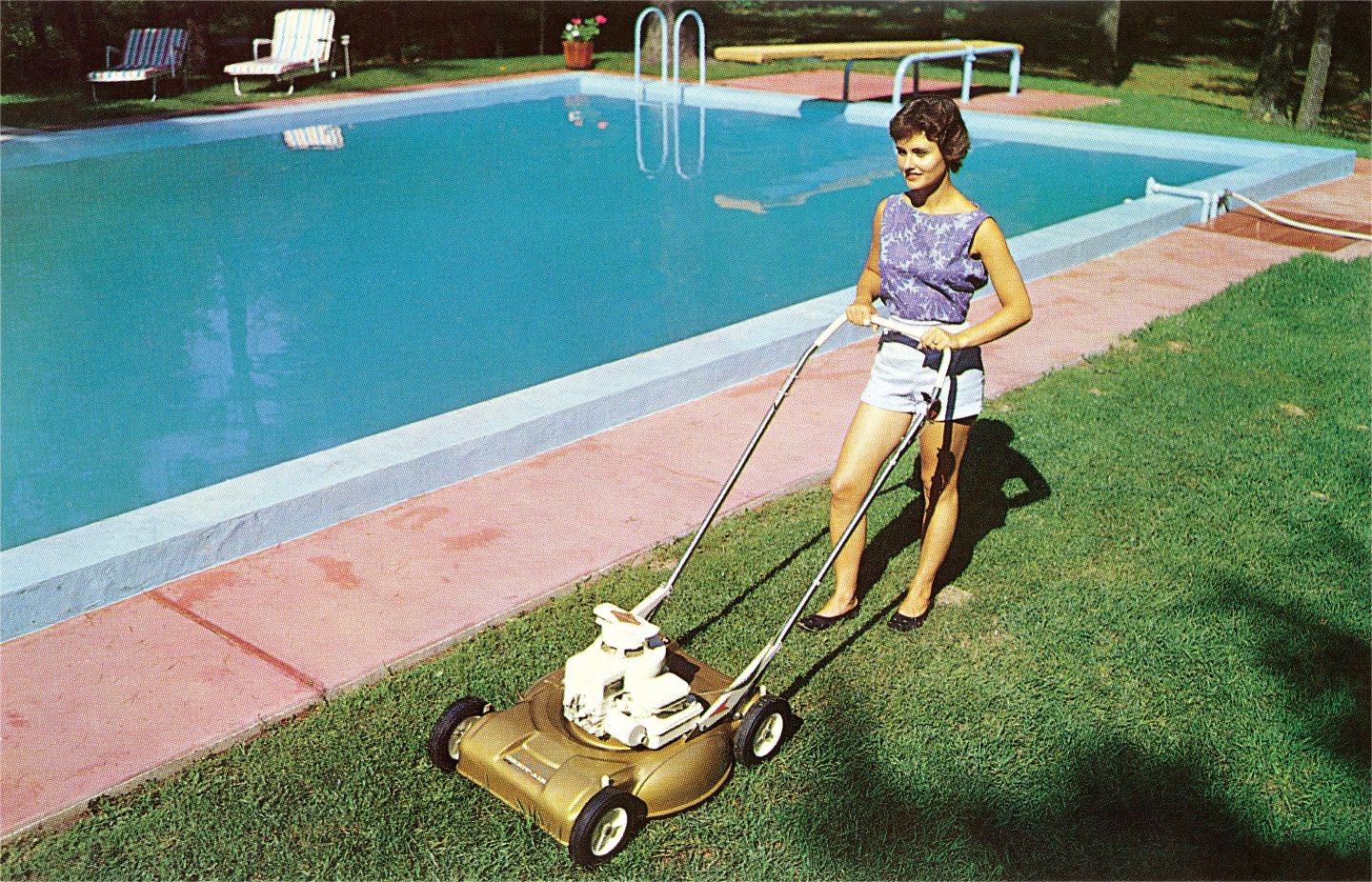
The suburbs: where people mow, trim, and praise the minor Greek god known as the lawns. Other members of the suburban pantheon include picket fences, malls, and of course, the shed (which is to be awed at and never touched). It’s all been a part of the American Dream since the postwar boom of the 1950s, and nearly 75 years later it persists amid an escalating crisis of affordability for (and involving) the American home.
As is well-documented, the pandemic prompted more Americans to fall out of love with cities, with the ‘burbs enjoying the latest of their many revivals, Pew Research Center found. The move was already in progress before 2020, as Arizona State’s Christopher Boone wrote about the U.S. as “a nation of suburbs” for The Conversation in 2018, noting that suburban-dwellers outnumbered those who lived in the city and country. That same year, Fortune reported on a major shift in the urban revival of the 21st century, with suburbs emerging as “the hot new destination.”
This decade, as remote work untethered employees from the office, freeing them up to move to more affordable places, over 2 million people left large urban areas from 2020 to 2022. How dramatic this pandemic migration actually was still remains to be seen, but it’s clear that priorities are shifting. And even as remote workers are ushered back to the office with hybrid policies, people are still drawn by the sweet suburban siren call.
The latest polling from the Ipsos Consumer Tracker, a research and consulting firm, reveals what is drawing Americans back to the suburbs: It’s not the American Dream per se, but pure affordability.
The siren’s affordability song
Three years after the pandemic first hit, one in five Americans is still looking to relocate, Ipsos finds. The hottest spot for those on the go is, as always, the suburbs (at 31%), followed by rural areas (24%) and then simply anywhere that is closer to family (24%).
Considering that affordability remains the top reason for relocating (39%) followed by the general cost of living (38%), per Ipsos, it seems many have been priced out of urban areas. In a time marked by high (yet ebbing) inflation, even six-figure salaries don’t lead to as comfortable of a lifestyle as they used to, especially in cities where the cost of living is often known to be higher.
But it still seems to be a more affordable option than city life, and that’s despite the bad rap the suburbs have developed in recent years. The suburbs can be in practice more of a nightmare than any other kind of dream, which makes sense given the history of the man-made invention. Born after World War II, suburbia boomed alongside the burgeoning middle class as well as the emergent car culture, fueled by the Eisenhower administration building a federal highway system connecting every major city with its “bedroom communities.”
Levittown, New York, widely considered the original Betty Crocker town, baked into said location a legacy of segregation and enshrinement of patriarchal norms. In coming decades, the so-called white flight era entrenched a cultural divide between cities and suburbs. The suburbs were memorably conjured by the Talking Heads at the dawn of the Reagan era with 1981’s “Once in a Lifetime,” as David Byrne talk-sings about a “large automobile,” with a “beautiful house” and a “beautiful wife.” At one point, the narrator wonders “My God, what have I done?” But this fades away, leading to an eerie refrain: “Same as it ever was, same as it ever was.”
P.E. Moskowitz, author of the Mental Health newsletter, argued in The Nation that the suburbs’ uniquely isolated and car-dependent nature have led to terrible outcomes. The ‘burbs have all but eliminated Americans’ ability to collectively protest and evolved into an ideology that “breeds reactionary thinking and turns Americans into people constantly scared of a Big Bad Other,” they argued. In particular, they cited the Target controversy, as a Fortune 500 firm was effectively bullied into retreating from a trans-oriented ad campaign, as a direct outgrowth of this thinking.
The ‘donut effect’ and the new suburban frontier
These days, the suburbs have grown far more diverse than their origins and ensuing stereotypes, becoming more of a representation of what America actually looks like. The 21st-century challenge facing the suburbs (and suburb-like communities) is the “donut effect,” where remote work-depressed central business districts hollow out as a wealthy ring emerges in a broad circle nearby—in other words, a remixed and updated version of the midcentury flight out of inner-city areas. This all puts to one side, as Elizabeth Kneebone wrote for Brookings in 2020, that the suburbs lack a consensus definition altogether. Whatever they may or may not be, the suburbs are above all a mentality, a state of mind that Americans want to move to in pursuit of a cheaper and better life.
Paradoxically, Americans are also looking for community now more than ever, perhaps stoked by the recent isolation and loneliness epidemic spurred on by the pandemic. But the suburbs are a famously isolating environment, essentially locking residents inside their cars and apart from each other. But it seems as if the desire to build wealth still wins out over this rising urge to know thy neighbor, especially as Ipsos finds that the political climate of the suburban town is low on Americans’ list of priorities.
The suburban pull remains strong for some, and millennials aren’t immune; a Bank of America Research survey found that 31- to 41-year-olds are almost three times more likely to move to a house than an apartment. And 43% to 45% of millennials of all ages report that they’re looking to buy a house in the suburbs, despite a market that was quite competitive until recently. The authors of the report suggest that millennials are looking to build wealth and invest in relatively affordable areas (at least compared to major metropolitan areas, which continue to experience a population drain).
Notwithstanding the plastic pink lawn flamingos and ample activities like loitering at Panera, other main factors for moving to the suburbs per Ipsos’ data include the location’s crime rates (37%), affordable healthcare options (28%), climate (23%), and the job market (20%). Least important to these new movers was their access to higher education and the politics of the area. It’s perhaps surprising given the polarization in American politics that residents are turning a blind eye to what their neighbors believe.
It seems as if the lure of lawns—and an affordable one—at that wins out. We all worship our own particular deity, and the gods of the suburbs loom large in the American mind, whatever they are.