• Home
  • Latest
  • Fortune 500
  • Finance
  • Tech
  • Leadership
  • Lifestyle
  • Rankings
  • Multimedia
TechAI

‘Don’t use AI detectors for anything important,’ says the author of the definitive ‘AI Weirdness’ blog. Her own book failed the test

By
Stephen Pastis
Stephen Pastis
Down Arrow Button Icon
By
Stephen Pastis
Stephen Pastis
Down Arrow Button Icon
July 3, 2023, 1:41 PM ET
Janelle Shane
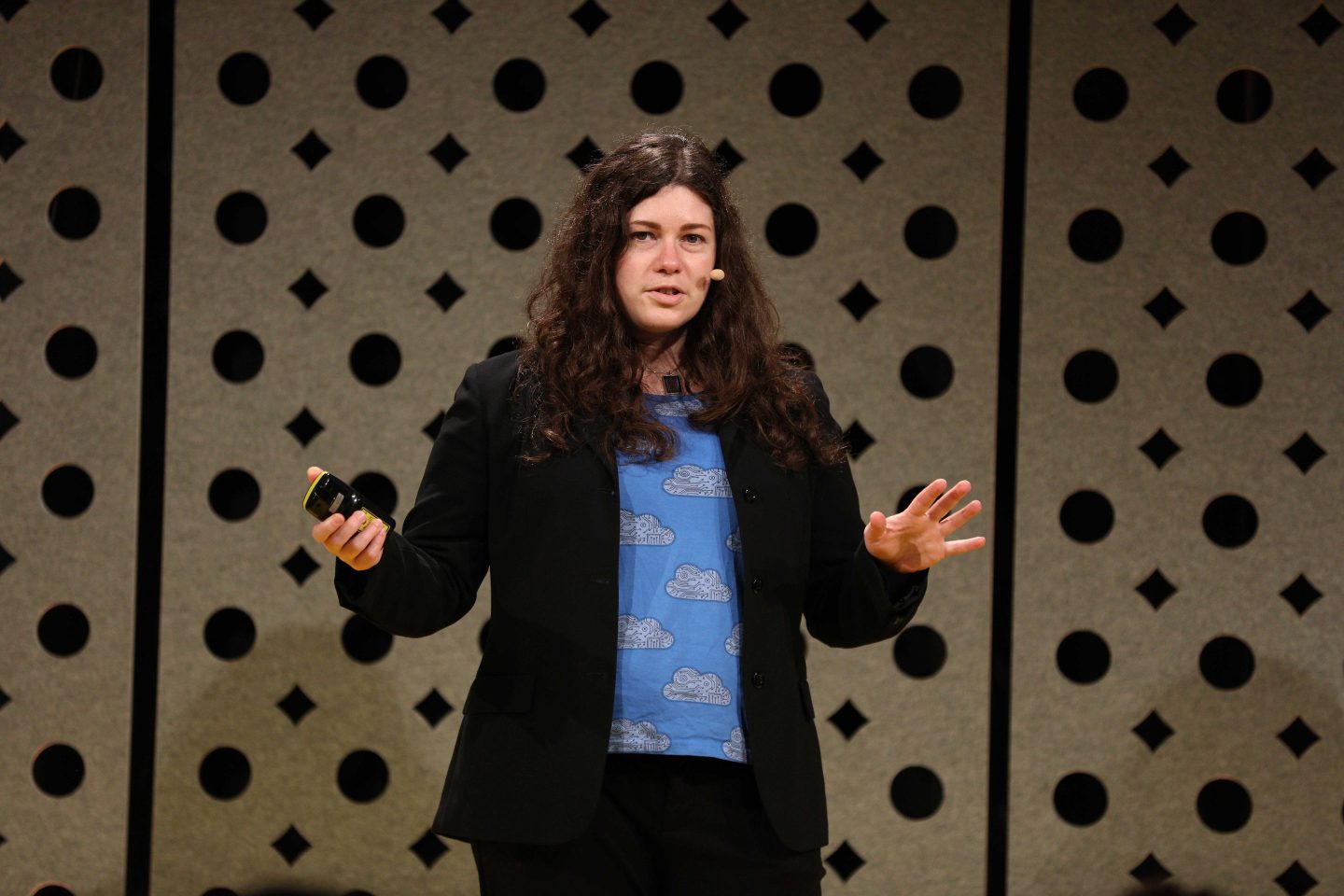
Janelle Shane of AI Weirdness has been an authoritative voice on A.I. for nearly a decade.Phil Walter/Getty Images for NZTE

Years before the rest of us heard about A.I., Janelle Shane was on the case. A scientist with a doctoral degree in engineering, she works for a research company that supplies complex, custom light control systems to organizations like NASA, with applications in the International Space Station, and she’s had a side hustle as an authoritative voice on A.I. for nearly a decade. In 2019 she released a popular book, You Look Like a Thing and I Love You, and gave a widely watched TED talk about the hype and realities of A.I. And since 2016, she’s been keeping a blog called AI Weirdness, and she just came down with a post about how A.I. detection tools shouldn’t be used for anything important, like, not at all.

In a blog post dated June 30, she highlighted an April study from Stanford University showing that A.I.-detection products, which are supposed to spot text written by a language model like ChatGPT, often incorrectly identify A.I.-generated content as being written by a human. They’re also strongly biased against non-native English-speaking writers.

The finding, in brief, is that A.I. detection tools are failing to spot content created by generative A.I., and the flawed technology especially flags and punishes content written by non-native English-speaking writers. In other words, A.I. thinks other A.I. is human, and it thinks humans writing in a language they’re not proficient in are A.I.

“What does this mean?” Shane writes. “Assuming they know of the existence of GPT detectors, a student who uses AI to write or reword their essay is LESS likely to be flagged as a cheater than a student who never used AI at all.” 

Shane’s conclusion was stated in the headline of her blog post: “Don’t use AI detectors for anything important.”

“If you spell it out kind of clearly, it becomes so obvious that these tools have problems,” Shane told Fortune in an interview.

If these problems are intentionally or unintentionally being used to single out individuals, then maybe this isn’t a tool that should exist, she added.

Her post discussed how the study found tools such as Originality.ai, Quill.org, and Sapling GPT, which are used to detect text written by an A.I. language generator, were “misclassifying writing by non-native English speakers” as A.I.-generated between 48% and 76% of the time, compared to 0% to 12% for native English speakers.

In simpler terms, A.I. detectors often label non-native English speakers’ writing as A.I.-written, according to the study. It’s also easy to trick A.I. detectors into thinking content is human-written if the ChatGPT prompt modifies existing language—for example, inputting “elevate the provided text by employing literary language” into ChatGPT, according to the study. 

“We strongly caution against the use of GPT detectors in evaluative or educational settings, particularly when assessing the work of non-native English speakers. The high rate of false positives for non-native English writing samples identified in our study highlights the potential for unjust consequences and the risk of exacerbating existing biases against these individuals,” the authors of the study write.

“In some cases, AI is being used to decide really important things that really strongly affect people’s future, who gets a loan or who gets parole, and when these algorithms are wrong, or when they’re biased and can really hurt people, it can be a reason to not use AI in those applications,” Shane said.

Shane puts the detectors to the test

Shane wrote that she entered a portion of her own book into two detectors. One detector rated Shane’s writing as “very likely to be AI-written” and the other, which was used in the Stanford study with a supposedly 0% false positive rate for native speakers, rated her writing as “moderately likely” to have been written by A.I. The sentence that was found “most likely to be written by a human” described an allegorical sandwich’s ingredients of “jam, ice cubes, and old socks,” Shane writes in the post.

When she prompted ChatGPT to “elevate the following text by employing literary language,” it spits out a bizarre, wordy speech—one full of words like “interlocutor,” “forsaken hosiery,” and “sojourn.” 

The A.I. detection tools give that kind of writing a “likely written entirely by human” rating.

Shane then asks ChatGPT to rewrite her original test as a Dr. Seuss poem and in Old English. How did A.I. detection tools rate the passages? They were rated as “more likely human-written” than the untouched text from her published book.

The responsibility is on people who are marketing these detectors to honestly look into the rate of misidentifying text and at what the consequences of that are, Shane told Fortune.

It’s already an issue in schools, which are likely using cheating prevention measures like these tools. In one known case, AI detection tools punished a student at the University of California, with others likely facing similar undeserved repercussions.

When she posted the blog entry, Shane said it received strong interaction on Tumblr, with more than 5,500 users agreeing with how problematic and frustrating these tools can be. “It was sort of disheartening to see, once I posted a version of that on Tumblr, I got all these re-blogs and comments from people who had their papers flagged and they knew they hadn’t cheated, just to see how widespread the use seems to be and how it’s affecting the students right now,” she said.

Whether or not using ChatGPT is defined as plagiarism, it’s certainly a new field of concern for linguists, professors, and writers alike. Even though there are limitations to these studies, both Shane and the Stanford researchers call for action. 

“Ongoing research into alternative, more sophisticated detection methods, less vulnerable to circumvention strategies, is essential to ensure accurate content identification and fair evaluation of non-native English authors’ contributions to broader discourse,” the authors of the study write.

[This article has been updated to include comments from an interview with Janelle Shane.]

Join us at the Fortune Workplace Innovation Summit May 19–20, 2026, in Atlanta. The next era of workplace innovation is here—and the old playbook is being rewritten. At this exclusive, high-energy event, the world’s most innovative leaders will convene to explore how AI, humanity, and strategy converge to redefine, again, the future of work. Register now.
About the Author
By Stephen Pastis
LinkedIn iconTwitter icon
See full bioRight Arrow Button Icon

Latest in Tech

Finance
Lorem ipsum dolor sit amet, consectetur adipiscing elit, sed do eiusmod tempor incididunt ut labore et dolore magna aliqua. Ut enim ad minim veniam
By Fortune Editors
October 20, 2025
Finance
Lorem ipsum dolor sit amet, consectetur adipiscing elit, sed do eiusmod tempor incididunt ut labore et dolore magna aliqua. Ut enim ad minim veniam
By Fortune Editors
October 20, 2025
Finance
Lorem ipsum dolor sit amet, consectetur adipiscing elit, sed do eiusmod tempor incididunt ut labore et dolore magna aliqua. Ut enim ad minim veniam
By Fortune Editors
October 20, 2025
Finance
Lorem ipsum dolor sit amet, consectetur adipiscing elit, sed do eiusmod tempor incididunt ut labore et dolore magna aliqua. Ut enim ad minim veniam
By Fortune Editors
October 20, 2025
Finance
Lorem ipsum dolor sit amet, consectetur adipiscing elit, sed do eiusmod tempor incididunt ut labore et dolore magna aliqua. Ut enim ad minim veniam
By Fortune Editors
October 20, 2025
Finance
Lorem ipsum dolor sit amet, consectetur adipiscing elit, sed do eiusmod tempor incididunt ut labore et dolore magna aliqua. Ut enim ad minim veniam
By Fortune Editors
October 20, 2025

Most Popular

Finance
Lorem ipsum dolor sit amet, consectetur adipiscing elit, sed do eiusmod tempor incididunt ut labore et dolore magna aliqua. Ut enim ad minim veniam
By Fortune Editors
October 20, 2025
Finance
Lorem ipsum dolor sit amet, consectetur adipiscing elit, sed do eiusmod tempor incididunt ut labore et dolore magna aliqua. Ut enim ad minim veniam
By Fortune Editors
October 20, 2025
Finance
Lorem ipsum dolor sit amet, consectetur adipiscing elit, sed do eiusmod tempor incididunt ut labore et dolore magna aliqua. Ut enim ad minim veniam
By Fortune Editors
October 20, 2025
Finance
Lorem ipsum dolor sit amet, consectetur adipiscing elit, sed do eiusmod tempor incididunt ut labore et dolore magna aliqua. Ut enim ad minim veniam
By Fortune Editors
October 20, 2025
Finance
Lorem ipsum dolor sit amet, consectetur adipiscing elit, sed do eiusmod tempor incididunt ut labore et dolore magna aliqua. Ut enim ad minim veniam
By Fortune Editors
October 20, 2025
Finance
Lorem ipsum dolor sit amet, consectetur adipiscing elit, sed do eiusmod tempor incididunt ut labore et dolore magna aliqua. Ut enim ad minim veniam
By Fortune Editors
October 20, 2025
Fortune Secondary Logo
Rankings
  • 100 Best Companies
  • Fortune 500
  • Global 500
  • Fortune 500 Europe
  • Most Powerful Women
  • Future 50
  • World’s Most Admired Companies
  • See All Rankings
Sections
  • Finance
  • Fortune Crypto
  • Features
  • Leadership
  • Health
  • Commentary
  • Success
  • Retail
  • Mpw
  • Tech
  • Lifestyle
  • CEO Initiative
  • Asia
  • Politics
  • Conferences
  • Europe
  • Newsletters
  • Personal Finance
  • Environment
  • Magazine
  • Education
Customer Support
  • Frequently Asked Questions
  • Customer Service Portal
  • Privacy Policy
  • Terms Of Use
  • Single Issues For Purchase
  • International Print
Commercial Services
  • Advertising
  • Fortune Brand Studio
  • Fortune Analytics
  • Fortune Conferences
  • Business Development
  • Group Subscriptions
About Us
  • About Us
  • Editorial Calendar
  • Press Center
  • Work At Fortune
  • Diversity And Inclusion
  • Terms And Conditions
  • Site Map
  • About Us
  • Editorial Calendar
  • Press Center
  • Work At Fortune
  • Diversity And Inclusion
  • Terms And Conditions
  • Site Map
  • Facebook icon
  • Twitter icon
  • LinkedIn icon
  • Instagram icon
  • Pinterest icon

Latest in Tech

Even Nvidia’s own research teams can’t get enough GPUs amid the race for AI computing power
NewslettersEye on AI
Even Nvidia’s own research teams can’t get enough GPUs amid the race for AI computing power
By Sharon GoldmanApril 9, 2026
7 hours ago
You’re looking at the AI revolution all wrong, top economist says: 40% unemployment and a 3-day work week are the same thing
AIdisruption
You’re looking at the AI revolution all wrong, top economist says: 40% unemployment and a 3-day work week are the same thing
By Nick LichtenbergApril 9, 2026
8 hours ago
Zoom CEO Eric Yuan
Successthe future of work
‘I hate working 5 days’: Zoom CEO says traditional work schedules are becoming obsolete—and predicts a 3-day workweek by 2031
By Preston ForeApril 9, 2026
9 hours ago
Nutella seen aboard the Orion spacecraft Integrity.
RetailFood and drink
Nutella jumps on the best product placement money can’t buy: a trip to the far side of the moon
By Catherina GioinoApril 9, 2026
10 hours ago
kash
Cybersecuritycyber
Trump’s ‘cease-fire’ won’t stop Iranian hackers for long, cyber experts say
By David Klepper and The Associated PressApril 9, 2026
10 hours ago
lego
PoliticsIran
AI-savvy pro-Iran groups troll America with Lego Movie-style propaganda videos mocking American failure
By Sam McNeil and The Associated PressApril 9, 2026
11 hours ago

Most Popular

The U.S. government is spending $88 billion a month in interest on national debt—equal to spending on defense and education combined
Economy
The U.S. government is spending $88 billion a month in interest on national debt—equal to spending on defense and education combined
By Fortune EditorsApril 9, 2026
13 hours ago
2 years ago, Saudi Arabia quietly canceled the ‘petrodollar’ deal with America that wired the world economy for 50 years. Then war broke out in Iran
Energy
2 years ago, Saudi Arabia quietly canceled the ‘petrodollar’ deal with America that wired the world economy for 50 years. Then war broke out in Iran
By Fortune EditorsApril 7, 2026
2 days ago
The U.S. had a national debt ‘home run’ in its grasp, says Jamie Dimon. But the government did nothing, and now its best option is crisis management
Economy
The U.S. had a national debt ‘home run’ in its grasp, says Jamie Dimon. But the government did nothing, and now its best option is crisis management
By Fortune EditorsApril 8, 2026
2 days ago
Self-made billionaire MrBeast says his work-life balance is nonexistent and calls it a ‘miracle’ if he works less than 15-hour days: ‘I live to work’
Success
Self-made billionaire MrBeast says his work-life balance is nonexistent and calls it a ‘miracle’ if he works less than 15-hour days: ‘I live to work’
By Fortune EditorsApril 8, 2026
1 day ago
Gen Z workers are so fearful AI will take their job they’re intentionally sabotaging their company’s AI rollout
AI
Gen Z workers are so fearful AI will take their job they’re intentionally sabotaging their company’s AI rollout
By Fortune EditorsApril 8, 2026
1 day ago
Gen Z doesn't want your full-time job. They want several part-time roles, and it's reshaping the entire workforce
Success
Gen Z doesn't want your full-time job. They want several part-time roles, and it's reshaping the entire workforce
By Fortune EditorsApril 9, 2026
16 hours ago

© 2026 Fortune Media IP Limited. All Rights Reserved. Use of this site constitutes acceptance of our Terms of Use and Privacy Policy | CA Notice at Collection and Privacy Notice | Do Not Sell/Share My Personal Information
FORTUNE is a trademark of Fortune Media IP Limited, registered in the U.S. and other countries. FORTUNE may receive compensation for some links to products and services on this website. Offers may be subject to change without notice.