• Home
  • Latest
  • Fortune 500
  • Finance
  • Tech
  • Leadership
  • Lifestyle
  • Rankings
  • Multimedia
Environmentclimate change

The Supreme Court just gave a massive boost to the dozens of cities suing Big Oil over rising sea levels, 2 law professors say

By
Patrick Parenteau
Patrick Parenteau
,
John Dernbach
John Dernbach
and
The Conversation
The Conversation
Down Arrow Button Icon
By
Patrick Parenteau
Patrick Parenteau
,
John Dernbach
John Dernbach
and
The Conversation
The Conversation
Down Arrow Button Icon
May 23, 2023, 3:50 PM ET
Rising sea levels
Sea levels are rising.Alex Wong—Getty Images

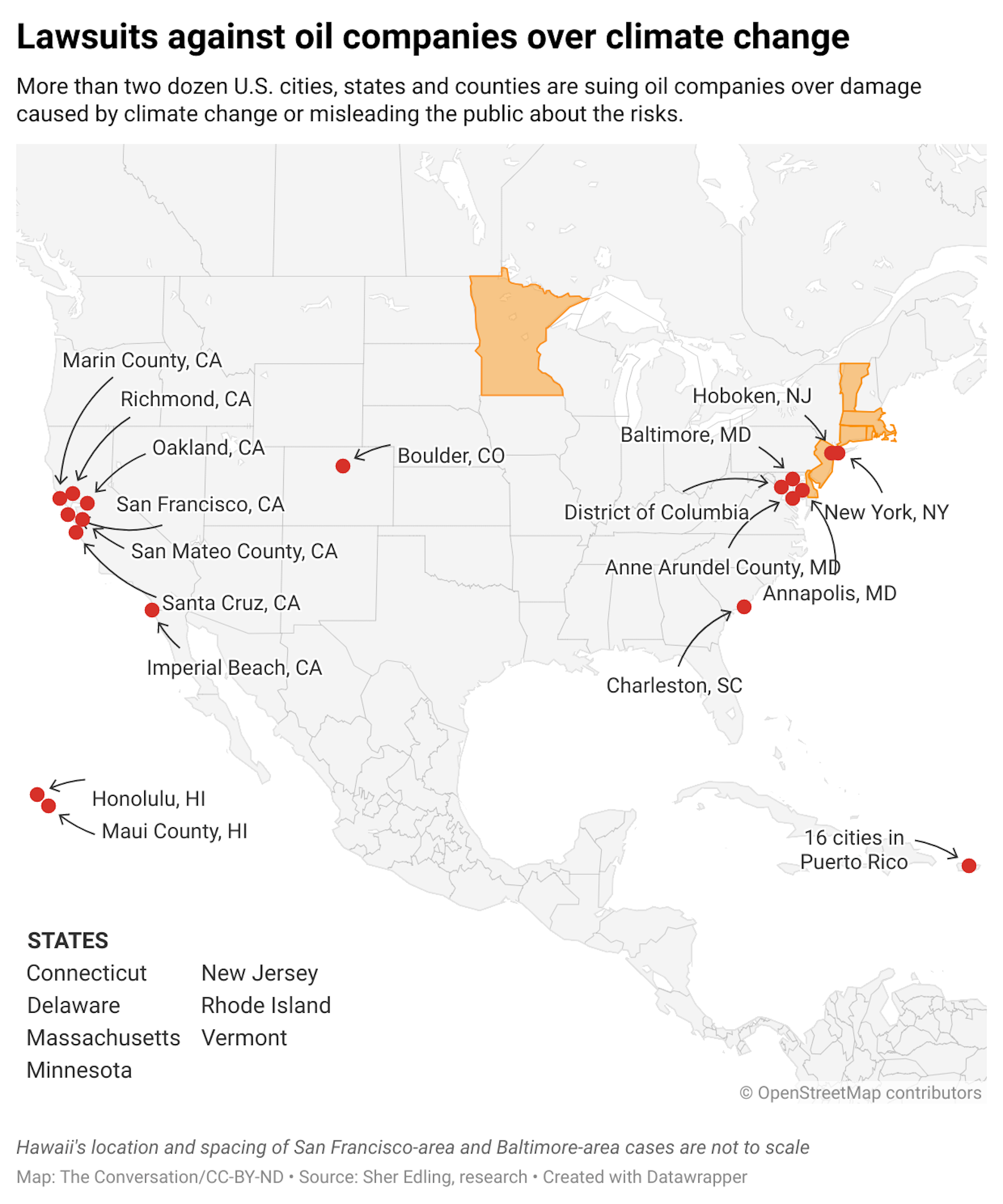
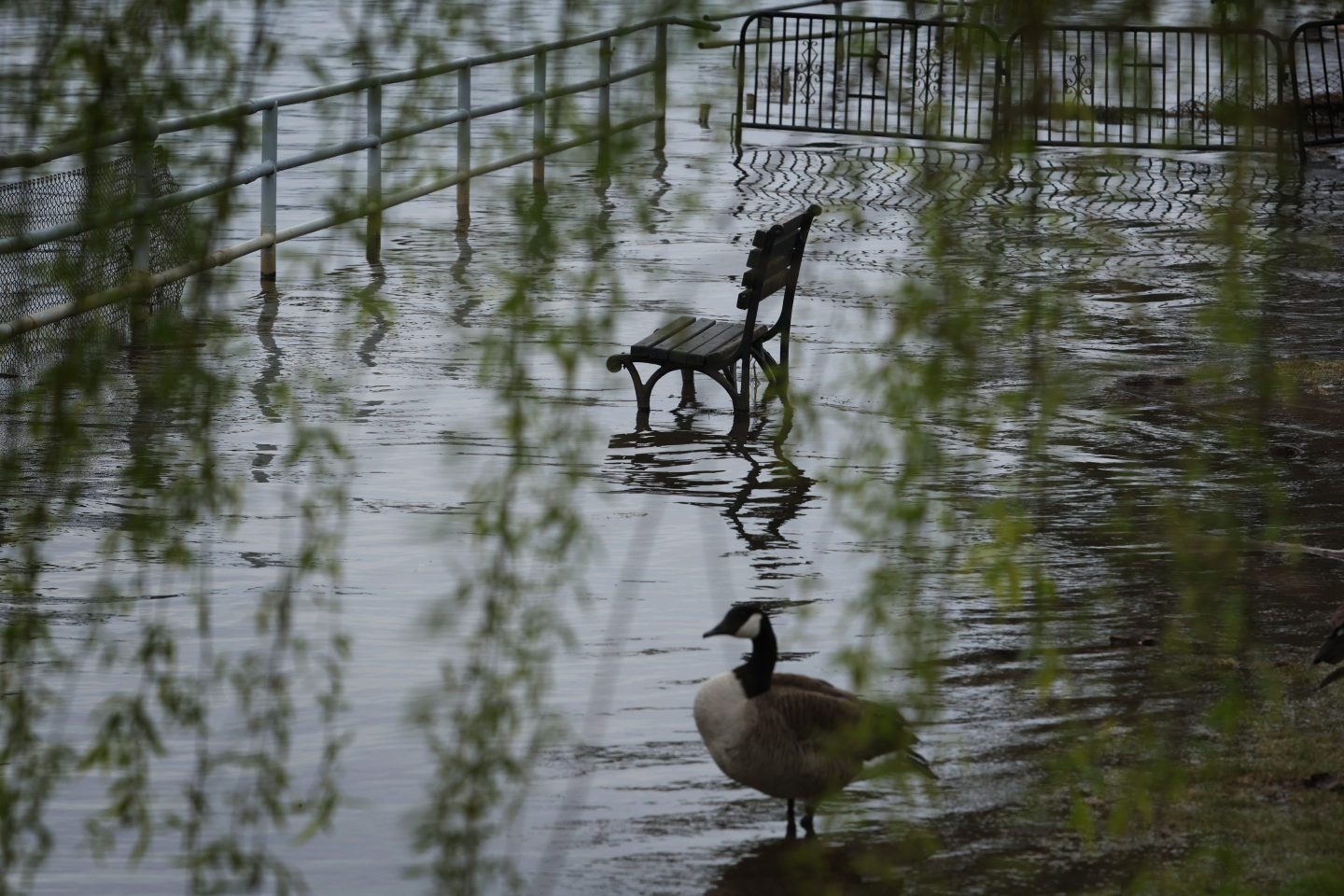
Honolulu has lost more than 5 miles of its famous beaches to sea level rise and storm surges. Sunny-day flooding during high tides makes many city roads impassable, and water mains for the public drinking water system are corroding from saltwater because of sea level rise.

Recommended Video

The damage has left the city and county spending millions of dollars on repairs and infrastructure to try to adapt to the rising risks.

Future costs will almost certainly be higher. More than $19 billion in property value, at today’s dollars, is at risk by 2100 from projected sea level rise, driven by greenhouse gas emissions largely from the burning of fossil fuels. Elsewhere in Honolulu County, which covers all of Oahu, many coastal communities will be cut off or uninhabitable.

Unwilling to have their taxpayers bear the full brunt of these costs, the city and county sued Sunoco LP, Exxon Mobil Corp. and other big oil companies in 2020.

Their case – one of more than two dozen involving U.S. cities, counties and states suing the oil industry over climate change – just got a break from the U.S. Supreme Court. That has significantly increased their odds of succeeding.

Suing over the cost of climate change

At stake in all of these cases is who pays for the staggering cost of a changing climate.

Local and state governments that are suing want to hold the major oil companies responsible for the costs of responding to disasters that scientists are increasingly able to attribute to climate disruption and tie back to the fossil fuel industry. Several of the plaintiffs accuse the companies of lying to the public about their products’ risks in violation of state or local consumer protection laws that prohibit false advertising.

The governments in the Honolulu case allege that the oil companies “are directly responsible” for a substantial rise in carbon dioxide emissions that have been driving climate change. They say the companies should contribute their fair share to defray some of the costs.

The gist of Honolulu’s complaint is that the big oil companies have known for decades that their products cause climate change, yet their public statements continued to sow doubts about what was known, and they failed to warn their customers, investors and the public about the dangers posed by their products.

Were it not for this deception, the lawsuit says, the city and county would not be facing mounting costs of abating the damage from climate change.

Importantly, the complaint is based on state – not federal – law. It alleges that the defendants have violated established common law rules long recognized by the courts involving nuisance, failure to warn and trespass.

The city and county want the companies to help fund climate adaptation measures – everything from building seawalls and raising buildings to buying flood-prone properties and restoring beaches and dunes.

Supreme Court could have killed these cases

Not surprisingly, the oil companies have thrown their vast legal resources into fighting these cases.

On April 24, however, they lost one of their most powerful arguments.

The U.S. Supreme Court declined to hear challenges in the Hawaii case and four others involving the seemingly technical question of which court should hear these cases: state or federal.

The oil companies had “removed” the cases from state court to federal court, arguing that damage lawsuits for climate change go beyond the limits of state law and are governed by federal law.

That theory would have derailed all five cases – because there is no federal common law for greenhouse gases.

The court made that position clear in 2011 in American Electric Power Co. v. Connecticut. Several state and local governments had sued five major power companies for violating the federal common law of interstate nuisance and asked for a court order forcing these companies to reduce their emissions. The Supreme Court refused, holding that the federal Clean Air Act displaced federal common law for these gases.

In Native Village of Kivalina v. Exxon Mobil Corp., a federal court of appeals extended that holding to also bar claims for monetary damages based on federal common law.

To avoid this fate, Honolulu and the other plaintiffs focused on violations of state law, not federal law. Without exception, the federal courts of appeals sided with them and sent the cases back to state court.

What happens next?

The Honolulu case leads the pack at this point.

In 2022, the 1st Circuit Court in Hawaii denied the oil companies’ motion to dismiss the case based on the argument that the Clean Air Act also preempts state common law. This could open the door for discovery to begin sometime this year.

In discovery, senior corporate officers – perhaps including former Exxon Mobil CEO Rex Tillerson, who was secretary of state under Donald Trump – will be required to answer questions under oath about what the companies knew about climate change versus what they disclosed to the public.

Evidence from Exxon documents, described in a recent study by science historians Naomi Oreskes and Geoffrey Supran, shows that the company’s own scientists “knew as much as academic and government scientists knew” about climate change going back decades. But instead of communicating what they knew, “Exxon worked to deny it,” Supran and Oreskes write. The company overemphasized uncertainties and cast doubt on climate models.

This is the kind of evidence that could sway a jury. The standard of proof in a civil case like Honolulu’s is “preponderance of the evidence,” which roughly translates to 51%. Ten of the 12 jurors must agree on a verdict.

Any verdict likely would be appealed, perhaps all the way to the U.S. Supreme Court, and it could be years before the Honolulu case is resolved.

Lawsuits don’t begin to cover the damage

It is unlikely that even substantial verdicts in these cases will come close to covering the full costs of damage from climate change.

According to the National Oceanic and Atmospheric Administration, in 2022 alone the U.S. sustained 18 weather and climate disasters that each exceeded $1 billion in damage. Together, they cost over $165 billion.

But for many of the communities most at risk from these disasters, every penny counts. We believe establishing the oil companies’ responsibility may also discourage further investments in fossil fuel production by banks and brokerage houses already nervous about the financial risks of climate disruption.

Patrick Parenteau is Professor of Law Emeritus, Vermont Law & Graduate School and John Dernbach is Professor of Law, Widener University.

This article is republished from The Conversation under a Creative Commons license. Read the original article.
Join us at the Fortune Workplace Innovation Summit May 19–20, 2026, in Atlanta. The next era of workplace innovation is here—and the old playbook is being rewritten. At this exclusive, high-energy event, the world’s most innovative leaders will convene to explore how AI, humanity, and strategy converge to redefine, again, the future of work. Register now.
About the Authors
By Patrick Parenteau
See full bioRight Arrow Button Icon
By John Dernbach
See full bioRight Arrow Button Icon
By The Conversation
See full bioRight Arrow Button Icon

Latest in Environment

Finance
Lorem ipsum dolor sit amet, consectetur adipiscing elit, sed do eiusmod tempor incididunt ut labore et dolore magna aliqua. Ut enim ad minim veniam
By Fortune Editors
October 20, 2025
Finance
Lorem ipsum dolor sit amet, consectetur adipiscing elit, sed do eiusmod tempor incididunt ut labore et dolore magna aliqua. Ut enim ad minim veniam
By Fortune Editors
October 20, 2025
Finance
Lorem ipsum dolor sit amet, consectetur adipiscing elit, sed do eiusmod tempor incididunt ut labore et dolore magna aliqua. Ut enim ad minim veniam
By Fortune Editors
October 20, 2025
Finance
Lorem ipsum dolor sit amet, consectetur adipiscing elit, sed do eiusmod tempor incididunt ut labore et dolore magna aliqua. Ut enim ad minim veniam
By Fortune Editors
October 20, 2025
Finance
Lorem ipsum dolor sit amet, consectetur adipiscing elit, sed do eiusmod tempor incididunt ut labore et dolore magna aliqua. Ut enim ad minim veniam
By Fortune Editors
October 20, 2025
Finance
Lorem ipsum dolor sit amet, consectetur adipiscing elit, sed do eiusmod tempor incididunt ut labore et dolore magna aliqua. Ut enim ad minim veniam
By Fortune Editors
October 20, 2025

Most Popular

Finance
Lorem ipsum dolor sit amet, consectetur adipiscing elit, sed do eiusmod tempor incididunt ut labore et dolore magna aliqua. Ut enim ad minim veniam
By Fortune Editors
October 20, 2025
Finance
Lorem ipsum dolor sit amet, consectetur adipiscing elit, sed do eiusmod tempor incididunt ut labore et dolore magna aliqua. Ut enim ad minim veniam
By Fortune Editors
October 20, 2025
Finance
Lorem ipsum dolor sit amet, consectetur adipiscing elit, sed do eiusmod tempor incididunt ut labore et dolore magna aliqua. Ut enim ad minim veniam
By Fortune Editors
October 20, 2025
Finance
Lorem ipsum dolor sit amet, consectetur adipiscing elit, sed do eiusmod tempor incididunt ut labore et dolore magna aliqua. Ut enim ad minim veniam
By Fortune Editors
October 20, 2025
Finance
Lorem ipsum dolor sit amet, consectetur adipiscing elit, sed do eiusmod tempor incididunt ut labore et dolore magna aliqua. Ut enim ad minim veniam
By Fortune Editors
October 20, 2025
Finance
Lorem ipsum dolor sit amet, consectetur adipiscing elit, sed do eiusmod tempor incididunt ut labore et dolore magna aliqua. Ut enim ad minim veniam
By Fortune Editors
October 20, 2025
Rankings
  • 100 Best Companies
  • Fortune 500
  • Global 500
  • Fortune 500 Europe
  • Most Powerful Women
  • Future 50
  • World’s Most Admired Companies
  • See All Rankings
Sections
  • Finance
  • Leadership
  • Success
  • Tech
  • Asia
  • Europe
  • Environment
  • Fortune Crypto
  • Health
  • Retail
  • Lifestyle
  • Politics
  • Newsletters
  • Magazine
  • Features
  • Commentary
  • Mpw
  • CEO Initiative
  • Conferences
  • Personal Finance
  • Education
Customer Support
  • Frequently Asked Questions
  • Customer Service Portal
  • Privacy Policy
  • Terms Of Use
  • Single Issues For Purchase
  • International Print
Commercial Services
  • Advertising
  • Fortune Brand Studio
  • Fortune Analytics
  • Fortune Conferences
  • Business Development
About Us
  • About Us
  • Editorial Calendar
  • Press Center
  • Work At Fortune
  • Diversity And Inclusion
  • Terms And Conditions
  • Site Map
  • Facebook icon
  • Twitter icon
  • LinkedIn icon
  • Instagram icon
  • Pinterest icon

Latest in Environment

greenland
EuropeGreenland
Americans have been quietly plundering Greenland for over 100 years, since a Navy officer chipped fragments off the Cape York iron meteorite
By Paul Bierman and The ConversationJanuary 14, 2026
21 hours ago
Greenland
PoliticsGreenland
Greenland’s 1.5 million tons of rare earths might never get mined because there just aren’t any roads to them
By Josh Funk, Suman Naishadham and The Associated PressJanuary 11, 2026
4 days ago
Elicker
LawCrime
New Haven mayor says police chief admitted to stealing money from department, accepts retirement
By The Associated PressJanuary 6, 2026
9 days ago
trump
PoliticsRare Earth Metal
Why Greenland appeals to Trump’s real-estate investor heart: location, location, location
By Danica Kirka and The Associated PressJanuary 6, 2026
9 days ago
data center
AIData centers
Angry town halls nationwide find a new villain: the data center driving up your electricity bill while fueling job-killing AI
By Marc Levy and The Associated PressJanuary 3, 2026
12 days ago
EnvironmentWhite House
‘I want nice, thin blood pouring through my heart'”: Trump talks health concerns, saying he takes more aspirin than recommended
By Michelle L. Price and The Associated PressJanuary 2, 2026
13 days ago

Most Popular

placeholder alt text
Personal Finance
Peter Thiel makes his biggest donation in years to help defeat California’s billionaire wealth tax
By Nick LichtenbergJanuary 14, 2026
1 day ago
placeholder alt text
AI
Being mean to ChatGPT can boost its accuracy, but scientists warn you may regret it
By Marco Quiroz-GutierrezJanuary 13, 2026
2 days ago
placeholder alt text
AI
'Godfather of AI' says the technology will create massive unemployment and send profits soaring — 'that is the capitalist system'
By Jason MaJanuary 12, 2026
3 days ago
placeholder alt text
Success
Despite a $45 million net worth, Big Bang Theory star still works tough, 16-hour days—he repeats one mantra when overwhelmed
By Orianna Rosa RoyleJanuary 15, 2026
9 hours ago
placeholder alt text
Success
Despite his $2.6 billion net worth, MrBeast says he’s having to borrow cash and doesn’t even have enough money in his bank account to buy McDonald’s
By Emma BurleighJanuary 13, 2026
2 days ago
placeholder alt text
Economy
Jamie Dimon warns $38 trillion national debt is going to 'bite': 'You can't just keep borrowing money endlessly'
By Eleanor PringleJanuary 14, 2026
1 day ago

© 2025 Fortune Media IP Limited. All Rights Reserved. Use of this site constitutes acceptance of our Terms of Use and Privacy Policy | CA Notice at Collection and Privacy Notice | Do Not Sell/Share My Personal Information
FORTUNE is a trademark of Fortune Media IP Limited, registered in the U.S. and other countries. FORTUNE may receive compensation for some links to products and services on this website. Offers may be subject to change without notice.