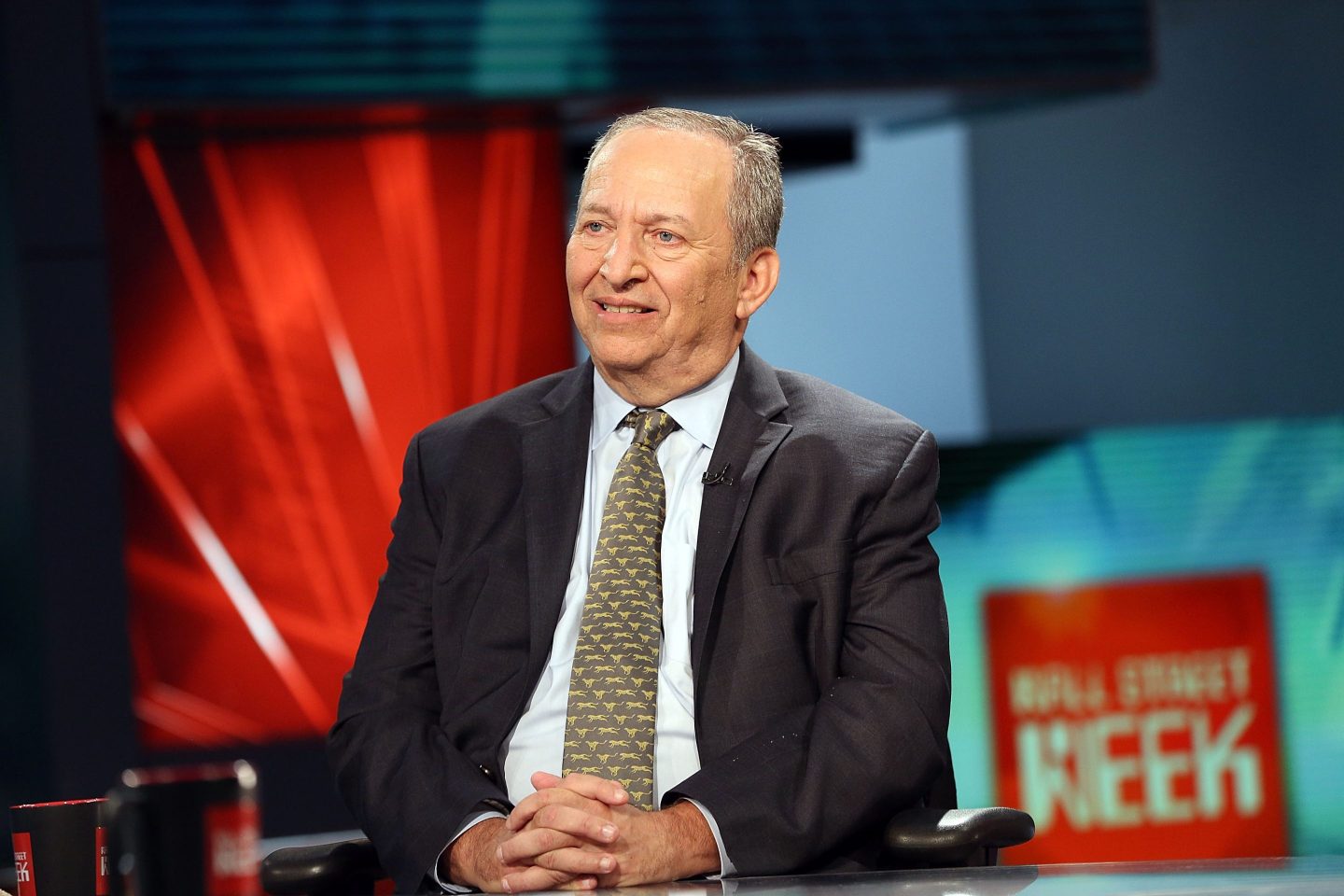
The government’s debt ceiling standoff is a dangerous and needless game akin to walking on a busy street with our eyes closed, while putting Americans’ entire livelihoods at stake, according to former Treasury Secretary Larry Summers.
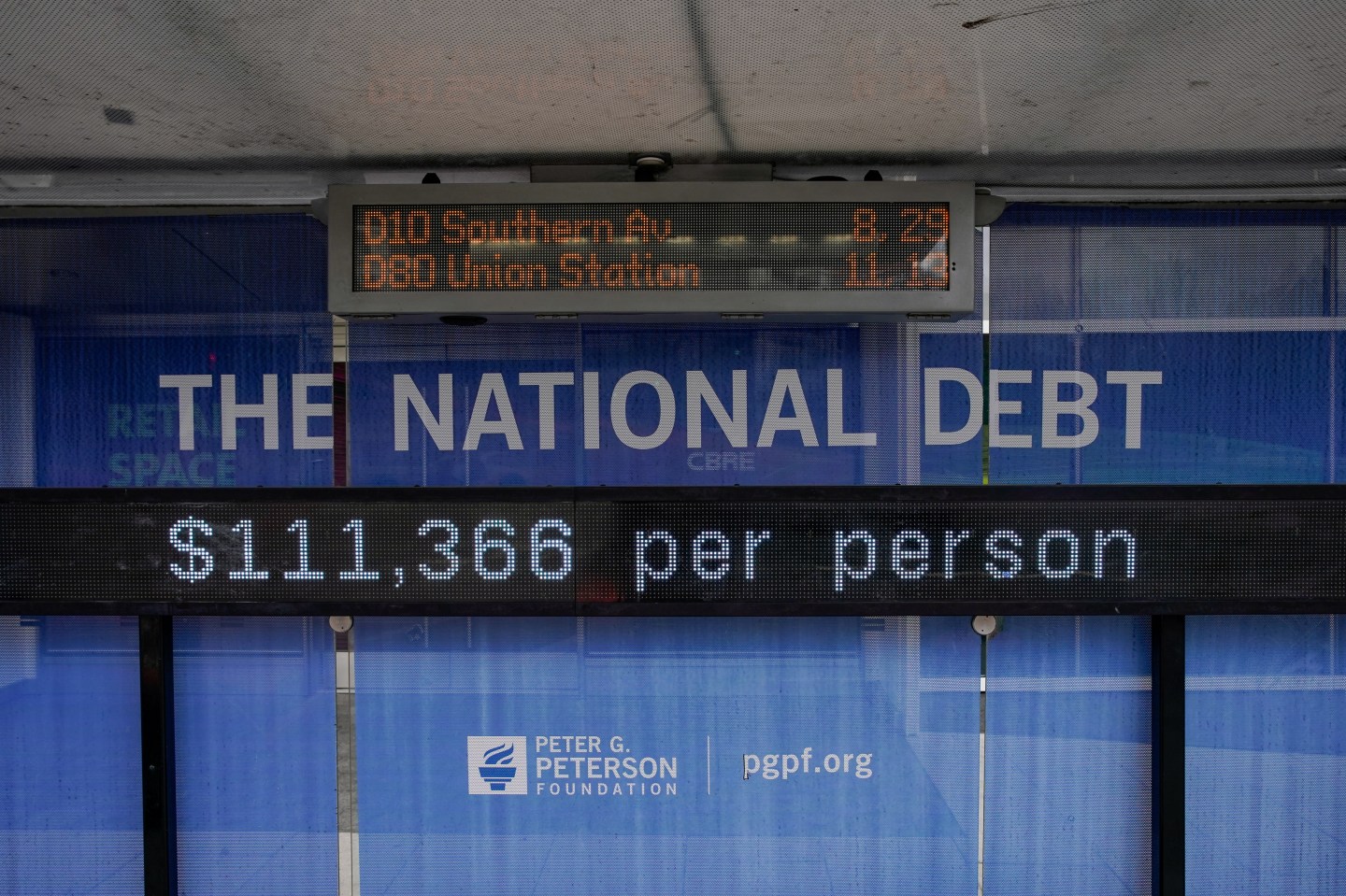
The debate over whether Congress will raise the debt ceiling, which limits how much the U.S. government can borrow to pay its bills, has been dragging on since January, when total national debt hit the current ceiling of $31.4 trillion. The government has been operating on “extraordinary measures” ever since, but those are about to run out, possibly as soon as June 1, after which the U.S. risks defaulting on its debt, imperiling government programs, financial markets, and the dollar’s role in the global economy.
Congressional Republicans argue the U.S. is already over budget and should cut borrowing, although lawmakers have long used the debt ceiling as a tool to achieve policy goals, especially when their party is not in the White House. But for Summers, playing the debt ceiling card this close is a plan with zero upside and far too many risks, as historical precedent suggests waiting until the eleventh hour could deal a major blow to financial markets and the global position of the U.S. economy.
“It’s an experiment, but it’s one of those experiments like taking a wander with your eyes closed in traffic. That might turn out okay if you do it, but why would you try that kind of experiment?” Summers said in an interview with CNN Tuesday evening.
“I just think this is a foolish exercise. I hope it ends as soon as it possibly can,” he continued.
2011 flashback
With the government required to raise its borrowing limit as the economy grows, debt ceiling debates are a long-standing fixture of U.S. politics—despite many calls, including from current Treasury Secretary Janet Yellen, to abolish the 106-year old tradition. The last time it happened was in 2021, although Summers compared the current standoff to a 2011 debt ceiling fight, when Congressional Republicans and the Obama administration raised the limit on July 31, just days before the Treasury estimated its borrowing authority would end. The ceiling was raised in exchange for large spending cuts, although the standoff still resulted in a downgrade for the U.S. credit rating.
“We still have a lower credit rating as a country, because we came close to the debt limit and default in the 2011 period,” Summers said. “We got downgraded and we haven’t been upgraded since.”
But another lasting consequence of the 2011 debt ceiling fight was that the possibility the U.S. might default on its debt dealt a major blow to the stock market, Summers said, a history he’d rather not see repeated.
“During the period when the default was being debated in 2011, the stock market went down by a little more than 15%. Today, that would be in the range of $6 trillion dollars. That’s $20,000 for every American almost, in wealth that at least for a time would be destroyed,” he said.
As the Treasury’s August 2 deadline to avoid risking a default in 2011 neared, U.S. markets were on thin ice. The dollar’s value plunged, financial markets started sliding, and investors threw their money into more stable assets like gold. It was the first time the U.S. had neared a realistic debt default, and tensions were extremely high.
“We could draw parallels and distinctions with other tumultuous times such as the Civil War,” Glen Browder, a former congressman from Alabama, told the New York Times shortly after the agreement became law.
Markets on edge
As the U.S. inches closer to the current debt debate’s deadline, the economy faces several of the same risks. Panic has yet to overtake financial markets, with the S&P 500 actually up 8% since January when the debt ceiling was surpassed, but there are some early signs that investors are moving to safer assets.
Prices for U.S. credit default swaps, which investors use to insure against defaults, are surging, and foreign governments are reducing their holdings of U.S. Treasury bonds, which would rapidly plummet in value in the event of a default. Morgan Stanley’s top strategist Michael Wilson warned this week that U.S. stocks could be in for sharp swings if the debt debate drags on, even though he forecasted that it will eventually be resolved. JPMorgan Chase’s Marco Kolanovic also compared the risk to stocks posed by the current standoff to the 2011 market carnage in a note to clients Monday.
“[I]t would be difficult to avoid at least a modest selloff in risk assets if the debt ceiling issue goes down to the wire as in August 2011,” he wrote.
On Wednesday, President Joe Biden said he was “confident” an agreement would be reached and the U.S. would not default on its debt. Summers said in his CNN interview that there’s a “very high likelihood” the U.S. won’t default on its debt, but added that the ceiling should be raised sooner rather than later as prolonging the debate will likely still have economic consequences.
“The people who say we have real fiscal issues in this country, they’re right. But just because you’ve got some issue with me and you are right about your issue doesn’t mean you get to hold me hostage or kidnap one of my children,” he said.