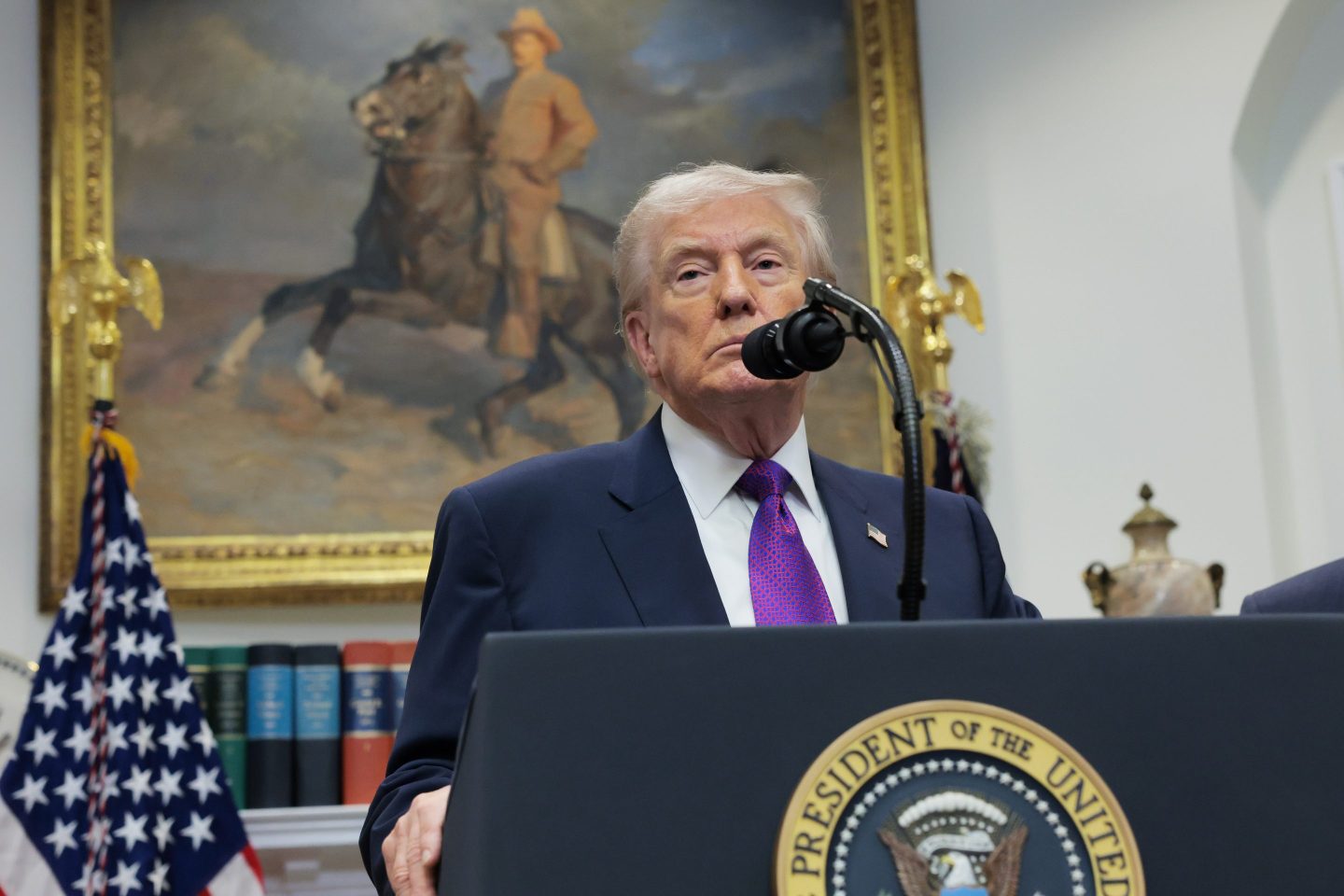
The White House has announced the end of the COVID-19 public health emergency and is disbanding its COVID response team. As we officially move on as a nation, there are lessons to be learned from the pandemic, and 33 of my peers and I lay out many of them in our new comprehensive report, Lessons from the Covid War. This group convened two years ago in the hopes of laying the foundation for a National Covid Commission. With no official inquiry in sight, we decided to publish our findings.
As the title suggests, the report compares fighting a pandemic to fighting a war. Governments may not think of pandemics as a security issue, but a problem that kills millions, costs trillions, crosses borders, and erodes the custodial function of the state is the definition of a security issue. Pandemic preparedness requires the type of investment that affords a wartime readiness posture.
During the upcoming period of “peacetime preparedness,” one issue demands sustained focus: The U.S. must build a pipeline that can deliver the medicine we need when we need it.
Some might ask: “Why? Look at what we did with Operation Warp Speed.” That program was a stunning success. The FDA authorized two vaccines for use in 11 months–a tenth of the average development time for a new vaccine. It was a galvanizing moment when everyone stepped outside of what was expected to do what was required.
Warp Speed harnessed the full power of the federal government. It gave competent leaders an enormous budget, political cover, and interagency authority. It committed to parallel procurement at risk and supported clinical trials, manufacturing, supply chains, and distribution to get vaccines across the finish line. Warp Speed demonstrated what government can do, but it was time-limited and COVID-specific. It is important to learn the right lessons going forward.
We cannot assume that a warp speed-like program will work again in the same way with a different pathogen.
Crash programs can apply new science, but they do not generate it. The U.S. became a front runner in the global race for a vaccine in no small part due to robust public support for science, which is a legacy of Vannevar Bush, the director of scientific research and development during the Second World War, and his vision for postwar America. In 2020, pharmaceutical companies such as Pfizer and Moderna reaped the reward of years of coronavirus research, mRNA delivery platforms, and protein stabilization techniques. Absent these scientific advances, Warp Speed would not have been able to achieve such a rapid delivery date.
The U.S. must continue to invest in basic virology, immunology, and vaccinology for pathogens with pandemic potential. This is the thrust of Biden’s $5 billion Next Gen initiative to develop more durable and variant-proof vaccines and therapeutics. This plan is necessary but insufficient because it is specific to COVID.
The U.S. must invest in a portfolio for a range of pathogens with pandemic potential
Given the breadth of pathogens of concern, the U.S. should coordinate portfolios with other countries and non-government vaccine accelerators, such as the Coalition for Epidemic Preparedness Innovations (CEPI). These portfolios should invest in research tools and manufacturing platforms as well.
The U.S. must establish robust incentives
Push incentives (like grants) can advance projects when there is not enough demand. Pull incentives (like advance purchase agreements) ensure that new medicines cross the finish line and are produced at the speed and scale required.
The U.S. can increase the power of these tools by joining forces with other countries, increasing our collective leverage, and shaping the market for public goods. Multilateral procurement mechanisms such as COVAX had mixed success in this pandemic, but these mechanisms may be a powerful tool in the future. COVAX was created during the pandemic, so it was still waiting on funds while high-income countries were already negotiating bilateral deals and locking up limited supply. Looking ahead, public funders can leverage advance purchases to maximize the social value of their investments by improving speed, scale, and access.
The federal government cannot develop new medicines and diagnostics without the private sector
The government needs to consider public health outcomes prior to negotiating optimal terms with the industry. These agreements must motivate the best partners and ensure access to life-saving countermeasures. To accomplish this, the federal government can make better use of multiyear contracts that are more compatible with private sector research and development investment strategies, emergency pivot clauses to maintain war footing, and access clauses to facilitate scaling in emergencies.
The U.S. must operationalize the development and use of new medicines
It is not enough to stockpile medicines “just in case.” The military does not build fighter jets just to store them in hangars. It trains pilots to fly them regularly and at great expense.
The challenge for medical countermeasures is even greater since developers must also learn how to build and test these new “jets” in real time. Exercises inform efforts to build a battle-ready workforce and industrial base. They also inform and improve the design of next-generation “jets.”
Federal executives must maintain an integrated command structure that can reach across departments to turn the gears of government
Multiple agencies each own a part of the problem, but no one agency is accountable for solving the whole problem. Warp Speed provided a temporary fix to the coordination problem, but this was reactive, time-limited, and vaccine-specific. It was characteristic of our traditional ad hoc approach to health emergencies, which has bred a counterproductive cycle of panic and neglect.
The US needs to establish a national health security enterprise. This enterprise will require stable appropriations and operational leadership from a new undersecretary for health security in a government department such as Health and Human Services.
The U.S. must prepare for the next pandemic as if it is really coming. Because it is.
Kendall Hoyt is Dartmouth Dickey Center’s faculty director, an assistant professor at the Geisel School of Medicine, and a senior lecturer for the Thayer School of Engineering.
The opinions expressed in Fortune.com commentary pieces are solely the views of their authors and do not necessarily reflect the opinions and beliefs of Fortune.
More must-read commentary published by Fortune:
- IBM CEO: ‘Today’s workforce should prepare to work hand in hand with A.I.’
- Is it smart to be a ‘stupid genius’ like Elon Musk?
- Why there will be no winners in the never-ending war between Disney and DeSantis
- America’s ‘disease burden’ is getting heavier by the day–and it’s unevenly distributed across states