Companies have an easy way to boost their financial performance: Hire the best employees at all levels of the company, invest in them, and retain them.
It sounds easy. But more than 51% of the Russell 1000 are not paying their employees a living wage. Why not? Because companies are pressured to reduce costs in order to return more money to shareholders and labor is the biggest “cost” for most companies. Unfortunately, this approach may actually depress returns to shareholders in the medium and long term.
Our research has found that we are not using decision-useful metrics when it comes to corporate employees in the U.S., which means we are not properly assessing human capital’s role in corporate financial performance. Neither our accounting methods nor our reporting metrics are up to the task. Current financial accounting assesses investments in employees as labor costs (despite those investments potentially leading to higher productivity and retention). Those costs are not detailed on financial statements in the U.S. (and only about 15% of firms disclose them), even though employee-related spending is responsible for typically more than half of a company’s operating costs.
In addition, current ESG reporting metrics do not capture what is needed to measure human capital, such as the share of employees making a living wage, cost of turnover, or value of benefits. Even when relevant metrics are encouraged by standard setters such as the Sustainable Standards Accounting Board, they are generally not reported. In our review of current “S” data, we find very limited jobs-related reporting (except for executive compensation). Yet, investors, regulators, and the managers themselves rely on that incomplete data to make decisions that have a significant impact on employees, society, and the bottom line.
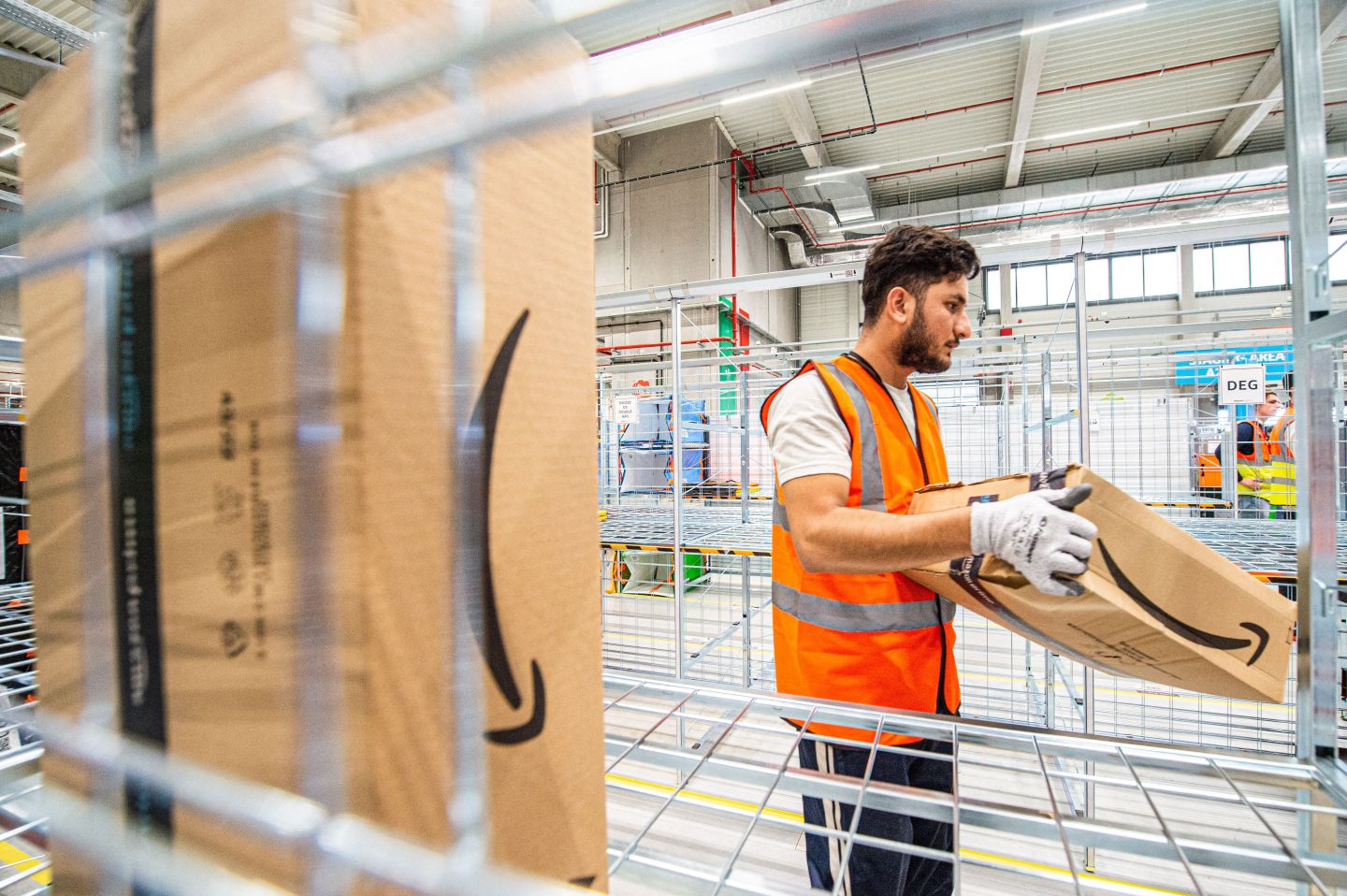
Amazon is a case in point. Leaked internal documents reportedly found regretted attrition (people leaving whom Amazon did not want to leave) of 69.5% to a high of 81.3% across all 10 levels of employees, with a cost to Amazon of $8 billion, or about 25% of its total annual profit.
Amazon declined to confirm or deny any of the specific claims or figures made in the documents and said it was doing its best to be the employer of choice. But clearly, there is significant employee dissatisfaction with Amazon, with a material financial impact. Yet, Amazon is highly ranked by ESG rating providers (Refinitiv gives Amazon an A for the “S”) as well as by LinkedIn (listed as one of the top three companies to work for) and the American Opportunity Index (listed in the top 50 for career growth). Why did Refinitiv give Amazon an A in social metrics for the last four years? HR policy disclosures, gender pay gap, and diversity metrics are outstanding, and the rest (e.g. living wage, benefits, inclusion, career development) is not requested or reported. Refinitiv did give Amazon a D- for the last four years on its separate ESG controversies score–seemingly driven by third-party reports on employee-related issues, which is not integrated into the A score for social metrics as above. Notably, turnover was not reported even though investors (according to the ISSB) might find it material. Interestingly, Amazon recently announced $1 billion in salary increases for hourly workers.
Better disclosure and reporting alone, while useful, will not necessarily drive better performance. Companies are disclosing CEO/median worker pay multiples and that disclosure has not changed the upward trajectory of CEO pay. To be helpful, human capital metrics must tie back to financial metrics in reporting, accounting, and corporate management practice. How much does an involuntary turnover rate of more than 100% (the lower end of turnover in retail and fast food) cost a company? How much do lower productivity and higher theft from dissatisfied contingent workers affect the bottom line? How much does a company’s poor workplace reputation affect customer loyalty and purchasing? How much does a company’s best-in-class treatment of its workers positively affect its valuation?
The quick-service restaurant industry has the highest turnover rate of any industry–144% in 2021. Domino’s lists labor shortages as a major risk in its 10K filing with the SEC, citing increased turnover, but does not disclose their actual turnover rate or the turnover amongst the franchise operations. In-store workers and delivery workers make $6-10 on average.
Because the actual data is not available, we are working with gross numbers here and they should be seen as directional. But clearly, this is financially material and problematic that it is not tracked or reported for the company and its shareholders. Cornell University has estimated that employee turnover in the restaurant industry costs approximately $5,864 per person. Domino’s pegged the cost at $2,500 per hourly worker and 20,000 per manager back in 2005. The Domino’s franchise system employs 350,000 in total. If they have turnover of 144%, they would have to hire approximately 525,000 people annually at a cost of $2,500-6,000 each for a total of approximately $1-3 billion annually against total revenue in 2021 of approximately $4.5 billion.
Based on this research, we have a few suggestions for corporate leaders and investors. As a fundamental principle, we should invest in retention as much or more than recruitment. Robust training, supportive managers, fair wages and benefits, work-life balance, corporate purpose, and equity should be prioritized. Taking a more holistic approach to assess the returns on employee investments and educating investors and other stakeholders about the benefits of better human capital management for a company’s financial returns will be critical.
Investors should understand the shortcomings of current job reporting and accounting and request that corporate leaders follow best practices in human capital management and publicly disclose regretted and unregretted turnover, as well as the percentage of workers who are paid a living wage and above, at a minimum.
Ulrich Atz is a research fellow at the NYU Stern Center for Sustainable Business. Tensie Whelan is a clinical professor and founding director of the NYU Stern Center for Sustainable Business.
The opinions expressed in Fortune.com commentary pieces are solely the views of their authors and do not necessarily reflect the opinions and beliefs of Fortune.
More must-read commentary published by Fortune:
- IBM CEO: ‘Today’s workforce should prepare to work hand in hand with A.I.’
- Is it smart to be a ‘stupid genius’ like Elon Musk?
- Credit scoring is pseudoscience–and it perpetuates the consequences of slavery and segregation
- America’s ‘disease burden’ is getting heavier by the day–and it’s unevenly distributed across states