The software company Autodesk, which makes management and rendering tools for designers, builders, and engineers, has long been a fixture among professionals who plan cities, construct high-rises, and build airports and train stations. As remote work upends commercial real estate, forcing developers and employers alike to reinvent the office space, it has boosted demand for the company’s products, including design tools for 2D and 3D digital models and renderings.
The prevalence of remote work has led many real estate developers in megalopolises like New York City, where office vacancy rates are at all-time highs, to retool their buildings. Some are making office real estate partly residential, while others are updating properties to compete with newer office buildings and their modern amenities.
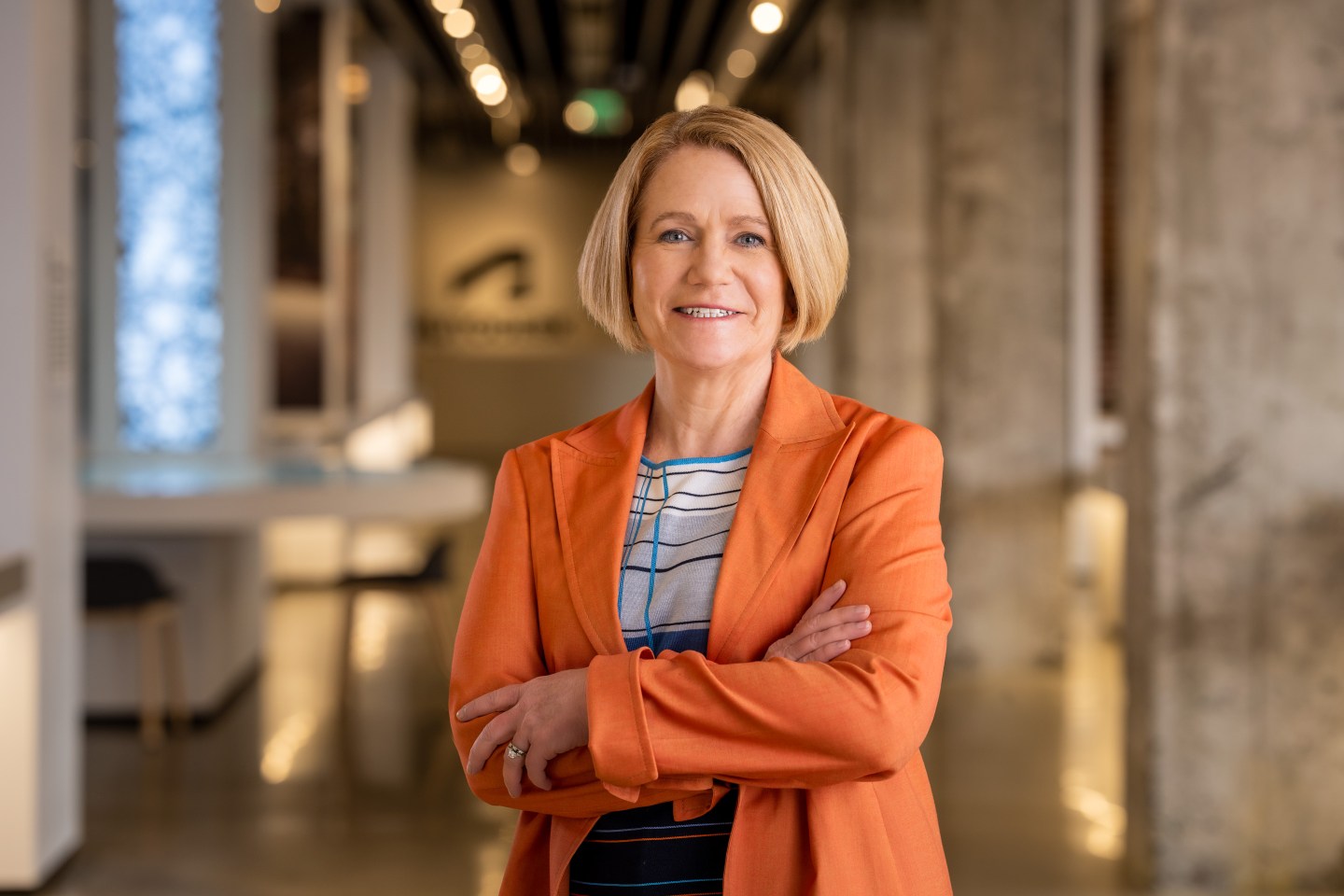
“There’s a lot of empty office space out there, and people are trying to figure out which of these buildings are suitable to maybe renovate into apartments or condominiums because the world needs more housing,” says Amy Bunszel, who, as executive vice president of Autodesk’s architecture, engineering, and construction design product, oversees its largest division. Clients use Autodesk software to simulate airflow for new air systems, determine how many apartments an office building can accommodate and the layout, or optimize water use in an effort to hit sustainability goals. Over the past year, Bunszel’s more than $2-billion-plus-a-year unit has seen the business grow by 16%.
The government is also an Autodesk client, using its software to track and prioritize public infrastructure and maintenance projects to avoid problems like sinkholes. “Part of why we have such crumbling, aging infrastructure is that planning and recordkeeping are not very digital,” Bunszel says.
This interview has been edited and condensed for clarity.
Fortune:What will Autodesk’s biggest business drivers be for the next few years?
Bunszel: Population growth, with the doubling of the size of our cities, doesn’t just mean more housing. It means all the infrastructure to get people to and from where they need to go. It means all the furniture and appliances that must go into the buildings. Another piece is our aging infrastructure. Climate change will drive many projects to rehabilitate, repair, and retrofit much of what already exists in the world. To wrap your head around this, we need twice as much housing capacityas we already have in cities to support all these additional people. My hope is we can get more affordability in our cities.
Let’s dig into this a bit more. How does climate change affect the Autodesk software used by architects and planners?
We’re trying to build capability into our software so customers can create more sustainable buildings and infrastructure, such as reducing the construction’s carbon footprint and running the building—heating, lighting, and so on. Forty percent of global emissions come from buildings. Water is another area. Some 8 trillion gallons of water are lost yearly to aging infrastructure leakage. Our customers are asking how to modernize, retrofit, and extend capacity. How do they proactively go in and fix it?
How does government involvement in such projects help your business?
We have such crumbling, aging infrastructure because planning and recordkeeping are not very digital. The ability to maintain, update, and track work and spending has been complicated, so [project managers]don’t have the good decision tools they need. Part of what’s happening under the Inflation Reduction Act is that to get some of the government money, you need to prove that you’re modernizing your practices, whether it’s a water facility, a train station, or whatever. We need to digitize things and use tools such as computer versions of physical assets, and Autodesk does that.
You were an entrepreneur and sold your company to the much bigger Autodesk in 2003. Is there still an entrepreneur in you?
There is an entrepreneur in me still, but I like scale, and I love the impact we can have on the world with all our proven products. So I don’t want to go back to figuring out if we have a good idea internally and how we incubate it and innovate. In my current role, I get to buy companies, and integrating them and figuring out how to merge cultures to create something bigger than the sum of its parts interests me.
How did working for a startup help you advance in the tech world?
One thing about being at a small startup was that everybody had to do everything. So there was just chaos, and it wasn’t about fighting for good assignments. The CEO was also generous with giving really useful feedback. That’s a big part of my career story: If you’re not getting feedback, ask for it. Ask someone else, a colleague, if your manager or supervisor isn’t capable of giving you feedback because it is so important. It’s also important for a manager to know how to give feedback.
To be a high-level executive in tech, you need to have right- and left-brain skills. How did you get the soft skills needed to complement your technical expertise?
I’ve always been extroverted, so I get energy from others. Earlier in my career, I would put my head down to work but also come up for air and engage with people. Another thing I did early in my career was volunteer for a nonprofit where even if I was fairly young, I could have leadership roles in a safe place to try out a bunch of things. At my sorority in college, I taught people how to run meetings, give feedback, and do things as a leader.
Is remote work making it harder to mentor people and give them coaching?
You definitely have to think about it differently because you’re not necessarily going to be in a room with people and won’t be able to pull someone aside and say, “That was great, but next time, think about doing this, this, this.” Feedback is harder, but as a manager, you can train yourself to still do that on Slack or Zoom. All these things are possible, but you have to build a new muscle.
Get to know Bunszel:
- She has completed over 1,600 Peloton rides, earning her gold status. Her favorite instructors are Emma Lovewell and Christine D’Ercole.
- Bunszel once owned two Cold Stone Creamery franchises.
- She holds a master’s degree in electrical engineering from the University of Massachusetts, Amherst.