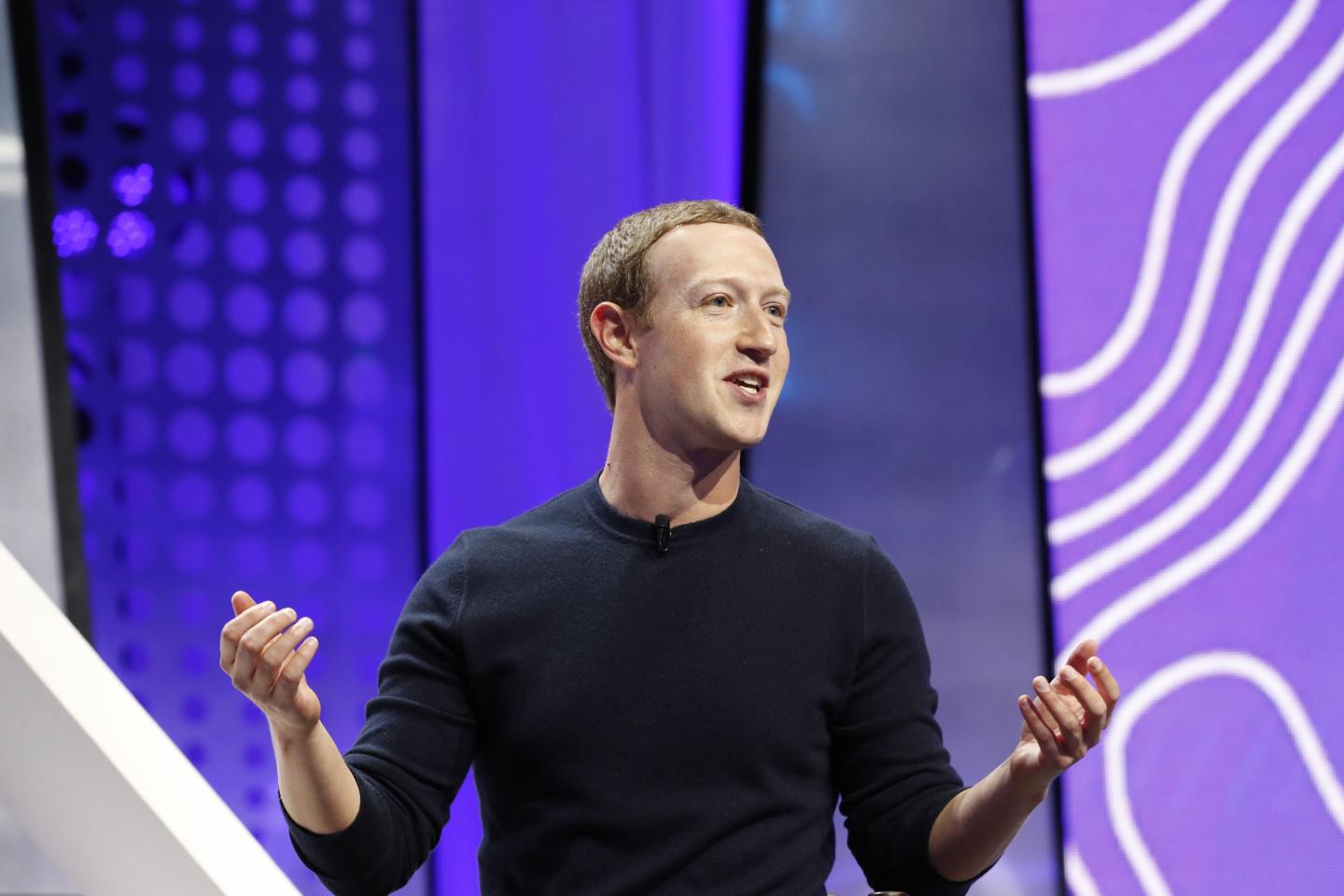
It’s now four years since venture capitalist Hemant Taneja took to the pages of the Harvard Business Review to declare an end to the “move fast and break things” era. The phrase had been Facebook’s mantra during its startup years, but the company abandoned it in 2014, with CEO Mark Zuckerberg saying a shift to a “move fast with stable infrastructure” attitude had become more appropriate.
Zuckerberg’s words were somewhat belied by the subsequent Cambridge Analytica scandal, but in the wake of that omnishambles—and the 2017 downfall of aggressive Uber CEO Travis Kalanick—it did seem like tech’s high-fliers had reached cruising altitude and it was safe for everyone to unfasten their seat belts. “Investing in responsible innovation not only benefits society, it protects the viability of technological progress in a democratic system,” wrote Taneja.
Well, buckle up again, because we’re entering a new era of Big Tech recklessness.
Elon Musk isn’t entirely to blame, but—chronologically at least—he started it with his wild steering of Twitter after buying it late last year. His abrupt mass layoffs at the company may not yet have resulted in Twitter’s structural integrity crumbling, which some had predicted, but they quickly compromised user safety by allowing an explosion of hate speech on the platform. Meanwhile, Musk’s new paid user verification scheme for Twitter was a gift to merchants of disinformation. He’s also making it harder for users to maintain their security unless they subscribe to Twitter Blue, which is only available in 15 countries.
This was chaos born of desperation, which in turn stemmed from the fact that Musk’s massive overpayment for Twitter left the company saddled with $13 billion of debt.
Meta also finds itself needing to “move fast”—Zuckerberg reintroduced that half of the motto a year back—for financial reasons. The unit responsible for the company’s metaverse project, on which Zuckerberg has bet the farm, lost more than $13 billion last year. Meta’s advertising cash cow has also been massively diminished by Apple and the EU giving users the power to easily reject the lucrative tracking of their online behavior. (There’s a non-negligible chance that Meta will be forced to yank Facebook and Instagram from the EU entirely in the near future.)
And so, this past weekend, we saw Zuckerberg follow in Musk’s footsteps by introducing paid user verification to Facebook and Instagram. This appears to be a slightly more sensible version of the idea, in which a government-issued ID is required to verify a user’s identity, but it still means less-well-off users will become second-class citizens on the platforms.
Then we have the burgeoning A.I. arms race, in which Microsoft has stirred memories of its infamous Tay debacle by unleashing a ChatGPT-equipped version of Bing that compares users to Hitler and tells them to leave their wives. Google scrambled so hard to see off the ChatGPT threat that it made a public demonstration of its Bard alternative in which the chatbot made factual errors, whacking Alphabet’s stock in the process. (It later turned out that Microsoft’s chatty Bing demo also spewed out inaccurate information.)
These particular breakages can be undone, and—while they come with severe reputational risk—they were perhaps to be expected. To evolve, these A.I.s will need to engage with real people, and that will be messy and at times dangerous. Time will tell whether the benefits outweigh the risks. But either way, Big Tech has left an era of relative tranquility that could prove to have been an anomaly.
Want to send thoughts or suggestions to Data Sheet? Drop me a line here.
David Meyer
Data Sheet’s daily news section was written and curated by Andrea Guzman.
NEWSWORTHY
Will Big Tech keep enjoying its protections? Supreme Court justices are hearing arguments for Gonzalez v. Google today. The case challenges Section 230 of the Communications Decency Act, a law that grants internet platforms immunity for most third-party content posted on their websites. The plaintiffs say Google’s algorithmic content recommendations boosted extremist messaging in the lead-up to a terrorist attack, and that Google is legally liable for the extremist videos. A ruling is expected in June.
Layoffs determined by A.I. The vast majority of 300 human resource leaders at U.S. companies surveyed last month said layoff decisions this year will be made with the help of software and algorithms. Only half of those leaders are confident that the tech will make unbiased recommendations. That’s because companies with a history of discrimination could have seen people of color quit at higher rates. Without accounting for that, HR algorithms might classify non-white workers as a higher flight risk and advise them to be cut, the Washington Post reports.
A new low for VC funding. VC firms raised $20.6 billion in new funds in the fourth quarter, an amount that is less than half of what was raised in the three months before that. But it’s more than just a quarter-to-quarter drop. Economic pressures have been weighing on investors with the greatest force in nearly a decade given that venture firms haven’t raised this low of an amount in the fourth quarter since 2013, data from Preqin reveals.
FOOD FOR THOUGHT
Maybe you can quit your day job. Eric Sedeño has used TikTok brand deals as his primary source of income since quitting his full-time job as an art director at an advertising agency last year. The switch came when he was tasked with coming up with campaigns for a bank, an assignment that made him realize it just wasn’t a good fit for him. Now, with 840,000 followers and more than 84 million video likes, the 26-year-old is focused on making content about the things he cares about like being with his friends, tie-dyeing clothing, and making jokes.
From the article:
Though he declined to share exact numbers, he says he makes more money than he made at the ad firm. He also gets more freedom to pursue other interests—he and his brother launched a line of candles that donates meals to a food pantry with every purchase—and work on his own art.
IN CASE YOU MISSED IT
Tesla cofounder ousted by Musk calls autonomous driving feature ‘crap’ and ‘way too immature’ for the road, by Steve Mollman
For $1,400, these A.I.-powered shoes will make you walk 2.5 times faster, by Andrea Guzman
OpenAI CEO Sam Altman frets over ‘potentially scary’ A.I. tools and how ‘people of the future will view us,’ by Steve Mollman
‘I can’t answer that’: Chatbot ChatGPT is supposed to stick to the script when it comes to ‘tricky topics’ like hate, violence, and sex, by Verne Kopytoff
Chinese app that lets you ‘shop like a billionaire’ is now the most downloaded in the U.S. after its Super Bowl debut, surpassing Amazon and Walmart, by Eleanor Pringle
YouTube’s new crypto-friendly CEO sees ‘incredible potential’ for Blockchain and NFT tech to boost viewership and reward influencers, by Christiaan Hetzner
Amazon CEO Andy Jassy calls for a return to office: ‘Collaborating and inventing is easier and more effective when we’re in person,’ by Chloe Berger
BEFORE YOU GO
The real quantum realm. Moviegoers headed to theaters in droves this weekend to catch Ant-Man and the Wasp: Quantumania. You won’t get sucked into a “Quantum Realm” with vast worlds like the one portrayed by Marvel, but quantum technology is changing how we travel and problem-solve. For example, it’s used for GPS systems and helping clocks tick. One type of quantum sensor has huge health care potential since it can use the way imperfections in diamonds emit light to image magnetic fields, which is nontoxic to living systems and can therefore accomplish work like detecting malaria-infected red blood cells to help stop the disease in its tracks. And in 2019, a Google quantum computer took just 200 seconds to complete a theoretical task that Google estimated could take the fastest “classical” supercomputer 10,000 years.
This is the web version of Data Sheet, a daily newsletter on the business of tech. Sign up to get it delivered free to your inbox.