
• Home
  • Latest
  • Fortune 500
  • Finance
  • Tech
  • Leadership
  • Lifestyle
  • Rankings
  • Multimedia
Successremote work

Marc Andreessen says remote work has ‘detonated’ the way we connect and it’s young professionals who will suffer the most

Steve Mollman
By
Steve Mollman
Steve Mollman
Contributors Editor
Down Arrow Button Icon
Steve Mollman
By
Steve Mollman
Steve Mollman
Contributors Editor
Down Arrow Button Icon
February 11, 2023, 7:00 AM ET
Marc Andreessen, co-founder and general partner of Andreessen Horowitz,
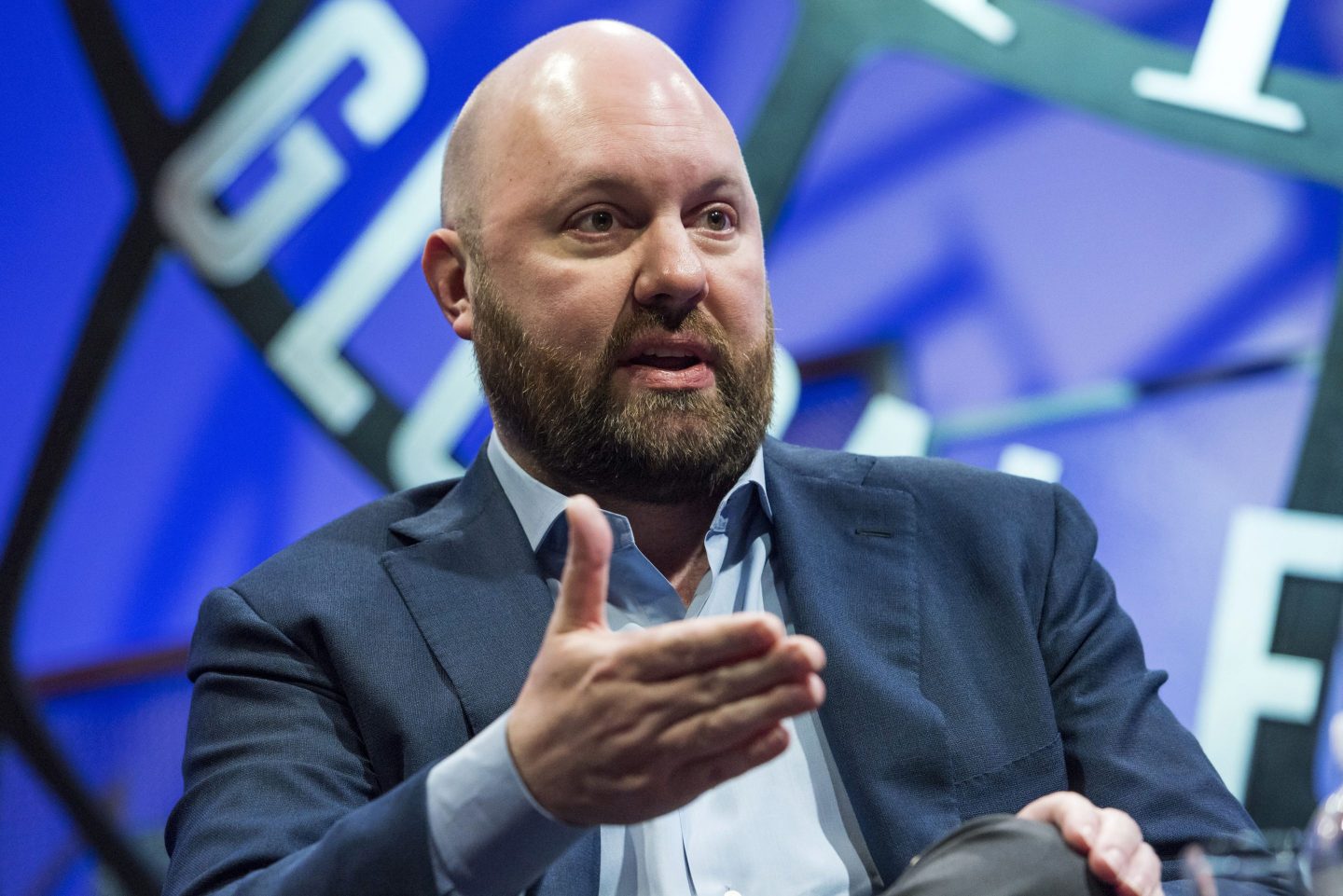
Marc Andreessen sees a remote-work problem for young adults.David Paul Morris—Bloomberg/Getty Images

Remote work looks like it’s here to stay. Whether that’s good for young professionals in the long run is up for debate.  

More companies are indeed demanding workers return to the office. But even RTO orders from big-name CEOs are often just for three days a week; meanwhile, many corporate offices are downsizing, and it’s increasingly common for remote workers to be hired and eventually let go having hardly met anyone in the company face to face.

Yet in American culture, the workplace has long been important as the primary place where young adults in particular form both personal and professional relationships affecting all aspects of their lives. What happens to that dynamic when more work is done at home and less of it—or none at all—is done at office where people can meet?

As far as high-profile venture capitalist Marc Andreessen is concerned, trouble lies ahead. The Andreessen Horowitz cofounder spoke at length about the social upheaval caused by the shift to remote work at the “American Dynamism Summit” in Washington, D.C., hosted by Andreessen Horowitz in November. This week, the firm shared recordings from that summit on its a16z Podcast. 

Andreessen made his comments in a summit discussion entitled “Disrupting the World’s Largest Asset Class,” which also featured Adam Neumann, the controversialWeWork founder whose latest startup, Flow, is about making renters “feel ownership” over their home (the details are a bit fuzzy). Andreessen Horowitz invested in Flow in August, reportedly to the tune of about $350 million. 

Andreessen described a traditional middle-class path that existed 50 years ago, where you go to college, graduate, and then buy a starter house. Over the last 20 to 25 years, he said, it became common to have a corporate campus, as exemplified by Google. The idea was that workers—lured by perks like gourmet food and swimming pools—would spend more time at work and, in the process, work more. The corporate campus also served as a dating pool, much like the college campus. 

When the pandemic hit, Andreessen said, “then all of the sudden the experience of a kid going through that—it’s like, nope, nope, you don’t get that. What you get is you get to sit in your studio apartment in front of your laptop and good luck. You’re cut off from everything else.”

While some companies are discussing having workers come back three or four days a week, he said, “the spirit is gone” in terms of workplaces being the primary source of connection. “Elvis has left the building for these kind of environments.”

The focus then turns to where you live, Andreessen said. “Are you literally by yourself? Do you have roommates? Are you in a small complex, are you in a big complex? Do you have any sense of connection whatsoever? Do you know who your neighbors are?”

Traditionally in America, tenants in an apartment building have little connection with others living in the same building. When you also remove work as a place to forge relationships, you end up with more workers feeling “alienation and loneliness,” Andreessen believes.

He’s not alone. Carmine Di Sibio, CEO of consulting firm EY, told Fortune during the pandemic in late 2020: “We have a lot of young people who are in small apartments around the world—and being in a small apartment in this environment is just not great. We have had more [employees] calling our hotlines wanting help, just from a mental state.” 

The pandemic has ended, but remote work goes on. For many workers, of course, particularly married ones with children, remote work can be a blessing, allowing them to spend more time with family and less time commuting. They’re in no hurry to return to old work patterns.

Younger workers have had less time to establish such lives.

“There’s this whole model that an entire generation grew up with that has all of the sudden been detonated…I think the idea of sitting in an apartment in front of the screen with DoorDash and Tinder is not a good life,” said Andreessen. “And so that opens the door for reinvention.” 

As Fortune reported earlier this month, remote work is changing the way new apartments are designed. 

“We’re designing for at-home workspace in a way that we have never done pre-COVID,” Jessica Hester, CEO of architecture firm Verdant Studios, in Rogers, Ark., toldTalk Business & Politics. “Making sure people have access to comfortable, well-lit desk space has become a priority,” as has considering “what the background looks like on a Zoom call.”

Some also include co-working spaces. 

But it seems likely that for many young adults who’ve recently entered the workforce, or are about to, the chance for connection will not be what it was for previous generations.

Learn how to navigate and strengthen trust in your business with The Trust Factor, a weekly newsletter examining what leaders need to succeed. Sign up here.


About the Author
Steve Mollman
By Steve MollmanContributors Editor
LinkedIn iconTwitter icon

Steve Mollman is a contributors editor at Fortune.

See full bioRight Arrow Button Icon

Latest in Success

Nicholas Thompson
C-SuiteBook Excerpt
I took over one of the most prestigious media firms while training for an ultramarathon. Here’s what I learned becoming CEO of The Atlantic
By Nicholas ThompsonDecember 13, 2025
7 hours ago
Lauren Antonoff
SuccessCareers
Once a college dropout, this CEO went back to school at 52—but she still says the Gen Zers who will succeed are those who ‘forge their own path’
By Preston ForeDecember 13, 2025
8 hours ago
Ryan Serhant lifts his arms at the premiere of Owning Manhattan, his Netflix show
Successrelationships
Ryan Serhant, a real estate mogul who’s met over 100 billionaires, reveals his best networking advice: ‘Every room I go into, I use the two C’s‘
By Dave SmithDecember 12, 2025
1 day ago
Apple CEO Tim Cook
SuccessBillionaires
Apple CEO Tim Cook out-earns the average American’s salary in just 7 hours—to put that into context, he could buy a new $439,000 home in just 2 days
By Emma BurleighDecember 12, 2025
1 day ago
Tensed teenage girl writing on paper
SuccessColleges and Universities
40% of Stanford undergrads receive disability accommodations—but it’s become a college-wide phenomenon as Gen Z try to succeed in the current climate
By Preston ForeDecember 12, 2025
1 day ago
SuccessHow I made my first million
Hinge CEO says he bribed students with Kit Kats to get the $550-million-a-year business off the ground: ‘I had to beg and borrow a lot‘
By Orianna Rosa RoyleDecember 12, 2025
1 day ago

Most Popular

placeholder alt text
Economy
Tariffs are taxes and they were used to finance the federal government until the 1913 income tax. A top economist breaks it down
By Kent JonesDecember 12, 2025
1 day ago
placeholder alt text
Success
Apple cofounder Ronald Wayne sold his 10% stake for $800 in 1976—today it’d be worth up to $400 billion
By Preston ForeDecember 12, 2025
1 day ago
placeholder alt text
Success
40% of Stanford undergrads receive disability accommodations—but it’s become a college-wide phenomenon as Gen Z try to succeed in the current climate
By Preston ForeDecember 12, 2025
1 day ago
placeholder alt text
Economy
The Fed just ‘Trump-proofed’ itself with a unanimous move to preempt a potential leadership shake-up
By Jason MaDecember 12, 2025
21 hours ago
placeholder alt text
Economy
For the first time since Trump’s tariff rollout, import tax revenue has fallen, threatening his lofty plans to slash the $38 trillion national debt
By Sasha RogelbergDecember 12, 2025
23 hours ago
placeholder alt text
Success
At 18, doctors gave him three hours to live. He played video games from his hospital bed—and now, he’s built a $10 million-a-year video game studio
By Preston ForeDecember 10, 2025
3 days ago
Rankings
  • 100 Best Companies
  • Fortune 500
  • Global 500
  • Fortune 500 Europe
  • Most Powerful Women
  • Future 50
  • World’s Most Admired Companies
  • See All Rankings
Sections
  • Finance
  • Leadership
  • Success
  • Tech
  • Asia
  • Europe
  • Environment
  • Fortune Crypto
  • Health
  • Retail
  • Lifestyle
  • Politics
  • Newsletters
  • Magazine
  • Features
  • Commentary
  • Mpw
  • CEO Initiative
  • Conferences
  • Personal Finance
  • Education
Customer Support
  • Frequently Asked Questions
  • Customer Service Portal
  • Privacy Policy
  • Terms Of Use
  • Single Issues For Purchase
  • International Print
Commercial Services
  • Advertising
  • Fortune Brand Studio
  • Fortune Analytics
  • Fortune Conferences
  • Business Development
About Us
  • About Us
  • Editorial Calendar
  • Press Center
  • Work At Fortune
  • Diversity And Inclusion
  • Terms And Conditions
  • Site Map

© 2025 Fortune Media IP Limited. All Rights Reserved. Use of this site constitutes acceptance of our Terms of Use and Privacy Policy | CA Notice at Collection and Privacy Notice | Do Not Sell/Share My Personal Information
FORTUNE is a trademark of Fortune Media IP Limited, registered in the U.S. and other countries. FORTUNE may receive compensation for some links to products and services on this website. Offers may be subject to change without notice.