• Home
  • Latest
  • Fortune 500
  • Finance
  • Tech
  • Leadership
  • Lifestyle
  • Rankings
  • Multimedia
supply chains
Europe

To reinvent globalization, companies and countries should think ‘diversifying,’ not ‘decoupling,’ according to McKinsey Global Institute’s research

By
Bob Sternfels
Bob Sternfels
and
Olivia White
Down Arrow Button Icon
January 20, 2023, 6:33 AM ET
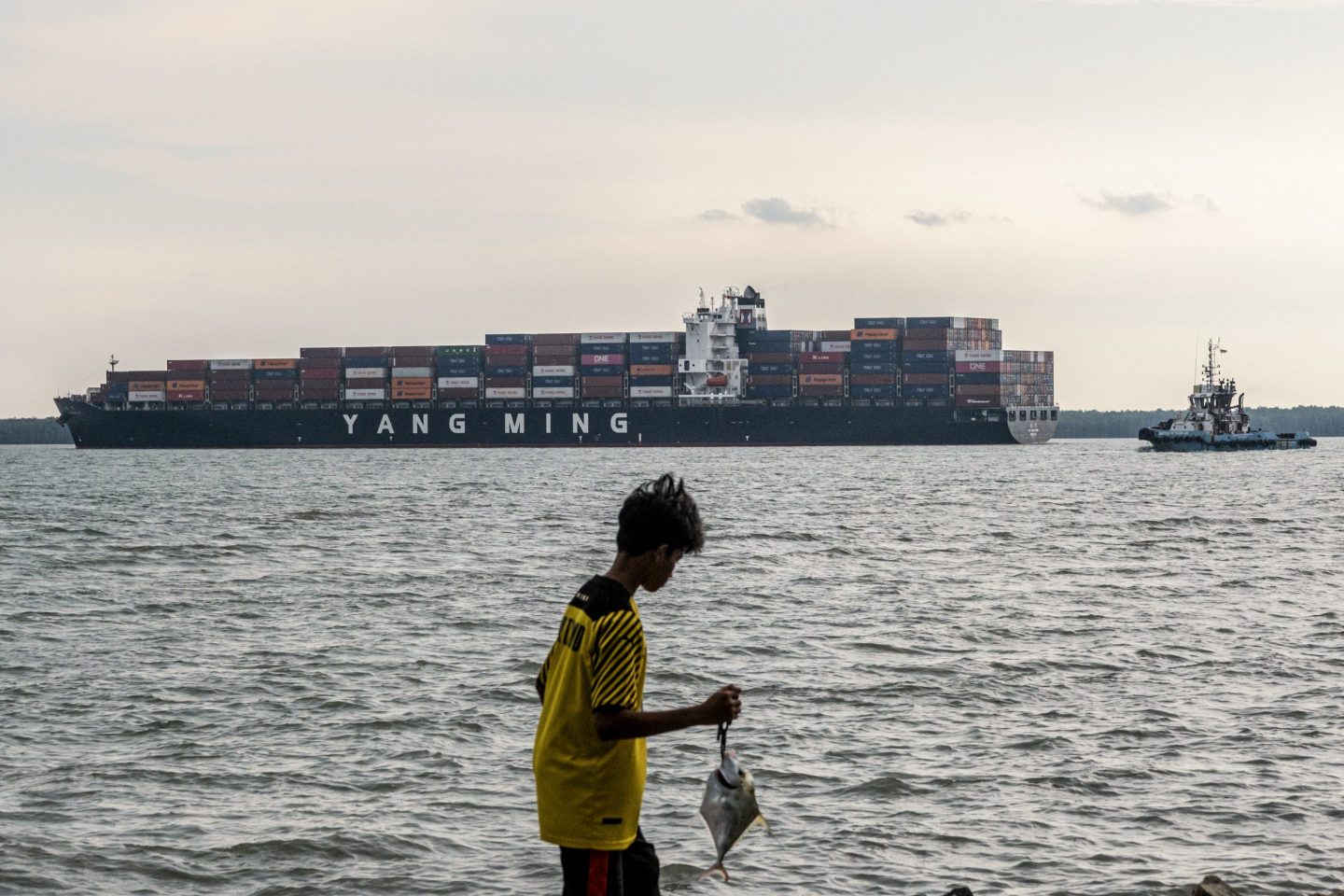
The world is interconnected, with every major region relying on imports for a large percentage of the goods and resources it needs.
The world is interconnected, with every major region relying on imports for a large percentage of the goods and resources it needs. Samsul Said—Bloomberg/Getty Images

The pandemic, Ukraine, geopolitical stress, climate change, and macroeconomic uncertainty: These are turbulent times. No wonder business leaders and policymakers are re-examining everything from their supply chains to their trading patterns. The overarching question, as we see it, is what this means for globalization.

The simple fact is that globalization is not going away. No nation can stand alone. The world is and will continue to be a dense web of interconnections. McKinsey Global Institute (MGI) research found that every major region relies on others for important manufactured goods or resources. More than half of Europe’s energy, a quarter of China’s minerals, and the majority of electronics for Central Asia, Eastern Europe, Latin America, and sub-Saharan Africa are imported. Even the United States, which is less dependent on trade than most countries, relies on imports for more than 30% of the value embedded in the goods it consumes.

These connections have brought broad benefits, such as fostering economic growth, improving efficiency, reducing prices, and increasing the availability of goods.  At the same time, the economic logic of scale and specialization has created vulnerabilities. About 40% of global product trade is concentrated in its origins–meaning that the importing economies rely on three or fewer nations for things they need, like laptops, mobile phones, cobalt, and palm oil.  

Concentration sometimes arises because a product is only produced in a few places. For example, Brazil and the U.S.  supply more than 90% of soybeans. However, three-quarters of concentrated trade–or 30% of all global trade–is a matter of choice, with individual countries sourcing from only a few places, even though there are other options.

Such “economy-specific concentration” can be observed widely, from natural resources (iron ore and wheat) to intermediate products (televisions and memory chips) to final goods (vaccines and aircraft). There are many reasons for this, including geographic proximity, consumer choice, comfort with established trading partners, market structure, and trade barriers and preferential arrangements.

While such concentration can be efficient, it can also bring troubling side effects. If concentrated trade flows are disrupted, products are harder to replace on short notice.

When the pandemic and stressed supply chains cut semiconductor chip production in Asia, for example, that affected automakers in Europe and the U.S., too.  In sensitive sectors associated with national strategic interests, concentrated trade relationships can result in uncomfortable levels of risk.

In response to these concerns, some have called for “decoupling” to reduce dependence on certain foreign countries. However, in practical terms, severing connections costs time and money. Plus, reducing sources of supply tends to increase concentration.

Instead, we would argue for increasing diversification. It just makes sense not to have all the important eggs in two or three baskets. Companies and countries that thoughtfully manage their concentrated exposures are likely to be more resilient–not only able to absorb a supply disruption but to bounce back better. Singapore, for example, realized that it was depending on a handful of pipelines for its critical imports of natural gas. Over the last decade, it has systematically diversified its supply, building a liquefied natural gas terminal to access the seaborne market.

Greater diversification could also promote a more inclusive trading system and economy. The connection between trade and wealth creation is strong: diversification could enable more countries to participate more fully. Picture a world in which countries ranging from Vietnam to Poland, India to Mexico, and Venezuela to Egypt play a larger role in global trade.

Is diversification happening? It’s complicated. An MGI analysis of a range of large economies found that their concentration patterns across sectors hadn’t changed much from 2016 to 2021.

In April 2022, though, 81% of global supply-chain leaders surveyed said they had initiated dual sourcing of raw materials, up 26 percentage points from the previous year. So, change could be in the making.                                        

Globalization has played a significant role in the sharp decline in extreme poverty–from 36% of the world’s population in 1990 to less than 10% in 2017. However, the benefits have not accrued everywhere or nearly enough. There have certainly been losers.

By focusing on resilience and diversifying sources of supply, we believe it is possible to re-imagine globalization and build the foundation for sustainable and inclusive growth.

Bob Sternfels is the managing partner of McKinsey & Company. Olivia White is a director of the McKinsey Global Institute.

The opinions expressed in Fortune.com commentary pieces are solely the views of their authors and do not necessarily reflect the opinions and beliefs of Fortune.

More must-read commentary published by Fortune:

  • Will the U.S. and Europe slide into recession in 2023? Here’s how to look out when economic outlooks don’t
  • Biggest CEO successes and setbacks: 2022’s triumphs and 2023’s challenges
  • The U.S. has thwarted Putin’s energy blackmail. Europe says ‘Tanks a lot!’
  • The next era of work will be about skills–not pedigree. Here’s how employers are changing the way they judge potential, according to LinkedIn and Jobs for the Future

Learn how to navigate and strengthen trust in your business with The Trust Factor, a weekly newsletter examining what leaders need to succeed. Sign up here.

About the Authors
By Bob Sternfels
See full bioRight Arrow Button Icon
By Olivia White
See full bioRight Arrow Button Icon

Latest in

Finance
Lorem ipsum dolor sit amet, consectetur adipiscing elit, sed do eiusmod tempor incididunt ut labore et dolore magna aliqua. Ut enim ad minim veniam
By Fortune Editors
October 20, 2025
Finance
Lorem ipsum dolor sit amet, consectetur adipiscing elit, sed do eiusmod tempor incididunt ut labore et dolore magna aliqua. Ut enim ad minim veniam
By Fortune Editors
October 20, 2025
Finance
Lorem ipsum dolor sit amet, consectetur adipiscing elit, sed do eiusmod tempor incididunt ut labore et dolore magna aliqua. Ut enim ad minim veniam
By Fortune Editors
October 20, 2025
Finance
Lorem ipsum dolor sit amet, consectetur adipiscing elit, sed do eiusmod tempor incididunt ut labore et dolore magna aliqua. Ut enim ad minim veniam
By Fortune Editors
October 20, 2025
Finance
Lorem ipsum dolor sit amet, consectetur adipiscing elit, sed do eiusmod tempor incididunt ut labore et dolore magna aliqua. Ut enim ad minim veniam
By Fortune Editors
October 20, 2025
Finance
Lorem ipsum dolor sit amet, consectetur adipiscing elit, sed do eiusmod tempor incididunt ut labore et dolore magna aliqua. Ut enim ad minim veniam
By Fortune Editors
October 20, 2025

Most Popular

Finance
Lorem ipsum dolor sit amet, consectetur adipiscing elit, sed do eiusmod tempor incididunt ut labore et dolore magna aliqua. Ut enim ad minim veniam
By Fortune Editors
October 20, 2025
Finance
Lorem ipsum dolor sit amet, consectetur adipiscing elit, sed do eiusmod tempor incididunt ut labore et dolore magna aliqua. Ut enim ad minim veniam
By Fortune Editors
October 20, 2025
Finance
Lorem ipsum dolor sit amet, consectetur adipiscing elit, sed do eiusmod tempor incididunt ut labore et dolore magna aliqua. Ut enim ad minim veniam
By Fortune Editors
October 20, 2025
Finance
Lorem ipsum dolor sit amet, consectetur adipiscing elit, sed do eiusmod tempor incididunt ut labore et dolore magna aliqua. Ut enim ad minim veniam
By Fortune Editors
October 20, 2025
Finance
Lorem ipsum dolor sit amet, consectetur adipiscing elit, sed do eiusmod tempor incididunt ut labore et dolore magna aliqua. Ut enim ad minim veniam
By Fortune Editors
October 20, 2025
Finance
Lorem ipsum dolor sit amet, consectetur adipiscing elit, sed do eiusmod tempor incididunt ut labore et dolore magna aliqua. Ut enim ad minim veniam
By Fortune Editors
October 20, 2025
Rankings
  • 100 Best Companies
  • Fortune 500
  • Global 500
  • Fortune 500 Europe
  • Most Powerful Women
  • Future 50
  • World’s Most Admired Companies
  • See All Rankings
Sections
  • Finance
  • Leadership
  • Success
  • Tech
  • Asia
  • Europe
  • Environment
  • Fortune Crypto
  • Health
  • Retail
  • Lifestyle
  • Politics
  • Newsletters
  • Magazine
  • Features
  • Commentary
  • Mpw
  • CEO Initiative
  • Conferences
  • Personal Finance
  • Education
Customer Support
  • Frequently Asked Questions
  • Customer Service Portal
  • Privacy Policy
  • Terms Of Use
  • Single Issues For Purchase
  • International Print
Commercial Services
  • Advertising
  • Fortune Brand Studio
  • Fortune Analytics
  • Fortune Conferences
  • Business Development
About Us
  • About Us
  • Editorial Calendar
  • Press Center
  • Work At Fortune
  • Diversity And Inclusion
  • Terms And Conditions
  • Site Map

© 2025 Fortune Media IP Limited. All Rights Reserved. Use of this site constitutes acceptance of our Terms of Use and Privacy Policy | CA Notice at Collection and Privacy Notice | Do Not Sell/Share My Personal Information
FORTUNE is a trademark of Fortune Media IP Limited, registered in the U.S. and other countries. FORTUNE may receive compensation for some links to products and services on this website. Offers may be subject to change without notice.


Latest in

Databricks co-founder and CEO Ali Ghodsi (left) with Fortune editorial director Andrew Nusca at Fortune Brainstorm AI 2025 in San Francisco. (Photo: Stuart Isett/Fortune)
NewslettersFortune Tech
Databricks is now worth $134 billion
By Andrew NuscaDecember 17, 2025
19 minutes ago
NewslettersCEO Daily
Why more boards are taking a chance on outsider CEOs
By Geoff ColvinDecember 17, 2025
41 minutes ago
Norbert Jung
Commentary
Factory 2030 runs on more than code. As a CEO, I see the power of agentic AI—and the trust gap that we must close
By Norbert JungDecember 17, 2025
53 minutes ago
Qualcomm Executive Vice President Nakul Duggal says the company's AI features in cars will be found in 100 countries by the end of next year.
AIRobots
‘Robots are going to be amongst us’: Qualcomm exec says buckle up for the next 5 years. Your car is going to be the first shoe to drop
By Nino PaoliDecember 17, 2025
2 hours ago
Gasoline delivery truck driver Robert Clark prepares to fill the underground gas tanks at a Shell station in Glendale California. Fuel prices in December 2025 are the lowest since the pandemic in early 2021.
Energygasoline
Prices at the gas pump are the lowest since the pandemic and still falling—just in time for record-high holiday travel
By Jordan BlumDecember 17, 2025
2 hours ago
Photo of Sam Altman
AIOpenAI
Inside OpenAI’s fragile lead in the AI race, and the 8-week ‘code red’ to fend off a resurgent Google
By Jeremy Kahn, Alexei Oreskovic and Lee CliffordDecember 17, 2025
2 hours ago

Most Popular

placeholder alt text
Economy
America's $38 trillion national debt 'exacerbates generational imbalances' with Gen Z and millennials paying the price, warns think tank
By Eleanor PringleDecember 16, 2025
1 day ago
placeholder alt text
Success
Meetings are not work, says Southwest Airlines CEO—and he’s taking action, by blocking his calendar every afternoon from Wednesday to Friday 
By Preston ForeDecember 15, 2025
2 days ago
placeholder alt text
Success
'I had to take 60 meetings': Jeff Bezos says 'the hardest thing I've ever done' was raising the first million dollars of seed capital for Amazon
By Dave SmithDecember 15, 2025
2 days ago
placeholder alt text
Innovation
An MIT roboticist who cofounded bankrupt Roomba maker iRobot says Elon Musk's vision of humanoid robot assistants is 'pure fantasy thinking'
By Marco Quiroz-GutierrezDecember 16, 2025
21 hours ago
placeholder alt text
Future of Work
The job market is so bad, people in their 40s are resorting to going back to school instead of looking for work
By Sydney LakeDecember 16, 2025
1 day ago
placeholder alt text
Politics
Exclusive: After citations against Elon Musk’s Boring Company were suddenly withdrawn, federal regulators are now investigating Nevada OSHA
By Jessica MathewsDecember 16, 2025
11 hours ago