• Home
  • News
  • Fortune 500
  • Tech
  • Finance
  • Leadership
  • Lifestyle
  • Rankings
  • Multimedia
Finance

‘Dr. Doom’ Nouriel Roubini says a severe recession will cause stocks to drop 25%—and warns zombie companies are in danger

Will Daniel
By
Will Daniel
Will Daniel
Down Arrow Button Icon
Will Daniel
By
Will Daniel
Will Daniel
Down Arrow Button Icon
December 7, 2022, 3:09 PM ET
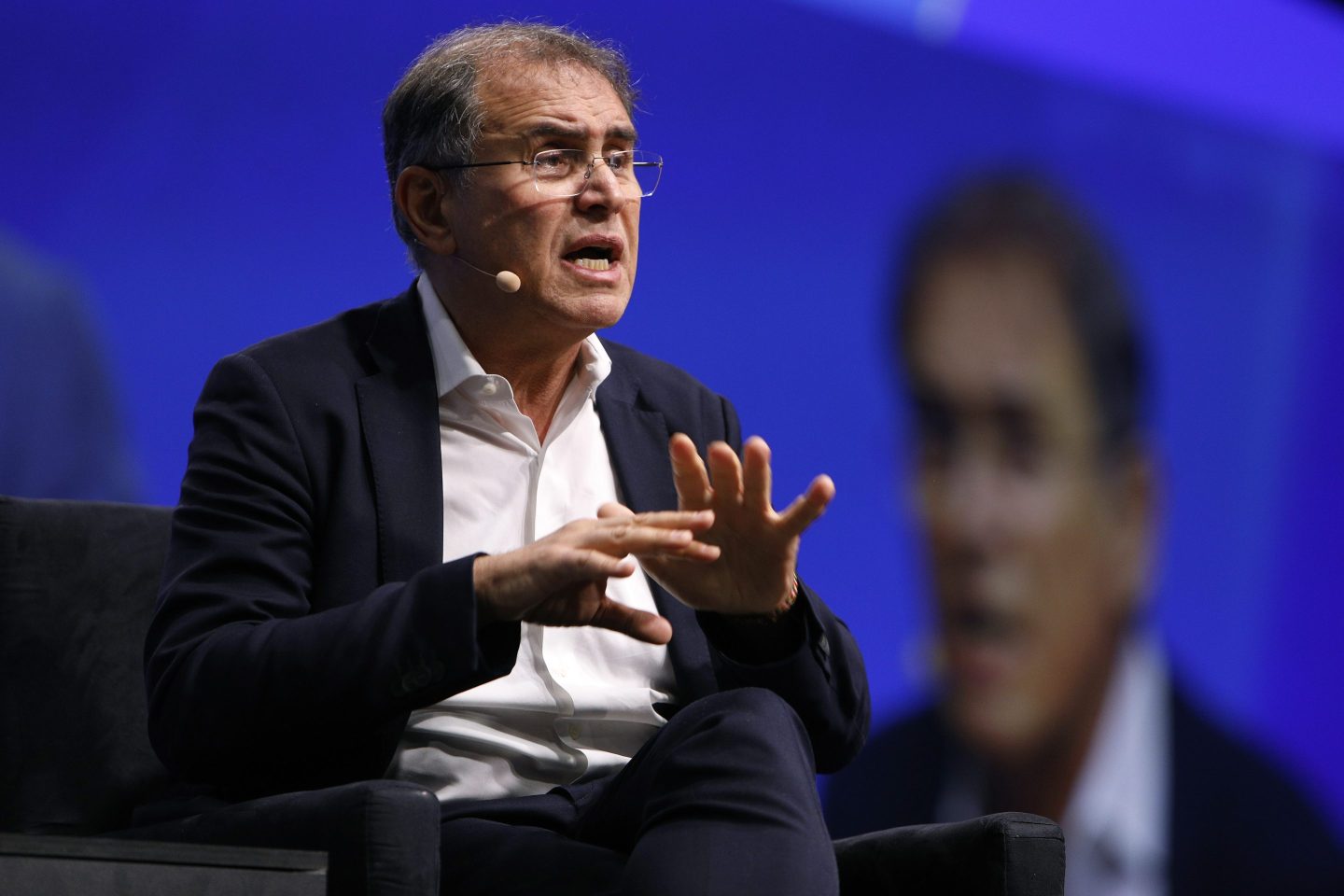
Nouriel Roubini, chief executive officer of Roubini Macro Associates, speaks during the Skybridge Alternatives (SALT) conference in Las Vegas, Nevada, U.S., on Wednesday, May 8, 2019.
Nouriel Roubini, CEO of Roubini Macro Associates, at the SkyBridge Alternatives (SALT) conference in Las Vegas, May 8, 2019.Joe Buglewicz—Bloomberg/Getty Images

They call him “Dr. Doom” for a reason. Nouriel Roubini, professor emeritus at New York University’s Stern School of Business and CEO of Roubini Macro Associates, has a history of making pessimistic—but often prophetic—economic forecasts. 

The man who spotted the 2008 U.S. housing bust and subsequent Great Financial Crisis (GFC) has warned throughout 2022 that a U.S. recession is inevitable and a global stagflationary debt crisis will follow.

This week he broke down how that might affect stocks, reiterating calls for a sharp drop in the S&P 500, despite the blue-chip index’s recent rebound from its October low.

“In a short and shallow recession, typically, from peak to trough the S&P 500 falls by 30%,” Roubini told Bloomberg. “So even if we have a mild recession…you’ll have another 15% leg down.”

“If we have something more severe than a short and shallow recession, but not as severe as the GFC…you have another 25% downside potentially,” he added.

Roubini warned that the first signs of the coming recession will be seen in credit markets, and particularly in the debt of “zombies”—companies that have taken on too much debt and rely on unsustainable business models. 

The economist said that he believes the Federal Reserve will be forced to raise interest rates to 6% to fight inflation, forcing many zombies “into distress.”

“If we are going to enter a recession, lots of institutions…will have significant increases in debt servicing ratios. So you’re going to see distress in credit markets,” Roubini said, arguing that many zombies are already “effectively insolvent.”

As Fortunepreviously reported, Goldman Sachs has estimated that 13% of U.S.-based companies “could be considered” zombies. And New Constructs CEO David Trainer argues there are now roughly 300 publicly traded zombie companies.

Roubini said in a recent Project Syndicate op-ed that the era of the “financial Dawn of the Dead” is now over owing to the Fed’s inflation fight, but added in his interview with Bloomberg that it went on longer than it should have. 

Zombie companies were bailed out during the COVID crisis, he says, by near-zero interest rates and quantitative easing—a policy where the Fed purchased mortgage-backed securities and government bonds to boost lending and investment in the economy.

“Before the COVID crisis, the Fed was writing financial stability reports saying their worry was about the corporate sector,” he said. “And what happened during the COVID crisis is those institutions, those corporations, not only didn’t go bust, but they were bailed out…and they borrowed even more.”

Private- and public-sector debt as a share of global gross domestic product has soared from 200% in 1999 to 350% in 2021. And in the U.S., nonfinancial corporate debt hit a record $12.5 trillion in the second quarter of this year, according to Federal Reserve data. 

In his new book, MegaThreats: 10 Dangerous Trends That Imperil Our Future, and How to Survive Them, Roubini warns about the potential for a debt crisis caused by rising interest rates and record public and private debt.

As interest rates rise, he argues that these debts will be unsustainable, leading to a global crisis unlike anything we’ve seen before.

“The mother of all stagflationary debt crises can be postponed, not avoided,” he wrote in his Project Syndicate op-ed.

Our new weekly Impact Report newsletter will examine how ESG news and trends are shaping the roles and responsibilities of today’s executives—and how they can best navigate those challenges. Subscribe here.
About the Author
Will Daniel
By Will Daniel
LinkedIn iconTwitter icon
See full bioRight Arrow Button Icon

Latest in Finance

Alex Amouyel is the President and CEO of Newman’s Own Foundation
Commentaryphilanthropy
Following in Paul Newman and Yvon Chouinard’s footsteps: There are more ways for leaders to give it away in ‘the Great Boomer Fire Sale’ than ever
By Alex AmouyelDecember 7, 2025
22 minutes ago
CryptoCryptocurrency
So much of crypto is not even real—but that’s starting to change
By Pete Najarian and Joe BruzzesiDecember 7, 2025
37 minutes ago
Hank Green sipping tea
SuccessPersonal Finance
Millionaire YouTuber Hank Green tells Gen Z to rethink their Tesla bets—and shares the portfolio changes he’s making to avoid AI-bubble fallout
By Preston ForeDecember 7, 2025
2 hours ago
MagazineWarren Buffett
Warren Buffett: Business titan and cover star
By Indrani SenDecember 7, 2025
3 hours ago
EconomyEurope
JPMorgan CEO Jamie Dimon says Europe has a ‘real problem’
By Katherine Chiglinsky and BloombergDecember 6, 2025
14 hours ago
Elon Musk
Big TechSpaceX
SpaceX to offer insider shares at record-setting $800 billion valuation
By Edward Ludlow, Loren Grush, Lizette Chapman, Eric Johnson and BloombergDecember 6, 2025
15 hours ago

Most Popular

placeholder alt text
AI
Nvidia CEO says data centers take about 3 years to construct in the U.S., while in China 'they can build a hospital in a weekend'
By Nino PaoliDecember 6, 2025
19 hours ago
placeholder alt text
Real Estate
The 'Great Housing Reset' is coming: Income growth will outpace home-price growth in 2026, Redfin forecasts
By Nino PaoliDecember 6, 2025
1 day ago
placeholder alt text
Economy
The most likely solution to the U.S. debt crisis is severe austerity triggered by a fiscal calamity, former White House economic adviser says
By Jason MaDecember 6, 2025
15 hours ago
placeholder alt text
Big Tech
Mark Zuckerberg rebranded Facebook for the metaverse. Four years and $70 billion in losses later, he’s moving on
By Eva RoytburgDecember 5, 2025
2 days ago
placeholder alt text
Asia
Despite their ‘no limits’ friendship, Russia is paying a nearly 90% markup on sanctioned goods from China—compared with 9% from other countries
By Jason MaNovember 29, 2025
8 days ago
placeholder alt text
Success
Nvidia CEO Jensen Huang admits he works 7 days a week, including holidays, in a constant 'state of anxiety' out of fear of going bankrupt
By Jessica CoacciDecember 4, 2025
3 days ago
Rankings
  • 100 Best Companies
  • Fortune 500
  • Global 500
  • Fortune 500 Europe
  • Most Powerful Women
  • Future 50
  • World’s Most Admired Companies
  • See All Rankings
Sections
  • Finance
  • Leadership
  • Success
  • Tech
  • Asia
  • Europe
  • Environment
  • Fortune Crypto
  • Health
  • Retail
  • Lifestyle
  • Politics
  • Newsletters
  • Magazine
  • Features
  • Commentary
  • Mpw
  • CEO Initiative
  • Conferences
  • Personal Finance
  • Education
Customer Support
  • Frequently Asked Questions
  • Customer Service Portal
  • Privacy Policy
  • Terms Of Use
  • Single Issues For Purchase
  • International Print
Commercial Services
  • Advertising
  • Fortune Brand Studio
  • Fortune Analytics
  • Fortune Conferences
  • Business Development
About Us
  • About Us
  • Editorial Calendar
  • Press Center
  • Work At Fortune
  • Diversity And Inclusion
  • Terms And Conditions
  • Site Map

© 2025 Fortune Media IP Limited. All Rights Reserved. Use of this site constitutes acceptance of our Terms of Use and Privacy Policy | CA Notice at Collection and Privacy Notice | Do Not Sell/Share My Personal Information
FORTUNE is a trademark of Fortune Media IP Limited, registered in the U.S. and other countries. FORTUNE may receive compensation for some links to products and services on this website. Offers may be subject to change without notice.