• Home
  • Latest
  • Fortune 500
  • Finance
  • Tech
  • Leadership
  • Lifestyle
  • Rankings
  • Multimedia
Commentary

U.S. policymakers have one last chance to avoid a recession: Find the 1.5 million women who vanished from our workforce

By
Katica Roy
Katica Roy
Down Arrow Button Icon
By
Katica Roy
Katica Roy
Down Arrow Button Icon
November 17, 2022, 6:55 AM ET
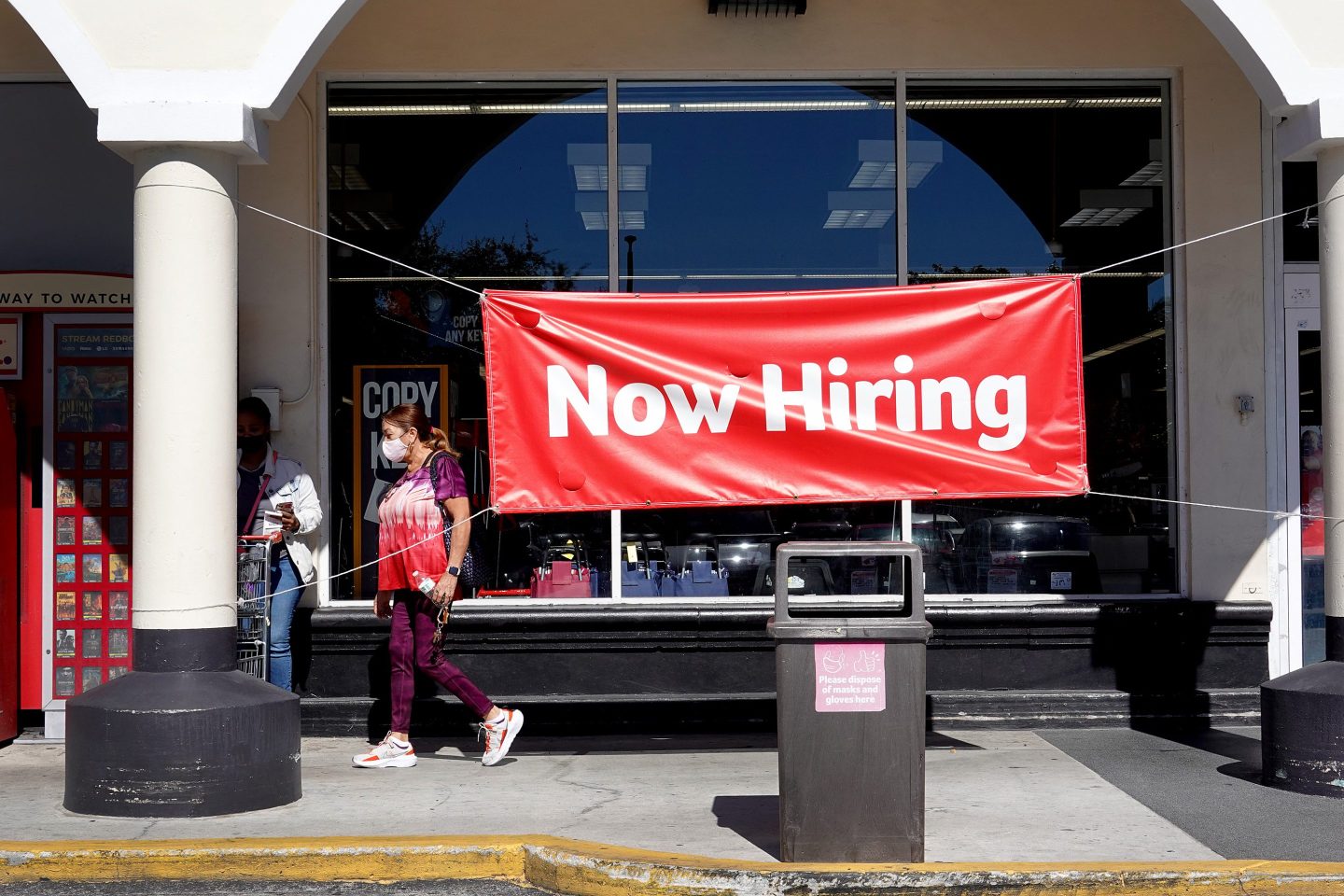
Women's workforce participation hasn't recovered to pre-pandemic levels.
Women's workforce participation hasn't recovered to pre-pandemic levels.Joe Raedle—Getty Images

Want to stick a soft landing? Try sticking to an agenda of gender equity. By closing the gender equity gap in the U.S. labor market, we can achieve the coveted soft landing policy leaders are striving for. And in doing so, we can reap the $1.789 trillion upside of labor market equity.

Something fascinating happens when we view the economy through the intersectional gender lens–     that is, when we disaggregate economic data by gender plus race and ethnicity. Right before the pandemic hit, women’s labor force participation rate had climbed to 59.2%. As of the October 2022 jobs report, the rate had dropped to 58%. When we deal in percentages that control for population growth, that means 1.549 million women have vanished from the labor force since February 2020.

This bothers me, and not for reasons of fairness. I’m not an activist. I’m a gender economist–and our economy derives its strength from the plurality of the labor base. We need those million-plus lost women to power our economic engine. Since 1970, women have added $2 trillion of value to the U.S. economy by increasing their labor force participation.

A trillion-dollar economic opportunity obliterated by the pandemic

Pre-pandemic, closing the gender gap in labor force participation could have yielded some $789 billion for the U.S. economy on top of the $2 trillion we’ve already gained since 1970.

However, in the last two years, 29 years of progress toward gender equity in the labor market has been obliterated. This regression has cost the U.S. $1.789 trillion in economic potential. In other words, closing the gender equity gap in the labor market could bolster the post-pandemic US economy by $1.789 trillion.

If we include the 1.549 million missing women from the labor market in October’s unemployment figures, women’s real unemployment rate would be 5.42%. The picture looks much bleaker through the intersectional lens. For Black women, including the 328,000 of them missing from the labor force since February 2020, the unemployment rate is 8.58%. For Latinas, including the 313,000 of them missing from the labor force since February 2020, the unemployment rate is 6.03%. Not only do our policies fail to take these women into account, but we also don’t know much about the reasons they left the workforce. The data is simply not available–but economists do suspect many of them went into the informal economy.

Not only do these vertiginous intersectional unemployment rates violate the Fed’s mandate of maximum employment (of which the target unemployment rate ranges between 4.1% and 4.7%), they also violate the principles of economic prosperity.

What if instead of yanking interest rates to cool down the economy, we craft solutions to bring these women back into the workforce? Doing so would generate a tripartite solution to the soft landing challenge: it would stabilize prices, encourage equitable employment, and fuel sustainable economic growth.

Gender equity is key to a soft landing

A soft landing follows a three-step dance. Let’s review the choreography.

First, the economy heats up and inflation rises. October’s prices were up 7.7% compared to the previous year.

Second, the Fed raises interest rates to cool down the economy. The Fed has raised the federal funds rate by 375 basis points in only eight months.

Third, prices stabilize and the economy avoids a recession. If we choose to bring those 1.549 million women back into the labor force, we can hope for a soft landing. Here’s why.

The economic benefits of equitable employment

Our economy has approximately two open jobs for every person looking for work. An expanded labor base would close the worker-to-open-job gap by nearly 33%. More workers chasing fewer jobs would keep inflation in check by mitigating the harmful effects of the wage-price spiral. 

To avoid a recession, we need to keep unemployment for all intersectional cohorts within the maximum employment mandate range of 4.1% and 4.7%. As the gender and race disaggregated data show, bringing Black and Latina women meaningfully back into the workforce would ensure we don’t have a protracted k-shaped recovery in a country already exhibiting some of its most egregious levels of economic stratification.

Further interest rate hikes do not bode well for equitable employment levels in general. Tighter monetary policy causes companies to consolidate their workforces to the rhythm of “last hired, first fired.” And that means women and Black employees are usually the first to get cut. 

Emerging research suggests the $1.789 trillion upside of labor market equity is a conservative projection–because the models used to calculate that figure rely on what’s known as a headcount measurement. It treats every “head” the same. A worker is a worker.

However, women and men are not perfect substitutes in the labor market. Increasing the gender diversity of a given business unit leads to improved financial performance of the firm in a way not captured by the models.

For instance, my company’s research shows that every 10% increase in intersectional gender equity yields a 1-2% increase in revenue. When models do account for gender equity, the economic gains of women’s labor force participation could be up to a fifth larger.

Katica Roy is the CEO of Pipeline.

The opinions expressed in Fortune.com commentary pieces are solely the views of their authors and do not necessarily reflect the opinions and beliefs of Fortune.

More must-read commentary published by Fortune:

  • Elon Musk knows what he’s doing. Here’s the real value he sees in Twitter
  • California Gov. Newsom: ‘Ideological attacks on ESG investing defy the free market—and taxpayers are losing out. Here’s why we consistently beat Republican-led states in nearly every economic category’
  • I got rich by betting that inequality would destroy the U.S. and U.K. I’m sorry
  • The last American venture capitalist in Beijing: Here are the strategic miscalculations undermining America’s technology competition with China

Our new weekly Impact Report newsletter will examine how ESG news and trends are shaping the roles and responsibilities of today's executives—and how they can best navigate those challenges. Subscribe here.
About the Author
By Katica Roy
See full bioRight Arrow Button Icon

Latest in Commentary

Finance
Lorem ipsum dolor sit amet, consectetur adipiscing elit, sed do eiusmod tempor incididunt ut labore et dolore magna aliqua. Ut enim ad minim veniam
By Fortune Editors
October 20, 2025
Finance
Lorem ipsum dolor sit amet, consectetur adipiscing elit, sed do eiusmod tempor incididunt ut labore et dolore magna aliqua. Ut enim ad minim veniam
By Fortune Editors
October 20, 2025
Finance
Lorem ipsum dolor sit amet, consectetur adipiscing elit, sed do eiusmod tempor incididunt ut labore et dolore magna aliqua. Ut enim ad minim veniam
By Fortune Editors
October 20, 2025
Finance
Lorem ipsum dolor sit amet, consectetur adipiscing elit, sed do eiusmod tempor incididunt ut labore et dolore magna aliqua. Ut enim ad minim veniam
By Fortune Editors
October 20, 2025
Finance
Lorem ipsum dolor sit amet, consectetur adipiscing elit, sed do eiusmod tempor incididunt ut labore et dolore magna aliqua. Ut enim ad minim veniam
By Fortune Editors
October 20, 2025
Finance
Lorem ipsum dolor sit amet, consectetur adipiscing elit, sed do eiusmod tempor incididunt ut labore et dolore magna aliqua. Ut enim ad minim veniam
By Fortune Editors
October 20, 2025

Most Popular

Finance
Lorem ipsum dolor sit amet, consectetur adipiscing elit, sed do eiusmod tempor incididunt ut labore et dolore magna aliqua. Ut enim ad minim veniam
By Fortune Editors
October 20, 2025
Finance
Lorem ipsum dolor sit amet, consectetur adipiscing elit, sed do eiusmod tempor incididunt ut labore et dolore magna aliqua. Ut enim ad minim veniam
By Fortune Editors
October 20, 2025
Finance
Lorem ipsum dolor sit amet, consectetur adipiscing elit, sed do eiusmod tempor incididunt ut labore et dolore magna aliqua. Ut enim ad minim veniam
By Fortune Editors
October 20, 2025
Finance
Lorem ipsum dolor sit amet, consectetur adipiscing elit, sed do eiusmod tempor incididunt ut labore et dolore magna aliqua. Ut enim ad minim veniam
By Fortune Editors
October 20, 2025
Finance
Lorem ipsum dolor sit amet, consectetur adipiscing elit, sed do eiusmod tempor incididunt ut labore et dolore magna aliqua. Ut enim ad minim veniam
By Fortune Editors
October 20, 2025
Finance
Lorem ipsum dolor sit amet, consectetur adipiscing elit, sed do eiusmod tempor incididunt ut labore et dolore magna aliqua. Ut enim ad minim veniam
By Fortune Editors
October 20, 2025
Rankings
  • 100 Best Companies
  • Fortune 500
  • Global 500
  • Fortune 500 Europe
  • Most Powerful Women
  • Future 50
  • World’s Most Admired Companies
  • See All Rankings
Sections
  • Finance
  • Leadership
  • Success
  • Tech
  • Asia
  • Europe
  • Environment
  • Fortune Crypto
  • Health
  • Retail
  • Lifestyle
  • Politics
  • Newsletters
  • Magazine
  • Features
  • Commentary
  • Mpw
  • CEO Initiative
  • Conferences
  • Personal Finance
  • Education
Customer Support
  • Frequently Asked Questions
  • Customer Service Portal
  • Privacy Policy
  • Terms Of Use
  • Single Issues For Purchase
  • International Print
Commercial Services
  • Advertising
  • Fortune Brand Studio
  • Fortune Analytics
  • Fortune Conferences
  • Business Development
About Us
  • About Us
  • Editorial Calendar
  • Press Center
  • Work At Fortune
  • Diversity And Inclusion
  • Terms And Conditions
  • Site Map
  • Facebook icon
  • Twitter icon
  • LinkedIn icon
  • Instagram icon
  • Pinterest icon

Latest in Commentary

sharma
CommentaryTraining
AI will infiltrate the industrial workforce in 2026—let’s apply it to training the next generation, not replacing them
By Kriti SharmaJanuary 15, 2026
1 day ago
CommentaryBusiness
Using AI just to reduce costs is a woeful misuse of a transformative technology
By Nigel VazJanuary 15, 2026
1 day ago
powell
CommentaryMiddle class
Forget the K-Shape: We have a barbell economy—and the middle class is buckling under the weight
By Katica RoyJanuary 14, 2026
2 days ago
engineer
Commentaryengineering
China graduates 1.3 million engineers per year, versus just 130,000 in the U.S. We need AI to bridge the gap
By Paul Eremenko and Ashish SrivastavaJanuary 14, 2026
2 days ago
powell/trump
CommentaryFederal Reserve
Is Powell’s Fed head independence dead? Trump outfoxes himself this time
By Jeffrey SonnenfeldJanuary 13, 2026
3 days ago
paramount
CommentaryM&A
A cautionary Hollywood tale: the Ellisons’ lose-lose Paramount positioning
By Jeffrey Sonnenfeld and Stephen HenriquesJanuary 12, 2026
4 days ago

Most Popular

placeholder alt text
Europe
Americans have been quietly plundering Greenland for over 100 years, since a Navy officer chipped fragments off the Cape York iron meteorite
By Paul Bierman and The ConversationJanuary 14, 2026
2 days ago
placeholder alt text
Personal Finance
Peter Thiel makes his biggest donation in years to help defeat California’s billionaire wealth tax
By Nick LichtenbergJanuary 14, 2026
2 days ago
placeholder alt text
Health
The head of marketing at Slate posted on LinkedIn requesting cleaning services as a benefit at her company. The next day, HR answered her call
By Sydney LakeJanuary 15, 2026
1 day ago
placeholder alt text
Economy
California's wealth tax doesn't fix the real problem: Cash-poor billionaires who borrow money, tax-free, to live on
By Nick LichtenbergJanuary 14, 2026
2 days ago
placeholder alt text
Politics
One year after Bill Gates surprised with the choice to close his foundation by 2045, he's cutting staff jobs
By Stephanie Beasley and The Associated PressJanuary 14, 2026
2 days ago
placeholder alt text
Success
Despite a $45 million net worth, Big Bang Theory star Kunal Nayyar still works tough, 16-hour days—he repeats this mantra when he's overwhelmed
By Orianna Rosa RoyleJanuary 15, 2026
1 day ago

© 2025 Fortune Media IP Limited. All Rights Reserved. Use of this site constitutes acceptance of our Terms of Use and Privacy Policy | CA Notice at Collection and Privacy Notice | Do Not Sell/Share My Personal Information
FORTUNE is a trademark of Fortune Media IP Limited, registered in the U.S. and other countries. FORTUNE may receive compensation for some links to products and services on this website. Offers may be subject to change without notice.