• Home
  • Latest
  • Fortune 500
  • Finance
  • Tech
  • Leadership
  • Lifestyle
  • Rankings
  • Multimedia
CommentaryU.S. midterm elections

American elections are a question of geography. Here’s how remote workers reshaped the political landscape

By
Sheila Lakshmi Steinberg
Down Arrow Button Icon
By
Sheila Lakshmi Steinberg
Down Arrow Button Icon
November 11, 2022, 2:57 PM ET
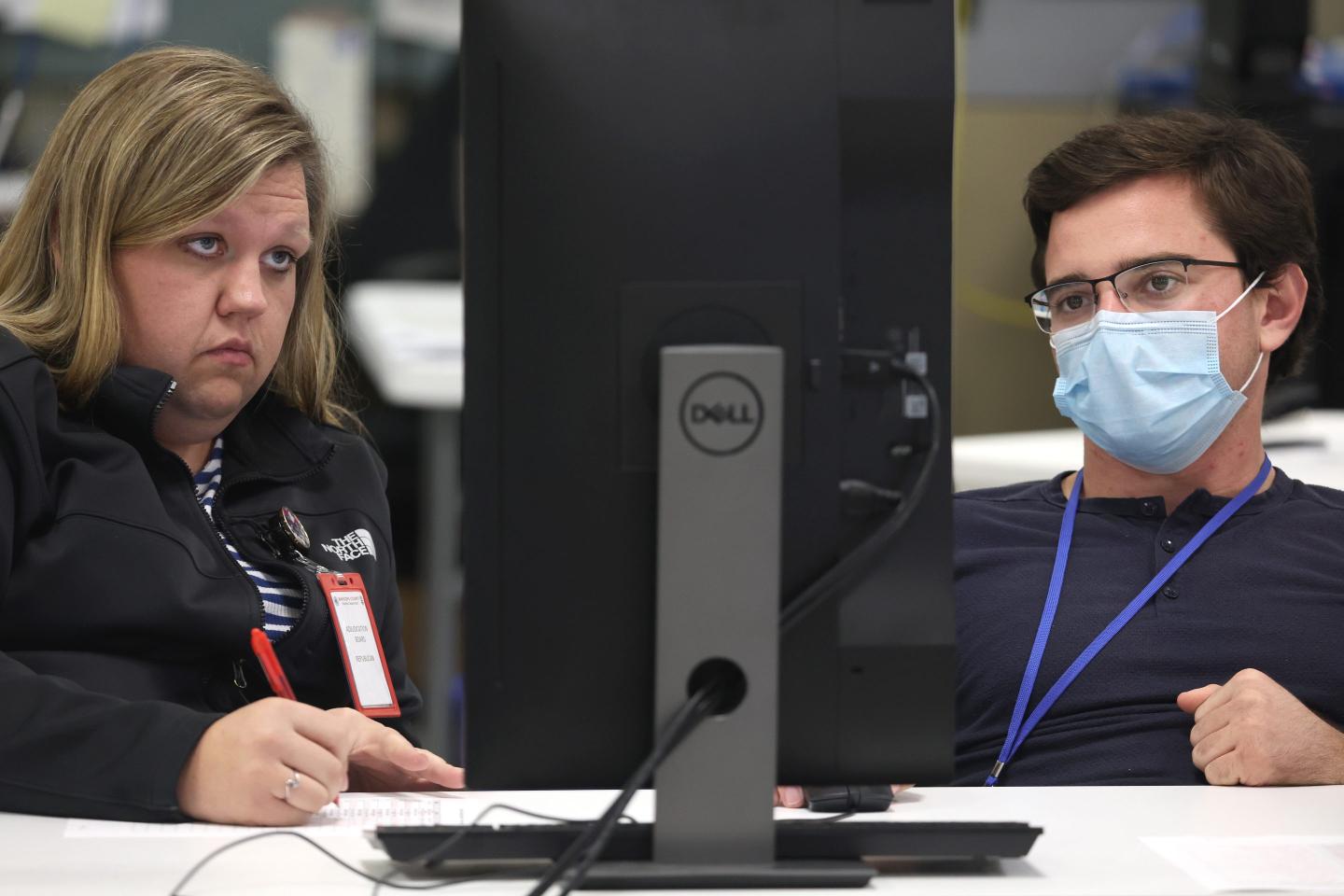
Poll workers count ballots in Arizona
Ballots continue to be counted in Maricopa County, Phoenix, three days after voters went to the polls for the midterm election in Arizona.Justin Sullivan - Getty Images

The pandemic changed where and how we work and live as a country, and with these shifts, where and how we vote.

Pandemic-driven mobility patterns are challenging our traditional understanding of the urban and rural voting blocs and our perceptions of who lives in these areas. Some regions grew and others declined as some fled high-priced, high-density urban environments for more affordable, lower-density communities.

For example, the population in Phoenix grew by 13,224 in 2020–202. Meanwhile, North Las Vegas gained 9,917 new residents. Two of the top five cities that gained the largest populations during the pandemic—North Las Vegas and Phoenix—are located in states that are still counting votes. 

Three days after the election with 80% of the votes counted in Arizona, Democratic candidate Mark Kelly is ahead 51.7% to Republican candidate Blake Masters, who has 46.1%. Meanwhile, in the Nevada Senate race three days after the election with 88% of votes in, it’s neck and neck, with Republican candidate Adam Laxalt with 49% of the vote to Democrat Catherine Cortez Masto with 48% of the vote. With such close margins, there is now an intense focus on the location of the outstanding ballots.  

During the COVID pandemic, significant numbers of voters began to move within the country. Remote work gave them the opportunity to move to new, more affordable communities so long as they had a good internet connection. The U.S. Census, in collaboration with the Annual Business Survey (ABS), found that from 2019 to 2020, the percentage of businesses that had employees working from home increased from 28.1 to 41.9%.

Like attracts like

Understanding geographic mobility patterns is essential to understanding voting patterns since people and places are interrelated. Tobler’s First Law of Geography states, “Everything is related to everything else, but near things are more related than distant things.” Translated into a voting context, we would expect two voters living near one another will be more likely to have similar voting patterns than those living far away. In short, “Like attracts like.”

People moved in response to both long-term socioeconomic forces and the unique circumstances of the pandemic. What is not yet clear is whether the political norms of communities these people moved to were motivating factors for selecting them or if other factors (environment, cost, etc.) drove their choices and led them to migrate to communities with differing political perspectives and voting patterns than the places they left.

William Frey, a senior fellow at Brookings Metro, commented on the New Great Migration back to the South, including a shift toward “younger, college-educated, Black Americans, from both northern and western places of origin. They have contributed to the growth of the New South, especially in Texas, Georgia, and North Carolina…” This demographic change is contributing to voting pattern shifts in Georgia and North Carolina.

The influx of new voters into metro, suburban, and rural areas may exert a significant influence on election outcomes. The geographic density and distribution of voters and districts represents a pattern that has limited Democrats in the past, even when they won the popular vote.

In 2019, writer Derek Thompson posed the question, “What would happen to the American political picture if more Democrats moved out of their excessively liberal enclaves to redistribute themselves more evenly across the vast expanse of Red America?”

The pandemic and remote work may have prompted just this sort of move.

Stanford political scientist Jonathan Rodden notes, “Democrats tend to be spatially clustered in politically homogeneous cities, while Republicans are spread out in more heterogeneous suburbs and rural areas.”

Shifting to new geographies

During the pandemic, many people moved to more affordable places as they experienced reduced income or, alternatively, chose to explore environmentally diverse rural and suburban areas.

In July 2021 the U.S. Census reported that only six of the top 15 fastest-growing cities with a population of 50,000 or more were also among the fastest-growing in 2019 before the pandemic hit. These were often smaller cities: Georgetown, Texas; Leander, Texas; Buckeye, Ariz., New Braunfels, Texas; Fort Meyers, Fla.; and Meridian, Idaho.

Cities with the largest growth rates during the pandemic were predominantly in the West and South, including (in order of gain) San Antonio; Phoenix; Fort Worth; Port St. Lucie, Fla.; North Las Vegas; Cape Coral, Fla.; and Buckeye, Ariz.

The overall trend was that several of the country’s biggest or densest cities lost residents. Between 2020 and 2021, New York City experienced the largest decrease (305,465 people), followed by San Francisco (54,813), Chicago (45,175), and Los Angeles (40,537). When we compare these numbers to pre-pandemic declines the difference is clear: In 2018–19 New York lost 53,264 people; Baltimore, 8,953; Chicago, 7,447; and San Jose, 6,225. COVID clearly changed people’s preferences for where they wanted to live and work.

People and place matter

As former city dwellers moved to rural or suburban areas, they imported their urban views to new geographies. As Rodden notes, “Republicans…tend to live in areas that are more heterogeneous, leading to the creation of districts where Republicans win districts by narrower margins.”

Democrats who move into these less dense areas may have a meaningful impact on elections. Moving from suburban to rural areas would involve an influx of potentially different voting patterns. Meanwhile, the density of big cities makes their voting outcomes more resilient to these population shifts, since a moderate influx of new voters is unlikely to sway the larger trends. In some smaller communities, a moderate influx may be sufficient to change election outcomes.

Geographically shifting populations are forcing a reexamination of traditional assumptions about “red” and “blue” areas. When voters move to new communities are they more influenced by their surroundings, or do they influence new geographies?

It seems the simple answer may be that people choose to move to a place because it’s affordable and they like the environment, not because it’s red or blue.

Sheila Lakshmi Steinberg, Ph.D., is a professor of geographic information system, social, and environmental sciences at University of Massachusetts Global.

The opinions expressed in Fortune.com commentary pieces are solely the views of their authors and do not necessarily reflect the opinions and beliefs of Fortune.

More must-read commentary published by Fortune:

  • Elon Musk knows what he’s doing. Here’s the real value he sees in Twitter
  • The inventors of ESG: ‘Critics have a point—here’s the new global reporting system that will address it’
  • I got rich by betting that inequality would destroy the U.S. and U.K. I’m sorry
  • The last American venture capitalist in Beijing: Here are the strategic miscalculations undermining America’s technology competition with China
Sign up for the Fortune Features email list so you don’t miss our biggest features, exclusive interviews, and investigations.
About the Author
By Sheila Lakshmi Steinberg
See full bioRight Arrow Button Icon

Latest in Commentary

Finance
Lorem ipsum dolor sit amet, consectetur adipiscing elit, sed do eiusmod tempor incididunt ut labore et dolore magna aliqua. Ut enim ad minim veniam
By Fortune Editors
October 20, 2025
Finance
Lorem ipsum dolor sit amet, consectetur adipiscing elit, sed do eiusmod tempor incididunt ut labore et dolore magna aliqua. Ut enim ad minim veniam
By Fortune Editors
October 20, 2025
Finance
Lorem ipsum dolor sit amet, consectetur adipiscing elit, sed do eiusmod tempor incididunt ut labore et dolore magna aliqua. Ut enim ad minim veniam
By Fortune Editors
October 20, 2025
Finance
Lorem ipsum dolor sit amet, consectetur adipiscing elit, sed do eiusmod tempor incididunt ut labore et dolore magna aliqua. Ut enim ad minim veniam
By Fortune Editors
October 20, 2025
Finance
Lorem ipsum dolor sit amet, consectetur adipiscing elit, sed do eiusmod tempor incididunt ut labore et dolore magna aliqua. Ut enim ad minim veniam
By Fortune Editors
October 20, 2025
Finance
Lorem ipsum dolor sit amet, consectetur adipiscing elit, sed do eiusmod tempor incididunt ut labore et dolore magna aliqua. Ut enim ad minim veniam
By Fortune Editors
October 20, 2025

Most Popular

Finance
Lorem ipsum dolor sit amet, consectetur adipiscing elit, sed do eiusmod tempor incididunt ut labore et dolore magna aliqua. Ut enim ad minim veniam
By Fortune Editors
October 20, 2025
Finance
Lorem ipsum dolor sit amet, consectetur adipiscing elit, sed do eiusmod tempor incididunt ut labore et dolore magna aliqua. Ut enim ad minim veniam
By Fortune Editors
October 20, 2025
Finance
Lorem ipsum dolor sit amet, consectetur adipiscing elit, sed do eiusmod tempor incididunt ut labore et dolore magna aliqua. Ut enim ad minim veniam
By Fortune Editors
October 20, 2025
Finance
Lorem ipsum dolor sit amet, consectetur adipiscing elit, sed do eiusmod tempor incididunt ut labore et dolore magna aliqua. Ut enim ad minim veniam
By Fortune Editors
October 20, 2025
Finance
Lorem ipsum dolor sit amet, consectetur adipiscing elit, sed do eiusmod tempor incididunt ut labore et dolore magna aliqua. Ut enim ad minim veniam
By Fortune Editors
October 20, 2025
Finance
Lorem ipsum dolor sit amet, consectetur adipiscing elit, sed do eiusmod tempor incididunt ut labore et dolore magna aliqua. Ut enim ad minim veniam
By Fortune Editors
October 20, 2025
Fortune Secondary Logo
Rankings
  • 100 Best Companies
  • Fortune 500
  • Global 500
  • Fortune 500 Europe
  • Most Powerful Women
  • Future 50
  • World’s Most Admired Companies
  • See All Rankings
Sections
  • Finance
  • Fortune Crypto
  • Features
  • Leadership
  • Health
  • Commentary
  • Success
  • Retail
  • Mpw
  • Tech
  • Lifestyle
  • CEO Initiative
  • Asia
  • Politics
  • Conferences
  • Europe
  • Newsletters
  • Personal Finance
  • Environment
  • Magazine
  • Education
Customer Support
  • Frequently Asked Questions
  • Customer Service Portal
  • Privacy Policy
  • Terms Of Use
  • Single Issues For Purchase
  • International Print
Commercial Services
  • Advertising
  • Fortune Brand Studio
  • Fortune Analytics
  • Fortune Conferences
  • Business Development
  • Group Subscriptions
About Us
  • About Us
  • Editorial Calendar
  • Press Center
  • Work At Fortune
  • Diversity And Inclusion
  • Terms And Conditions
  • Site Map
  • About Us
  • Editorial Calendar
  • Press Center
  • Work At Fortune
  • Diversity And Inclusion
  • Terms And Conditions
  • Site Map
  • Facebook icon
  • Twitter icon
  • LinkedIn icon
  • Instagram icon
  • Pinterest icon

Latest in Commentary

LI
CommentaryLinkedIn
AI adoption isn’t the hard part, it’s building employee agency
By Teuila Hanson and Mohak ShroffApril 3, 2026
6 hours ago
I helped build Uber and Discord and now my tools help fuel billion-dollar unicorns. But Silicon Valley is losing the AI race to itself
CommentarySilicon Valley
I helped build Uber and Discord and now my tools help fuel billion-dollar unicorns. But Silicon Valley is losing the AI race to itself
By Sumeet VaidyaApril 3, 2026
6 hours ago
messi
CommentaryFlorida
Apollo and FC Barcelona just proved legacy markets are losing their grip on business
By Mike SimasApril 2, 2026
24 hours ago
kroenke
CommentarySoccer
Why American billionaires are abandoning Wall Street for English soccer clubs
By Andrés MartinezApril 2, 2026
1 day ago
wyle
CommentaryTV
What HBO’s ‘The Pitt’ gets right—and wrong—about treating alcohol use disorder
By Jonathan Hunt-GlassmanApril 2, 2026
1 day ago
nic
CommentaryInsider trading
Prediction markets caught insider traders in real time. Congress wants to shut them down anyway
By Nic PuckrinApril 2, 2026
1 day ago

Most Popular

Gen Z fled San Francisco for Texas and Florida. Now they’re turning ‘welcomer cities’ into the next big tech towns
Real Estate
Gen Z fled San Francisco for Texas and Florida. Now they’re turning ‘welcomer cities’ into the next big tech towns
By Fortune EditorsApril 2, 2026
2 days ago
Major 4-day workweek study suggests that when we work 5 days we spend one doing basically nothing
Success
Major 4-day workweek study suggests that when we work 5 days we spend one doing basically nothing
By Fortune EditorsApril 2, 2026
1 day ago
Current price of oil as of April 2, 2026
Personal Finance
Current price of oil as of April 2, 2026
By Fortune EditorsApril 2, 2026
1 day ago
Paul Krugman smacks down Trump speech with argument that $4 gas is ‘less than half’ of the Hormuz hit. Here’s what he’s talking about
Economy
Paul Krugman smacks down Trump speech with argument that $4 gas is ‘less than half’ of the Hormuz hit. Here’s what he’s talking about
By Fortune EditorsApril 2, 2026
24 hours ago
The Walmart billionaires next door: Quiet backlash is brewing against the heirs who remade the retailer’s hometown
Magazine
The Walmart billionaires next door: Quiet backlash is brewing against the heirs who remade the retailer’s hometown
By Fortune EditorsApril 3, 2026
12 hours ago
Current price of gold as of April 1, 2026
Personal Finance
Current price of gold as of April 1, 2026
By Fortune EditorsApril 1, 2026
2 days ago

© 2026 Fortune Media IP Limited. All Rights Reserved. Use of this site constitutes acceptance of our Terms of Use and Privacy Policy | CA Notice at Collection and Privacy Notice | Do Not Sell/Share My Personal Information
FORTUNE is a trademark of Fortune Media IP Limited, registered in the U.S. and other countries. FORTUNE may receive compensation for some links to products and services on this website. Offers may be subject to change without notice.