• Home
  • News
  • Fortune 500
  • Tech
  • Finance
  • Leadership
  • Lifestyle
  • Rankings
  • Multimedia
Financesupply chains

China’s loss is Mexico’s gain: Bank of America says a transformed global supply chain means nearshoring investment in the country is a ‘lifetime opportunity’

Tristan Bove
By
Tristan Bove
Tristan Bove
Down Arrow Button Icon
Tristan Bove
By
Tristan Bove
Tristan Bove
Down Arrow Button Icon
November 2, 2022, 5:16 PM ET
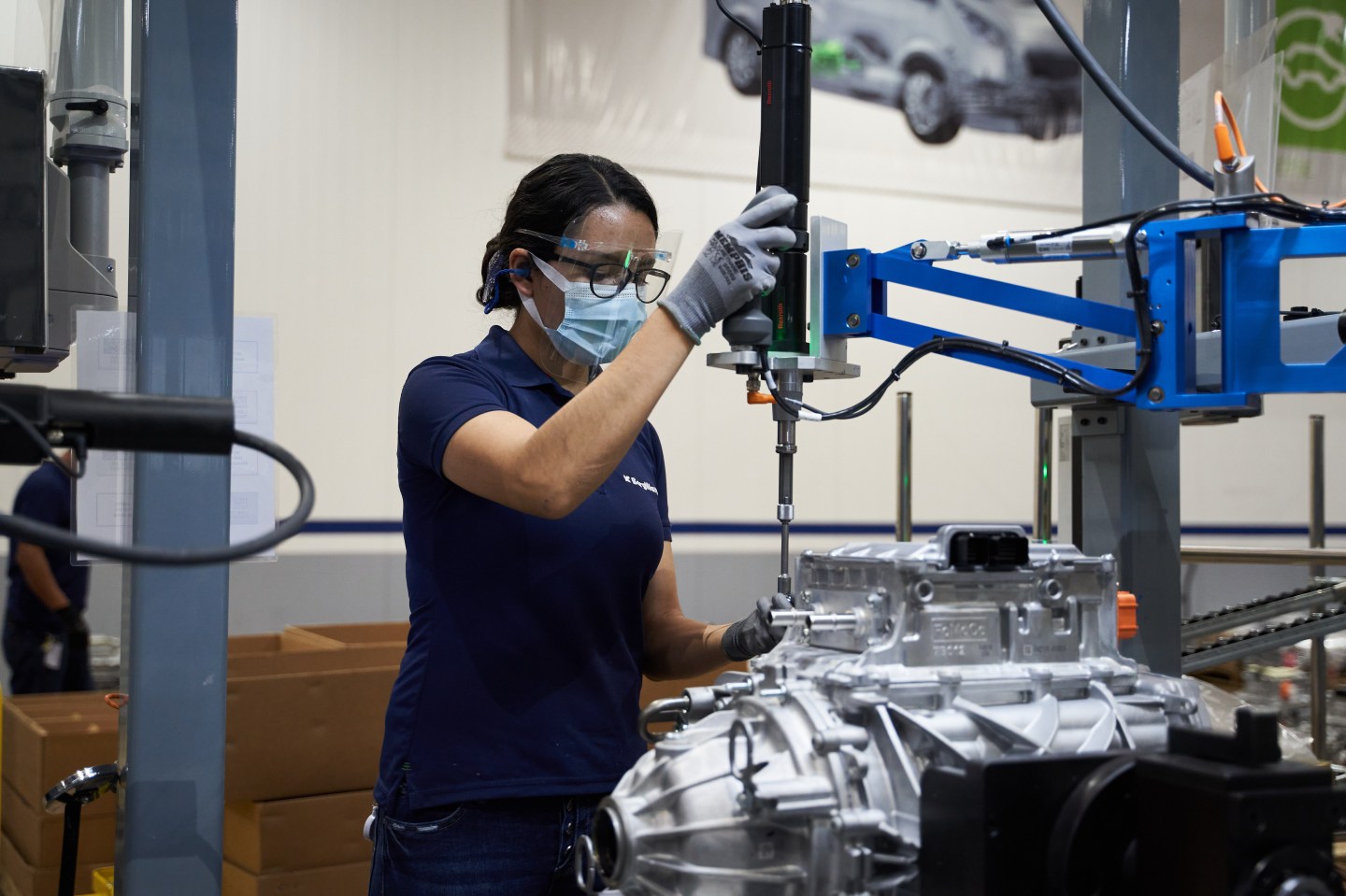
Shot of a worker assembling a vehicle component at a car manufacturing plant in Mexico
An engineer working on the assembly line at a Ford Motors plant in San Luis Potosi, Mexico.Mauricio Palos/Bloomberg via Getty Images

One of the many buzzwords to have come out of the supply chain crisis of the past few years has been “nearshoring”: companies investing in production closer to home so that they don’t have to deal with global sourcing challenges.

In the U.S., the supply chain crisis has added fuel to the country’s inflation fire, and a growing number of industries have chosen to bring production closer to home as a result. U.S.-based companies that have already reshored their operations to nearby countries in Latin America and the Caribbean include carmaker Ford and aerospace manufacturer Boeing.

The nearshoring momentum could represent a major rethink of global supply chains, and some countries could be in line for a windfall because of it. But Bank of America analysts believe that based on early signs, Mexico is poised to be the main beneficiary of the new nearshoring wave sweeping the U.S.

Nearshoring to Mexico could be a “lifetime opportunity” for those interested in investing in the country and in the companies doing business there, researchers by the bank’s head of Canada and Mexico economics Carlos Capistrán, wrote in a note last week, and believe the country is headed for massive growth in the coming years.

They added that the supply chain crisis, a breakdown in U.S.-China relations, and a free trade agreement already in place between the U.S. and Mexico have created the conditions behind the country’s “best growth opportunity for the next 10 years.” 

The China conundrum

The nearshoring move to Mexico comes as more and more U.S. companies decide doing business in China is simply no longer worth the cost.

U.S. trade relations with China have been tense for years, since a series of U.S. tariffs on imported Chinese goods paved the way for a trade war between the two countries in 2018 under former President Trump. That war has survived mostly intact into the current administration.

The trade war heightened tensions between the two countries and made cooperation more difficult, but the real spark behind the supply chain crisis and the move towards nearshoring happened more recently when the COVID-19 pandemic hit.

China responded with periodic lockdowns, which threw supply chains into disarray, and are still happening now with factories in China shutting down for weeks at a time. The supply chain crisis has led to a full-blown shortage of items the U.S. once imported heavily from China, including semiconductor chips and iPhones.

In addition to China’s strict COVID-19 policies—which have widely eroded U.S. business confidence in the country—labor costs in China have been on a steady rise in recent years, pushing many international companies to look elsewhere.

In response to the shortages, the Biden administration has approved large investments in domestic production of goods including chips and solar panels, products that the U.S. has previously imported from China and other East Asian countries in large amounts.

But with companies on the hunt for more affordable workforces that are also in relative proximity to the U.S., Latin American countries have been put in the spotlight, and Mexico is poised to benefit the most from American companies relocating their operations, according to BofA.

Mexico steps up

Relatively cheap labor and its proximity to the U.S. has made Mexico an ideal destination for industries to manufacture their products, including electric cars, toys, and medical supplies.

Mexico’s manufacturing industry has been “booming” as a result of recent nearshoring initiatives, BofA’s Capistrán wrote. The sector has grown 5% so far in 2022 alone, and has already exceeded its pre-pandemic size, he added.

Capistrán noted that average labor costs in Mexico are now cheaper than in China, incentivizing more companies to move manufacturing operations to its shores.

These factors—combined with a preexisting free trade framework between Mexico, Canada, and the U.S.—could help Mexico increase its exports by 30% over the next several years, BofA analysts wrote.

Banks are already jumping on the region’s promise as a new manufacturing hub to replace China. In July, the Inter-American Development Bank, the largest developmental finance institution servicing Latin America and the Caribbean, announced it would inject between $1.75 and $2.25 billion to support nearshoring and relocation projects in Mexico over the next three years. 

In a separate study in June, the IDB found that nearshoring could add $78 billion in export value in Latin America over the next few years, with Mexico seeing the biggest gains, adding $35.3 billion in annual export value.


Sign up for the Fortune Features email list so you don’t miss our biggest features, exclusive interviews, and investigations.
About the Author
Tristan Bove
By Tristan Bove
LinkedIn iconTwitter icon
See full bioRight Arrow Button Icon

Latest in Finance

RetailConsumer Spending
U.S. consumers are so financially strained they put more than $1 billion on buy-now, pay later services during Black Friday and Cyber Monday
By Jeena Sharma and Retail BrewDecember 5, 2025
12 hours ago
Elon Musk
Big TechSpaceX
Musk’s SpaceX discusses record valuation, IPO as soon as 2026
By Edward Ludlow, Loren Grush, Lizette Chapman, Eric Johnson and BloombergDecember 5, 2025
12 hours ago
data center
EnvironmentData centers
The rise of AI reasoning models comes with a big energy tradeoff
By Rachel Metz, Dina Bass and BloombergDecember 5, 2025
12 hours ago
Personal FinanceLoans
5 ways to use a home equity line of credit (HELOC)
By Joseph HostetlerDecember 5, 2025
12 hours ago
Netflix
InvestingAntitrust
Netflix–Warner Bros. deal sets up $72 billion antitrust test
By Josh Sisco, Samuel Stolton, Kelcee Griffis and BloombergDecember 5, 2025
12 hours ago
Schumer
Politicsnational debt
‘This is a bad idea made worse’: Senate Dems’ plan to fix Obamacare premiums adds nearly $300 billion to deficit, CRFB says
By Nick LichtenbergDecember 5, 2025
12 hours ago

Most Popular

placeholder alt text
Economy
Two months into the new fiscal year and the U.S. government is already spending more than $10 billion a week servicing national debt
By Eleanor PringleDecember 4, 2025
2 days ago
placeholder alt text
Success
‘Godfather of AI’ says Bill Gates and Elon Musk are right about the future of work—but he predicts mass unemployment is on its way
By Preston ForeDecember 4, 2025
2 days ago
placeholder alt text
Success
Nearly 4 million new manufacturing jobs are coming to America as boomers retire—but it's the one trade job Gen Z doesn't want
By Emma BurleighDecember 4, 2025
2 days ago
placeholder alt text
Success
Nvidia CEO Jensen Huang admits he works 7 days a week, including holidays, in a constant 'state of anxiety' out of fear of going bankrupt
By Jessica CoacciDecember 4, 2025
2 days ago
placeholder alt text
Real Estate
‘There is no Mamdani effect’: Manhattan luxury home sales surge after mayoral election, undercutting predictions of doom and escape to Florida
By Sasha RogelbergDecember 4, 2025
2 days ago
placeholder alt text
Economy
Tariffs and the $38 trillion national debt: Kevin Hassett sees ’big reductions’ in deficit while Scott Bessent sees a ‘shrinking ice cube’
By Nick LichtenbergDecember 4, 2025
2 days ago
Rankings
  • 100 Best Companies
  • Fortune 500
  • Global 500
  • Fortune 500 Europe
  • Most Powerful Women
  • Future 50
  • World’s Most Admired Companies
  • See All Rankings
Sections
  • Finance
  • Leadership
  • Success
  • Tech
  • Asia
  • Europe
  • Environment
  • Fortune Crypto
  • Health
  • Retail
  • Lifestyle
  • Politics
  • Newsletters
  • Magazine
  • Features
  • Commentary
  • Mpw
  • CEO Initiative
  • Conferences
  • Personal Finance
  • Education
Customer Support
  • Frequently Asked Questions
  • Customer Service Portal
  • Privacy Policy
  • Terms Of Use
  • Single Issues For Purchase
  • International Print
Commercial Services
  • Advertising
  • Fortune Brand Studio
  • Fortune Analytics
  • Fortune Conferences
  • Business Development
About Us
  • About Us
  • Editorial Calendar
  • Press Center
  • Work At Fortune
  • Diversity And Inclusion
  • Terms And Conditions
  • Site Map

© 2025 Fortune Media IP Limited. All Rights Reserved. Use of this site constitutes acceptance of our Terms of Use and Privacy Policy | CA Notice at Collection and Privacy Notice | Do Not Sell/Share My Personal Information
FORTUNE is a trademark of Fortune Media IP Limited, registered in the U.S. and other countries. FORTUNE may receive compensation for some links to products and services on this website. Offers may be subject to change without notice.