• Home
  • News
  • Fortune 500
  • Tech
  • Finance
  • Leadership
  • Lifestyle
  • Rankings
  • Multimedia
Successreturn to office

Slack’s CEO pinpoints the problem with the return to office: ‘People don’t want to be told what to do’

By
Jane Thier
Jane Thier
Down Arrow Button Icon
By
Jane Thier
Jane Thier
Down Arrow Button Icon
October 21, 2022, 10:21 AM ET
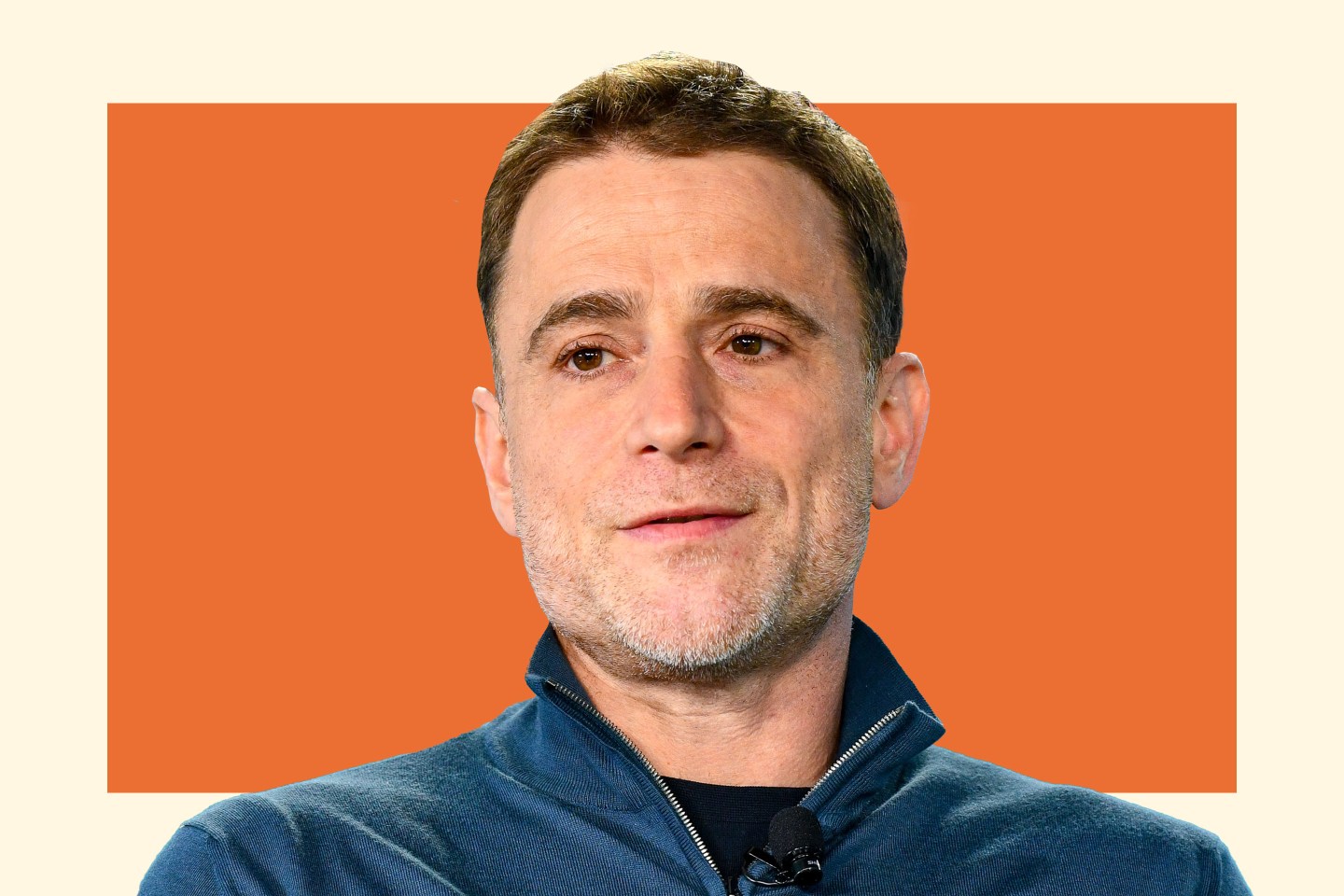
Stewart Butterfield, Co-founder and CEO, Slack
Stewart Butterfield, Co-founder and CEO, Slack Photograph by Stuart Isett for Fortune Magazine

Despite more workers being back in office than at any point since the pandemic began, bosses are still failing to get all of them back at their desks.

The trick, says Slack cofounder and CEO Stewart Buttefield, is to make workers feel like it’s their own decision. That involves valuing them.

“People do want structure, and people like boundaries,” Butterfield told Fortune editor-in-chief Alyson Shontell during a panel this week on Connect, Fortune’s education community. “But they don’t like to be told what to do, so I think the secret is to not make them feel like their autonomy is being denied or that their ideas aren’t important, while still giving some structure.” 

That structure, he went on, is much harder to pin down. He said he appreciates the frustrations and challenges among managers and employees alike. “But I think in both cases, it really is an opportunity to reimagine, and that’s what people really want.”

That’s all coming from the CEO of a company whose entire purpose is making a distributed workforce more feasible.

Slack’s business hinges on enabling teams to work productively from across the globe, and for Butterfield, grasping the limits and possibilities of that is paramount. Slack itself embraces asynchronous, location-flexible work, bolstered by its own data and research. In September 2020, it launched think tank Future Forum, aimed at providing insights to companies trying to master the new digital-first workplace. 

Recent research from Future Forum has found that 80% of employees want flexibility in where they work, and 94% want flexibility in when they work. “It’s not just being able to live somewhere else, though that’s important,” Butterfield remarked to Shontell. “It’s the flexibility.”

He recounted a recent conversation with Slack’s head of North America sales, who signs off from work early every Thursday to coach his son’s 4 p.m. little league games. 

“He never would have been able to do that [pre-pandemic],” Butterfield said, noting that he himself has a one-and-a-half-year-old, with whom his relationship would have been different in a pre-pandemic world, where he would have struggled “to get home a couple of nights a week” before his son was in bed.

Now that remote work has proven that it’s possible for people to carve out time for such day-to-day moments with their loved ones, he said, “people are unlikely to be able to give that opportunity up.”

Unlikely may be an understatement. Flexible work has gone from perk to expectation among many workers, who would go so far as to put the value of flexibility on par with getting a heftier paycheck or the opportunity to climb the ladder. Most workers will threaten to leave a job if a flexible arrangement isn’t on the table.

There’s no going backward in the remote work war, Butterfield concluded. He hopes bosses can reimagine the actual methods they use in the workplace, from meetings and documentation to tracking and measuring progress against its priorities—all of which Butterfield’s team is constantly monitoring. 

He says that bosses, to their great detriment, are busy trying to implement pre-pandemic ways in the “New World” rather than seeing this newfound flexibility “as an opportunity.”

Sign up for the Fortune Features email list so you don’t miss our biggest features, exclusive interviews, and investigations.

About the Author
By Jane Thier
LinkedIn iconTwitter icon
See full bioRight Arrow Button Icon

Latest in Success

Rich woman lounging on boat
SuccessWealth
The wealthy 1% are turning to new status symbols that can’t be bought—and it’s hurting Dior, Versace, and Burberry
By Emma BurleighDecember 3, 2025
14 hours ago
Alex Karp smiles on stage
Big TechPalantir Technologies
Alex Karp credits his dyslexia for Palantir’s $415 billion success: ‘There is no playbook a dyslexic can master … therefore we learn to think freely’
By Lily Mae LazarusDecember 3, 2025
15 hours ago
Startups & VentureLeadership Next
Only social media platforms with ‘real humanity’ will survive, investor and Reddit cofounder Alexis Ohanian says
By Fortune EditorsDecember 3, 2025
16 hours ago
SuccessEducation
Scott Galloway got mostly B’s and C’s in high school, never studied for the SAT, and had to try twice to get into UCLA. Now he’s worth $150 million
By Sydney LakeDecember 3, 2025
17 hours ago
Billie Eilish
SuccessBillionaires
While Billie Eilish slams non-philanthropic billionaires, this CEO says telling people what to do with their cash is ‘invasive’ and to ‘butt out’
By Jessica CoacciDecember 3, 2025
17 hours ago
Tony Cuccio posing in a chair
C-SuiteMillionaires
Tony Cuccio started with $200 selling beauty products on Venice Beach. Then he brought gel nails to the masses—and forged a $2 billion empire
By Dave SmithDecember 3, 2025
18 hours ago

Most Popular

placeholder alt text
North America
Jeff Bezos and Lauren Sánchez Bezos commit $102.5 million to organizations combating homelessness across the U.S.: ‘This is just the beginning’
By Sydney LakeDecember 2, 2025
2 days ago
placeholder alt text
Economy
Ford workers told their CEO 'none of the young people want to work here.' So Jim Farley took a page out of the founder's playbook
By Sasha RogelbergNovember 28, 2025
6 days ago
placeholder alt text
North America
Anonymous $50 million donation helps cover the next 50 years of tuition for medical lab science students at University of Washington
By The Associated PressDecember 2, 2025
2 days ago
placeholder alt text
C-Suite
MacKenzie Scott's $19 billion donations have turned philanthropy on its head—why her style of giving actually works
By Sydney LakeDecember 2, 2025
2 days ago
placeholder alt text
Innovation
Google CEO Sundar Pichai says we’re just a decade away from a new normal of extraterrestrial data centers
By Sasha RogelbergDecember 1, 2025
3 days ago
placeholder alt text
Economy
Scott Bessent calls the Giving Pledge well-intentioned but ‘very amorphous,’ growing from ‘a panic among the billionaire class’
By Nick LichtenbergDecember 3, 2025
16 hours ago
Rankings
  • 100 Best Companies
  • Fortune 500
  • Global 500
  • Fortune 500 Europe
  • Most Powerful Women
  • Future 50
  • World’s Most Admired Companies
  • See All Rankings
Sections
  • Finance
  • Leadership
  • Success
  • Tech
  • Asia
  • Europe
  • Environment
  • Fortune Crypto
  • Health
  • Retail
  • Lifestyle
  • Politics
  • Newsletters
  • Magazine
  • Features
  • Commentary
  • Mpw
  • CEO Initiative
  • Conferences
  • Personal Finance
  • Education
Customer Support
  • Frequently Asked Questions
  • Customer Service Portal
  • Privacy Policy
  • Terms Of Use
  • Single Issues For Purchase
  • International Print
Commercial Services
  • Advertising
  • Fortune Brand Studio
  • Fortune Analytics
  • Fortune Conferences
  • Business Development
About Us
  • About Us
  • Editorial Calendar
  • Press Center
  • Work At Fortune
  • Diversity And Inclusion
  • Terms And Conditions
  • Site Map

© 2025 Fortune Media IP Limited. All Rights Reserved. Use of this site constitutes acceptance of our Terms of Use and Privacy Policy | CA Notice at Collection and Privacy Notice | Do Not Sell/Share My Personal Information
FORTUNE is a trademark of Fortune Media IP Limited, registered in the U.S. and other countries. FORTUNE may receive compensation for some links to products and services on this website. Offers may be subject to change without notice.