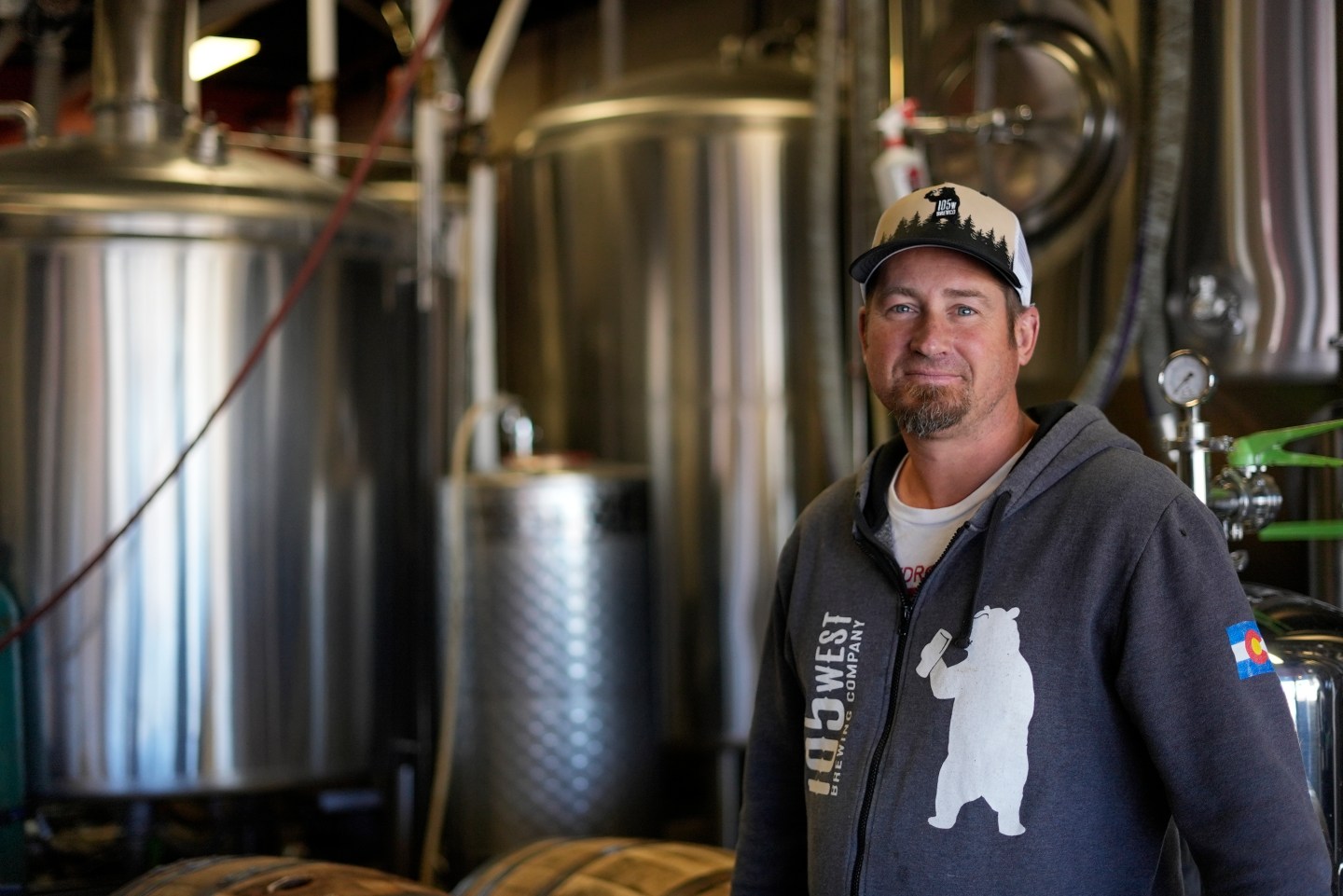
When Eric Seufert brewed a test batch of beer in 2017 with water from recycled sewage, he wasn’t too concerned about the outcome. The engineering firm that approached him about the test explained the process, and together they sipped samples of recycled water. Seufert quickly understood it wasn’t too different from how water is normally handled.
“Every stream and river in this country has someone putting in their wastewater after they’ve treated it,” he said.
After tapping the keg and having a taste, the owner of 105 West Brewing Co. in Castle Rock, Colorado proudly served it at his bar.
Brewing beer, cooking food, and refilling water bottles with recycled wastewater could soon become standard practice in a state that’s synonymous with its pristine-tasting snowmelt and mountain springs.
Last week, Colorado’s water quality agency gave unanimous preliminary approval to regulate direct potable reuse — the process of treating sewage and sending it directly to taps without first being dispersed in a larger water body. Pending a final vote in November, the state would become the first to adopt direct potable reuse regulations, according to WateReuse, a national group advocating for the method.
“Having well-developed regulations … helps ensure projects are safe and that project proponents know what will be required of them,” said Laura Belanger, water resources engineer with the non-profit Western Resource Advocates.
As the state’s population explodes and regional water supplies dwindle, recycling water for drinking is a significant opportunity for stretching a limited supply, said Kevin Reidy, conservation specialist for the Colorado Water Conservation Board. And he said it’s a game changer in a place like Castle Rock, a city of 75,000 just south of Denver nestled under its prominent namesake butte, that relies primarily on pumping finite groundwater for drinking.
“I think it’s an important tool for the long term because it gives water providers options to respond to future scarcity of water supplies, whether drought-driven or other reasons,” said Mark Marlowe, director of Castle Rock Water.
The utility already reuses about 14% of its wastewater, sending it to a creek from the treatment plant, and re-drawing it farther downstream. But as climate change leads to more arid conditions in the western U.S., the creek’s flow is becoming less reliable.
With a dry bed, water is “lost” into the ground rather than recaptured and sent back out to taps. Blending highly treated wastewater directly at the facility would eliminate that climate risk, Marlowe said.
The process, which typically entails disinfecting wastewater with ozone gas or ultraviolet light to remove viruses and bacteria, then filtering it through membranes with microscopic pores to remove solids and trace contaminants, is gaining interest as communities grapple with extended droughts. While many U.S. states don’t explicitly prohibit this type of water reuse, developing statewide standards can encourage more rapid adoption, said Reidy of the Colorado conservation board.
There are no specific federal regulations for direct potable reuse. However, projects have to comply with federal health standards for drinking water.
Like many Colorado cities, Castle Rock is still evaluating the cost and urgency of adopting direct potable reuse, but plans to begin testing next year so they can be ready to move quickly if needed. Even so, it could be three to five years before the new source is available.
That’s actually a short timeline for developing a new water supply, much speedier than building a reservoir over 20 to 30 years, said Reidy. “You’re looking at the long-term viewpoint.”
The interest is widely shared among other Colorado Front Range cities, many involved in the rule making process. The region anticipates rapid population growth over the next few decades, and treating sewage for drinking is how that growth will be met, said Greg Baker of Aurora Water.
“It becomes more and more difficult to acquire new water,” Baker said. “The more we can take advantage of water we already have, the better for all of us.”
Treated wastewater from local rivers and creeks often must be returned to the source for downstream users, who are owed minimum flows as required by various laws. But imports, such as Colorado River water pumped over the continental divide and down to the Front Range, can in many cases be completely used up.
Nearly all the water in Aurora can be reused. The city is currently reusing about 10%, filtered through the South Platte River bank, and is well-positioned to accommodate future growth by expanding recycling, Baker said.
Florida, California and Arizona are moving swiftly to adopt regulations as well, and a handful of other states are beginning the process or have existing projects. As conditions continue to decline on the Colorado River, Arizona faces deep mandatory water cuts, while pressure mounts for California to give up more of its share — a strong incentive to find ways to stretch what they have.
Denver and Colorado Springs — the state’s most populous cities — already recycle the majority of their water through downstream exchanges with other cities and for non-drinking uses, such as watering parks. Both expect to someday recycle water for drinking purposes, but officials are concerned their reusable supplies from the stressed Colorado River soon could face mandatory reductions.
“If you’ve built a big direct potable reuse system and you don’t have it even for a few years, that causes some problems,” said Greg Fisher, demand planning manager at Denver Water.
“If we are relying on those reusable (drinking water) supplies to meet our customers’ needs, our ability to meet their needs is put at risk,” Fisher said.
Water recycling projects can carry a large price tag, although federal funding is available. The Environmental Protection Agency offers low-cost loans for water infrastructure projects, including recycling. Through the U.S. Bureau of Reclamation’s water recycling programs, the Bipartisan Infrastructure Law offers over $1 billion over the next five years for non-federal water recycling projects.
As part of the program, $20 million was recently granted to El Paso’s water board to help construct a direct potable reuse facility. The project is expected to save 13,000 acre-feet of water annually — enough to supply about 26,000 households.
Not all projects will meet requirements for federal assistance, so costs could fall to users. But delaying reuse and relying on new water — if it’s available — can be expensive.
“You have to compare it to the cost of new supplies and where you’ll store that,” Reidy said.
Seufert already knows he can make good beer from recycled water. He’s more worried about keeping the cost of business down.
“I’m concerned that the resources will be there for the planned growth in an affordable way for this region,” Seufert said. “But, as of now, I trust that they’re working on it.”
___
The Associated Press receives support from the Walton Family Foundation for coverage of water and environmental policy. The AP is solely responsible for all content. For all of AP’s environmental coverage, visit https://apnews.com/hub/climate-and-environment
Sign up for the Fortune Features email list so you don’t miss our biggest features, exclusive interviews, and investigations.