• Home
  • Latest
  • Fortune 500
  • Finance
  • Tech
  • Leadership
  • Lifestyle
  • Rankings
  • Multimedia

Trendingnow

1

Mark Cuban says he has the solution to growing income inequality, and it's to reward every employee—from CEO to janitor—with company stock

2

‘I want to die broke’: Billionaire philanthropist Denny Sanford dies after giving away $4 billion

3

'Dr. Doom' Nouriel Roubini says we're headed for universal basic income or 'some form of socialism' as AI revolutionizes work—He calls that optimistic

1

Mark Cuban says he has the solution to growing income inequality, and it's to reward every employee—from CEO to janitor—with company stock

2

‘I want to die broke’: Billionaire philanthropist Denny Sanford dies after giving away $4 billion

3

'Dr. Doom' Nouriel Roubini says we're headed for universal basic income or 'some form of socialism' as AI revolutionizes work—He calls that optimistic
CommentaryESG Investing

Was Milton Friedman the first ‘woke’ capitalist?

By
Terrence Keeley
Terrence Keeley
Down Arrow Button Icon
By
Terrence Keeley
Terrence Keeley
Down Arrow Button Icon
October 17, 2022, 6:50 AM ET
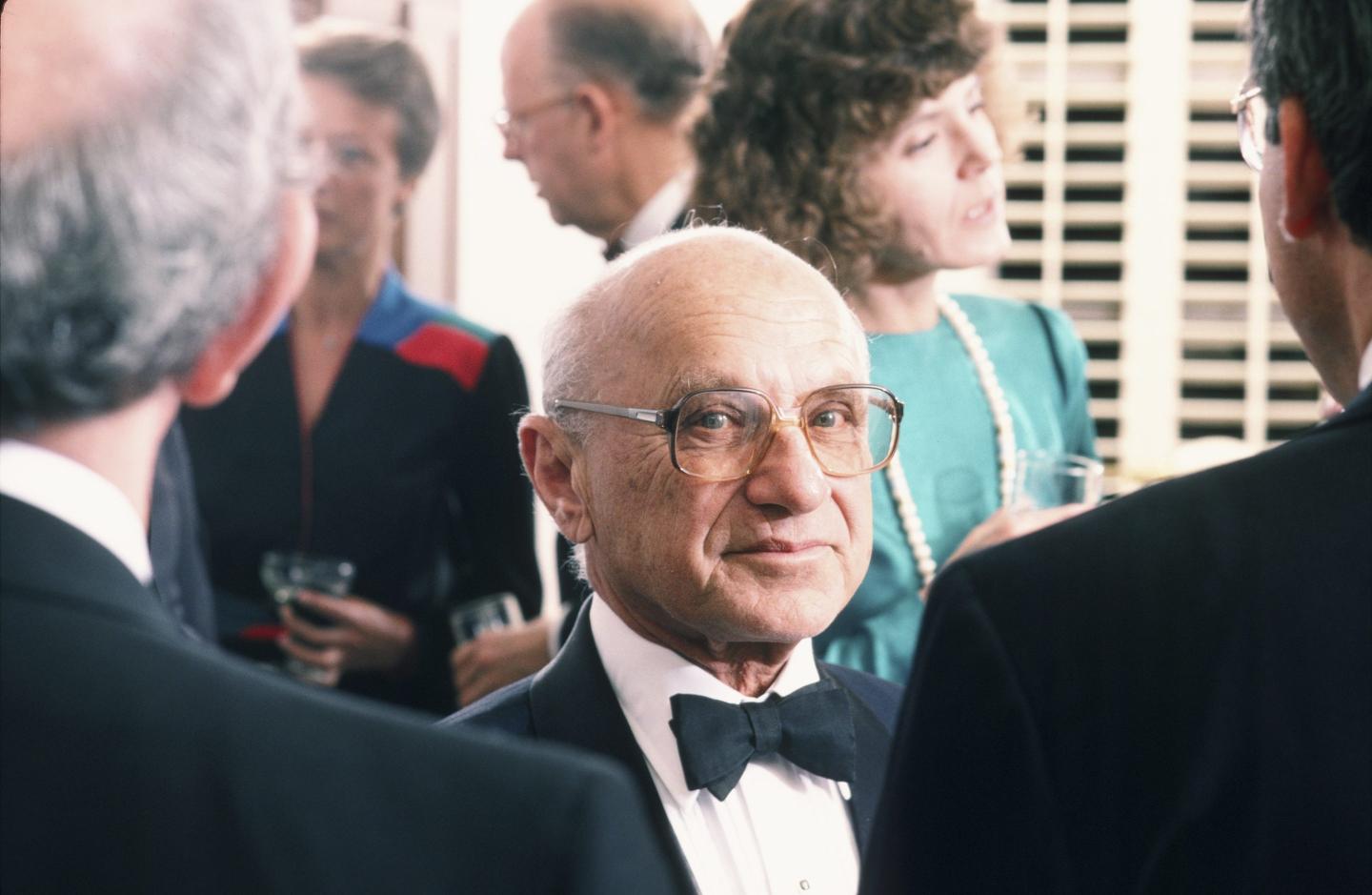
Economist Milton Friedman in 1986
The concepts of social and environmental consciousness have increasingly become our ethical norms, as the Nobel Prize–winning economist Milton Friedman anticipated.George Rose - Getty Images
Add Fortune on Google for similar content.

A bitter battle between “stakeholder” and “shareowner” capitalists is heating up again, with BlackRock CEO Larry Fink and entrepreneur Vivek Ramaswamy pitted against each other. If Milton Friedman had anything to say about it, however, Fink and Ramaswamy would be locking arms rather than trading blows.

Like most conflicts, the perennial stakeholder-vs.-shareowner controversy is born largely of a misunderstanding. Milton Friedman’s famous 1970 essay never stated corporations should maximize profits at all costs. Instead, he wrote they should “make as much money as possible while conforming to the basic rules of society, both those embodied in law and ethical custom.” Friedman also said shareowners are the final arbiters of relevant rules and customs. “In a free enterprise, private property system, a corporate executive is an employee of the owners of the business.”

Since 1970, shareowners have broadly operated as Friedman would hope. They have repeatedly intervened to improve their own long-term welfare.

For example, in the ’70s, the bankruptcy of Penn Central and repeated corporate bribery scandals led shareowners and the SEC to require independent audit committees. It worked. No corporate bankruptcy larger than Penn Central’s took place for more than three decades, until Enron’s, in 2001. In the ’80s and ’90s, institutional investors led by public pension plans like Calpers imposed performance-based executive pay guidelines and poison-pill takeover protections, in an effort to mute excesses in CEO pay and hostile takeovers. Victor Posner—who was once reported to “have the arrogance of a banana republic dictator”—had grown infamous for buying corporations like Sharon Steel and paying himself multiples of what his aggressed targets earned. No more.

From 1991 to 1993, underperforming CEOs at Westinghouse, American Express, IBM, Kodak, and General Motors were removed through the actions of their shareowners, not their boards.

Later, the global financial crisis of 2007–09 uncovered serious misalignments between compensation incentives and shareowner interests, as well as widespread risk management lapses. Stronger balance sheets and professional risk management became core shareowner priorities. So did deferred compensation packages and claw-back provisions.

In the past few years, shareowner resolutions have focused more on environmental and social concerns. In 2021, 81% of Dupont’s shareowners supported a proposal requiring the company to disclose how many of its plastic pellets end up in landfills and oceans each year (apparently, about 10 trillion). In the same year, 95% of Wendy’s shareowners required management to join the “fair food program” to support safer working conditions in the COVID era, something most other fast-food companies had already done.

Each of these shareowner interventions shares the same broad cause and effect: In every case, shareowners imposed some short-term cost in exchange for more probable, long-term gains. One can also appreciate why. Most shareowners are future pensioners, plan sponsors, insurance companies, or sovereign wealth funds—i.e., individuals or institutions with long-term liabilities. Their financial needs span generations of corporate leadership, not just the next few quarters. Most shareowners want their long-term welfare to be maximized.

The stakeholder paradigm has always rested on shaky ground. Corporations shouldn’t risk displacing essential growth priorities with potentially superfluous, tenuous, fleeting, and/or socially divisive ones. Stakeholder capitalists have no proven optimization models or track record upon which they could base any broad competency claims.

The same cannot be said of shareowners. They have the legal right to order corporate bosses around coupled with a proven record of success. That’s why Friedman wanted the buck to stop with shareowners, not stakeholders. Shareowners bear the direct consequences of their orders. Incentives are aligned.

It’s a sign of the times that the stakeholder-vs.-shareowner debate has been resurrected. Contrived “red-vs.-blue” conflicts are a pernicious, modern affliction. Besides, avid students of corporate purpose know this debate was effectively resolved 17 years ago—by none other than Milton Friedman and Whole Foods CEO John Mackey.

In a friendly 2005 symposium on the topic with then 96-year-old Milton Friedman, John Mackey stated, “Free-enterprise capitalism is the most powerful system for social cooperation and human progress ever conceived.” Friedman unhesitantly agreed. “The differences between John Mackey and me regarding the social responsibility of business are…rhetorical. Strip off all the camouflage and it turns out we are in essential agreement.”

Today, shareowners legally insist companies make as much money as possible. They further expect executives to do so in a manner that is socially and environmentally sustainable. Why? Because the concepts of social and environmental consciousness have increasingly become our ethical norms, as Milton Friedman anticipated.

Free enterprise capitalism will continue to generate the greatest benefits for the greatest number, and mindful shareowners will continue to guide free enterprise capitalism to do so for as long as possible.

Stated more simply, there are no substantive differences between stakeholder welfare and long-term shareowner welfare. Larry Fink and Vivek Ramaswamy can live in peace, after all.

Terrence R. Keeley is the CEO of 1PointSix and the author of  Sustainable by Columbia University Press.

The opinions expressed in Fortune.com commentary pieces are solely the views of their authors and do not necessarily reflect the opinions and beliefs of Fortune.

More must-read commentary published by Fortune:

  • The Fed is oversteering on inflation–every signal suggests it’s already cooling
  • The IFRC wants to leverage financial markets to keep up with the world’s unprecedented humanitarian needs. Here’s how
  • I got rich by betting that inequality would destroy the U.S. and U.K. I’m sorry
  • Remote work isn’t hurting our mental well-being. The lack of work-life boundaries is
Sign up for the Fortune Features email list so you don’t miss our biggest features, exclusive interviews, and investigations.
About the Author
By Terrence Keeley
See full bioRight Arrow Button Icon
Add Fortune on Google for similar content.

Latest in Commentary

Finance
Lorem ipsum dolor sit amet, consectetur adipiscing elit, sed do eiusmod tempor incididunt ut labore et dolore magna aliqua. Ut enim ad minim veniam
By Fortune Editors
October 20, 2025
Finance
Lorem ipsum dolor sit amet, consectetur adipiscing elit, sed do eiusmod tempor incididunt ut labore et dolore magna aliqua. Ut enim ad minim veniam
By Fortune Editors
October 20, 2025
Finance
Lorem ipsum dolor sit amet, consectetur adipiscing elit, sed do eiusmod tempor incididunt ut labore et dolore magna aliqua. Ut enim ad minim veniam
By Fortune Editors
October 20, 2025
Finance
Lorem ipsum dolor sit amet, consectetur adipiscing elit, sed do eiusmod tempor incididunt ut labore et dolore magna aliqua. Ut enim ad minim veniam
By Fortune Editors
October 20, 2025
Finance
Lorem ipsum dolor sit amet, consectetur adipiscing elit, sed do eiusmod tempor incididunt ut labore et dolore magna aliqua. Ut enim ad minim veniam
By Fortune Editors
October 20, 2025
Finance
Lorem ipsum dolor sit amet, consectetur adipiscing elit, sed do eiusmod tempor incididunt ut labore et dolore magna aliqua. Ut enim ad minim veniam
By Fortune Editors
October 20, 2025

Most Popular

Finance
Lorem ipsum dolor sit amet, consectetur adipiscing elit, sed do eiusmod tempor incididunt ut labore et dolore magna aliqua. Ut enim ad minim veniam
By Fortune Editors
October 20, 2025
Finance
Lorem ipsum dolor sit amet, consectetur adipiscing elit, sed do eiusmod tempor incididunt ut labore et dolore magna aliqua. Ut enim ad minim veniam
By Fortune Editors
October 20, 2025
Finance
Lorem ipsum dolor sit amet, consectetur adipiscing elit, sed do eiusmod tempor incididunt ut labore et dolore magna aliqua. Ut enim ad minim veniam
By Fortune Editors
October 20, 2025
Finance
Lorem ipsum dolor sit amet, consectetur adipiscing elit, sed do eiusmod tempor incididunt ut labore et dolore magna aliqua. Ut enim ad minim veniam
By Fortune Editors
October 20, 2025
Finance
Lorem ipsum dolor sit amet, consectetur adipiscing elit, sed do eiusmod tempor incididunt ut labore et dolore magna aliqua. Ut enim ad minim veniam
By Fortune Editors
October 20, 2025
Finance
Lorem ipsum dolor sit amet, consectetur adipiscing elit, sed do eiusmod tempor incididunt ut labore et dolore magna aliqua. Ut enim ad minim veniam
By Fortune Editors
October 20, 2025
Fortune Secondary Logo
Rankings
  • 100 Best Companies
  • Fortune 500
  • Global 500
  • Fortune 500 Europe
  • Most Powerful Women
  • World's Most Admired Companies
  • See All Rankings
  • Lists Calendar
Sections
  • Finance
  • Fortune Crypto
  • Features
  • Leadership
  • Health
  • Commentary
  • Success
  • Retail
  • Mpw
  • Tech
  • Lifestyle
  • CEO Initiative
  • Asia
  • Politics
  • Conferences
  • Europe
  • Newsletters
  • Personal Finance
  • Environment
  • Magazine
  • Education
Customer Support
  • Frequently Asked Questions
  • Customer Service Portal
  • Privacy Policy
  • Terms Of Use
  • Single Issues For Purchase
  • International Print
Commercial Services
  • Advertising
  • Fortune Brand Studio
  • Fortune Analytics
  • Fortune Conferences
  • Business Development
  • Group Subscriptions
About Us
  • About Us
  • Press Center
  • Work At Fortune
  • Terms And Conditions
  • Site Map
  • About Us
  • Press Center
  • Work At Fortune
  • Terms And Conditions
  • Site Map
  • Facebook icon
  • Twitter icon
  • LinkedIn icon
  • Instagram icon
  • Pinterest icon

Latest in Commentary

Sumeet Agrawal is VP of Product Management (Data, AI Governance & Context Engineering for Agentic Systems) at Salesforce.
CommentaryAI agents
Salesforce VP on the leaky AI pipeline: why cheaper tokens won’t fix enterprise AI
By Sumeet AgrawalJuly 20, 2026
17 hours ago
japan
CommentaryJapan
Japan’s monetary conundrum — why the yen hit a 40-year low as interest rates hit a 31-year high
By Steve H. Hanke and John GreenwoodJuly 20, 2026
19 hours ago
ryan
CommentaryLeadership
I’ve interviewed 700 leaders. The ones outsourcing their thinking to AI lose their best people first
By Ryan HawkJuly 20, 2026
20 hours ago
ranch
CommentaryWorld Cup
Ranch dressing is quietly doing America’s diplomacy for it
By David BohigianJuly 19, 2026
2 days ago
jt
CommentaryRetirement
Gen X built their whole identity on never needing help. Retirement is the one door they can’t unlock alone
By Jeanne ThompsonJuly 19, 2026
2 days ago
biden
CommentaryLeadership
Ginsburg and Biden’s blind spot: when leaders don’t know when to leave
By Michael SonnenfeldtJuly 19, 2026
2 days ago

Most Popular

Mark Cuban says he has the solution to growing income inequality, and it's to reward every employee—from CEO to janitor—with company stock
Success
Mark Cuban says he has the solution to growing income inequality, and it's to reward every employee—from CEO to janitor—with company stock
By Sasha RogelbergJuly 20, 2026
14 hours ago
‘I want to die broke’: Billionaire philanthropist Denny Sanford dies after giving away $4 billion
Success
‘I want to die broke’: Billionaire philanthropist Denny Sanford dies after giving away $4 billion
By Sydney LakeJuly 20, 2026
18 hours ago
'Dr. Doom' Nouriel Roubini says we're headed for universal basic income or 'some form of socialism' as AI revolutionizes work—He calls that optimistic
AI
'Dr. Doom' Nouriel Roubini says we're headed for universal basic income or 'some form of socialism' as AI revolutionizes work—He calls that optimistic
By Jason MaJuly 18, 2026
2 days ago
Warren Buffett says his $147 billion investing career was an accident: ‘I may be one of the 10 luckiest in the world’
Future of Work
Warren Buffett says his $147 billion investing career was an accident: ‘I may be one of the 10 luckiest in the world’
By Sarah GlodekJuly 20, 2026
1 day ago
Current price of silver as of Monday, July 20, 2026
Personal Finance
Current price of silver as of Monday, July 20, 2026
By Joseph HostetlerJuly 20, 2026
22 hours ago
It’s not just Taco Bell lettuce and possible glass in Pillsbury rolls: Food and drink recall events reached a 6-year year-over-year high
Retail
It’s not just Taco Bell lettuce and possible glass in Pillsbury rolls: Food and drink recall events reached a 6-year year-over-year high
By Sasha RogelbergJuly 20, 2026
22 hours ago

© 2026 Fortune Media IP Limited. All Rights Reserved. Use of this site constitutes acceptance of our Terms of Use and Privacy Policy | CA Notice at Collection and Privacy Notice | Do Not Sell/Share My Personal Information
FORTUNE is a trademark of Fortune Media IP Limited, registered in the U.S. and other countries. FORTUNE may receive compensation for some links to products and services on this website. Offers may be subject to change without notice.