• Home
  • Latest
  • Fortune 500
  • Finance
  • Tech
  • Leadership
  • Lifestyle
  • Rankings
  • Multimedia
ConferencesMPW Summit

Transformation executives have had to overhaul their companies since the pandemic. The one thing they can’t do without: Employees

Paolo Confino
By
Paolo Confino
Paolo Confino
Reporter
Down Arrow Button Icon
Paolo Confino
By
Paolo Confino
Paolo Confino
Reporter
Down Arrow Button Icon
October 12, 2022, 1:55 PM ET
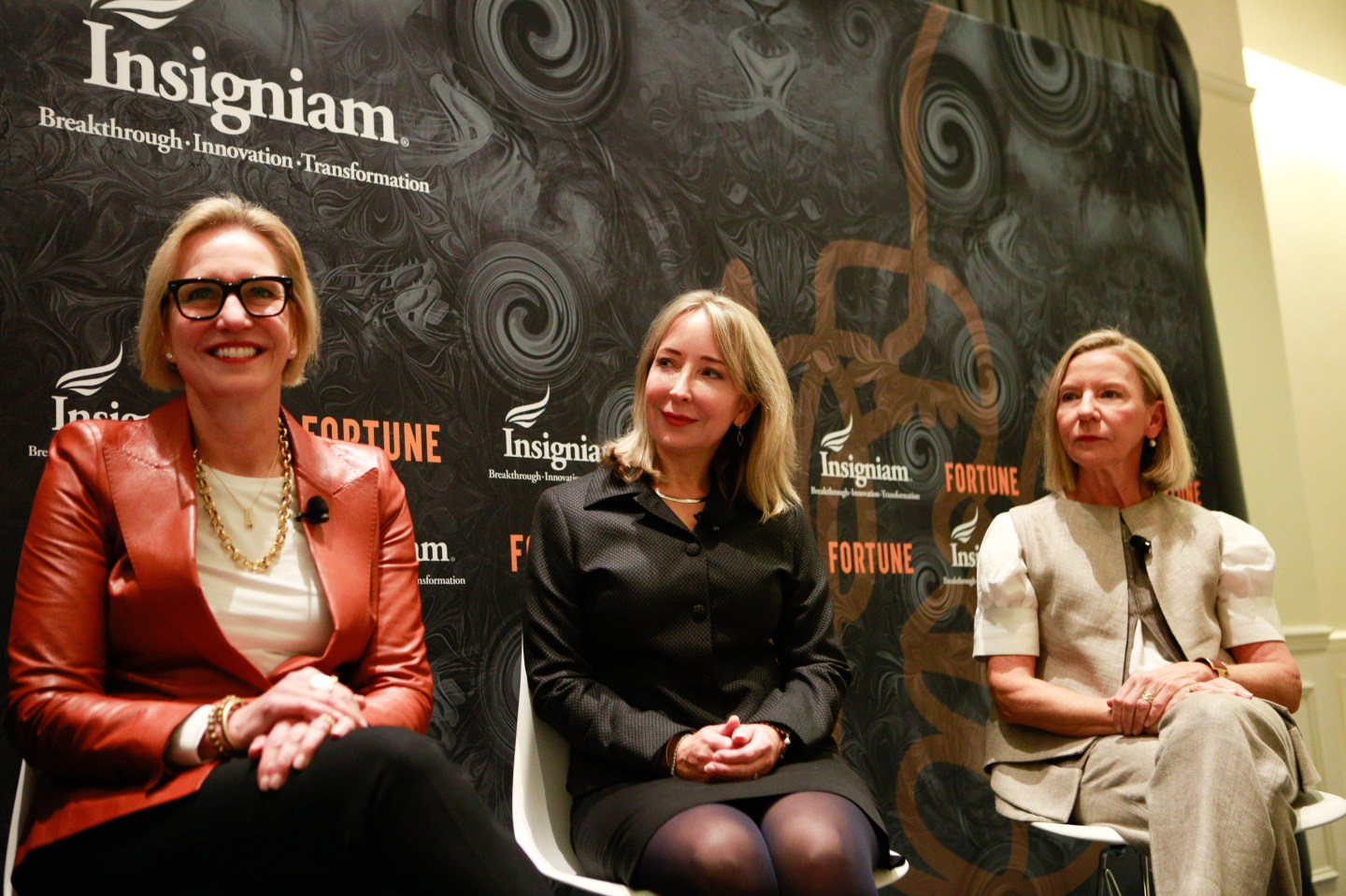
A conversation at Fortune's Most Powerful Women Summit about the challenges forcing businesses to transform ended up centering on the importance of valuing employees throughout the process. Laguna Niguel, Calif., October 11, 2022.
A conversation at Fortune's Most Powerful Women Summit about the challenges forcing businesses to transform ended up centering on the importance of valuing employees throughout the process. Laguna Niguel, Calif., October 11, 2022.Kristy Walker for Fortune

The importance of chief transformation officers can be illustrated by the variety of problems they’re asked to solve, from the future of work to the macroeconomic question of an impending recession, or the business implications of the geopolitical war in Ukraine.

A panel with four transformation executives at Fortune‘s Most Powerful Women Summit was supposed to touch on all of these; instead it ended up focusing on a single topic that provided a through line for all the problems facing businesses: people.  

“Employees will be your superheroes and they will show up,” said MetLife chief human resource officer Susan Podlogar.

“If you don’t have change management and transformation as a competency, that’s like not having an IT group, or not having a finance group,” said Novant Health chief transformation officer Angela Yochem. “It’d be a ludicrous idea.”

The pandemic thrust people’s relationship to work to the forefront and meant that employees started demanding a greater degree of empathy from their employers. 

“Long-term, what’s really top of mind—because I run HR—is the changing workplace,” said Podlogar. “You’re looking at the disintermediation of managers, the changing worker in just the relationship the worker has to work.” 

It was a sentiment shared by everyone on the panel, who—regardless of their field—recognized that implementing organizational transformations required a renewed focus on valuing employees and acknowledging the extent of their efforts since the pandemic’s outset in March 2020.

Novant Health’s Yochem implemented new “resiliency programs” for the nursing staff, who witnessed the most acute difficulties at the height of the pandemic and were contemplating leaving the industry altogether.

“A nurse might have graduated from nursing school, gone to work, and over the course of his or her tenure might have seen one or two patients pass a year. In COVID, it was five to 10 a night. No one is prepared to see that. No one,” she said. 

The need to empathize and be “really human” with employees has become a top priority across all industries, not just those most directly affected by the pandemic, said U.S. Chamber of Commerce chief relationship officer Elizabeth Baker Keffer, who represents 80% of the companies on the Fortune 100. 

Interestingly, though, Podlogar acknowledged that while employees might want (and need) more support from their managers they might not always need more oversight.

“We are overmanaging employees, because if you give them a challenge, they will rise to the occasion,” she said, underscoring a change almost certainly brought on by the rise of remote work and the now broadly accepted notion of work-life balance.

Employees are also starting to expect that their companies rise to the occasion and speak out on social issues that affect their lives. “In particular, what [our members] have been asking us is to help them navigate how they respond to social issues,” Keffer said. “They’re seeing employee bases that are, much like the rest of the country, 50/50. So, it’s very hard for them to make a right decision when they stand up on an issue, whether it’s gun control or voting rights or Dobbs.” 

Employers might have to solve pressing business needs of an energy shortages or supply chain disruptions, all while effectively navigating their employees’ evolving desire for more empathy in the workplace. But the organizations most comfortable with the ambiguity of the future will be best poised to transform effectively. 

“I don’t believe that complexity is something to be feared,” said Shideh Bina, founding partner of the consulting firm Insigniam. “Complexity can be beautiful. It can be magic, if you are willing to stand in the chaos and move forward toward your ambition.”

Sign up for the Fortune Features email list so you don’t miss our biggest features, exclusive interviews, and investigations.
About the Author
Paolo Confino
By Paolo ConfinoReporter

Paolo Confino is a former reporter on Fortune’s global news desk where he covers each day’s most important stories.

See full bioRight Arrow Button Icon

Latest from our Conferences

InnovationBrainstorm AI
Backflips are easy, stairs are hard: Robots still struggle with simple human movements, experts say
By Nicholas GordonDecember 11, 2025
2 days ago
ConferencesBrainstorm AI
Exelon CEO: The ‘warning lights are on’ for U.S. electric grid resilience and utility prices amid AI demand surge
By Jordan BlumDecember 9, 2025
4 days ago
AIBrainstorm Design
AI’s reliance on patterns can lead to ‘somewhat mediocre’ results, warns CEO of design consultancy IDEO
By Andrew StaplesDecember 9, 2025
4 days ago
Logo of Fortune Brainstorm AI conference
ConferencesBrainstorm AI
Fortune Brainstorm AI 2025 Livestream
By Fortune EditorsDecember 8, 2025
5 days ago
Workplace CultureBrainstorm Design
How two leaders used design thinking and a focus on outcomes to transform two Fortune 500 giants
By Christina PantinDecember 4, 2025
10 days ago
Workplace CultureBrainstorm Design
Designer Kevin Bethune: Bringing ‘disparate disciplines around the table’ is how leaders can ‘problem solve the future’
By Fortune EditorsDecember 3, 2025
10 days ago

Most Popular

placeholder alt text
Economy
Tariffs are taxes and they were used to finance the federal government until the 1913 income tax. A top economist breaks it down
By Kent JonesDecember 12, 2025
2 days ago
placeholder alt text
Success
Apple cofounder Ronald Wayne sold his 10% stake for $800 in 1976—today it’d be worth up to $400 billion
By Preston ForeDecember 12, 2025
1 day ago
placeholder alt text
Success
40% of Stanford undergrads receive disability accommodations—but it’s become a college-wide phenomenon as Gen Z try to succeed in the current climate
By Preston ForeDecember 12, 2025
1 day ago
placeholder alt text
Economy
The Fed just ‘Trump-proofed’ itself with a unanimous move to preempt a potential leadership shake-up
By Jason MaDecember 12, 2025
1 day ago
placeholder alt text
Economy
For the first time since Trump’s tariff rollout, import tax revenue has fallen, threatening his lofty plans to slash the $38 trillion national debt
By Sasha RogelbergDecember 12, 2025
1 day ago
placeholder alt text
Success
Apple CEO Tim Cook out-earns the average American’s salary in just 7 hours—to put that into context, he could buy a new $439,000 home in just 2 days
By Emma BurleighDecember 12, 2025
1 day ago
Rankings
  • 100 Best Companies
  • Fortune 500
  • Global 500
  • Fortune 500 Europe
  • Most Powerful Women
  • Future 50
  • World’s Most Admired Companies
  • See All Rankings
Sections
  • Finance
  • Leadership
  • Success
  • Tech
  • Asia
  • Europe
  • Environment
  • Fortune Crypto
  • Health
  • Retail
  • Lifestyle
  • Politics
  • Newsletters
  • Magazine
  • Features
  • Commentary
  • Mpw
  • CEO Initiative
  • Conferences
  • Personal Finance
  • Education
Customer Support
  • Frequently Asked Questions
  • Customer Service Portal
  • Privacy Policy
  • Terms Of Use
  • Single Issues For Purchase
  • International Print
Commercial Services
  • Advertising
  • Fortune Brand Studio
  • Fortune Analytics
  • Fortune Conferences
  • Business Development
About Us
  • About Us
  • Editorial Calendar
  • Press Center
  • Work At Fortune
  • Diversity And Inclusion
  • Terms And Conditions
  • Site Map

© 2025 Fortune Media IP Limited. All Rights Reserved. Use of this site constitutes acceptance of our Terms of Use and Privacy Policy | CA Notice at Collection and Privacy Notice | Do Not Sell/Share My Personal Information
FORTUNE is a trademark of Fortune Media IP Limited, registered in the U.S. and other countries. FORTUNE may receive compensation for some links to products and services on this website. Offers may be subject to change without notice.