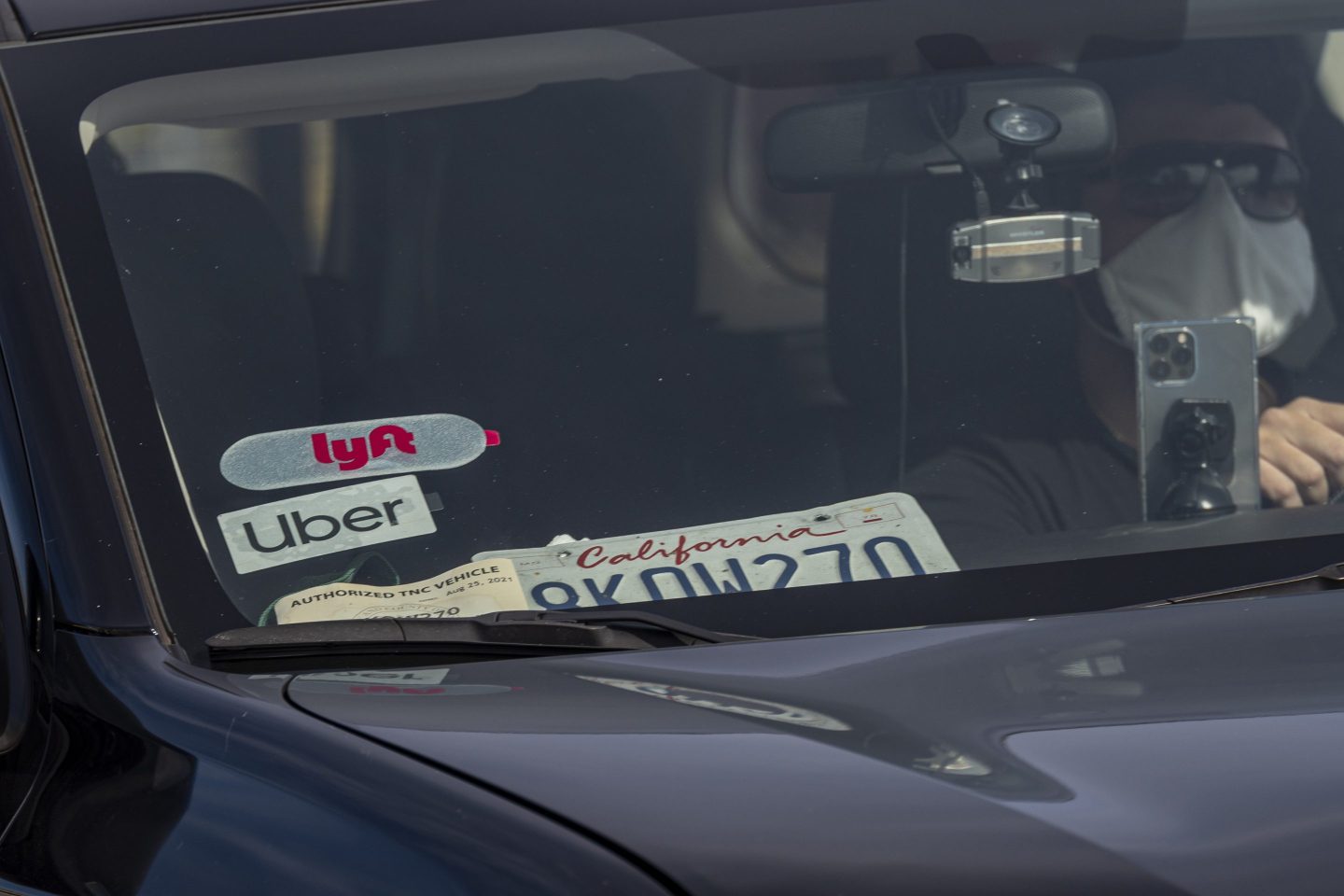
Congress recently introduced the Worker Flexibility and Choice Act (WFCA), which would do quite the opposite of what its name suggests: It would make it so gig workers like me are not protected by federal minimum wage laws and other worker protections–and it would block states from introducing their own regulations to maintain decent standards.
As a full-time Lyft driver working in southern California since 2017, I know the importance of flexibility at work. That’s why I decided to start driving in the first place–the ability to work when and for how long I wanted.
However, the reality of gig work is not so rosy. App-based companies such as Uber, Lyft, and DoorDash spend millions to convince lawmakers and the public that they should be exempt from worker protection laws that apply to all other employers. Working through lobbying groups such as Flex and the Coalition for Workforce Innovation (CWI)–the very group behind the WFCA–they pitch policymakers the false premise that drivers like me can’t have employee rights and benefits. They say that I am an independent contractor, even as key aspects of my job–like who I pick up, where I take them, and how much money I make—are set by Lyft.
“Flexibility” and “independence” sound nice, but here’s the truth: When you have to work over 50 hours a week to make ends meet, when you have to weigh every hour that you don’t work against the lost income, when you are one accident or illness away from financial ruin, flexibility and independence mean nothing.
Although I made a decent living as a driver initially, my pay per hour dropped by about 25% around a year after I started. Lyft had unilaterally cut drivers’ rates, forcing me to work longer hours to earn the same amount of money. That’s when I realized that “gig work flexibility” pushed me to work longer and during specific times. My pay continues to be unpredictable, especially because I incur expenses–like rising gas prices–that I cannot pass on to Lyft or my passengers.
Unlike employees, I’m paid only for some of my working time. In California, Uber and Lyft claim that they will guarantee pay equal to 120% of California’s minimum wage—which comes to $18 per hour—but this pay standard doesn’t account for the third of the time that drivers spend waiting to be assigned a new passenger or returning from trips to outlying areas. One study found that the minimum hourly pay for app-based drivers is really $5.64 per hour, after accounting for all working time and all expenses.
Further, although we face health and safety risks like carjackings at alarming rates, app-based drivers don’t have paid sick leave, workers’ compensation, or employer-provided medical insurance. Drivers end up relying on GoFundMe campaigns to pay for hospital bills and car repairs. Families of killed drivers have done the same for funeral expenses.
So why, according to the gig companies, aren’t they responsible as employers? Because their drivers get to choose when they work. There must be a tradeoff, the gig companies argue, between schedule flexibility on the one hand and employer responsibility and employment-based rights and protections on the other.
But this tradeoff is a lie. Many employees—including, I bet, many high-level executives at Uber and Lyft—get to work a schedule that fits their needs, while also enjoying the rights and protections that come with being an employee, including the right to a safe, healthy, and discrimination-free workplace, and benefits like paid leave, health insurance, and retirement savings.
The independent contractor model is not necessary for the companies’ operations. After the EU proposed requiring gig companies to treat their workers as employees, Uber’s CEO reassured investors that the company would continue to thrive because it “can make any model work.” A recent study by researchers at Northeastern University and Boston College of a company that reclassified its drivers as employees in response to a change in California law found that the drivers enjoyed the same scheduling flexibility they had as independent contractors.
Lawmakers shouldn’t roll back workers’ rights in the name of “flexibility.” Instead, they should ensure basic workplace rights and standards apply equally to workers across the board. Many gig workers work full time for the apps and rely on these jobs as their primary source of income. We should be entitled to livable and predictable wages. We also should have benefits such as health and accident insurance, workers’ compensation, and unemployment insurance to help get us through hard times. And we deserve the right to collectively bargain with the gig companies about the terms and conditions of our work.
Coming out of the pandemic, a time when many professional-class workers enjoyed unprecedented scheduling flexibility, Congress and other policymakers need to ensure more flexibility for all workers, not fewer rights for underpaid workers like me.
Mike Robinson is a California-based rideshare driver and member of the Mobile Workers Alliance.
The opinions expressed in Fortune.com commentary pieces are solely the views of their authors and do not reflect the opinions and beliefs of Fortune.
More must-read commentary published by Fortune:
- Here come the Roarin’ 20s. Invest until it hurts
- The recession is already here—if you’re a woman
- Why India could single-handedly shape the future of e-commerce this summer
- Here’s how the pandemic-fueled surge in gaming is reshaping our understanding of its effects on mental health
- Stop calling them ‘job creators’
Sign up for the Fortune Features email list so you don’t miss our biggest features, exclusive interviews, and investigations.











