Karen Raschke, a retired attorney in New York, started getting her groceries delivered early in the pandemic. Each delivery cost $30 in fees and tips, but it was worth it to avoid the store.
Then earlier this spring, Raschke learned her rent was increasing by $617 per month. Delivery was one of the first things she cut from her budget. Now, the 75-year-old walks four blocks to the grocery several times a week. She only uses delivery on rare occasions, like a recent heat wave.
“To do it every week is not sustainable,” she said.
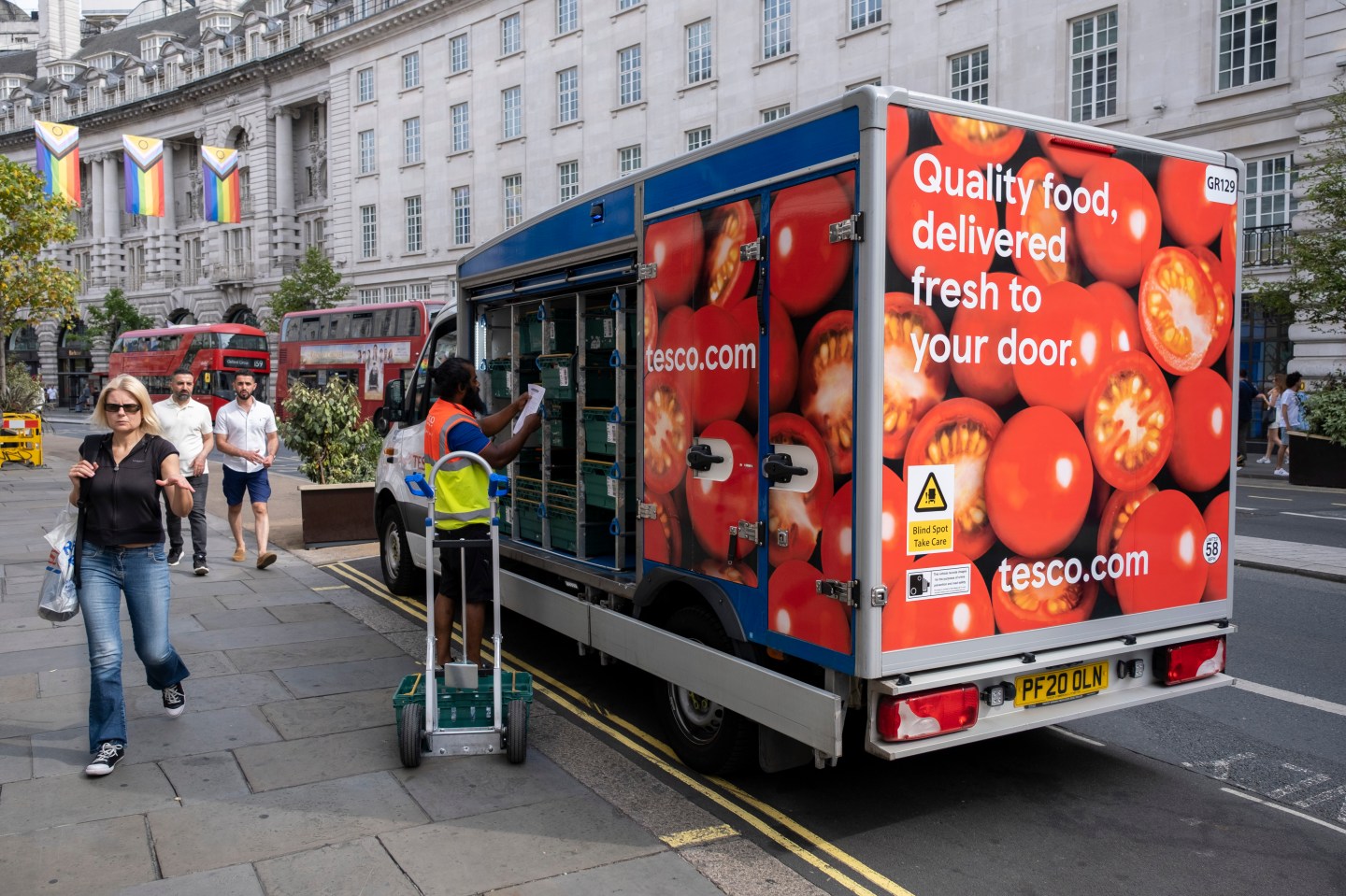
Raschke isn’t alone. U.S. demand for grocery delivery is cooling as prices for food and other necessities rise. Some are shifting to pickup — a less expensive alternative where shoppers pull up curbside or go into the store to collect their already-bagged groceries — while others say they’re comfortable doing the shopping themselves.
Grocery delivery saw tremendous growth during the first year of the pandemic. In August 2019 — a typical pre-pandemic month — Americans spent $500 million on grocery delivery. By June 2020, it had ballooned to a $3.4 billion business, according to Brick Meets Click, a market research company.
Companies rushed to fill that demand. DoorDash and Uber Eats began offering grocery delivery. Kroger — the nation’s largest grocer — opened automated warehouses to fulfill delivery orders. Amazon opened a handful of Amazon Fresh groceries, which provide free delivery to Prime members. Hyper-fast grocery delivery companies like Jokr and Buyk expanded into U.S. cities.
But as the pandemic eased, demand softened. In June 2022, Americans spent $2.5 billion on grocery delivery — down 26% from 2020. For comparison, they spent $3.4 billion on grocery pickup, which saw demand drop 10.5% from its pandemic highs.
That’s causing some turmoil in the industry. Buyk filed for bankruptcy in March; Jokr pulled out of the U.S. in June. Instacart — the U.S. market leader in grocery delivery — slashed its own valuation by 40% to $24 billion in March ahead of a potential IPO. Kroger said its digital sales — which include pickup and delivery — dropped 6% in the first quarter of this year.
Some think delivery demand could drop further. Chase Design, a consulting firm, says its surveys show the number of U.S. shoppers who plan to use grocery delivery “all the time” has fallen by half since 2021.
Cost is the biggest reason. Peter Cloutier, the growth and commercial strategy lead at Chase Design, said it’s difficult to get groceries to a customer’s door for less than a $10 premium, which covers labor and transportation. Often, that cost is higher.
Consider a basket of eight staples from Target, including a gallon of milk, a dozen eggs and a pound of ground beef. In store, the order would ring up at $35.12. Target offers curbside pickup for free. Delivery costs $9.99, not including a tip.
DoorDash also offers delivery from Target, but it charges more for each item on its website. The cart rings up at $39.90 from DoorDash, which then adds $12.18 in taxes and delivery fees. If the consumer adds a $10 tip, that totals $62.08.
Both DoorDash and Target offer free delivery through subscriptions, but those come with a monthly or yearly fee.
The premiums are tough to swallow on top of skyrocketing food prices. In June, U.S. grocery food prices were up 12.2% over the last 12 months, the largest increase since April 1979, according to government data.
Cynthia Carrasco White, an attorney for a nonprofit in Los Angeles, got accustomed to grocery delivery during the pandemic. She still prefers it, since her youngest child isn’t fully vaccinated and it saves time.
But earlier this summer, as gas prices approached $7 and a box of strawberries neared $9, she got serious about cutting costs.
White now toggles between Instacart, Uber Eats, Walmart and others, using whichever has the best offers and coupons. She will sometimes spend two hours filling a delivery cart and then wait to see if more promotions are posted before she finishes her order. And she has cut back on the amount she tips drivers.
“The economy has definitely taken the wind out of our sails,” she said. “It’s just this endless pressure.”
Retailers are responding by varying delivery prices by time of day. On a recent morning, Walmart offered to deliver a $35 order within two hours for $17.95; that dropped to $7.95 if the order could be delivered between 3 p.m. and 4 p.m.
But cost isn’t the only reason some consumers are moving away from delivery. Cloutier says many customers are wary of the quality of items selected by workers.
“There’s a trust gap between what the shopper wants to get and what the retailer fulfills,” Cloutier said.
Delivery companies are trying to improve that. Last month, Uber Eats announced upgrades to its online grocery offering, including the ability for consumers to see the products as workers scan them.
But even that may not entice some shoppers.
Diane Kovacs, a college lecturer in Brunswick, Ohio, has been using curbside pickup for nearly a decade. It saves her money, she says, because she doesn’t get sucked into impulse buys inside the grocery.
She got her groceries delivered briefly during the pandemic and she didn’t mind paying $10 or $15 a week for the service. But she still prefers pickup. She likes driving her dogs to the store and chatting with the employees.
“I think that people are not using delivery because they want to get the heck out of the house,” she said.
True demand for grocery delivery is tough to calculate. Usage can swing wildly when COVID cases rise or companies offer discounts, said David Bishop, a partner at Brick Meets Click.
But he sees some patterns emerging. Households with young children and people with mobility issues are sticking with delivery. People over 60 have generally gone back to shopping in person.
Bishop says delivery saw five years of growth in the first three months of the pandemic, and demand is probably still elevated. Eventually, he expects delivery sales to settle into more regular growth of about 10% per year. But delivery won’t go away, he said.
“I don’t see it moving all the way back to pre-COVID levels. That can has been opened up,” he said.
Sign up for the Fortune Features email list so you don’t miss our biggest features, exclusive interviews, and investigations.