• Home
  • News
  • Fortune 500
  • Tech
  • Finance
  • Leadership
  • Lifestyle
  • Rankings
  • Multimedia
HealthCoronavirus

Your COVID protection outside isn’t what it was in 2020. Here’s why it’s time to think more critically about outdoor gatherings

By
Erin Prater
Erin Prater
Down Arrow Button Icon
By
Erin Prater
Erin Prater
Down Arrow Button Icon
July 9, 2022, 3:02 PM ET
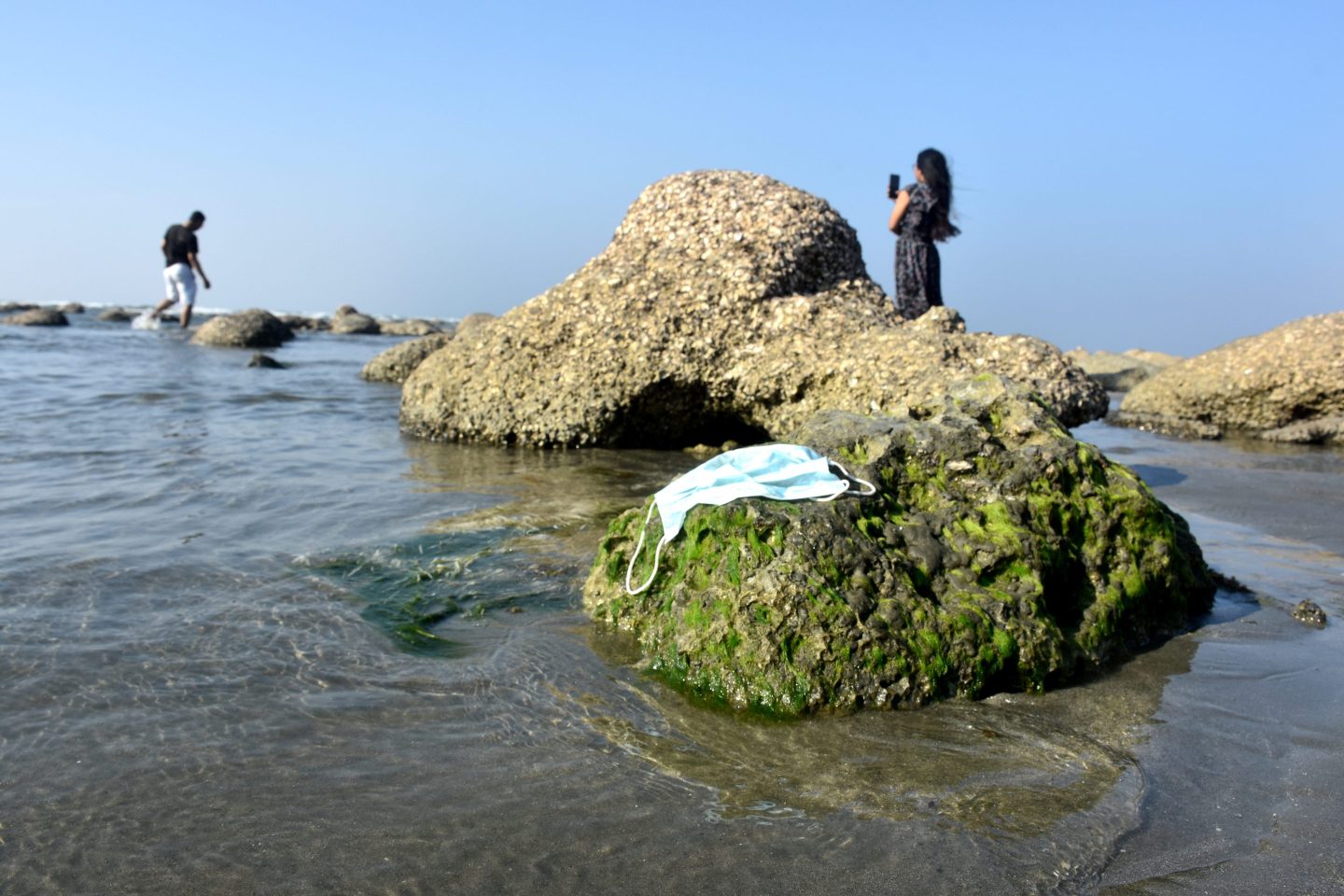
A used mask is seen on beach at marine protected area located in St. Martin's Island, Cox's Bazar, Bangladesh on March 13. Greater COVID transmissibility due to Omicron variants means greater transmissibility in any setting, indoors or outdoors—even if outside is still safer, experts say.
A used mask is seen on beach at marine protected area located in St. Martin's Island, Cox's Bazar, Bangladesh on March 13. Greater COVID transmissibility due to Omicron variants means greater transmissibility in any setting, indoors or outdoors—even if outside is still safer, experts say.Mohammad Shajahan—Anadolu Agency/Getty Images

The outdoors have always been a sanctuary—even more so since the advent of the pandemic.

Spreading COVID outside was possible, but not probable, experts advised in 2020, urging cooped-up citizens to turn to Mother Nature as an antidote to the isolation of lockdowns. Events, dining, and even entire classrooms were moved outside, when feasible.

But Omicron was a game changer, in more ways than one.

The original Wuhan strain of COVID-19 had a reproductive rate—also known as an R0 or R-naught value—of around 3.3, meaning that each infected person infected another 3.3 people, on average. That put COVID-19 among the least transmissible human diseases.

Slightly less transmissible were the 1918 pandemic strain of flu, which had an estimated R0 of 2, as does Ebola. On the higher end of the spectrum, mumps has an R0 of 12; measles tops the list at 18.

In order to outcompete, successful COVID variants have become more transmissible with time. Delta had a slightly higher reproductive rate of around 5.1. Then came Omicron, with an reproductive rate almost twice as large: 9.5.

So called “stealth Omicron,” nicknamed for its ability to evade detection on PCR tests, was about 1.4 times more transmissible than BA.1, so its reproductive rate was around 13.3, Adrian Esterman, a professor of biostatistics and epidemiology at the University of South Australia, recently wrote on academic news website The Conversation.

New studies suggest that BA.4 and BA.5, currently sweeping the U.S. and countries around the globe, have a growth advantage over BA.2 similar to the growth advantage BA.2 had over BA.1. Thus, the latest dominant COVID subvariants have a reproductive rate of around 18.6, tying or surpassing measles, the world’s most infectious viral disease, according to Esterman.

Greater transmissibility means greater transmissibility in any setting, indoors or outdoors—even if outside is still safer, Maimuna Majumder, an assistant professor at Harvard Medical School and a computational epidemiologist at Boston Children’s Hospital, recently told NPR.

Upping the ante is the fact that recent subvariants like BA.4 and BA.5 are the most immune-evasive yet, with the ability to dodge antibodies from both vaccines and prior infection.

All this to say your protection outdoors isn’t what it was in 2020—and it may be time to begin thinking more critically about outdoor gatherings.

For those hosting events, Majumder recommended decreasing the amount of attendees at gatherings, a move that can “drastically” reduce transmission. She also suggested making sure guests are vaccinated, have recently tested negative, and are symptom-free.

If an outdoor event is crowded, especially with singing or yelling—perhaps a concert or protest—masking is a good idea, she advised.

While outdoor events are safer than indoor events, they’re “not 100% safe,” Majumder told the news outlet. “The more crowded an outdoors space is, the more it begins to mimic an indoor space in terms of our exposure to shared air.”

She cautions that outdoor tents that don’t have flaps that let air in are “not that different from being indoors,” as far as COVID transmission risk goes.

As for indoor activities outside of home—mask up, even if your trips are brief, she recommended: It’s more possible than ever to catch COVID in passing.

Welcome to Fortune Well, a new destination that will curate the essential stories working professionals need to thrive in their careers and personal lives.

About the Author
By Erin Prater
See full bioRight Arrow Button Icon

Latest in Health

Workplace CultureSports
Exclusive: Billionaire Michele Kang launches $25 million U.S. Soccer institute that promises to transform the future of women’s sports
By Emma HinchliffeDecember 2, 2025
3 hours ago
North Americaphilanthropy
Anonymous $50 million donation helps cover the next 50 years of tuition for medical lab science students at University of Washington
By The Associated PressDecember 2, 2025
9 hours ago
Trump
PoliticsWhite House
Trump had MRI on heart and abdomen and it was ‘perfectly normal,’ doctor says
By The Associated PressDecember 2, 2025
9 hours ago
Medical Glasses
InnovationNews
New FDA-approved glasses can slow nearsightedness in kids
By The Associated Press and Matthew PerroneDecember 1, 2025
1 day ago
Luigi Mangione
LawNews
Luigi Mangione watches footage of cops approaching him at Altoona McDonald’s as courtroom hearings commence
By Michael R. Sisak and The Associated PressDecember 1, 2025
1 day ago
Our testers trying out a Nectar mattress.
Healthmattresses
Best Cyber Monday Mattress Deals of 2025: Saatva, Helix, and More
By Christina SnyderDecember 1, 2025
1 day ago

Most Popular

placeholder alt text
Economy
Ford workers told their CEO 'none of the young people want to work here.' So Jim Farley took a page out of the founder's playbook
By Sasha RogelbergNovember 28, 2025
4 days ago
placeholder alt text
Success
Warren Buffett used to give his family $10,000 each at Christmas—but when he saw how fast they were spending it, he started buying them shares instead
By Eleanor PringleDecember 2, 2025
11 hours ago
placeholder alt text
Success
Forget the four-day workweek, Elon Musk predicts you won't have to work at all in ‘less than 20 years'
By Jessica CoacciDecember 1, 2025
1 day ago
placeholder alt text
Innovation
Google CEO Sundar Pichai says we’re just a decade away from a new normal of extraterrestrial data centers
By Sasha RogelbergDecember 1, 2025
1 day ago
placeholder alt text
Economy
Elon Musk says he warned Trump against tariffs, which U.S. manufacturers blame for a turn to more offshoring and diminishing American factory jobs
By Sasha RogelbergDecember 2, 2025
5 hours ago
placeholder alt text
Personal Finance
Current price of gold as of December 1, 2025
By Danny BakstDecember 1, 2025
1 day ago
Rankings
  • 100 Best Companies
  • Fortune 500
  • Global 500
  • Fortune 500 Europe
  • Most Powerful Women
  • Future 50
  • World’s Most Admired Companies
  • See All Rankings
Sections
  • Finance
  • Leadership
  • Success
  • Tech
  • Asia
  • Europe
  • Environment
  • Fortune Crypto
  • Health
  • Retail
  • Lifestyle
  • Politics
  • Newsletters
  • Magazine
  • Features
  • Commentary
  • Mpw
  • CEO Initiative
  • Conferences
  • Personal Finance
  • Education
Customer Support
  • Frequently Asked Questions
  • Customer Service Portal
  • Privacy Policy
  • Terms Of Use
  • Single Issues For Purchase
  • International Print
Commercial Services
  • Advertising
  • Fortune Brand Studio
  • Fortune Analytics
  • Fortune Conferences
  • Business Development
About Us
  • About Us
  • Editorial Calendar
  • Press Center
  • Work At Fortune
  • Diversity And Inclusion
  • Terms And Conditions
  • Site Map

© 2025 Fortune Media IP Limited. All Rights Reserved. Use of this site constitutes acceptance of our Terms of Use and Privacy Policy | CA Notice at Collection and Privacy Notice | Do Not Sell/Share My Personal Information
FORTUNE is a trademark of Fortune Media IP Limited, registered in the U.S. and other countries. FORTUNE may receive compensation for some links to products and services on this website. Offers may be subject to change without notice.