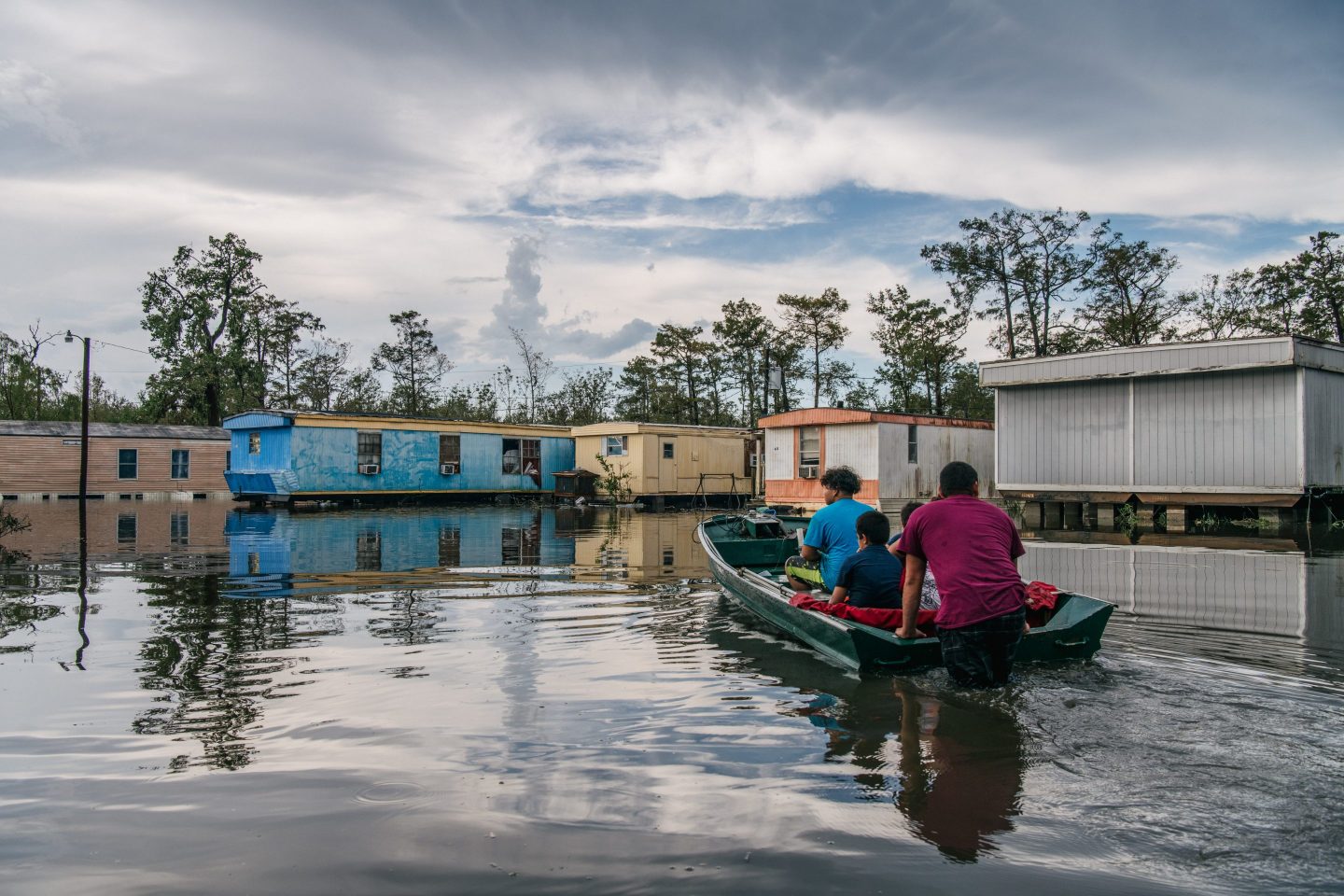
More American homes are at a greater risk of harm from weather-related disasters than at any point in our history. In 2021, the U.S. recorded at least 20 disasters that cost $1 billion or more in losses, totaling more than $145 billion in recovery costs. Estimates pegged the damage from Hurricane Ida at $95 billion—just for one single storm.
The frequency and severity of extreme weather events are increasing, but our national disaster mitigation and recovery efforts are not accelerating at even close to the same pace. This cannot continue–and Congress and the Biden-Harris administration have the tools to fix it.
When major disasters strike, FEMA steps in to provide initial emergency aid, including offering funds for basic short-term rental housing and temporary repairs. But once disaster survivors are out of immediate danger, the wait begins for long-term help.
Congress provides funding for residential disaster recovery and rebuilding efforts primarily through the Department of Housing and Urban Development’s Community Development Block Grant-Disaster Recovery (CDBG-DR) program, which funnels flexible resources to counties, cities, and states to provide loans and grants to address rebuilding needs not already covered by insurance or FEMA.
CDBG-DR has become a critical safeguard for filling any unmet needs if insurance proceeds and FEMA grants are insufficient to repair homes or get families to stable new housing. CDBG-DR particularly aids lower-income communities, with a typical program dedicating at least 70% of its resources to benefit low and moderate-income families.
Unlike FEMA’s disaster recovery programs, CDBG-DR cannot reach communities quickly because it is not permanently authorized. This means Congress must vote to approve its use before funds can be made available to impacted jurisdictions. The green light from Washington is only the first step: A CDBG-DR appropriation kicks off a lengthy approval process during which states and local jurisdictions that are set to receive resources must develop new programs and guidelines to distribute them. The Urban Institute found that it takes an average of 20 months after a disaster for CDBG-DR funds to begin reaching impacted property owners.
Such an extreme delay in federal relief is an unacceptable equity issue. While property owners with the means can start making repairs immediately and hope for reimbursement, many of the lowest-income households and people of color–who are disproportionately affected by disasters but receive the least amount of assistance–face homelessness or displacement when shorter-term assistance programs end.
Many families who cannot afford the indefinite waiting period start over elsewhere, moving to new communities without financial or social safety nets. Others use the limited funds they have on hand to rebuild, but often lack the capital to ensure their new homes are fortified against future disasters.
The solution to this challenge is twofold.
First, Congress must permanently authorize CDBG-DR. Congressional leaders in the House and Senate introduced The Reforming Disaster Recovery Act to ameliorate America’s ailing disaster recovery system. The bipartisan bill would permanently authorize the CDBG-DR program and improve outcomes for families by getting recovery resources to disaster-stricken communities in a more efficient and equitable way. This bill, according to Senator Brian Schatz, “changes the law so [families] no longer have to wait. As soon as a disaster strikes, HUD can help communities begin the process of recovery.”
Second, the private market should step in to provide financing to fill the gap. Enterprise Community Partners and Morgan Stanley recently launched a $25 million pilot program to prove this concept. This first-of-its-kind product will provide owners of multifamily affordable housing properties bridge loans to start the recovery process immediately while waiting for long-term assistance.
We are starting with Iowa, Louisiana, and Oregon, three of the states selected to receive federal disaster recovery resources from the five billion dollars Congress made available in the fall. Initiatives like this can be scaled nationwide, so that the private sector provides short-term capital until public recovery dollars arrive, shortening the time that survivors live in temporary or damaged housing.
Natural disasters and climate shocks are growing more severe with each passing year. Storms that were once considered “once in a generation” have become the norm. Federal resources must move faster–and more equitably–to keep pace. This cannot wait.
Priscilla Almodovar is president and chief executive officer of Enterprise Community Partners, a national affordable housing nonprofit.
The opinions expressed in Fortune.com Commentary pieces are solely the views of their authors, and do not reflect the opinions and beliefs of Fortune.
More must-read commentary published by Fortune:
- Now is the time for a universal digital wallet–and Google can’t make it happen on its own
- We should stop blaming workers for the Great Resignation–and start looking at the jobs they’re leaving
- These employers are helping workers achieve their dreams of homeownership
- We are not doing our best to solve the truck driver shortage
- I was a senior executive at WeWork before it imploded. Here’s the one behavior that could have saved the company