It’s been a busy few years for the folks in human resources.
Fresh off a much-needed reckoning on harassment and discrimination in the workplace, a global pandemic forced an unprecedented overhaul of the traditional office. Now, with the pandemic subsiding and corporate leaders itching to bring staffers back into buildings, HR leaders are dealing with a new headache: empowered employees eager to keep working from home.
Fortune’s Beth Kowitt explores this dynamic in a feature published Tuesday that examines how one of Silicon Valley’s largest employers, Google, is struggling to manage reopening offices in a post-shutdown environment. The Alphabet unit expects staffers to spend three days in the office and two days at home, though workers can apply for a fully-remote setup.
As Kowitt writes, Google’s effort to bring most of its 165,000 employees back into the office part-time hasn’t gone totally according to plan.
Some staffers grumble about a tiered compensation system, which provides lower pay to people working remotely in areas with lower living costs. Some managers gripe about having to decide whether to approve applications to work from home full-time, a product of corporate leaders opting against broad mandates. Some executives still cling to five days of in-person work, convinced that the camaraderie and collaboration leads to better production.
Many employees, meanwhile, appear to be settling into the hybrid routine without much consternation. (It helps when your company opens a sparkling new 1.1-million square foot campus and brings in Lizzo to rally the troops.)
In the moment, it’s easy to panic about the conflict stemming from this enormous shift, which will leave companies looking callous and employees feeling insulted. As Stanford University economics professor Nick Bloom told Kowitt: “Whatever Google does, it can’t keep everyone happy.”
But there’s beauty in this emerging labor market, where employees have a newfound bargaining chip.
All across the land, corporate executives now have to run tighter calculations on the value of a worker. If they find that higher-output employees routinely depart for fully-remote outfits, it’s now on leadership to adjust compensation and working conditions.
“Meeting these new employee expectations will require a mindset shift that considers the experience of the past two years,” the authors of Microsoft’s 2022 Work Trend Index wrote in March. “Employees’ ‘worth it’ equation has changed—and there’s no going back. The best leaders will create a culture that embraces flexibility and prioritizes employee wellbeing— understanding that this is a competitive advantage to build a thriving organization and drive long-term growth.”
Already, we’ve seen this calculus play out in the varied approaches to in-person and remote work at top tech companies. Apple, Alphabet, Microsoft, and Meta employed various hybrid schedules this month, while Amazon left workplace decisions to managers. Several big-name tech outfits, including Airbnb and Twitter, opted to allow employees to permanently work from home.
In a sense, the work-from-home shift represents just another disruption in an industry built on shattering the status quo. While it will certainly take time for this shift to shake out, the tech industry should reach some kind of equilibrium in the not-too-distant future. Just as the business world adjusted to the upheaval of early 2020, so will HR departments and C-suites over the coming months.
“You need to adapt,” Amazon CEO Andy Jassy said during a Fortune event earlier this year. “When you have to do something really discontinuous overnight, like moving from your office where you work to your home, you have to change the way you operate,”
Want to send thoughts or suggestions for Data Sheet? Drop me a line here.
Jacob Carpenter
NEWSWORTHY
Still on hold. Elon Musk’s agreement to buy Twitter for $44 billion looked even more tenuous Monday after the Tesla CEO said the deal “cannot move forward” until the social media company provides more proof backing up its statements about fake accounts on the platform. Twitter officials have long claimed about 5% of its 200 million-plus daily active users are spam or bot accounts, but Musk said he believes that number reaches at least 20%. Musk has hinted that he could seek to renegotiate terms of the deal in response to the fake account dust-up, though some analysts have accused him of using the issue to set the stage for abandoning his bid or buying Twitter at a lower price following a recent decline in the valuation of tech companies.
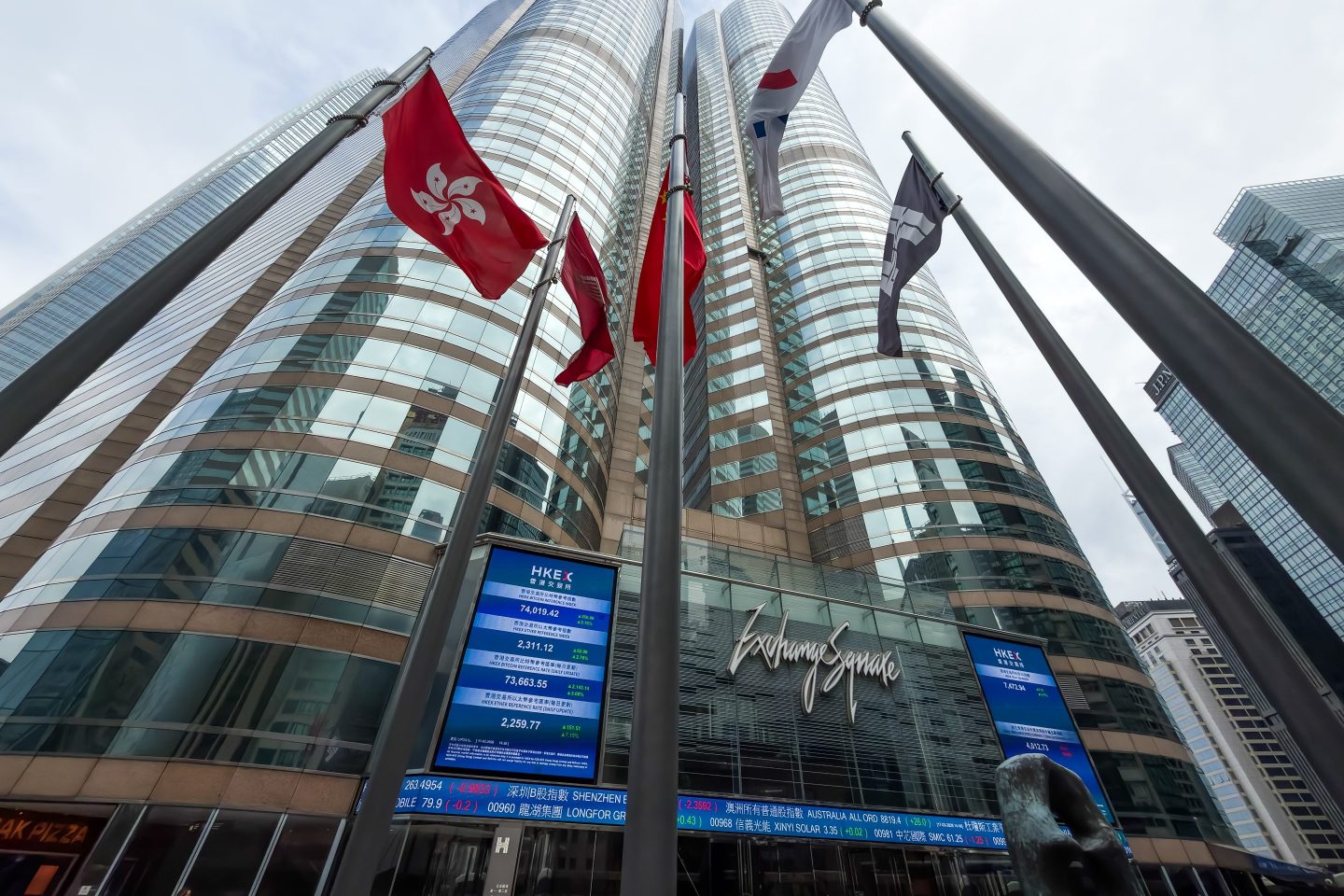
On friendlier terms. The Chinese government’s top economic official delivered another message Tuesday signaling that the country will ease its crackdown on large tech companies, Bloomberg reported. At a conference attended by some of China’s largest tech outfits, Vice Premier Liu He said the government will support public and private companies in the digital economy, a sharp contrast with President Xi Jinping’s actions over the past 18 months. The potential for warming relations between Chinese government leaders and tech companies boosted Hong Kong’s Hang Seng Tech Index by 6% on Tuesday.
Keeping up with the Amazons. Microsoft CEO Satya Nadella told employees Monday that the company will boost employee compensation to combat inflation and a hot job market for high-tech workers, CNBC reported. The increases, which mostly target early- and mid-career staffers, include a roughly 50% bump in the company’s merit pay pool and growth of at least 25% in annual stock compensation. The announcement comes on the heels of Amazon and Alphabet unit Google notifying employees of plans to increase compensation—despite a downturn in the market for tech companies.
A few too many Benjamins. Intel shareholders who voted on CEO Pat Gelsinger’s compensation package overwhelmingly rejected the plan, which could total as much as $179 million. While roughly two-thirds of voters opposed the package, Gelsinger’s compensation plan will not immediately change because the survey is only advisory. However, Intel officials said the results show “there is clearly more work to do” to address shareholders’ concerns over Gelsinger’s compensation, which consists largely of stock awards.
FOOD FOR THOUGHT
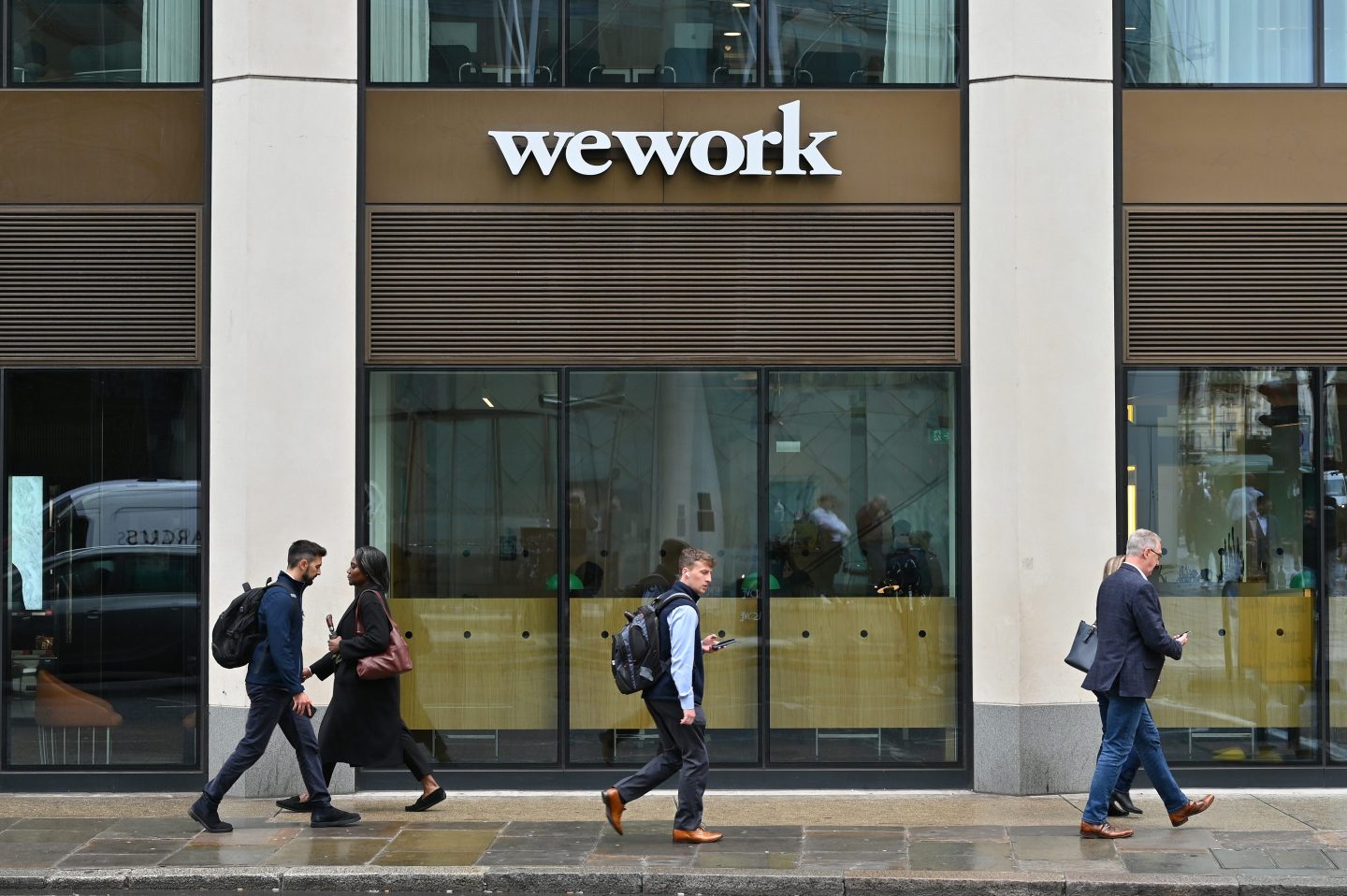
Back to the shared office. Maybe WeWork’s problem was just bad timing. (OK, probably not.) As The New York Times reported Tuesday, demand for coworking space has spiked as employers look to bring staffers back into the office and suddenly frugal companies try to keep costs down in the bear market environment. The revival follows the dramatic downturn in office occupancy amid the pandemic, which forced many co-working startups out of business. The sector isn’t exactly profitable—the post-Adam Neumann WeWork posted losses totaling $435 million in the first three quarters of 2022—but it’s at least on the upswing again.
From the article:
In uncertain times — as start-ups undergo tremendous growth, with the knowledge that the funding spigot may yet turn off — short-term leases are more appealing than ever. Start-ups are flocking to spaces like WeWork, the national chain, as well as smaller co-working companies with more elaborate designs like the San Francisco-based Canopy and the New York-based Industrious.
“Start-ups are going to markets where they would traditionally grab leases and they’re finding a Canopy or a WeWork or an Industrious,” said Hugh Scott, the executive managing director of the commercial real estate firm Jones Lang LaSalle.
IN CASE YOU MISSED IT
Despite ban, Bitcoin mining continues in China, by Chris Morris
Bill Ackman calls Terra a ‘pyramid scheme’ and warns that ‘hyping’ this kind of token ‘will destroy the entire crypto industry’, by Taylor Locke
Before his Twitter takeover offer, Elon Musk considered launching his own social media company, by Chris Morris
Terra creator Do Kwon proposes ditching his UST stablecoin, creating a new chain altogether, by Taylor Locke
SpaceX employees are quietly selling shares at a $125 billion valuation, by Gillian Tan, Katie Roof, and Bloomberg
Hacker shows how to unlock, start and drive off with someone else’s Tesla, by Bloomberg
BEFORE YOU GO
Delivering on disruption. CNBC’s annual Disruptor 50 list typically includes a who’s-who of sexy startups poised to become household names (past high-rankers include Uber, SpaceX, Airbnb, Robinhood, and Stripe). But this year’s crew of private companies shaking up tech reflects our moment, with a heavy focus on the meat-and-potatoes businesses of logistics and supply chain management. San Francisco-based Flexport topped the 10th-annual rundown, earning plaudits for using cloud-based technology to better coordinate cargo and break shipping bottlenecks. Lineage Logistics finished third, thanks to its highly efficient process for storing and freezing food. Convoy, which offers more efficient management of freight trucks through digitization, clocks in at No. 6. All told, 10 of the final 50 hail from the logistics sector. Take that, crypto.
Editor's note: Monday's edition of Data Sheet inaccurately stated that the arrested suspect in the Buffalo, N.Y., shooting was influenced by information on the social media site Reddit.
This is the web version of Data Sheet, a daily newsletter on the business of tech. Sign up to get it delivered free to your inbox.