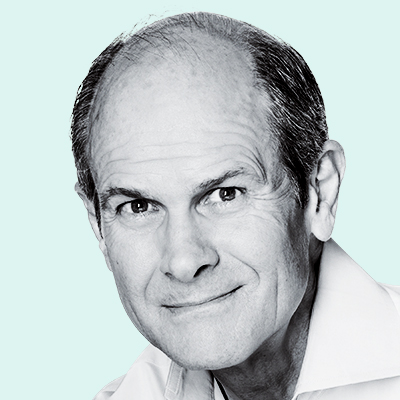

“Edward Jones has always had a differentiated strategy,” says CEO Penny Pennington. “The way we serve people is different than the way other firms in our industry serve people. And a differentiated strategy is generally a winning proposition.”
She’s right on all counts. In the brutally competitive business of brokerage and financial advice, Edward Jones looks like a misfit. It isn’t the biggest player, yet it employs more financial advisers—nearly 19,000—than any other firm. (Morgan Stanley is No. 2, with 16,000.) Its branches aren’t in office buildings; they tend to be in strip malls and other shopping areas. Headquarters are nowhere near Wall Street; they’re in St. Louis.
If you want to concoct your own investment strategies or trade stocks online, Edward Jones is not the firm for you. It seeks only customers who want guidance, and its website ignores online trading.
That strategy seems to be a winning proposition. Though Edward Jones was launched a century ago, it took 92 years to enter the Fortune 500, where it first landed at No. 491. Today it’s ranked No. 295—an uphill gallop of 196 places in eight years. Even [hotlink]Microsoft, now at No. 15, didn’t rise that fast.
No single factor can account for such success, but the company’s strategy is centrally important. The key insight for business leaders across industries isn’t in the specific elements of Jones’s strategy. It’s that the strategy reflects sharply clear decisions about what the firm will and won’t do, which customers it will and won’t serve, and how it will and won’t serve them. That’s rare.
A widely read 2008 Harvard Business Review article cites Jones’s strategy as exemplary and unusual. The authors observe, “In an astonishing number of organizations, executives, frontline employees, and all those in between are frustrated because no clear strategy exists for the company or its lines of business.”
In an exclusive interview with Fortune, Pennington explains how the pandemic challenged that very strategy, what Jones’s advisers are telling customers as markets wobble, how the firm is serving digitally savvy millennial and Gen Z investors, and much else.
How Edward Jones grew its customer base virtually
Building trusted personal relationships with customers, maintained through face-to-face interactions, is at the heart of the Jones strategy. The firm seeks clients who want to deal with their adviser in person, which is largely why it has hired thousands of financial advisers. But the pandemic’s arrival posed an unprecedented threat to Jones’s model, forcing leaders to get creative and double down on the distinction between what the firm does and how it does it.
“What we do is develop deep, trusted personal relationships with human beings,” Pennington says. “How we’ve done that over many years has been eyeball-to-eyeball, at somebody’s kitchen table, at their place of business, in our branch offices.”
When such meetings became impossible, Jones did what everyone else did: turn to tech. “We have deepened relationships with clients through the utilization of technology, through Zoom and web-based portals,” she says, adding that the results speak for themselves. “Our engagement scores with our clients have never been higher. The attraction of new clients and the retention of our clients have never been higher.”
In more concrete terms, profit jumped 18% in 2020 and another 25% last year. The company added 200,000 client households in 2020 and another 200,000 in last year’s first three quarters, reaching a total of 5.9 million.
Despite the digital shift, some customers still crave, and at at times require, an in-person experience. “They’re saying, ‘Oh my gosh, I know when I want to be in the same airspace with my financial adviser,’” Pennington says. “And often I’ve heard financial advisers say, ‘I know when I actually need to hold their hand.’” But for routine check-ins, customers are embracing virtual contact.
How advisers steer customers through market volatility
Jones’s investment philosophy is long-term buy and hold; the firm doesn’t sell penny stocks or commodities, which are viewed as too risky. In light of this, target customers are conservative individual investors who want guidance, and major turbulence can be particularly upsetting for them.
“We constantly remind our clients that there is a business cycle,” Pennington says. “We often say one out of every four years you should expect a significant downdraft, and we haven’t gotten that in a number of years. So we just remind people that the business cycle is not dead.”
Advisers then shift to discuss investment opportunities and portfolio rebalancing. “We know rebalancing is a tried-and-true, sound investment philosophy. So our clients are rebalancing right now.”
How the firm woos young investors
Millennial and Gen Z investors have powered Robinhood, Acorns, SoFi, and other online investing startups. And to be frank, few people under age 35 see any reason to ever walk into a bank branch. Can Edward Jones reach them? Says Pennington: “90% of the people we have called—not just our clients, this is the investing public—say they want technology to complement a human being. And 85% say they would prefer a human being as a financial adviser.” The message is clear, she believes. Investors of all ages want advice tailored for them by a person, and they want 24/7 account access to help them feel informed, in control, and secure.
“I’ve got two millennial daughters, and I can tell you, they want to talk to a human being.” She pauses and points to her phone: “They want this to work really well, too, because that human being isn’t necessarily there all the time.”
Pennington says data shows plenty of the serious, long-term investors whom Edward Jones courts are part of the younger cohort, who have become increasingly astute about their financial future. They understand that “time in the market is way more important than timing the market,” she says.
Why Jones avoids a typical money question
It’s common for financial advisers to ask customers how much money they want to have by retirement or some other milestone. But most people don’t know the answer. Jones takes a different approach, asking customers about their priorities and why they matter.
Other prompts that elicit more useful responses include: Tell me about the life you want to be living five years, 10 years, or 30 years from now. Imagine what you’d be doing and why. Do you want to live that life on the road? Do you want to live that life with three homes across the world? “Then we start talking about what that number might be and what the plan is to get there,” Pennington says.
Even that is just the beginning. Creating a plan is considerably easier than following it, a challenge that reveals an overlooked advantage of human advisers. “One of the really important parts of having a human being as a financial adviser is to tell you the hard stuff—to tell you that what you’re hoping for actually requires you to make some decisions today that you’re not making.”
The emotional reason customers still want in-person advice
The subsiding pandemic and new financial anxieties are driving clients back to advisers’ offices. The far-reaching health crisis, geopolitical tensions, and high inflation have stoked customers’ worries.
As the market becomes more volatile, Pennington says, people reset their expectations. “They perhaps have to be reminded in real time that, yes, the markets do ebb and flow. And sometimes that anxiety is relieved in a really effective way when we’re face-to-face.”
Never miss a story: Follow your favorite topics and authors to get a personalized email with the journalism that matters most to you.