• Home
  • Latest
  • Fortune 500
  • Finance
  • Tech
  • Leadership
  • Lifestyle
  • Rankings
  • Multimedia
Commentarysupply chains

Wake up and smell the coffee: The agricultural commodity market is broken

By
Frank Giustra
Frank Giustra
Down Arrow Button Icon
By
Frank Giustra
Frank Giustra
Down Arrow Button Icon
February 17, 2022, 6:46 AM ET
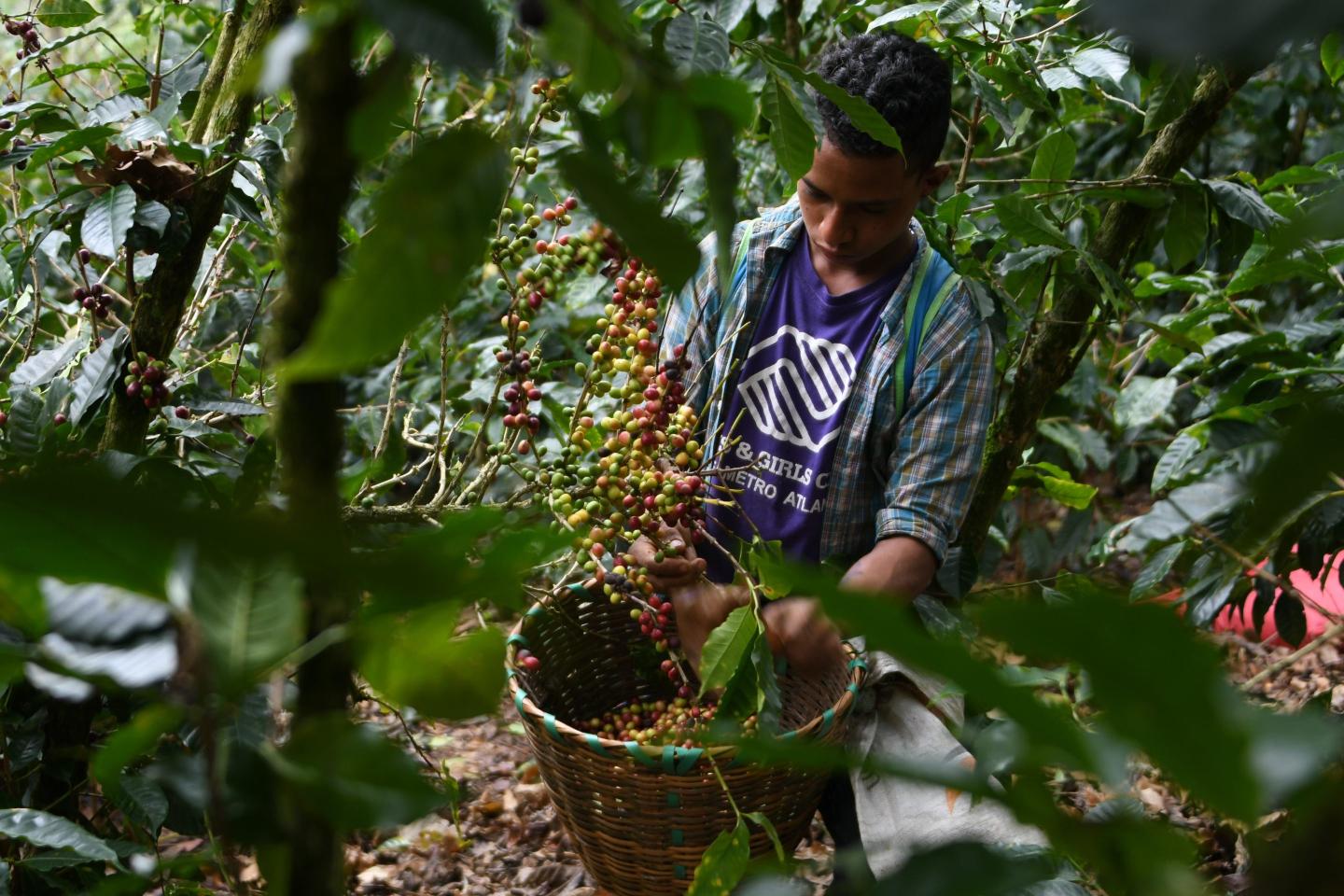
When crops fail in Central America, many people see no other option but to migrate to the U.S.
When crops fail in Central America, many people see no other option but to migrate to the U.S.ORLANDO SIERRA - Getty Images

The coffee crisis brewing in Central America is not just the result of climate change accelerating the spread of crop disease, but also the perpetual reliance on individual commodities to prop up global markets and offer the only solution to poverty for millions of smallholders worldwide.

Large-scale investments by development organizations and multinationals over the past decades that incentivize monoculture programs for crops such as coffee leave small producers (as well as consumers) vulnerable to boom and bust cycles through a lack of alternatives when prices fluctuate, or if harvests fail. This vulnerability is contributing to what could become the sector’s worst crisis in living memory, already prompting scores of coffee farmers in the Northern Triangle to abandon their crops entirely, with many seeing no other option but to migrate to the U.S.

Vice President Kamala Harris recently called on the private sector trading in the region to help, and significant investment ensued. However, it is unclear how corporations that have repeatedly failed to repair the broken agricultural commodity market for smallholder farmers will be able to achieve much more without a new economic model for the entire system. 

Social enterprise is an underutilized tool, even though it can lay the foundations for a more sustainable agricultural market and should be leveraged by the U.S. administration in its bid to address the root causes of immigration.

Traditional approaches to economic development have typically focused on the more straightforward task of increasing access to finance and farmer productivity through training, and then largely leaving the trading activity in the hands of private sector buyers. This means farmers are often left with a limited number of options, dominated by the very corporations that have made sizeable financial contributions towards aid budgets. 

Without the need to generate the same unsustainable profit margins, social enterprises can act as benevolent intermediaries between the farmer and the market at large, building a longer-term network that puts the needs of the farmer first rather than simply connecting smallholders to a handful of buyers at the mercy of global markets.

This approach is now gaining momentum in sub-Saharan Africa. Over the past four decades, donors invested an estimated $40 billion in agriculture, yet food imports continued to soar.

New forms of “farmer-allied intermediaries”, like Twiga Foods in Kenya, collect produce from smallholders centrally, bridging a fragmented market and taking away the burden of negotiating at the farm gate. This reduces the farmers’ exposure to risk by offering, with impartiality, a better bargaining position.

Consolidating the produce of smallholders reduces inefficiencies and waste, with platforms like Siembra Viva also advising farmers in Colombia when to plant and when to harvest.

Even greater benefits lie in building a broader multi-crop supply chain. Social enterprises that aggregate crops can also incentivize intercropping, or growing different fruits and vegetables together, which benefits smallholder farmers–and the environment­. Combining different plants improves soil quality and pest resistance. This means additional resilience for the crops, the farmers, and the entire food system.

It also means smallholders can trade various crops with different margins, increasing their likelihood of turning a profit consistently and guaranteeing their own food and economic security. Social enterprise can support farmers to prioritize a range of crops that serves their interests, not just those of the private sector co-founder of a rural development program. For example, Haitian farmers growing peanuts alongside lime and moringa with Acceso’s support report incomes of more than US$3,000 per hectare compared to those growing peanuts only, who earn around US$1,400 per hectare.

Not only does this de-risk the position of the farmer but it also has greater potential to support domestic food systems. With a more mission-led approach, intermediaries can support farmers to better meet the needs and standards of their local formalized markets, adding vital food supplies, new market links, and greater sustainability to domestic supply chains.

This can even then support humanitarian needs, such as those that arise after an earthquake or hurricane. With a functioning local food system that can increase supply when needed, there would be no reason for U.S.-funded humanitarian programs in countries like Haiti and El Salvador to be importing food instead of sourcing it locally from smallholders. This would also provide income to stabilize communities during times of crisis. It also avoids the risk of distorting the market with food aid, which reduces prices for the most vulnerable farmers and chips away at their market.

The major challenge is that multi-crop supply chains require more complex logistics and trading, and more sophisticated infrastructure that can process multiple crops, rather than facilities that are purposefully designed to handle just one commodity. 

Left to themselves, markets that operate on short-term, “just enough, just-in-time” food supplies are unlikely to address the long-term, systemic fragilities that exist in the global food trade and keep smallholders in thrall to cycles of boom and bust.

With the support of philanthropy and development practitioners using a collaborative approach, social businesses can revolutionize food systems.

This is what should lead the U.S. government’s strategy for reducing poverty and migration, rather than prioritizing solutions from those who are seeking to make a profit under the guise of development.

Frank Giustra is the founder of Acceso, a social agribusiness operating in Colombia, El Salvador, and Haiti.

More must-read commentary published by Fortune:

  • We need a radical new approach to tackle scientific misinformation online
  • The Great Resignation’s culture conundrum
  • How the European gas market fuels Putin’s obsession with Ukraine
  • Arianna Huffington: It’s time to replace work/life balance with “life-work integration”
  • How George Washington defeated a pandemic to save the American Revolution
Never miss a story: Follow your favorite topics and authors to get a personalized email with the journalism that matters most to you.
About the Author
By Frank Giustra
See full bioRight Arrow Button Icon

Latest in Commentary

Finance
Lorem ipsum dolor sit amet, consectetur adipiscing elit, sed do eiusmod tempor incididunt ut labore et dolore magna aliqua. Ut enim ad minim veniam
By Fortune Editors
October 20, 2025
Finance
Lorem ipsum dolor sit amet, consectetur adipiscing elit, sed do eiusmod tempor incididunt ut labore et dolore magna aliqua. Ut enim ad minim veniam
By Fortune Editors
October 20, 2025
Finance
Lorem ipsum dolor sit amet, consectetur adipiscing elit, sed do eiusmod tempor incididunt ut labore et dolore magna aliqua. Ut enim ad minim veniam
By Fortune Editors
October 20, 2025
Finance
Lorem ipsum dolor sit amet, consectetur adipiscing elit, sed do eiusmod tempor incididunt ut labore et dolore magna aliqua. Ut enim ad minim veniam
By Fortune Editors
October 20, 2025
Finance
Lorem ipsum dolor sit amet, consectetur adipiscing elit, sed do eiusmod tempor incididunt ut labore et dolore magna aliqua. Ut enim ad minim veniam
By Fortune Editors
October 20, 2025
Finance
Lorem ipsum dolor sit amet, consectetur adipiscing elit, sed do eiusmod tempor incididunt ut labore et dolore magna aliqua. Ut enim ad minim veniam
By Fortune Editors
October 20, 2025

Most Popular

Finance
Lorem ipsum dolor sit amet, consectetur adipiscing elit, sed do eiusmod tempor incididunt ut labore et dolore magna aliqua. Ut enim ad minim veniam
By Fortune Editors
October 20, 2025
Finance
Lorem ipsum dolor sit amet, consectetur adipiscing elit, sed do eiusmod tempor incididunt ut labore et dolore magna aliqua. Ut enim ad minim veniam
By Fortune Editors
October 20, 2025
Finance
Lorem ipsum dolor sit amet, consectetur adipiscing elit, sed do eiusmod tempor incididunt ut labore et dolore magna aliqua. Ut enim ad minim veniam
By Fortune Editors
October 20, 2025
Finance
Lorem ipsum dolor sit amet, consectetur adipiscing elit, sed do eiusmod tempor incididunt ut labore et dolore magna aliqua. Ut enim ad minim veniam
By Fortune Editors
October 20, 2025
Finance
Lorem ipsum dolor sit amet, consectetur adipiscing elit, sed do eiusmod tempor incididunt ut labore et dolore magna aliqua. Ut enim ad minim veniam
By Fortune Editors
October 20, 2025
Finance
Lorem ipsum dolor sit amet, consectetur adipiscing elit, sed do eiusmod tempor incididunt ut labore et dolore magna aliqua. Ut enim ad minim veniam
By Fortune Editors
October 20, 2025
Fortune Secondary Logo
Rankings
  • 100 Best Companies
  • Fortune 500
  • Global 500
  • Fortune 500 Europe
  • Most Powerful Women
  • Future 50
  • World’s Most Admired Companies
  • See All Rankings
Sections
  • Finance
  • Fortune Crypto
  • Features
  • Leadership
  • Health
  • Commentary
  • Success
  • Retail
  • Mpw
  • Tech
  • Lifestyle
  • CEO Initiative
  • Asia
  • Politics
  • Conferences
  • Europe
  • Newsletters
  • Personal Finance
  • Environment
  • Magazine
  • Education
Customer Support
  • Frequently Asked Questions
  • Customer Service Portal
  • Privacy Policy
  • Terms Of Use
  • Single Issues For Purchase
  • International Print
Commercial Services
  • Advertising
  • Fortune Brand Studio
  • Fortune Analytics
  • Fortune Conferences
  • Business Development
  • Group Subscriptions
About Us
  • About Us
  • Editorial Calendar
  • Press Center
  • Work At Fortune
  • Diversity And Inclusion
  • Terms And Conditions
  • Site Map
  • About Us
  • Editorial Calendar
  • Press Center
  • Work At Fortune
  • Diversity And Inclusion
  • Terms And Conditions
  • Site Map
  • Facebook icon
  • Twitter icon
  • LinkedIn icon
  • Instagram icon
  • Pinterest icon

Latest in Commentary

hormuz
CommentaryIran
With Hormuz under strain, a trade corridor built for resilience faces a real-world test
By Angela Chitkara and Samantha SuttonApril 17, 2026
7 hours ago
broker
CommentarySoftware
The 3 forces quietly dismantling the business model that made enterprise software fabulously profitable
By Michael Jacobides and Stefano PuntoniApril 17, 2026
8 hours ago
welti
CommentaryIran
Switzerland’s former ambassador to Iran: here’s how to end this war — and why Pakistan isn’t enough
By Philippe WeltiApril 17, 2026
14 hours ago
Anita Beveridge-Raffo is Head of Retail and Consumer Goods at Palantir Technologies
CommentaryAI agents
Palantir exec: the biggest mistake retailers are making with AI? Trying to do it all with one agent
By Anita Beveridge-RaffoApril 16, 2026
1 day ago
wyle
CommentaryHealth
‘The Pitt’ reveals why healthcare desperately needs a new front door
By Jeremy MorganApril 16, 2026
1 day ago
health
CommentaryHealth Care Service
Two physicians on ending the waiting-room era: bring care home
By Benjamin Kornitzer and Bill FristApril 16, 2026
1 day ago

Most Popular

Pope Leo warned the world is in ‘big trouble’ if Elon Musk becomes the first trillionaire
Success
Pope Leo warned the world is in ‘big trouble’ if Elon Musk becomes the first trillionaire
By Preston ForeApril 17, 2026
11 hours ago
A world going broke: IMF says America's $39 trillion national debt is actually a global problem—and AI may be the only rescue
Economy
A world going broke: IMF says America's $39 trillion national debt is actually a global problem—and AI may be the only rescue
By Nick LichtenbergApril 16, 2026
1 day ago
Jeff Bezos pledged $10 billion for climate change. With the 2030 clock ticking, his wife, Lauren Sánchez Bezos, is leading the charge to spend it
Environment
Jeff Bezos pledged $10 billion for climate change. With the 2030 clock ticking, his wife, Lauren Sánchez Bezos, is leading the charge to spend it
By Sydney LakeApril 15, 2026
2 days ago
MacKenzie Scott is bypassing the Ivy League and rewriting the $79 billion higher ed playbook by giving to HBCUs and community colleges
Politics
MacKenzie Scott is bypassing the Ivy League and rewriting the $79 billion higher ed playbook by giving to HBCUs and community colleges
By Sydney LakeApril 16, 2026
1 day ago
Germany already told its workers to ditch four-day weeks and work-life balance. Now the government wants to cut their pay for calling in sick, too
Success
Germany already told its workers to ditch four-day weeks and work-life balance. Now the government wants to cut their pay for calling in sick, too
By Orianna Rosa RoyleApril 16, 2026
2 days ago
NYC Mayor Zohran Mamdani points at Ken Griffin's $238 million penthouse on tax day: 'Today we're taxing the rich'
Personal Finance
NYC Mayor Zohran Mamdani points at Ken Griffin's $238 million penthouse on tax day: 'Today we're taxing the rich'
By Catherina GioinoApril 16, 2026
1 day ago

© 2026 Fortune Media IP Limited. All Rights Reserved. Use of this site constitutes acceptance of our Terms of Use and Privacy Policy | CA Notice at Collection and Privacy Notice | Do Not Sell/Share My Personal Information
FORTUNE is a trademark of Fortune Media IP Limited, registered in the U.S. and other countries. FORTUNE may receive compensation for some links to products and services on this website. Offers may be subject to change without notice.