• Home
  • Latest
  • Fortune 500
  • Finance
  • Tech
  • Leadership
  • Lifestyle
  • Rankings
  • Multimedia
Commentaryphilanthropy

‘Seed funding’: How more billionaires can help end world hunger

By
Claudia Sadoff
Claudia Sadoff
Down Arrow Button Icon
By
Claudia Sadoff
Claudia Sadoff
Down Arrow Button Icon
December 23, 2021, 7:14 AM ET
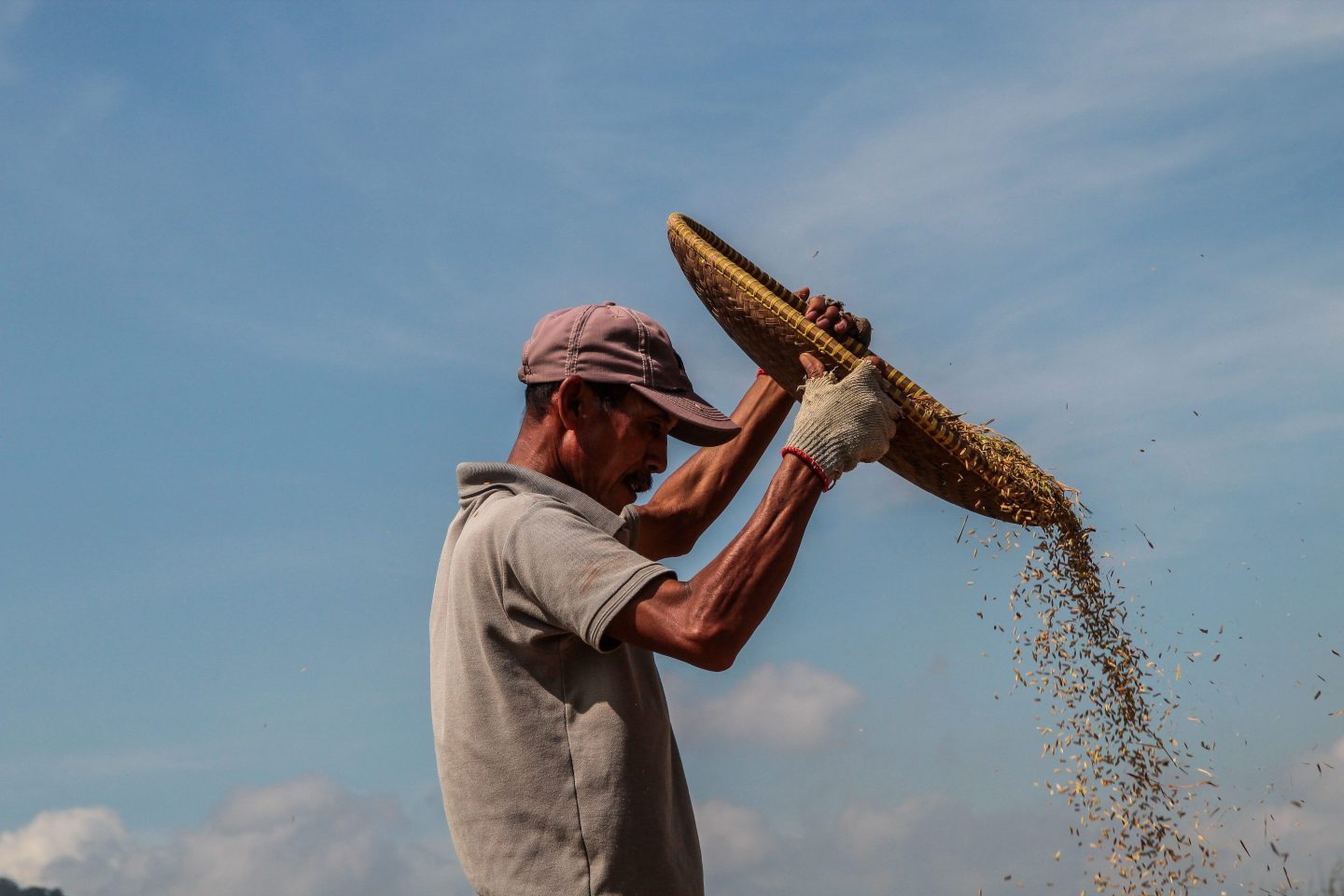
The genetic material needed to help smallholder farmers grow crops that survive the effects of climate change is in the seeds stored at genebanks all over the world.
The genetic material needed to help smallholder farmers grow crops that survive the effects of climate change is in the seeds stored at genebanks all over the world.SOPA Images - Getty Images

A  recent Twitter conversation between the UN’s David Beasley and Tesla’s Elon Musk has shown that hunger is deceptively complex. There is a crucial difference between acute hunger, caused by shocks like war or natural disasters, and chronic hunger, which occurs when agricultural production (and distribution) fails to keep pace with threats such as soil degradation, erratic rainfall, or heatwaves, or when poverty renders food unaffordable.

This means that ending hunger requires both rapid response efforts during crises and sustained investment to protect our future food supply over the long term. Philanthropists like Mr. Musk who seek to “solve world hunger” should also be encouraged to tackle chronic hunger, as this offers long-term, systemic solutions–much like equity in a business that keeps paying dividends year after year.   

A visionary philanthropic opportunity would be the creation of an endowment to support the 11 genebanks held as international public goods by CGIAR, securing in perpetuity the agrobiodiversity we need to feed the world.

Genebanks, which are repositories for genetic material, represent the biological foundation of global food systems, past, present, and future. They are the equivalent of our agricultural intellectual property, and they essentially offer open-source, patent-free “code” for crop breeders anywhere in the world–or potentially other planets–to develop varieties that are more resilient and nutritious and need less water and land.

The genebanks, which are spread over five continents and include a genetic library that survived the war in Syria, contain the most comprehensive back catalog of crop traits and their original or wild relatives. They also form a network that sends duplicate samples to the Doomsday Vault buried in the permafrost on Svalbard island near the North Pole.

As growing conditions change more rapidly under climate change, it is in the trove of genetic material in genebanks that scientists stand to find the traits that could climate-proof and shock-proof food supplies by incorporating them into new crop varieties–overcoming many of the barriers to fighting malnutrition and hunger around the world.

Within these genebanks, researchers have already identified a gene in wild potatoes that could help breed modern varieties to withstand late blight, the world’s most damaging disease for potato crops. Eliminating losses caused by crop disease would immediately generate more food, income, and opportunities to reduce chronic hunger without needing more land, resources, or food aid.

The potential for genetic gains through crop breeding is not limited to disease resistance. Identifying and combining traits that allow farmers to sow rice seeds directly in the ground–rather than transplanting them in flooded fields–can reduce the amount of water needed for rice production, which eases the burden on smallholder farmers and safeguards a staple crop against water shortages. Such varieties are currently being tested across South Asia and Africa.

The possibilities for better crops to do the heavy lifting against hunger are endless: saline-tolerant rice that withstands more extreme and frequent floods, drought-resistant maize and wheat that secures food amid water scarcity, and faster-growing, early-maturing varieties that increase the growing season for those who depend on agriculture for their livelihoods.

In short, genebanks may just be the exact kind of transformative investment that entrepreneurs like Elon Musk could get behind if they are serious about contributing to the fight against world hunger. These resources are currently funded on an annual basis by generous, committed donors who do not have the scale of resources to fund an endowment. Long-term funding securing the assets’ survival in perpetuity would accelerate the rate and equity of innovation available–“seed funding” at its most literal and important.

While neither money nor research alone will “solve” hunger, they can catalyze systematic change on a global scale and significantly reduce the number of people who are starving or chronically malnourished. As a result, those currently at most risk from short-term food crises will also have a stronger starting position and be better placed to cope with temporary food shortages.

Dr. Claudia Sadoff is the managing director for research delivery and impact at CGIAR, the largest publicly funded agricultural research institution in the world.

More must-read commentary published by Fortune:

  • Prosperity will be “made in America” as supply chains buckle
  • Extreme events are forcing corporations to think like insurers
  • To deliver the infrastructure boom, construction giants must open their doors to startups
  • Meet your new A.I. best friend
  • Can a community of basketball fanatics run an NBA team as a DAO?

Never miss a story: Follow your favorite topics and authors to get a personalized email with the journalism that matters most to you.
About the Author
By Claudia Sadoff
See full bioRight Arrow Button Icon

Latest in Commentary

Finance
Lorem ipsum dolor sit amet, consectetur adipiscing elit, sed do eiusmod tempor incididunt ut labore et dolore magna aliqua. Ut enim ad minim veniam
By Fortune Editors
October 20, 2025
Finance
Lorem ipsum dolor sit amet, consectetur adipiscing elit, sed do eiusmod tempor incididunt ut labore et dolore magna aliqua. Ut enim ad minim veniam
By Fortune Editors
October 20, 2025
Finance
Lorem ipsum dolor sit amet, consectetur adipiscing elit, sed do eiusmod tempor incididunt ut labore et dolore magna aliqua. Ut enim ad minim veniam
By Fortune Editors
October 20, 2025
Finance
Lorem ipsum dolor sit amet, consectetur adipiscing elit, sed do eiusmod tempor incididunt ut labore et dolore magna aliqua. Ut enim ad minim veniam
By Fortune Editors
October 20, 2025
Finance
Lorem ipsum dolor sit amet, consectetur adipiscing elit, sed do eiusmod tempor incididunt ut labore et dolore magna aliqua. Ut enim ad minim veniam
By Fortune Editors
October 20, 2025
Finance
Lorem ipsum dolor sit amet, consectetur adipiscing elit, sed do eiusmod tempor incididunt ut labore et dolore magna aliqua. Ut enim ad minim veniam
By Fortune Editors
October 20, 2025

Most Popular

Finance
Lorem ipsum dolor sit amet, consectetur adipiscing elit, sed do eiusmod tempor incididunt ut labore et dolore magna aliqua. Ut enim ad minim veniam
By Fortune Editors
October 20, 2025
Finance
Lorem ipsum dolor sit amet, consectetur adipiscing elit, sed do eiusmod tempor incididunt ut labore et dolore magna aliqua. Ut enim ad minim veniam
By Fortune Editors
October 20, 2025
Finance
Lorem ipsum dolor sit amet, consectetur adipiscing elit, sed do eiusmod tempor incididunt ut labore et dolore magna aliqua. Ut enim ad minim veniam
By Fortune Editors
October 20, 2025
Finance
Lorem ipsum dolor sit amet, consectetur adipiscing elit, sed do eiusmod tempor incididunt ut labore et dolore magna aliqua. Ut enim ad minim veniam
By Fortune Editors
October 20, 2025
Finance
Lorem ipsum dolor sit amet, consectetur adipiscing elit, sed do eiusmod tempor incididunt ut labore et dolore magna aliqua. Ut enim ad minim veniam
By Fortune Editors
October 20, 2025
Finance
Lorem ipsum dolor sit amet, consectetur adipiscing elit, sed do eiusmod tempor incididunt ut labore et dolore magna aliqua. Ut enim ad minim veniam
By Fortune Editors
October 20, 2025
Rankings
  • 100 Best Companies
  • Fortune 500
  • Global 500
  • Fortune 500 Europe
  • Most Powerful Women
  • Future 50
  • World’s Most Admired Companies
  • See All Rankings
Sections
  • Finance
  • Leadership
  • Success
  • Tech
  • Asia
  • Europe
  • Environment
  • Fortune Crypto
  • Health
  • Retail
  • Lifestyle
  • Politics
  • Newsletters
  • Magazine
  • Features
  • Commentary
  • Mpw
  • CEO Initiative
  • Conferences
  • Personal Finance
  • Education
Customer Support
  • Frequently Asked Questions
  • Customer Service Portal
  • Privacy Policy
  • Terms Of Use
  • Single Issues For Purchase
  • International Print
Commercial Services
  • Advertising
  • Fortune Brand Studio
  • Fortune Analytics
  • Fortune Conferences
  • Business Development
About Us
  • About Us
  • Editorial Calendar
  • Press Center
  • Work At Fortune
  • Diversity And Inclusion
  • Terms And Conditions
  • Site Map

Latest in Commentary

Jamie Dimon
CommentaryCorporate Governance
Jamie Dimon’s bombshell on proxy advisory delivers a body blow to the firms he called ‘incompetent’
By Richard TorrenzanoJanuary 7, 2026
3 hours ago
fraser
CommentaryLeadership
The 7 most overlooked CEOs in 2025—and the 5 to watch in 2026
By Jeffrey Sonnenfeld and Stephen HenriquesJanuary 7, 2026
7 hours ago
christian klein
CommentarySoftware
The most honest prediction for 2026: nobody knows what’s next
By Christian KleinJanuary 7, 2026
11 hours ago
CES
CommentaryRobots
Beyond the CES hype: why home robots need the self-driving car playbook
By Jason CorsoJanuary 6, 2026
1 day ago
AsiaTariffs and trade
Countries must move beyond seeing AI as a race, where one side must beat the other
By Boris Babic and Brian WongJanuary 3, 2026
4 days ago
trump
CommentaryVenezuela
5 takeaways on Venezuela in the aftermath of Maduro: A memo to CEOs
By Jeffrey SonnenfeldJanuary 3, 2026
4 days ago

Most Popular

placeholder alt text
Law
Amazon is cutting checks to millions of customers as part of a $2.5 billion FTC settlement. Here's who qualifies and how to get paid
By Sydney LakeJanuary 6, 2026
1 day ago
placeholder alt text
Personal Finance
Janet Yellen warns the $38 trillion national debt is testing a red line economists have feared for decades
By Eva RoytburgJanuary 5, 2026
2 days ago
placeholder alt text
Economy
Mark Cuban on the $38 trillion national debt and the absurdity of U.S. healthcare: we wouldn't pay for potato chips like this
By Nick LichtenbergJanuary 6, 2026
1 day ago
placeholder alt text
Future of Work
'Employers are increasingly turning to degree and GPA' in hiring: Recruiters retreat from ‘talent is everywhere,’ double down on top colleges
By Jake AngeloJanuary 6, 2026
1 day ago
placeholder alt text
Success
The college-to-office path is dead: CEO of the world’s biggest recruiter says Gen Z grads need to consider trade and hospitality jobs that don't even require degrees
By Orianna Rosa RoyleJanuary 6, 2026
1 day ago
placeholder alt text
Success
Blackstone exec says elite Ivy League degrees aren’t good enough—new analysts need to 'work harder' and be nice 
By Ashley LutzJanuary 5, 2026
2 days ago

© 2025 Fortune Media IP Limited. All Rights Reserved. Use of this site constitutes acceptance of our Terms of Use and Privacy Policy | CA Notice at Collection and Privacy Notice | Do Not Sell/Share My Personal Information
FORTUNE is a trademark of Fortune Media IP Limited, registered in the U.S. and other countries. FORTUNE may receive compensation for some links to products and services on this website. Offers may be subject to change without notice.