• Home
  • Latest
  • Fortune 500
  • Finance
  • Tech
  • Leadership
  • Lifestyle
  • Rankings
  • Multimedia
CommentaryOil

Something will cause inflation to go up this year, but it’s not oil

By
Steve H. Hanke
Steve H. Hanke
and
John Greenwood
John Greenwood
Down Arrow Button Icon
By
Steve H. Hanke
Steve H. Hanke
and
John Greenwood
John Greenwood
Down Arrow Button Icon
March 9, 2026, 4:34 PM ET

Steve Hanke is a professor of applied economics at The Johns Hopkins University. His most recent book, co-authored with Matt Sekerke, is Making Money Work: How to Rewrite the Rules of Our Financial System, Wiley 2025. John Greenwood is a fellow at the Johns Hopkins Institute for Applied Economics, Global Health, and the Study of Business Enterprise in Baltimore, Md.

trump
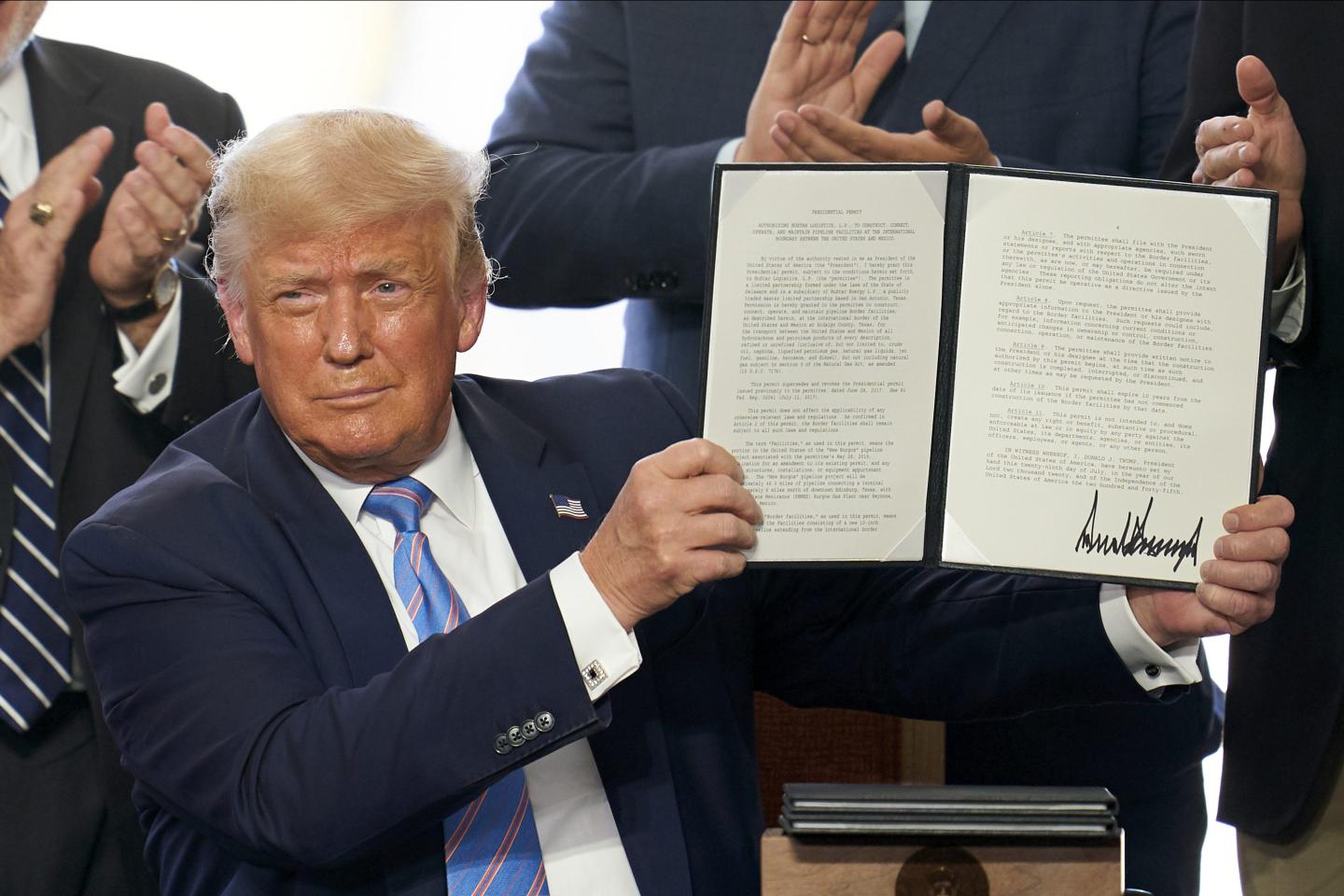
U.S. President Donald Trump holds up a signed executive order at a Double Eagle Energy Holdings LLC oil rig in Midland, Texas, U.S., on Wednesday, July 29, 2020. Cooper Neill/Bloomberg via Getty Images

Since the U.S.-Israeli war was mounted against Iran, oil prices have surged. As a result, pundits, journalists, and many economists have dusted off an often-used song sheet. It claims that higher oil prices will fuel inflation. While this narrative is widely accepted, it is wrong.

Recommended Video

A surge in oil prices results in a change in relative prices, with the price of oil going up relative to the price of other goods and services. But the higher relative price of oil does not cause the overall inflation rate to pick up. That can only occur if the money supply picks up. After all, inflation is always and everywhere a monetary phenomenon.

It is often said that the inflation of the 1970s and 1980s in the United States and elsewhere was caused by the two oil crises of 1973-74 and 1979-80. The first crisis was a result of the Yom Kippur War, during which Arab oil-producing nations reduced oil shipments to countries that supported Israel. The second crisis stemmed from the revolution in Iran and its subsequent conflict with Iraq, which disrupted Iranian oil exporters. Both led to significant increases in oil prices. The standard narrative asserts that the correlation between the oil price surges and observed increases in inflation was causally linked. Even though widely accepted, and often repeated, this narrative doesn’t hold water.

While it’s true that each oil crisis was accompanied by inflation in some countries, that doesn’t mean that a surge in oil prices caused their inflations. In the U.S., the inflations of 1973-75 and 1979-81 were generated by prior surges in broad money, as measured by the growth of M2, the term economists use for the “money supply” in the economy, during the two to three years preceding the outbreak of each inflationary episode. (Briefly, M2 is all the bills and coins in circulation as well as checking accounts, plus less liquid investments such as savings accounts and certificates of deposit.)

Indeed, in the first case, there was sustained double-digit growth of U.S. M2 from July 1971 until June 1973. During that period, M2 was growing at an average annual rate of 12.5%. That is roughly double the rate of monetary growth consistent with realizing an inflation rate of around 2% per year in the U.S. Not surprisingly, annual headline CPI inflation rose from 3.7% in January 1973 to a peak of 12.3% in December 1974, averaging 8.6% over those two years. Similarly, between January 1976 and December 1978, M2 growth averaged 11.2% per year. This led directly to a second surge of inflation, in which the average rate jumped from 7.6% in 1978 to 11.3%, 13.5%, and 10.3% in 1979, 1980, and 1981, respectively. In short, the surges in inflation that occurred at the same time as the two oil price spikes were already baked in the cake long before the oil crises erupted. 

Japan’s experience in the two oil crises was very different than that in the United States – and highly instructive. It demonstrates convincingly the relationship between money growth and inflation. In the U.S. case, there was a failure to control money growth ahead of both oil crises. Whereas, in the case of Japan, the authorities learned from their experience in the first episode. Ahead of the first crisis, Japan had allowed the money supply to grow unchecked, but when the second oil crisis occurred, Japan’s determination not to repeat its previous mistake paid off. 

In August 1971, President Nixon announced the closing of the gold “window”, thereby ending the promise of the U.S. authorities to sell gold to foreign central banks at $35 per ounce. The result was an abrupt appreciation of numerous foreign currencies, including the Japanese yen against the U.S. dollar. The Japanese feared that this move would seriously damage their export-led economy. They therefore embarked on an easy money policy, lowering interest rates and allowing money growth to accelerate to an average of 25.2% per year between June 1971 and June 1973. The surge in money growth laid the ground for a surge in asset prices, economic growth, and inflation. Indeed, inflation jumped from 4.9% in 1972 to 11.6% in 1973 and a stunning 23.2% in 1974.

After the crisis was over, the Japanese authorities announced a plan to control M2 growth, starting in July 1974. The growth rate of M2 gradually declined over the following decade, averaging just 12.8% in the critical period January 1976 to December 1978, effectively halving the growth rate of M2 experienced before the first oil crisis. Consequently, when the second oil crisis erupted, the overall CPI increased only mildly, from 4.2% per year in 1978 to a peak of 8.2% in 1980, and then to 4.9% in 1981. In other words, while relative prices increased, overall inflation remained relatively moderate. There can be few more striking demonstrations of the fact that changes in the money supply, not changes in oil prices, cause inflation.

Let us move to the current state of affairs in the U.S. If the Trump budget deficits continue to be financed through the banking system and money market funds, the rate of growth in the money supply will continue to accelerate and headline inflation will pick up. But if the rate of growth in broad money is controlled, then higher spending on oil and gasoline will be offset by lower spending on other items, restraining overall inflation.

The opinions expressed in Fortune.com commentary pieces are solely the views of their authors and do not necessarily reflect the opinions and beliefs of Fortune.

Join us at the Fortune Workplace Innovation Summit May 19–20, 2026, in Atlanta. The next era of workplace innovation is here—and the old playbook is being rewritten. At this exclusive, high-energy event, the world’s most innovative leaders will convene to explore how AI, humanity, and strategy converge to redefine, again, the future of work. Register now.
About the Authors
Steve H. Hanke
By Steve H. Hanke
Twitter icon
See full bioRight Arrow Button Icon
By John Greenwood
See full bioRight Arrow Button Icon

Latest in Commentary

Finance
Lorem ipsum dolor sit amet, consectetur adipiscing elit, sed do eiusmod tempor incididunt ut labore et dolore magna aliqua. Ut enim ad minim veniam
By Fortune Editors
October 20, 2025
Finance
Lorem ipsum dolor sit amet, consectetur adipiscing elit, sed do eiusmod tempor incididunt ut labore et dolore magna aliqua. Ut enim ad minim veniam
By Fortune Editors
October 20, 2025
Finance
Lorem ipsum dolor sit amet, consectetur adipiscing elit, sed do eiusmod tempor incididunt ut labore et dolore magna aliqua. Ut enim ad minim veniam
By Fortune Editors
October 20, 2025
Finance
Lorem ipsum dolor sit amet, consectetur adipiscing elit, sed do eiusmod tempor incididunt ut labore et dolore magna aliqua. Ut enim ad minim veniam
By Fortune Editors
October 20, 2025
Finance
Lorem ipsum dolor sit amet, consectetur adipiscing elit, sed do eiusmod tempor incididunt ut labore et dolore magna aliqua. Ut enim ad minim veniam
By Fortune Editors
October 20, 2025
Finance
Lorem ipsum dolor sit amet, consectetur adipiscing elit, sed do eiusmod tempor incididunt ut labore et dolore magna aliqua. Ut enim ad minim veniam
By Fortune Editors
October 20, 2025

Most Popular

Finance
Lorem ipsum dolor sit amet, consectetur adipiscing elit, sed do eiusmod tempor incididunt ut labore et dolore magna aliqua. Ut enim ad minim veniam
By Fortune Editors
October 20, 2025
Finance
Lorem ipsum dolor sit amet, consectetur adipiscing elit, sed do eiusmod tempor incididunt ut labore et dolore magna aliqua. Ut enim ad minim veniam
By Fortune Editors
October 20, 2025
Finance
Lorem ipsum dolor sit amet, consectetur adipiscing elit, sed do eiusmod tempor incididunt ut labore et dolore magna aliqua. Ut enim ad minim veniam
By Fortune Editors
October 20, 2025
Finance
Lorem ipsum dolor sit amet, consectetur adipiscing elit, sed do eiusmod tempor incididunt ut labore et dolore magna aliqua. Ut enim ad minim veniam
By Fortune Editors
October 20, 2025
Finance
Lorem ipsum dolor sit amet, consectetur adipiscing elit, sed do eiusmod tempor incididunt ut labore et dolore magna aliqua. Ut enim ad minim veniam
By Fortune Editors
October 20, 2025
Finance
Lorem ipsum dolor sit amet, consectetur adipiscing elit, sed do eiusmod tempor incididunt ut labore et dolore magna aliqua. Ut enim ad minim veniam
By Fortune Editors
October 20, 2025
Fortune Secondary Logo
Rankings
  • 100 Best Companies
  • Fortune 500
  • Global 500
  • Fortune 500 Europe
  • Most Powerful Women
  • World's Most Admired Companies
  • See All Rankings
  • Lists Calendar
Sections
  • Finance
  • Fortune Crypto
  • Features
  • Leadership
  • Health
  • Commentary
  • Success
  • Retail
  • Mpw
  • Tech
  • Lifestyle
  • CEO Initiative
  • Asia
  • Politics
  • Conferences
  • Europe
  • Newsletters
  • Personal Finance
  • Environment
  • Magazine
  • Education
Customer Support
  • Frequently Asked Questions
  • Customer Service Portal
  • Privacy Policy
  • Terms Of Use
  • Single Issues For Purchase
  • International Print
Commercial Services
  • Advertising
  • Fortune Brand Studio
  • Fortune Analytics
  • Fortune Conferences
  • Business Development
  • Group Subscriptions
About Us
  • About Us
  • Lists Calendar
  • Press Center
  • Work At Fortune
  • Terms And Conditions
  • Site Map
  • About Us
  • Lists Calendar
  • Press Center
  • Work At Fortune
  • Terms And Conditions
  • Site Map
  • Facebook icon
  • Twitter icon
  • LinkedIn icon
  • Instagram icon
  • Pinterest icon

Latest in Commentary

gas
CommentaryMiddle class
The $100 oil shock is hitting the middle class like a margin call
By Katica RoyApril 21, 2026
22 hours ago
trump
CommentarySocial Security
What happens if nothing is done to fix Social Security by 2032?
By Martha SheddenApril 21, 2026
24 hours ago
ternus
CommentaryApple
This Apple doesn’t fall far from the tree: Tim Cook is leaving at a peak and John Ternus is exactly the right CEO for the AI era
By Jeffrey Sonnenfeld and Steven TianApril 20, 2026
1 day ago
trump
CommentaryZoom
The U.S. has a $282 billion trade surplus you’ve never heard of — and it’s at risk
By Josh KallmerApril 19, 2026
3 days ago
benioff
CommentarySalesforce
AI’s next act: how Salesforce is turning efficiency gains into revenue
By Keith Ferrazzi and Wendy SmithApril 18, 2026
4 days ago
trump
CommentaryWhite House
Trump has already endorsed the Monroe Doctrine. Now he needs to endorse the Truman Doctrine
By Robert HormatsApril 18, 2026
4 days ago

Most Popular

$166 billion in tariff refunds just became available, but small businesses may already be at a disadvantage
Law
$166 billion in tariff refunds just became available, but small businesses may already be at a disadvantage
By Sasha RogelbergApril 20, 2026
1 day ago
Jeff Bezos once gave Eva Longoria and the admiral behind Osama bin Laden's capture $100 million—but she says you don't need wealth to give back
Success
Jeff Bezos once gave Eva Longoria and the admiral behind Osama bin Laden's capture $100 million—but she says you don't need wealth to give back
By Orianna Rosa RoyleApril 21, 2026
1 day ago
'Something sinister could be happening': FBI looks into dead or missing nuclear and space defense scientists tied to NASA, Blue Origin, and SpaceX
Politics
'Something sinister could be happening': FBI looks into dead or missing nuclear and space defense scientists tied to NASA, Blue Origin, and SpaceX
By Catherina GioinoApril 21, 2026
14 hours ago
The tables have turned: Florida and Texas are the biggest losers in the housing market as Ohio emerges a surprise winner
Real Estate
The tables have turned: Florida and Texas are the biggest losers in the housing market as Ohio emerges a surprise winner
By Sydney LakeApril 21, 2026
15 hours ago
This talent CEO says laid-off tech workers are ignoring a $300K ‘white-collar trade job’ with 81K openings a year
Economy
This talent CEO says laid-off tech workers are ignoring a $300K ‘white-collar trade job’ with 81K openings a year
By Jake AngeloApril 20, 2026
2 days ago
Tim Cook's exit is part of a CEO reckoning sweeping Corporate America
Newsletters
Tim Cook's exit is part of a CEO reckoning sweeping Corporate America
By Diane BradyApril 21, 2026
23 hours ago

© 2026 Fortune Media IP Limited. All Rights Reserved. Use of this site constitutes acceptance of our Terms of Use and Privacy Policy | CA Notice at Collection and Privacy Notice | Do Not Sell/Share My Personal Information
FORTUNE is a trademark of Fortune Media IP Limited, registered in the U.S. and other countries. FORTUNE may receive compensation for some links to products and services on this website. Offers may be subject to change without notice.