Just in time for Halloween, the specter of 1970s-style stagflation has materialized to haunt equity markets and central bankers, and threatens to scare the pants off your stock portfolio.
Subpar economic activity combined with spiraling inflation, as evidenced by last week’s poor U.S. jobs report and Wednesday’s eye-watering CPI data for September, could be poison for corporate earnings—and by extension investor returns.
“Stagflation was the most common word in client conversations this week,” wrote strategists at Goldman Sachs in a recent investor note, citing elevated volatility in equity markets reflected these concerns.
The U.S. investment bank went back 60 years to calculate the S&P 500 index return in both stagflationary and normal environments of growth. In the former, stocks generated a median quarterly inflation-adjusted total return of negative 2.1%. In more normal periods of growth, that return was a healthy 2.5% per quarter, on average.
What exactly is stagflation?
It seems unusual to be discussing stagflation—a crippling phenomenon last seen in the era of President Jimmy Carter and the OPEC oil crisis—at a period when global growth is experiencing the fastest rebound from a recession in eight decades. Current projections put next year’s global expansion at a still robust 4.9%, according to the latest IMF estimates.
“My gut feeling is that while the risks are elevated, especially on the inflation side, the phrase ‘stagflation’ is being used too aggressively at the moment,” wrote Jim Reid, head of thematic research at Deutsche Bank, last Friday.
This is partly due to the widespread confusion over just exactly how it should be defined, a useful prerequisite when attempting to accurately forecast its probability.
In an attempt to have a more nuanced debate on the subject, Reid recently polled investors on their views. While he found clients were largely split as to what stagflation precisely means, he was more shocked at how many are pricing the eventuality into their models: “I was very surprised how strong the consensus is now that stagflation of some kind is more likely than not over the next 12 months.”
Mohamed El-Erian, chief economic adviser at Allianz, also seemed to downplay the threat, characterizing it as a high impact, low probability event. That could change as a result of careless mistakes, however, he warned.
“There are stagflationary winds, but if policymakers respond early enough, they will die down,” he told CNBC last week, urging the Federal Reserve to ease its foot off the monetary stimulus pedal.
What policy failure means can be seen in Reid’s survey of investors. It points to a stagflation risk of between 22% and 33% for the U.S. and Europe, respectively, whereas the figure spikes to a “stunningly high” 54% for the U.K.
That’s because the Boris Johnson government negotiated a trade pact with the European Union, its largest trading partner, that ripped it out of the EU’s single market while failing to simultaneously sign offsetting deals that mitigate the loss. The subsequent damage is seen by long queues at filling stations, empty shelves in supermarkets, and the mass culling of pigs as a consequence of too few slaughterhouse workers, leaving the Brits with a very vivid picture of what stagflation—if it’s a thing—actually looks like.
The Greenspan put
A major stagflation clue came on Wednesday from the International Energy Agency, which warned that a surge in energy prices threatens to put the brakes on the global economic rebound. That’s because the current expansion we’re seeing has been primarily enabled by the consumption of fossil fuels.
“As such, the recovery is not sustainable,” IEA executive director Fatih Birol told reporters, citing the very real risk that energy price inflation could throttle economic activity.
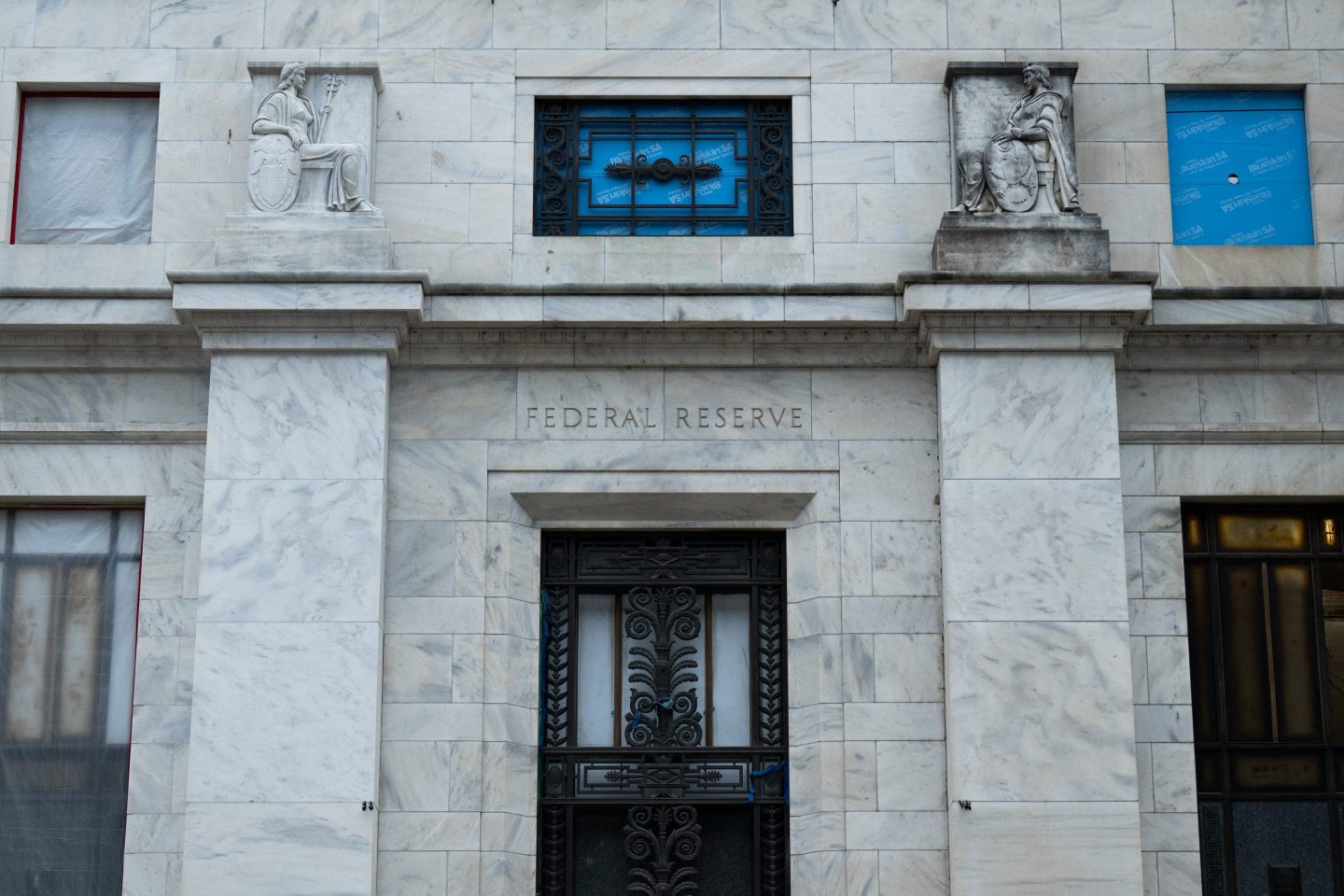
Analysts at Bank of America might have the answer as to why markets are already beginning to go weak at the knees: the loss of the fabled Greenspan put. This time-honored tradition of further spiking the punch bowl every time the intoxicating effect of easy money on investors wears off has been the go-to play employed by every Fed chair since the 1990s to prop up demand for risk assets.
With inflation running hot, the central bank’s ability to intervene in equity markets and provide a floor for stock prices—if only by tightening less than previously planned—is diminished. That lack of firepower could mean we’re approaching the end of the golden era when the economy has been running neither too hot, nor too cold, but just right.
“Even if long-term inflation expectations remain anchored, we would expect more volatile markets, as they will not be able to rely on Fed support anymore,” BofA wrote. “This is the unwinding of the reflation/goldilocks trades,” a term for the all-is-dandy economy-is-reopening trade.
History’s rather annoying penchant for repeating itself could prove to come true once more—to the detriment of investors.
When was the last time global GDP expanded faster than its current pace of roughly 6%? Yep, 1973. But it didn’t last. An OPEC embargo that began in October of that year soon sent oil prices soaring and starved the economy of the fuel it needed to operate, ushering in the era of stagflation—a one-two punch of high inflation and a global recession—as we know it.
More finance coverage from Fortune:
- What’s really behind the 10.5% increase in meat prices this year
- Crypto, options, margin, REITs: How to tackle the market’s most complex areas
- Value stocks are unloved, unsexy, and poised to make a killing over the next decade
- 4 timeless investment tips for young investors
- What I wish I’d known when I started out: Advice from A-list investors
Subscribe to Fortune Daily to get essential business stories delivered straight to your inbox each morning.