
“What is that?” is a question Polestar 2 owners will hear countless times in dozens of parking lots. And “What is a Polestar?” is a very fair question—thanks to both Polestar’s novelty and its confusing corporate history.
Originally a moniker given to Volvo’s performance division—similar to BMW’s M subsidiary—Polestar was spun off by Volvo and Chinese parent company Geely in 2017, and set free to develop electric vehicles unconstrained by the customer expectations that go with the company’s Scandinavian heritage.
Its first vehicle, Polestar 1, was a two-door, plug-in hybrid sports coupe. It lived up to the performance credentials of the Polestar name, but at a price of $156,000 and with the brand committing to just 1,500 production cars, it was intended to make a statement more than a market impact.
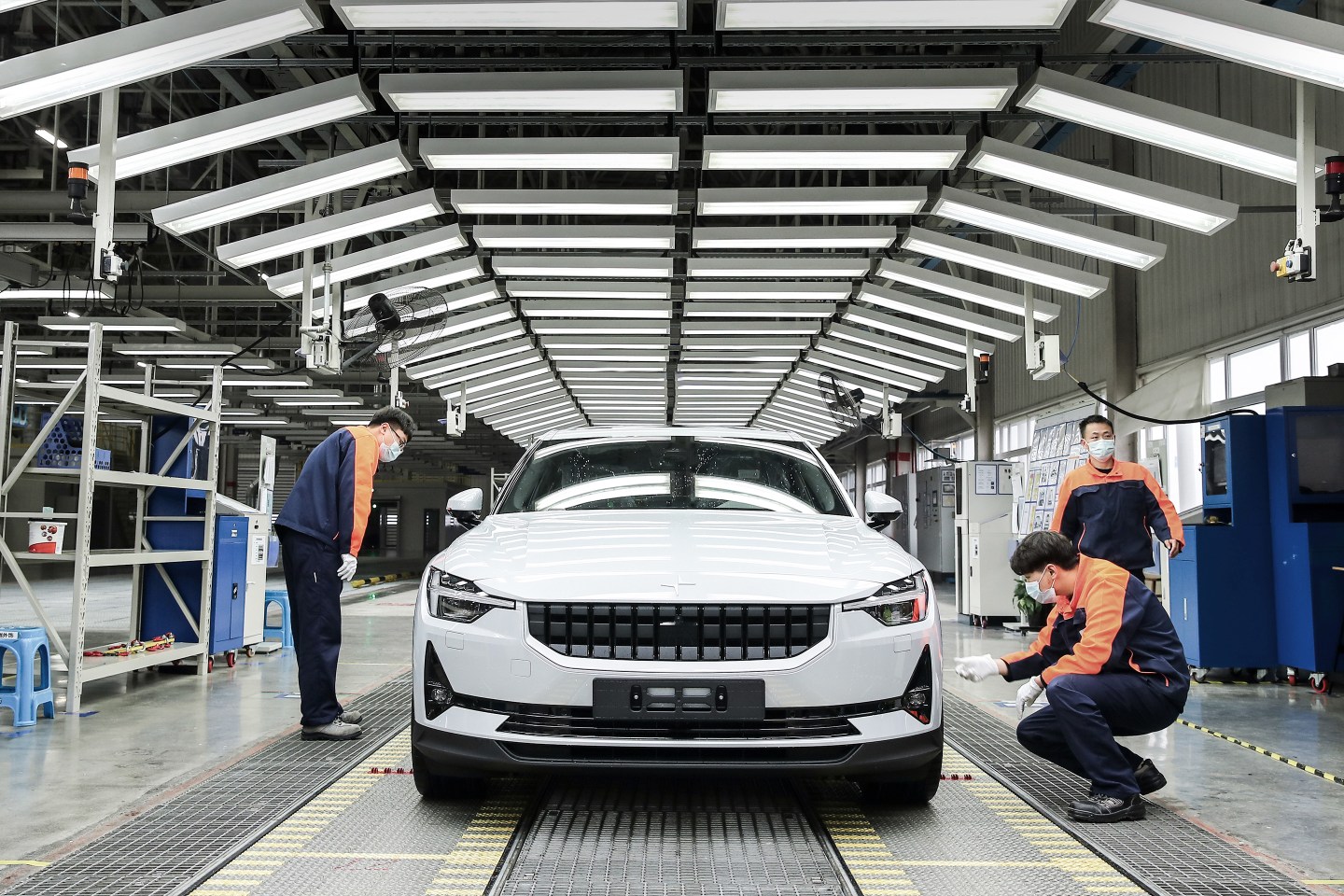
The fully electric Polestar 2, however, is squarely aimed at the upper-middle masses, with a $59,900 price tag for the dual-motor Launch Edition. (A cheaper, single-motor version is coming in 2022.) And it sets itself directly against the market-leading Tesla Model 3.
Which should you buy? It’s the natural question to ask, but not a straightforward one to answer. If you want the fully integrated EV experience—the longest range, access to Tesla’s vast Supercharger network—and like the cut of Elon Musk’s jib, the Tesla might be calling you. For those who always preferred the Rolling Stones to the Beatles, Chuck Taylors to Nike Air Max, or DC to Marvel, the Polestar 2 is worth a closer look.
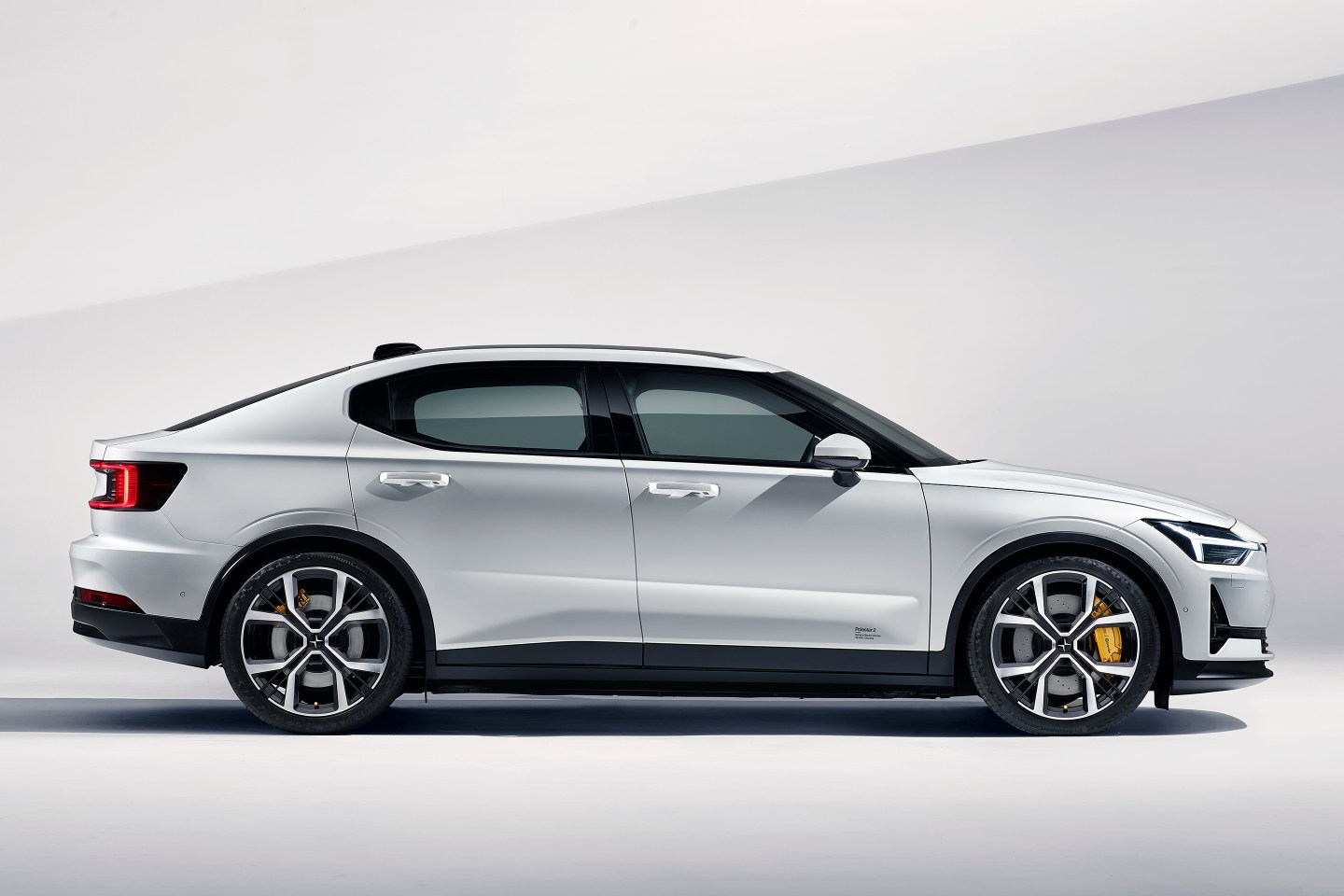
Designed by the company’s German CEO, Thomas Ingenlath, and manufactured at a Geely plant in Zhejiang province, China, the Polestar 2 nevertheless retains a strong Swedish identity. Its boxy lines and “Thor’s hammer” headlights are a subtle nod to its forebears. But it has enough unique touches, such as its distinct fastback rear hatch and muscular wheel arches, as to not be confused with the Volvo XC40, with which it shares a platform.
Inside, the Polestar 2 is minimal without being spartan: all of what you need, nothing you don’t. “Premium” is overused when describing car interiors, but it’s appropriate here. Doors clunk reassuringly, trim panels are neatly finished, plastics are soft to the touch, and the central drive shifter feels great in the hand. Put any hang-ups about a Chinese-built car firmly out of mind.
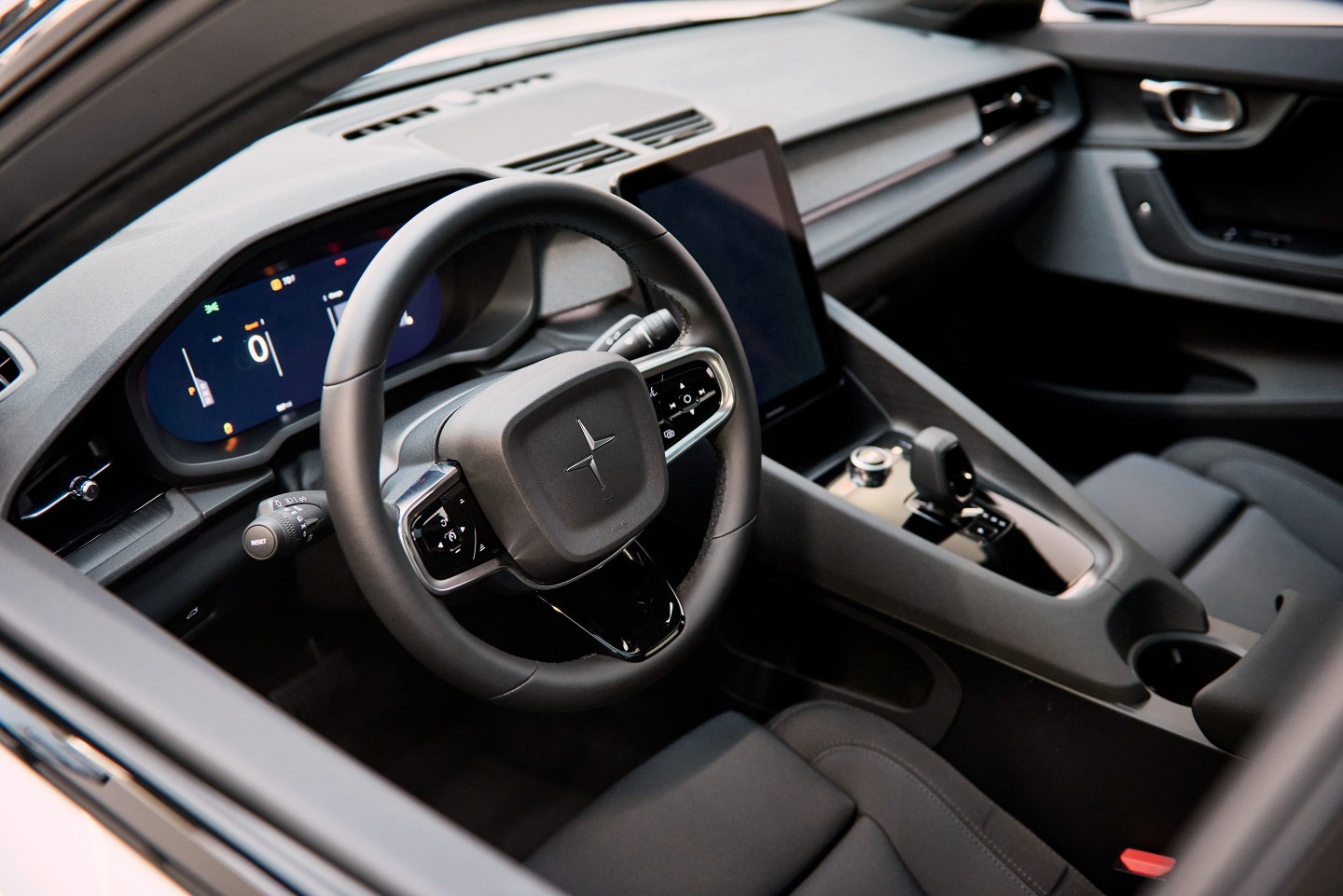
To say the Polestar 2’s infotainment operating system is one of the car’s standout features is not to throw shade at the rest of the vehicle, but a recognition of how important software is to the overall ownership experience of a modern vehicle, especially an EV. The system is the first deployment of Google’s Android Automotive OS in a production car, and it’s both slick and reliable. Touch inputs on the centrally mounted tablet are precise and responsive. The interface is clear and driver friendly, requiring just brief glances to find the options one needs. Safer still, the Google Assistant voice control can handle a lot more beyond changing music playlists and navigation commands: “OK Google, heat the driver’s seat.” And because it’s based on Android, you get Google Maps built in, as well as the Google Play app store. The system pairs with both Android and iPhone devices, and full Apple CarPlay is coming soon via a software update. Let this be a humbling lesson to all carmakers—leave the software to the software people.
To say the infotainment is one of the car’s standout features is not to throw shade at the rest of the vehicle, but a recognition of how important software is to the overall ownership experience.
The parts left to the car people are just as impressive. The Polestar 2 has impeccable road manners and a commanding presence in traffic. Acceleration is immediate, thanks to its front and rear motors, and the battery range of 233 miles is acceptable without being class-leading (the Model 3 tops out at 353 miles). Suspension damping is perhaps a tad too firm for New York’s less-than-stellar roads, but that’s a worthy tradeoff for exceptionally precise handling. At highway speeds everything smooths out, and Polestar’s host of driver assistance, such as radar adaptive cruise control and lane assist, keep things pleasant for longer journeys.
The premium EV segment is not a zero-sum game, and the Polestar 2 is not a Tesla Model 3 “killer.” It is, however, a welcome competitor that more than holds its own and is worth the serious consideration of any battery vehicle shopper. We suspect the question “What is that?” won’t be asked for much longer.
This article appears in the October/November 2021 issue of Fortune with the headline, “Pole position.”
Dive into stories from Fortune’s print edition:
- Roz Brewer on what it feels like to be 1 of 2 Black female CEOs in the Fortune 500
- Can new CEO Fidji Simo turn Instacart into more than just a delivery company?
- Are women on a collision course with the COVID ceiling?
- Hard right turn: Companies are toeing the political line in business-friendly red states
- These 9 powerful women are ones to watch
Subscribe to Fortune Daily to get essential business stories straight to your inbox each morning.