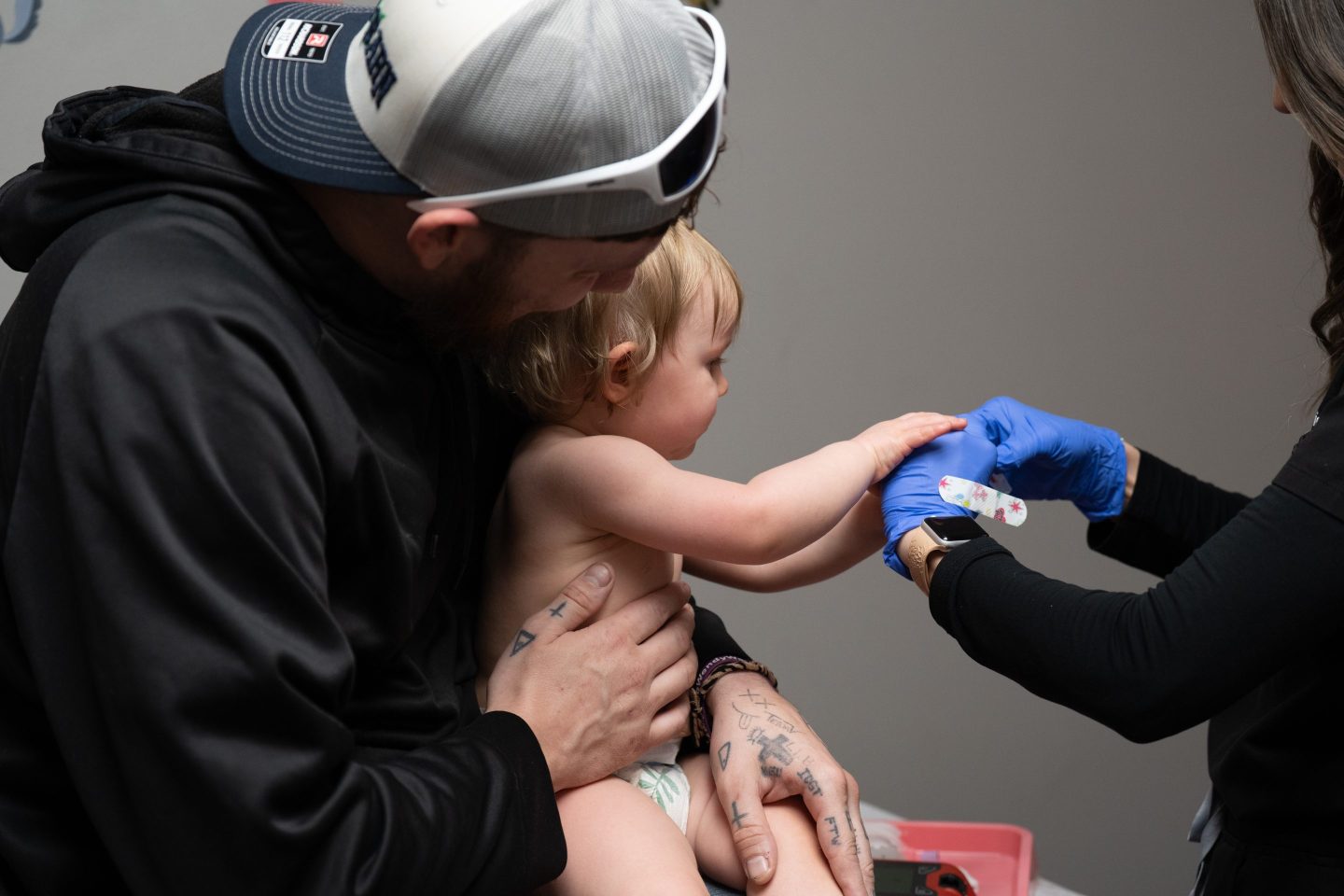
Now that Pfizer’s COVID-19 vaccine has received full Food and Drug Administration (FDA) approval for those age 16 and older and is the only coronavirus jab in the U.S. available to teens who are 12 to 15 years old under emergency authorization, parents watching their children flock back to school may be wondering when younger kids will qualify for a shot—and why the process is taking so long. Even if most children are unlikely to get seriously ill from COVID-19, the number of kids hospitalized for COVID-19 has been on the rise in the past few months. Plus, children appear to be fertile ground for the Delta variant’s spread: They could still carry the virus and pass it on to friends, family, and neighbors who may be unvaccinated, or individuals whose immune response from a vaccine has weakened over time or is less effective against variants like Delta.
“We know that with the spread of the Delta variant, how contagious it is, more children and more adolescents are getting infected, and certainly because more are getting infected, more are becoming significantly ill and becoming hospitalized,” as Department of Health and Human Services assistant secretary for health Rachel L. Levine said during a recent FDA roundtable discussing youth vaccination. “In addition, these children and adolescents are potentially spreading this disease in their homes and their communities.”
So why the delay? If Pfizer’s vaccine is already deemed safe and effective for Americans 12 and over, would inoculating an 11-year-old really be all that different?
The answer is rooted in the special design of children’s clinical trials and the ensuing considerations that parents, study volunteers, researchers, and regulators must balance. That may include delivering the proper “informed consent” on risks and trial design to parents of younger children who want to enroll in COVID vaccine trials. Furthermore, the unique and rapidly changing biology of kids necessitates that drugmakers make adjustments, such as reduced dosing for different age groups since the appropriate amount of vaccine for a 5-year-old might be much lower than what is needed for a teenager or an adult.
There are also other important health questions that need answering when it comes to a vaccine’s potential effects on a child. “With the COVID-19 vaccine, for example, we need to make sure it doesn’t interfere with immunity generated by routine childhood vaccinations—and that standard vaccination protocols are not interfering with the COVID-19 vaccine,” said Moshe Arditi, academic director of the division of pediatric infectious diseases at Cedars-Sinai in an interview. “And that’s going to take some time to assess.”
In the case of a pandemic like COVID-19, the timeline for such trials may be compressed given the urgent public health need. (After all, traditional new vaccine development can take upwards of a decade, but coronavirus jabs were made available to the public in less than a year.) That can lead to a delicate balancing act between urgency and caution for children’s medical groups. For instance, the American Academy of Pediatrics (AAP) hailed the FDA’s Pfizer vaccine approval while urging against off-label use of the jab in children younger than 12 given the existing unknowns. Simultaneously, the AAP has lobbied the FDA for months to do everything it can to authorize Pfizer’s and Moderna’s vaccines for kids under the age of 12.
“We understand that the FDA has recently worked with Pfizer and Moderna to double the number of children ages 5–11 years included in clinical trials of their COVID-19 vaccines,” wrote AAP president Lee Savio Beers in an Aug. 5 letter to acting FDA Commissioner Janet Woodcock. “In our view, the rise of the Delta variant changes the risk-benefit analysis for authorizing vaccines in children. The FDA should strongly consider authorizing these vaccines for children ages 5–11 years based on data from the initial enrolled cohort, which are already available, while continuing to follow safety data from the expanded cohort in the post-market setting. This approach would not slow down the time to authorization of these critically needed vaccines in the 5–11-year age group.”
Put plainly, the group believes it’s prudent to move sooner rather than later on getting COVID jabs to more kids given Pfizer’s and Moderna’s ongoing and continuous clinical trials in children, and to keep tabs on the safety and effectiveness numbers going forward if adjustments need to be made.
Pfizer and BioNTech began dosing children as young as six months and up to 11 years of age in a continuous Phase 1/2/3 study in March. “Younger children, who make up a significant portion of the total global population, will play a critical role in our continued fight against COVID-19. The Phase 1/2/3 study will enroll approximately 4,500 children 6 months to 11 years old in the United States, Finland, Poland, and Spain at more than 90 clinical trial sites,” according to the company. “Children younger than 6 months of age may subsequently be evaluated, once an acceptable safety profile has been established.” Pfizer is expected to begin submitting data from these studies by early September and launching the regulatory process for kids ages 5 to 11. The vaccines’ effect on this group would have to be monitored for longer than it is for adults (four to six months of follow-up safety data versus two months for adults), but there have been anonymous reports that regulators could authorize COVID vaccines for those age 5 and over by midwinter.
After this data submission and ongoing safety checkups, the Centers for Disease Control (CDC) would ultimately be responsible for setting up a vaccine schedule and recommendations for a vaccine’s appropriateness across ages and in what doses.
So while it may seem like the age lines for COVID vaccine authorizations are arbitrary and slowing down the immunization campaign, longstanding regulatory guidelines and the need for special caution in America’s youngest have influenced the current timeline. In the coming months, expect more and more kids to qualify for a jab.
More health care and Big Pharma coverage from Fortune:
- The most common COVID Delta variant symptoms in adults and kids
- Pfizer wants you to call its COVID vaccine Comirnaty. How the name came about
- Singapore is trying to do what no other country has done: pivot away from COVID-zero. Will it work?
- What Pfizer’s FDA approval means for Americans and businesses
- Vietnam had a near-perfect record of fending off COVID-19. Then came the Delta variant
Subscribe to Fortune Daily to get essential business stories straight to your inbox each morning.