In Ostia, a beach community outside the city of Rome, two miles of fencing and high walls conceal to all but the paying customers the Mediterranean in all her splendor.
“They closed the view of the sea,” says Edoardo Zanchini, a member of the environmental organization Legambiente, about the stabilimenti balneari, the bathing establishments where beachgoers can splash out a small fortune on sunbeds, beach umbrellas, and, this being Italy, a fine meal.
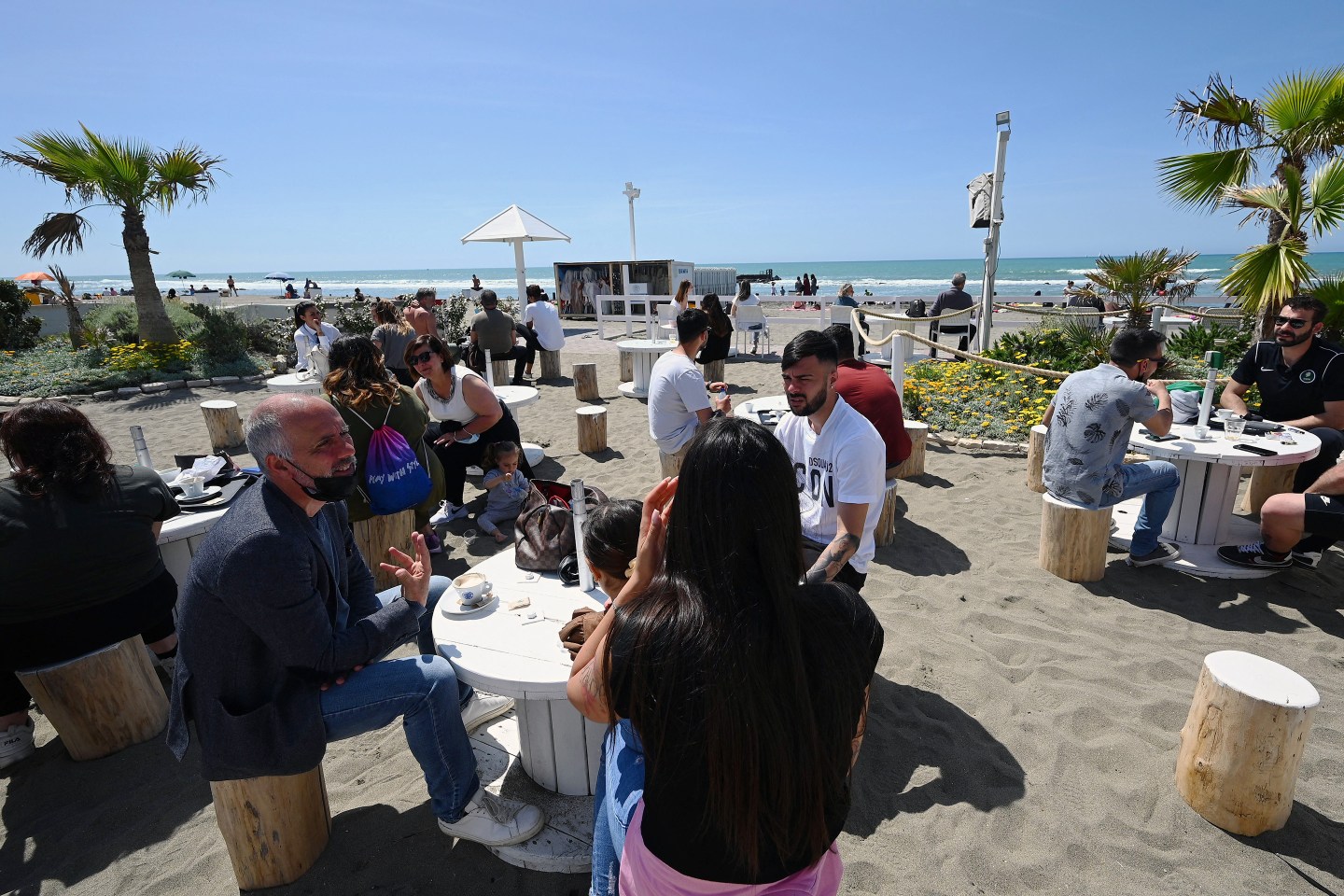
The bathing establishments ofter a clean, orderly, and comfortable bubble mere feet from the sea—but only for those who can afford the entry fee. In recent years, the bubbles have been multiplying, to the ire of open-spaces advocates. To them, these beachside businesses are an unsightly barrier. They even have a name for it: the lungomare, or sea front, becomes the “lungomuro,” a long wall.
Following activist protests, the regional government in May approved a new beach plan that could mean the destruction of sections of the barrier—not just in Ostia, but elsewhere in the region. The fight over Italy’s sea and sand, meanwhile, is being watched in the Italian courts, and as far away as drizzly Brussels.
There’s a lot more than a splendid vista mare on the line. Italy’s COVID-battered economy is highly dependent on a bounce-back in tourism, and it can ill afford a drawn-out battle over its beaches. In a good year, Italy’s beach economy generates €32 billion ($37.5 billion). The Sindacato Italiano Balneari, the trade group representing the beach businesses, is quick to point out its 30,000 members contribute billions to the economy, while employing 100,000.
That doesn’t satisfy the activists. They say the rapid commercialization of Italy’s coastal communities risks creating a vast gulf between rich and poor.
“Wealthier Italians are able to pay the fees, but poorer Italians are not,” says Danilo Ruggiero, a member of Mare Libero, an activist group in Ostia. “Many people are in a position to rent a cabin for the season, but many earn the price of a cabin in a year.”
All this sand kicked up over concessions has the potential to transform one of the most popular and beautiful seasides in the world.
Where can I find a free beach in this town?
Meanwhile, the number of free beaches are vanishing from the map.
The stats read like a well executed land grab. Pay-to-enter beaches make up about 70 percent of Liguria’s coast, in the northwest, bordering France. In some cities, companies occupy 80-90% of the beachfront. In Gatteo, near Rimini, there are no free beaches in the city.
Behind the scenes, a lack of competition means that concessions stay with the same family for generations no matter what they do, resulting in poor services and high prices, critics say. That has resulted in a formal complaint from the European Union, a wave of lawsuits, and a review of all beach concessions in the country.
The Sindacato Italiano Balneari did not respond to Fortune‘s multiple requests for comment.
Post-war boom
Bathing establishments have existed for centuries along Italy’s sun-baked peninsula, but it wasn’t until after the end of the Second World War, as the country experienced an economic boom in the 1950s, that beaches became popular spaces for the masses and business opportunities for entrepreneurs. Families bought newly built second homes near the coast or rented places near their favorite beaches, often returning to the same spot every year.
Since the 1990s, the coast, like the rest of Italy, has changed dramatically. The end of the social-democrat center-left post-war era ushered in the corporatist, free-market politics of Silvio Berlusconi. At the same time, the number of beachside business establishments tripled from about 4,000 in the 1990s to about 12,000 today, Legambiente calculates. It helped that the fees “paid to the state for the concessions were really low,” says Zanchini.
Critics describe the market for beach concessions as chaotic and too business-friendly. For example, according to newspaper Il Fatto Quotidiano, Cala di Volpe, a luxury hotel along Sardinia’s famed Costa Smeralda, pays a yearly rate of €520 for the right to cordon off a big piece of prime seaside real estate as its exclusive beach. One room there can cost €5,500 a night, enough to pay ten years of fees.
The central government in Rome has since upped the minimum concession fees, but even that change seems like a band-aid rather than a proper reform of the market, critics say.
Activists argue that fees should be linked to revenue, so big enterprises pay more, and smaller ones pay less. They also demand that the government not be blinded by the potential tax receipts, including the fact that there is not enough competition among firms that operate on the coast.
The EU has been pressuring Italy on that issue. It has repeatedly demanded open bidding processes for beach concessions, in particular after changes in regulations in the 1990s and 2000s allowed the government to renew beach concessions automatically, without opening new public tenders.
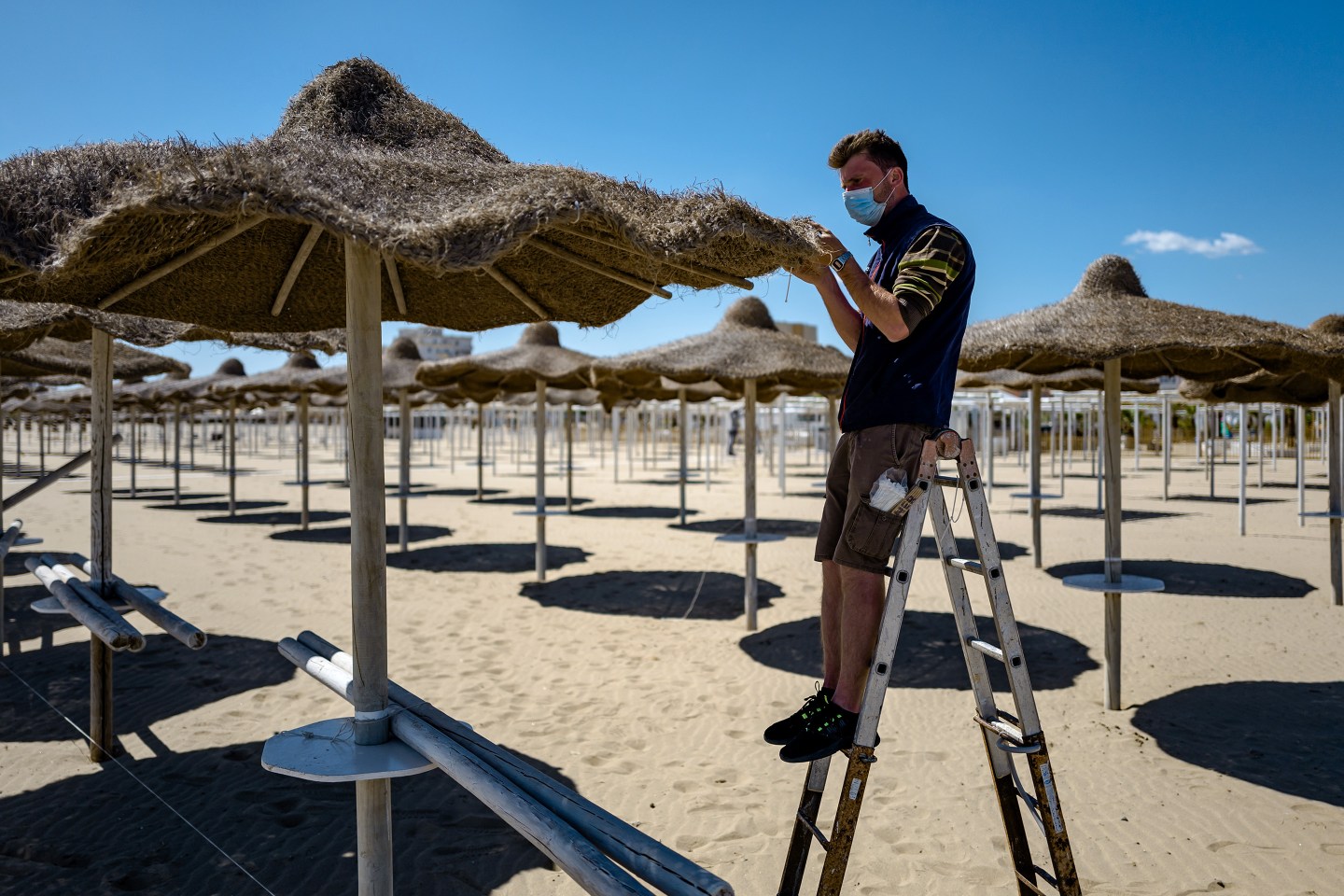
In 2010, after much pressure, the Italian government ended the automatic renewals, but threw a lifeline to the businesses by repeatedly extending existing concessions, now set for 2033. As a result, Brussels opened a formal infringement procedure in December, which could result in financial penalties for Italy.
The impasse with Brussels has created plenty of confusion and litigation in Italy.
Some municipalities, including Lecce in Puglia, several cities in Liguria, and Olbia in Sardinia, are respecting European regulations and refusing to extend concessions. Owners of establishments and their powerful national associations are suing them. Other municipalities, including Piombino and Carrara in Tuscany, are following Rome’s rules, extending concessions automatically. They are being taken to court by competition watchdogs and activists.
One of those court battles, involving a traditional establishment in Genoa, is having national reverberations and could cause a tsunami of closures on the coast, after a court asked prosecutors in July to review the concessions of every establishment in the country.
Feeling the heat
The Italian government is also under pressure from below, from domestic activist groups. “There is increasing opposition to this situation among Italians,” says Zanchini of Legambiente.
Matilde Nocchi, a beach activist from Massa, in Tuscany, says that the goal of the organization that she founded in 2019 is “to sensitize people so that they start perceiving our coast as a common good and not as belonging to the families that have managed it for years.”
She also wants to help improve the quality of free beaches, which are often poorly kept by municipalities, with mountains of debris and unprotected by lifeguards. “The sea belongs to everyone, and we want to access it with dignity and safety,” says Nocchi.
Meanwhile, activists are staging protests on their local beaches and intervening in municipal politics.
In Massa, they are attending municipal planning meetings where decisions about the beach are taken, balancing the influential presence of the bathing establishments. In Ostia, the activists make attempts to reach the sea without paying, under the nose of the businesses. They film any attempts by the owners to stop them. In Gaeta, they are on an informational offensive, distributing maps that show the location of public beaches so people know when they should not be charged to be on the sand.
Whatever it takes
Prime minister Mario Draghi, swamped with the country’s economic recovery, may be Italy’s last great hope to negotiate a truce between the European demand for change and the Italian tradition for inertia. As the former head of the European Central Bank, he is respected in Brussels and respects its institutions.
“He’s the only person who could bring us into a more modern regulation of this situation,” says Zanchini. “It would be a problem for Draghi to approve a law that goes against Europe. He can’t afford to do something like that.”
Draghi promised new laws on the issue, and Rome is planning to ask for a meeting in Brussels after the August break, according to a senior source in the tourism ministry.
In the meantime, the activists vow they’ll continue to put the heat on the beachside businesses.
Dive into stories from Fortune’s print edition:
- Crypto traders anonymous: A new addiction takes hold for many as cryptocurrency goes mainstream
- How Toyota kept making cars when the chips were down
- Ethereum risks it all on going green
- NFTy 50: The most influential builders, creatives, and influencers in the NFT world
- The war to charge your electric car is powering up
Subscribe to Fortune Daily to get essential business stories straight to your inbox each morning.