I recently fired my first-ever direct report. Although he was low-energy, uninspired, and an awful speller, what ultimately led him to the ax was his insistence on boundaries.
He would come into the office at nine every morning, leave at five, and be inaccessible anytime before and after. Regardless of deadlines or passion projects, his workday was determined not by his work, but by his hours.
The concept of “work/life balance” is so ubiquitous nowadays that businesses erect culture committees to make sure the idea is enforced; HR departments are instructed to add the phrase to the end of job postings in an effort to communicate a culture not only of hard work but of good life. It’s become emblematic of a woke work environment—one that acknowledges that an employee base is composed of actual humans, often with spouses, children, and outside interests.
The idea of balance has always had a firm foothold in human ideals. Our diets, checkbooks, relationships are all areas in which we strive to find harmony. But the term “work/life balance” as we know it became its own philosophy only recently.
Careers in industries like law, medicine, and architecture established reputations early on as high-powered and rigorous, their demanding hours and high-stakes deadlines epitomizing corporate success and creating associations between time spent working and professional satisfaction. Having to work late or pull an all-nighter demonstrated employees’ value and implied their commitment to their careers.
Fast-forward to the 2010s, or the unofficial advent of Hustle Culture. The recession was in full swing, millennials were entering the workforce, and the digital space gifted tech giants like Elon Musk and Adam Neumann an unprecedented public forum to broadcast their prolific work ethic and the wealth that resulted. A hunger percolated—work for work’s sake—and as millennials graduated and began their careers, they were guided by two values: a laser-focused desire to do what they love, and the misconception that doing what they loved meant working all the time.
Success to these young people was more contingent on hard work than it was on salary. There was pride in time investment, as it was regarded as a necessary step in the construction of a dream. Additionally, with the uptick in freelancers, contract employees, and nascent entrepreneurs, time directly corresponded to money made—if you weren’t hustling, you weren’t making money.
Toxic productivity, or the belief that too much is never enough, led many to forgo their social lives in the pursuit of overextension, as it was becoming increasingly popular to overschedule oneself, making the hustle less about ambitions and more about optics.
Enterprises like Google and Amazon fed off this frenetic energy and based their entire corporate model around it, spending billions of dollars renovating their offices to create a distinctly homelike environment, blurring the lines further between home and work. Meals were catered. Gyms and recreational opportunities were on-site. Some offices even contained bedrooms. Too late to go home? Just sleep at the office. No time to pick up groceries? Have an early breakfast at the office. Work while you eat.
Predictably, this wasn’t a sustainable practice, though it took highly visible CEOs and entrepreneurs to start the process of destigmatizing burnout. Around 2012, Susan Packard, the business brains behind popular channels like CNBC, HGTV, and Food Network, turned down the opportunity to be CEO to spend more time with her son, claiming that she “needed to stop at No. 2 if [she] wanted any work/life balance.” Matthew Cooper, CEO of EarnUp, a financial technology platform, stepped down in 2020 when he announced he’d been dealing with mental health issues exacerbated by his demanding role.
In 2019, the corporate world witnessed a historic high in CEO turnovers, reaching a whopping 1,332—a figure 13% higher than the preceding year, and the highest number since the career-transition and executive coaching firm Challenger, Gray & Christmas, began tracking CEO departures in 2002. The ranks expanded in 2021 to include leaders like fashion entrepreneur Kendra Scott, Jeff Bezos, and Reshma Saujani of Girls Who Code, when the pandemic enlightened many to the joys of a world without travel and office work, and introduced a slower routine that centered around the home.
The pendulum swings against workaholism
As it became increasingly common for high-ranking businesspeople to leave their careers, the pendulum began swinging in the opposite direction. Soon, a full rejection of the workaholism that had drained so many went into effect. As people were given permission to feel overwhelmed, they drew a stark line in the sand between their home lives and their work lives.
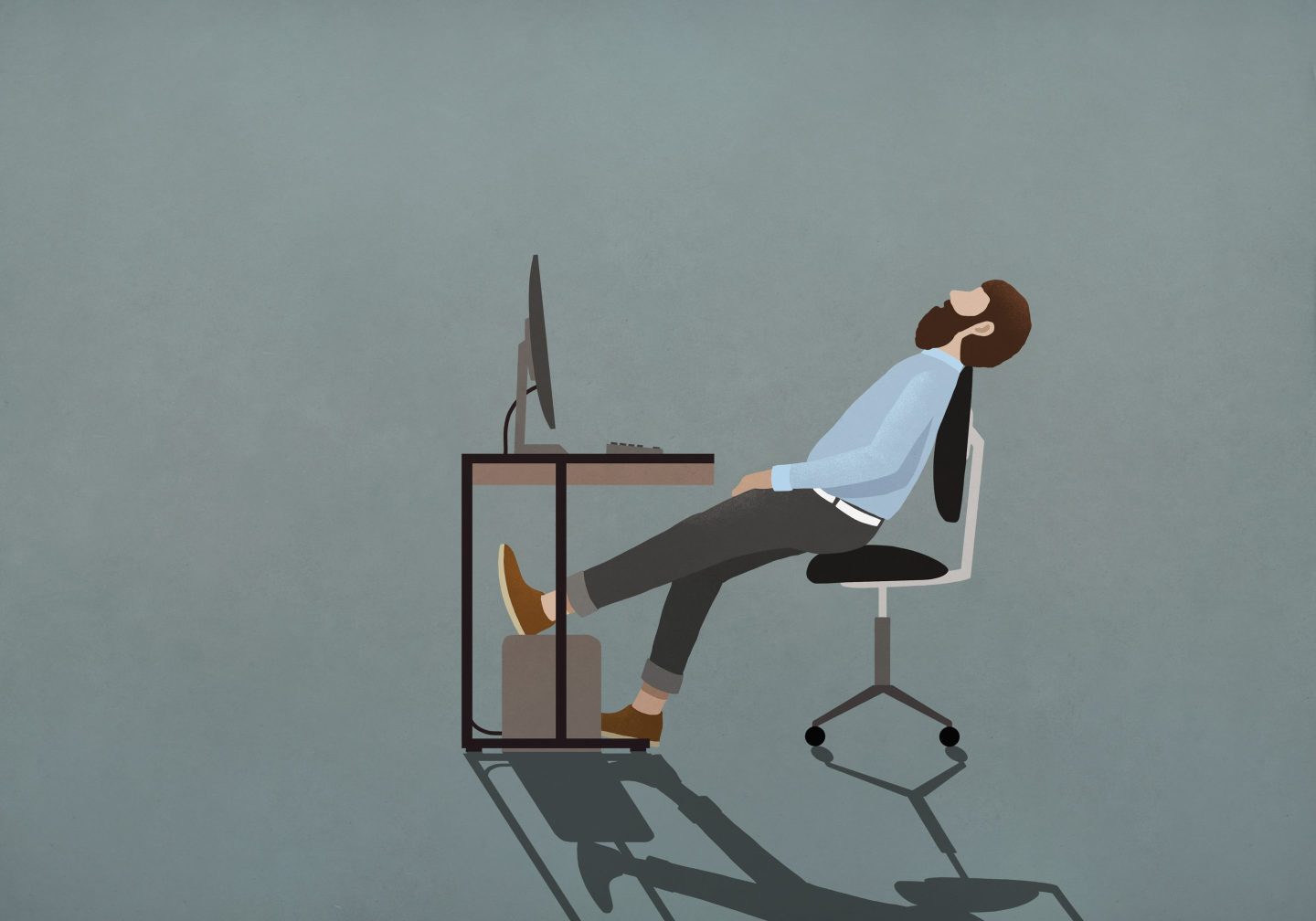
For many, this simply meant not doing work during nights or weekends. For others, it became an excuse to end the day mid-assignment, to leave coworkers hanging, to sit idly until the clock struck 5:00. In essence, it emboldened an ugly mediocrity.
Just like Hustle Culture, what started as a reasonable endeavor—the healthy pursuit of equity in work and life—became distorted, morphing into a type of compartmentalization, and a misguided entitlement to a workday neatly bookended.
A work/life balance that truly divides the work and life components of a person’s experience may be okay for a job. But for a career? It simply won’t fly. There’s no disputing it—sometimes emails need to be sent at night. Sometimes calls need to be taken early in the morning. Sometimes a Monday deadline necessitates a few hours of work on a Saturday.
And what’s more, this “balance” implies a strict tradeoff between the two constituent parts, a polarizing schedule of on/off. At work, you’re all on. After work, you’re all off. But this mindset is problematic in that it puts an undue amount of pressure on us to be all on when, in reality, sometimes we can’t be. It also bases one’s day around an arbitrary time frame that measures productivity by hours spent behind a desk as opposed to the actual work product put out.
As Gen Z graduates and enters the workforce now, they (just as their predecessors did) are responding to the current corporate climate. Millennials took the hint that overworking was the way to go (likely influenced by the Great Recession); while Gen Z (which is graduating with record-high employment) is picking up on the work/life divide, and, in my direct report’s case, getting fired for their rigidity.
Our careers are a part of our lives. And try as we might to leave work at the office, the expectation is just as unrealistic as leaving home at home. Inevitably, sometimes things bleed into one another. If we are at work and receive a phone call from our crying child, would we not take it? If we are in a meeting and discover there is a leak in our house, would we not rush out?
Work/life balance is reasonable to ask of an employer, but we must understand that balance does not equate to separation. Unwilling to work the occasional Saturday or take a call at 7 p.m.? Then good luck building a career.
Gabrielle Peterson is a Chicago-based writer and editor who works in the urban design industry.
More must-read commentary published by Fortune:
- “Cognitive diversity”: Why the best leaders build teams that disagree
- How to stop vaccine corruption, which is plaguing the global fight against COVID-19
- If Google wants to reform criminal justice, it should start with its search results
- Don’t forget about hydrogen fuel in your excitement over electric vehicles
- McDonald’s can’t dodge responsibility for sexual harassment at its restaurants
Subscribe to Fortune Daily to get essential business stories straight to your inbox each morning.