• Home
  • Latest
  • Fortune 500
  • Finance
  • Tech
  • Leadership
  • Lifestyle
  • Rankings
  • Multimedia
NewslettersFortune Analytics

Nearly a third of workers don’t want to ever return to the office

By
Lance Lambert
Lance Lambert
Former Real Estate Editor
Down Arrow Button Icon
By
Lance Lambert
Lance Lambert
Former Real Estate Editor
Down Arrow Button Icon
December 6, 2020, 5:57 PM ET
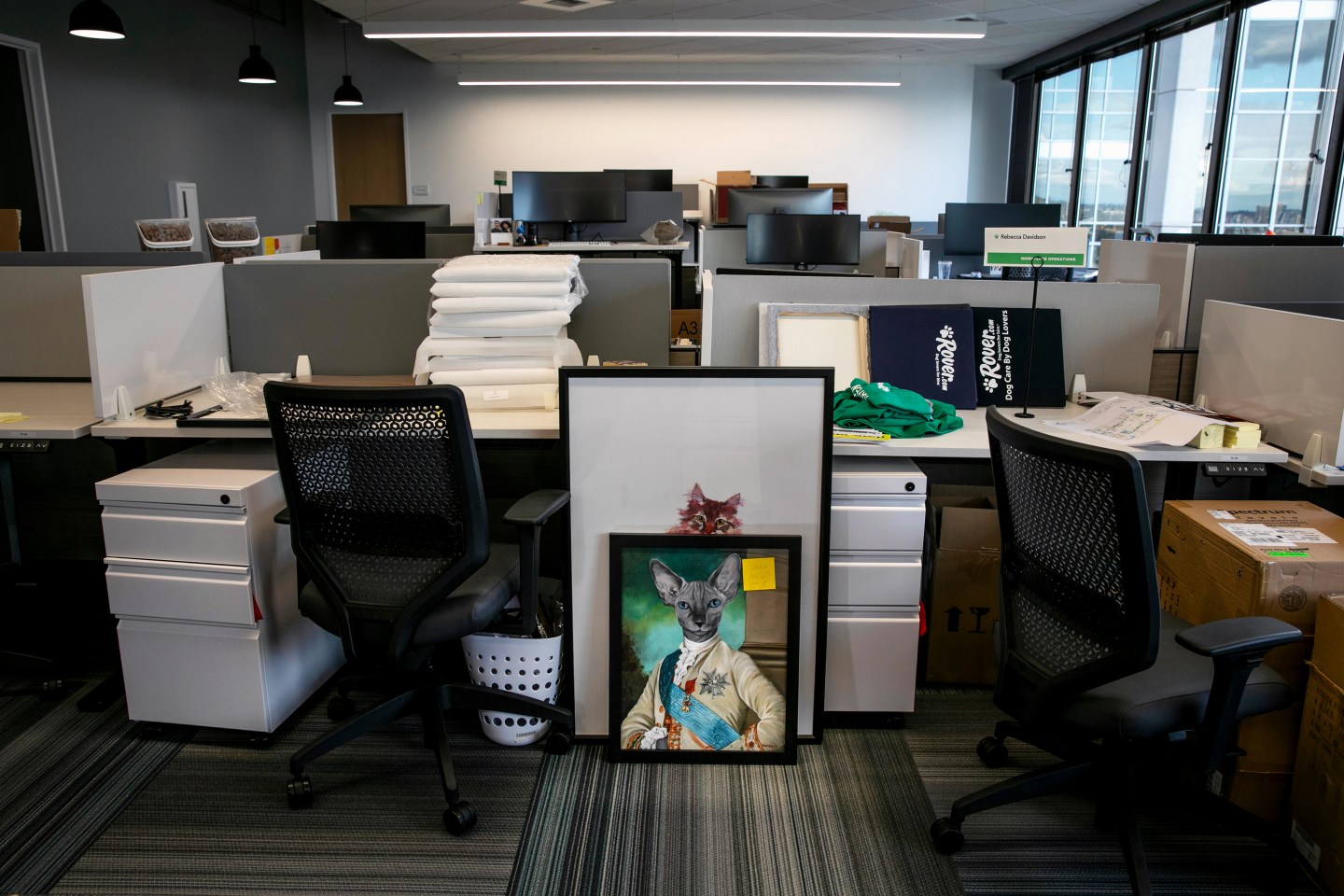
Empty Office Space-Office Survey
The office of Rover.com sits empty with employees working from home due to the coronavirus pandemic on March 12 in Seattle, WashingtonJohn Moore—Getty Images

The vaccines are on their way. So far, they appear so effective that Dr. Anthony Fauci even thinks we may have packed stadiums return in the summer of 2021.

That also means more employers will begin to reopen their offices—and we’ll get to see to what degree WFH sticks around.

To get an eye on the future of work, Future Forum by Slack conducted a three-month survey of over 9,000 knowledge workers or skilled office workers around the world—something they used to build their Remote Employee Experience Index. Future Forum by Slack gave Fortune Analytics exclusive access to that raw data.*

Here’s what we found.

The numbers to know

27%

  • … of knowledge workers say they’d never (13%) or rarely (14%) work from their employer’s office in an ideal world. 39% say they’d want to always (12%) or usually (27%) work from the office. And 34% are in the middle.

48%

  • … of workers say they expect their employer to make permanent policies changes to expand remote working post-pandemic. 31% say they don’t expect permanent changes, and 21% are unsure.

43%

  • … of hiring managers say they’re likely to consider a remote candidate when hiring for a position on their team. 32% said they’d be unlikely to, and 25% are neutral.

33%

  • … of workers are feeling burned out.

The big picture

Workers are split on returning to the office. Around 3 in 10 workers would never or rarely want to return to the office, while 4 in 10 would like to go back to the old normal. We should expect a mixed approach from employers, tailoring new work policies based on how their staff works best. Simply put: The future of work won’t look like fully packed offices nor a wasteland of empty buildings.

A few deeper takeaways
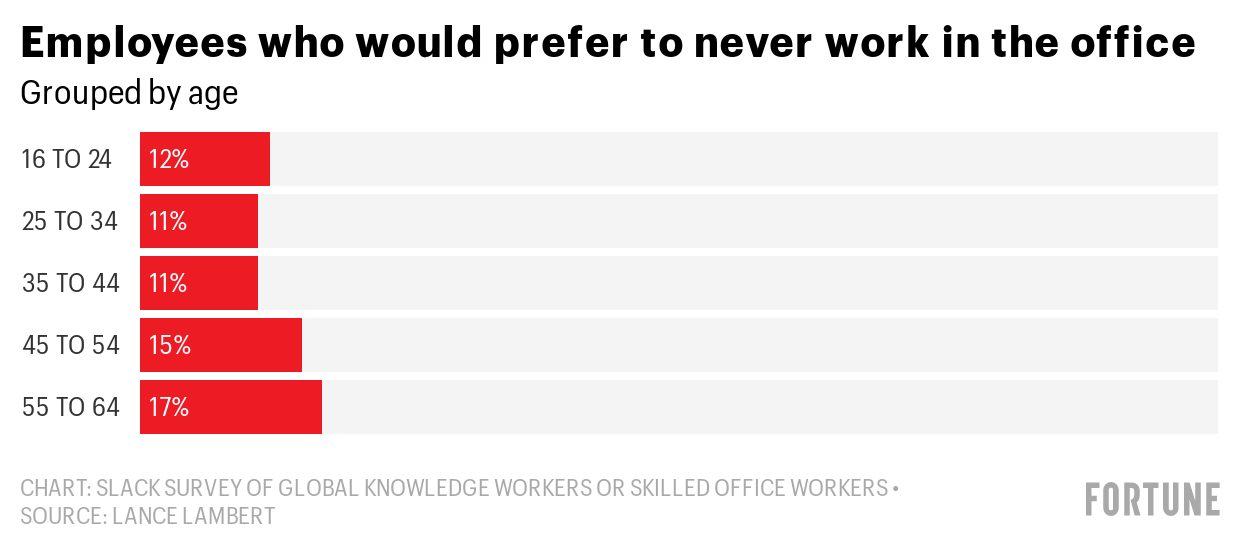
1. Older workers prefer WFH the most.

This isn’t the ’90s: Older workers are damn good at digital communication. And these employees aged 55 to 64 are the most likely to say they’d prefer to never work from the office, with 17% of them indicating so.

Only 11% of workers aged 25 to 44 say the same thing. What may be the reason? As I’ve pointed out before, younger staffers are struggling the most to be productive while working from home. Some find it challenging because they’re still learning the ropes in their industry or job. This age group includes many parents—a group that is struggling to balance WFH and childcare.
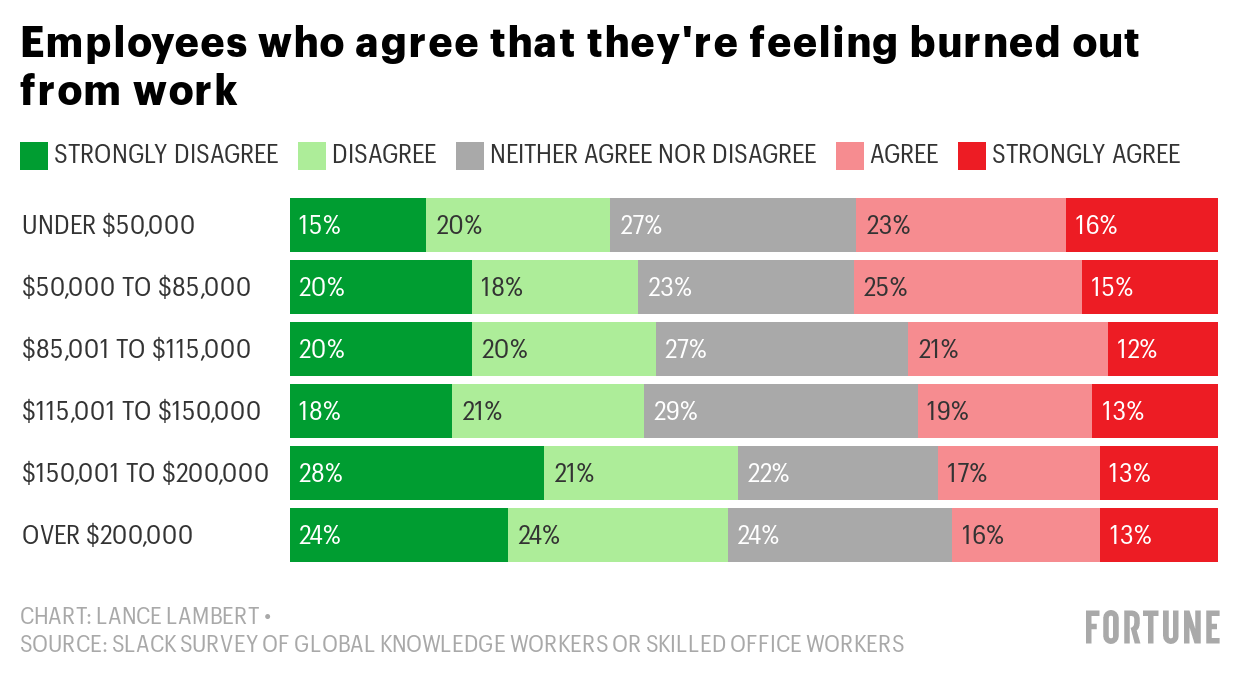
2. Burnout is hitting lowest-paid workers hardest.

In April alone, more than 20 million Americans were laid off. Smaller staffs mean those who were lucky enough to escape pink slips are being asked to do more. That, paired with disruptions in everyone’s personal lives, is a perfect recipe for burnout. In all, 33% of workers say they’re burned out.

Those at the bottom of the office chain are most likely to be struggling with burnout. Among those earning less than $50,000, 39% agree they’re feeling burned out. 29% earning more than $200,000 are feeling the same.

Workers paid less are more likely to see their jobs cut during the crisis. That means many of these modest earners are working extra hard to avoid the corporate axing—and burning out faster.

*Methodology: The Slack Work Tracking Survey was conducted between May 30 to August 11 among an audience of over 9,000 “knowledge workers” or “skilled office workers” in Australia, France, Germany, Japan, United Kingdom, and United States.


About the Author
By Lance LambertFormer Real Estate Editor
Twitter icon

Lance Lambert is a former Fortune editor who contributes to the Fortune Analytics newsletter.

See full bioRight Arrow Button Icon

Latest in Newsletters

NewslettersMPW Daily
Alexis Ohanian believes in the future of women’s sports: ‘I can market excellence all day long’
By Emma HinchliffeDecember 12, 2025
22 hours ago
NewslettersCFO Daily
SEC chair moves to boost IPO momentum: ‘Make it cool to be a public company’
By Sheryl EstradaDecember 12, 2025
1 day ago
NewslettersTerm Sheet
Disney plus OpenAI: What could possibly go wrong?
By Alexei OreskovicDecember 12, 2025
1 day ago
Disney CEO Bob Iger in Los Angeles, California on November 20, 2025.(Photo: Unique Nicole/AFP/Getty Images)
NewslettersFortune Tech
Disney and OpenAI do a deal
By Andrew NuscaDecember 12, 2025
1 day ago
NewslettersCEO Daily
Honest Company CEO Carla Vernón on being mentored by Walmart’s Doug McMillon
By Diane BradyDecember 12, 2025
1 day ago
Stephanie Zhan, Partner Sequoia Capital speaking on stage at Fortune Brainstorm AI San Francisco 2025.
AIEye on AI
Highlights from Fortune Brainstorm AI San Francisco
By Jeremy KahnDecember 11, 2025
2 days ago

Most Popular

placeholder alt text
Economy
Tariffs are taxes and they were used to finance the federal government until the 1913 income tax. A top economist breaks it down
By Kent JonesDecember 12, 2025
1 day ago
placeholder alt text
Success
Apple cofounder Ronald Wayne sold his 10% stake for $800 in 1976—today it’d be worth up to $400 billion
By Preston ForeDecember 12, 2025
1 day ago
placeholder alt text
Success
40% of Stanford undergrads receive disability accommodations—but it’s become a college-wide phenomenon as Gen Z try to succeed in the current climate
By Preston ForeDecember 12, 2025
24 hours ago
placeholder alt text
Economy
For the first time since Trump’s tariff rollout, import tax revenue has fallen, threatening his lofty plans to slash the $38 trillion national debt
By Sasha RogelbergDecember 12, 2025
20 hours ago
placeholder alt text
Economy
The Fed just ‘Trump-proofed’ itself with a unanimous move to preempt a potential leadership shake-up
By Jason MaDecember 12, 2025
18 hours ago
placeholder alt text
Success
At 18, doctors gave him three hours to live. He played video games from his hospital bed—and now, he’s built a $10 million-a-year video game studio
By Preston ForeDecember 10, 2025
3 days ago
Rankings
  • 100 Best Companies
  • Fortune 500
  • Global 500
  • Fortune 500 Europe
  • Most Powerful Women
  • Future 50
  • World’s Most Admired Companies
  • See All Rankings
Sections
  • Finance
  • Leadership
  • Success
  • Tech
  • Asia
  • Europe
  • Environment
  • Fortune Crypto
  • Health
  • Retail
  • Lifestyle
  • Politics
  • Newsletters
  • Magazine
  • Features
  • Commentary
  • Mpw
  • CEO Initiative
  • Conferences
  • Personal Finance
  • Education
Customer Support
  • Frequently Asked Questions
  • Customer Service Portal
  • Privacy Policy
  • Terms Of Use
  • Single Issues For Purchase
  • International Print
Commercial Services
  • Advertising
  • Fortune Brand Studio
  • Fortune Analytics
  • Fortune Conferences
  • Business Development
About Us
  • About Us
  • Editorial Calendar
  • Press Center
  • Work At Fortune
  • Diversity And Inclusion
  • Terms And Conditions
  • Site Map

© 2025 Fortune Media IP Limited. All Rights Reserved. Use of this site constitutes acceptance of our Terms of Use and Privacy Policy | CA Notice at Collection and Privacy Notice | Do Not Sell/Share My Personal Information
FORTUNE is a trademark of Fortune Media IP Limited, registered in the U.S. and other countries. FORTUNE may receive compensation for some links to products and services on this website. Offers may be subject to change without notice.