This is the web version of Data Sheet, Fortune’s daily newsletter on the top tech news. To get it delivered daily to your in-box, sign up here.
I recently bought an Apple Watch SE—the edition co-branded with Nike, in case you were wondering—as a 30th birthday gift to myself. (Thank you, dear readers, for your input; I ultimately chose the cheaper option.)
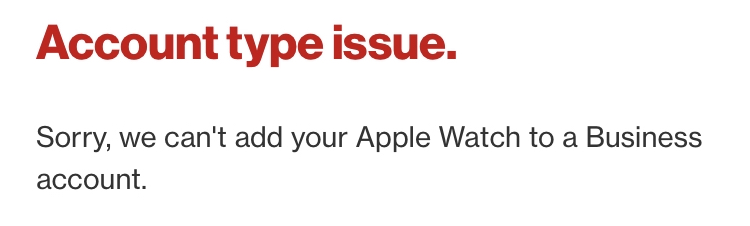
While setting up the watch this weekend, I was startled to discover an impediment. To enable cellular service, a feature for which I paid extra, one must first establish a connection to one’s carrier network through an existing phone plan. I attempted to connect the accessory through my work iPhone only to discover that the watch cannot be set up using a business account. Oy vey.
That was frustrating (as was learning that my preferred app for library loans is incompatible). But these are minor irritations compared to the connectivity issues facing much of the world. I was reminded of this during our virtual Fortune Global Forum event on Monday, where I moderated two sessions on Internet access.
My panelists put things into perspective for me. Here’s a smattering of what they said.
On a year of reckoning in the U.S.: “In the last six months, we’ve learned about the many gaps we have in our country, whether it’s the digital divide or systemic racism.” —Enrique Lores, CEO, HP
On the significance of Internet access: “Not only do we already have a digital divide, but we also can see through the pandemic how critical access to technology is for so many people around the world to stay connected from online learning health to health and wellness.” —Suzanne Fallender, head of corporate responsibility, Intel
On the pandemic’s impact: “The new reality is that COVID has accelerated and increased the digital divide. We are in a new kind of apartheid, a digital apartheid. It’s more than a divide. People are excluded and don’t have access in Brazil, in Latin America, in Africa.” —Rodrigo Baggio, president, Recode
On cultural gender differences: “There are concerns around safety and online harassment that will lead some families to not want to give their girls access to smartphone devices for school and for remote learning. There are stereotypes that technology is for boys. Social norms keep girls away. They don’t see STEM role models in many of these places around the world. That widens the sense of digital divide.” —Suzanne Ehlers, CEO, Malala Fund
On corporate initiatives: “We’re trying to reach 500 million people in the next four years…. We’re trying to concentrate on making digital technologies affordable in developing areas, creating digital ecosystems, helping developers and working with local governments and communities to improve their digital skill sets.” —Andy Purdy, chief security officer, Huawei Technologies USA
On wiring up Africa: “We’re making the best out of a bad situation. Let me give you an example. We have countries that have never been connected before. We completed South Sudan about four months ago. The biggest barrier was the landmines that were there on the border with Uganda.” —Sam Nkusi, CEO, One Africa Network and Liquid Telecom
Lastly, but certainly not leastly, Beth Ford, CEO of the farmer cooperative Land O’ Lakes, has advocated more vocally for broadband access in rural America than perhaps any other executive in corporate America. She put it best: “We’re sitting here saying, Our cell phones aren’t working, I’m untethered. But there is very basic wiring that is missing in these communities.”
My Apple Watch snag is nothing compared to the disadvantages so many people face merely because of geography.
***
Another episode of Fortune’s Reinvent podcast is out featuring John Zimmer, co-founder and president of Lyft. COVID-19 dealt the ride-hailing company (and Uber arch-nemesis) a punishing blow. At the pandemic’s peak, rides were down as much as 75%, and Lyft was forced to lay off 17% of its workforce. Yet Zimmer remains positive about the future and his vision of “transportation as a service.”
Hosts Adam Lashinsky and Beth Kowitt discuss the challenges ahead for Lyft, including efforts at diversifying revenue streams, and California’s Prop 22 ballot initiative. Listen to the episode here.
Robert Hackett
Twitter: @rhhackett
THREATS
Making Alps out of anthills. China's Ant Financial held the biggest IPO of all time: a $34 billion bonanza on the Hong Kong and Shanghai stock exchanges. The unprecedented market debut vaulted Alibaba founder Jack Ma, already the richest man this side of the Yangtze, up the canonical rich list, putting him ahead of Walmart's heirs.
Chip on your shoulder. Chipmaker Advanced Micro Devices has agreed to buy tech firm Xilinx for $35 billion in an all-stock deal. Xilinx makes components for data centers, giving AMD another way to take on arch-rival Intel.
Zoom, enhance, zoom, enhance. Work-from-home darling Zoom rolled out an end-to-end encryption offering across its teleconferencing service on Monday. The debut—this is considered a "phase one" of the privacy-preserving technology and is not turned on by default—has some limitations, however. As Fortune's David Z. Morris explains, the tech prevents cloud video recording, live audio transcription, certain chats, and more. Phase two, which may address at least some of these issues, is slated for next year.
Who will censor the censors?
ACCESS GRANTED
Russian disinformation is a fact of life, sure. But just how effective is it? Not as much as everyone would like you to believe, argues Yochai Benkler, a professor at Harvard Law School and co-director of Harvard's Berkman Klein Center for Internet & Society, in a shrewd piece for national security blog Lawfare. People give the Kremlin's information operations more credit than they deserve, thereby playing right into Putin's hands.
Let’s get one issue off the table: The evidence that there are Russian information operations aimed at the United States is overwhelming, and whatever debates there can be about the operations should be only about whether they merit the attention given to them, not whether they exist.
That said, there is no publicly available evidence that establishes that these operations have made any difference worth caring about.
FORTUNE RECON
When COVID cases rise, Trump’s odds of winning the election drop by Shawn Tully
Slack CEO Stewart Butterfield on Zoom, growth, and the changing nature of work by Jonathan Vanian
Those ‘accept cookies’ banners on websites undermine your privacy—but they can be fixed by Todd McKinnon
Land O’ Lakes CEO calls for big federal spending on rural broadband by David Z. Morris
Larry Culp: We’re in the second or third inning of GE’s turnaround by Daniel Bentley
‘Success of everyone’: Chobani and PayPal are paying workers more—and rethinking capitalism by Maria Aspan
(Some of these stories require a subscription to access.Thank you for supporting our journalism.)
ONE MORE THING
Against the better judgment of longtime Bitcoin foe and J.P. Morgan Chase chief executive Jamie Dimon, analysts at the investment bank are extolling the cryptocurrency's virtues. The authors of a recent research note say the price of so-called digital gold could experience a "doubling or tripling" over the long-term, since many Millennials dig it.
As if to placate the bossman—who once said he would fire any trader "stupid" enough to be caught trading the "fraud" that is Bitcoin—the JPMorgan analysts added caveat: “For the near term, Bitcoin looks rather overbought and vulnerable to profit taking we think.”
And so they live to trade another day...