Our mission to help you navigate the new normal is fueled by subscribers. To enjoy unlimited access to our journalism, subscribe today.
The Federal Reserve Bank of Atlanta projects that GDP dropped a record –35.2% in the second quarter. Put simply: No event in American history has wrecked the U.S. economy faster than the pandemic-driven recession, or pancession for short.
But even before we get that official GDP number, the economy might already be turning the corner. The unemployment rate shot up from a 50-year low of 3.5% in February to a staggering 14.7% in April, but has since fallen two consecutive months coming in at 11.1% in June.
That has some economists saying the recession is technically over and we’ve moved into recovery or growth.
To give Fortune readers a better understanding of where the economy is and where it’s heading, we rounded up eight charts of economic data we’ve been tracking throughout the crisis:
- Permanent job losses
- Employment in hospitality and leisure industries
- Consumer spending
- Initial unemployment claims
- Americans receiving unemployment benefits
- State-by-state unemployment rate
- Racial unemployment gap
- Manufacturing
Permanent job losses
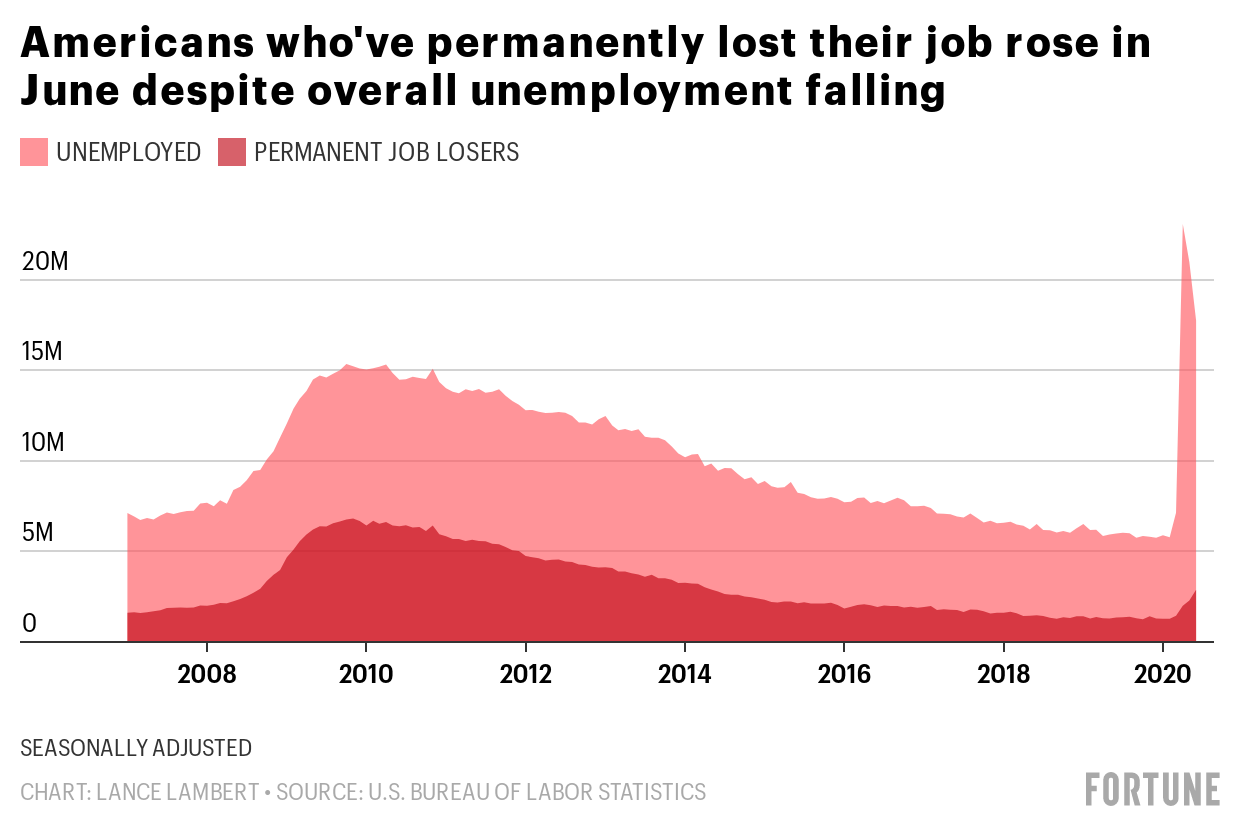
The number of unemployed Americans topped 23.1 million in April, far above the peak of 15.4 million during the 2007–09 Great Recession years. But we’re already seeing people get rehired. Between April and June the number of unemployed Americans fell 5.3 million to 17.8 million.
However, the number of “permanently” unemployed Americans rose from 2 million in April to 2.9 million in June. That’s a sign that employers are converting some of their furloughs into layoffs—something that could impede the recovery.
“Last month permanent job losses rose…People who said, ‘I lost my job and it’s gone and it isn’t coming back,’” said Claudia Sahm, director of macroeconomic policy at the Washington Center for Equitable Growth. As that number rises, the window to put the economy back on the tracks will narrow, she said.
Employment in hospitality and leisure industries
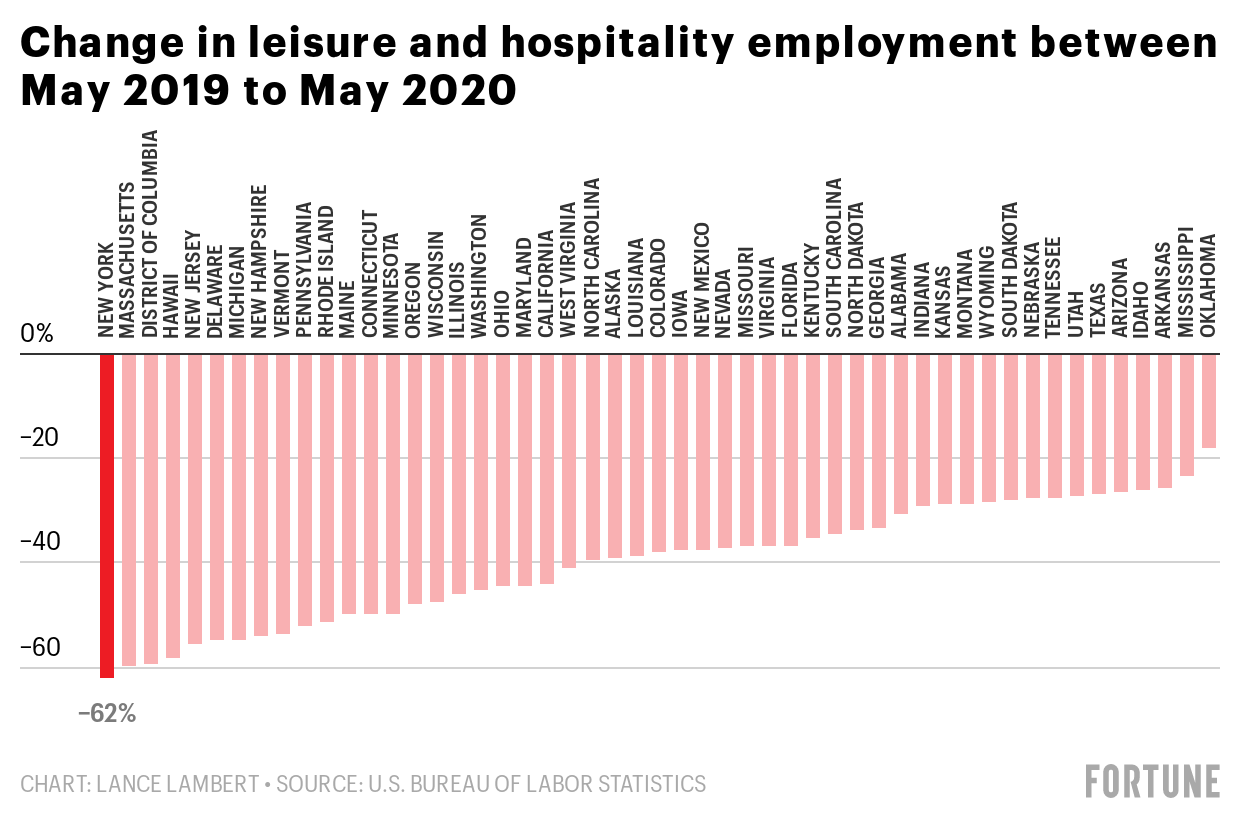
Businesses with any connections to tourism, dining, or public events got hammered at the onset of the crisis. The number of U.S. leisure and hospitality jobs is down 41% year over year in May, from 16.5 million in May 2019 to 9.8 million now. It is hands down America’s hardest-hit industry.
Back in the spring, New York State was the epicenter of the pandemic in the U.S., with the most COVID-19 deaths at over 32,000. It has also seen the biggest decline in leisure and hospitality jobs. Between May 2019 and May 2020, the number of leisure and hospitality jobs in New York fell from 961,000 to 364,100, according to the U.S. Bureau of Labor Statistics.
Hospitals, dental offices, and salons are all bringing back workers as states ease shutdowns. That is driving unemployment lower. But it will get harder to keep that recovery pace if leisure and hospitality don’t start bringing back employees too.
Consumer spending
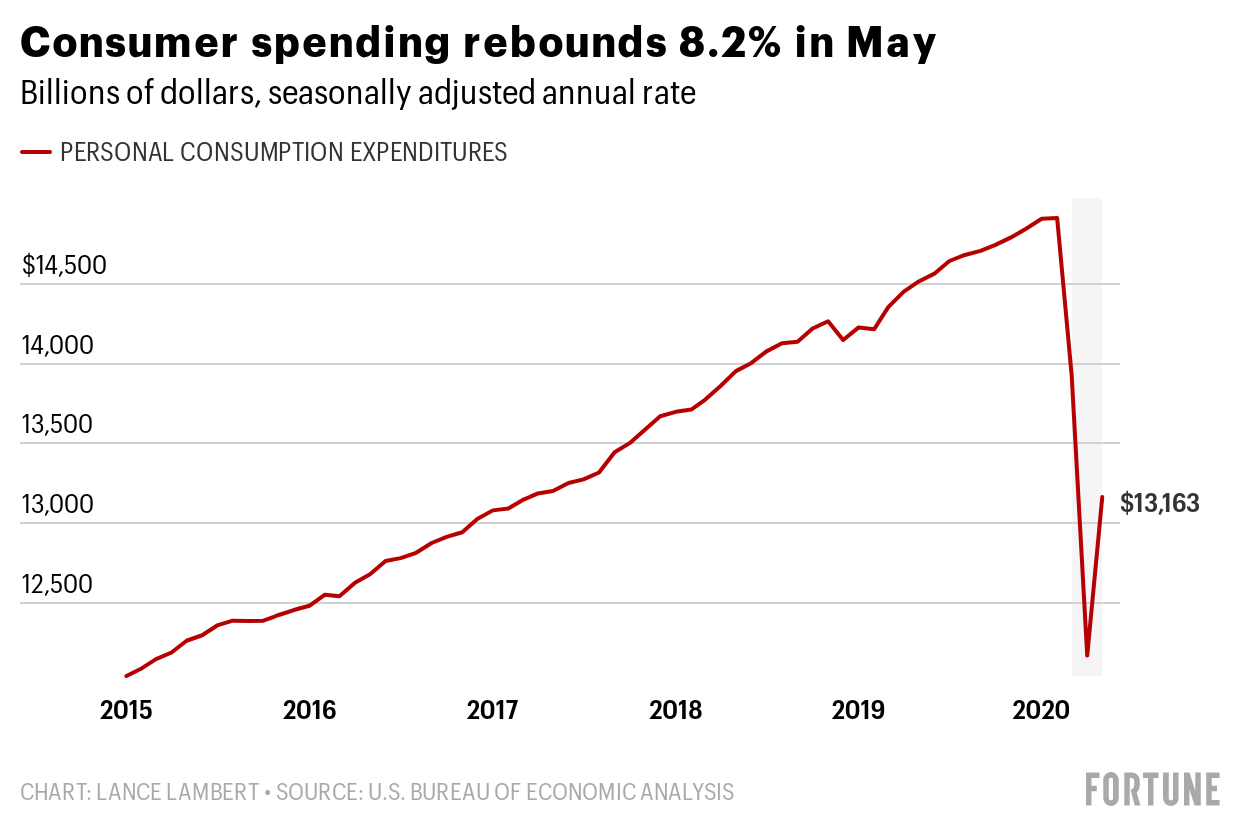
Consumer spending dropped –6.6% and –12.6% in March and April, respectively. But it then jumped a record 8.2% in May, according to the U.S. Bureau of Economic Analysis.
That is great news for an economy that is largely powered by consumers. However, it has a long way to go to reach pre-coronavirus levels. And remember, all those PPP loans, stimulus checks, and the $600 extra federal unemployment checks are soon set to expire unless Congress reaches a consensus on extending more help.
Initial unemployment claims
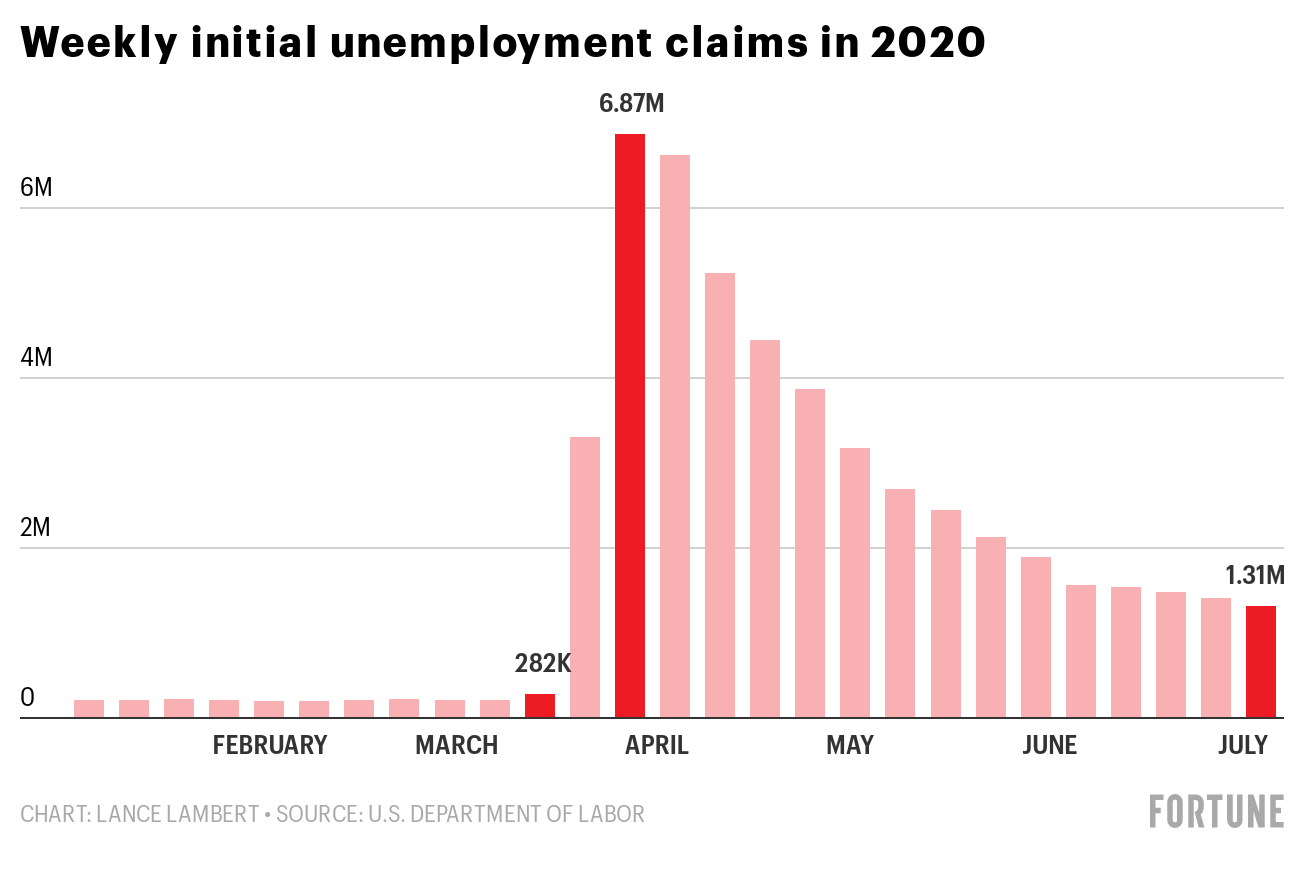
In the week ended March 14, a total of 282,000 Americans filed initial unemployment claims. The outbreak of the pandemic swelled that number to a staggering 6.9 million just two weeks later.
Since then we’ve since seen initial weekly unemployment claims fall for 14 consecutive weeks, with 1.3 million filed in the week ended July 4. But it still means 15 straight weeks with claims topping 1 million—something that had never occurred in a week before March 2020.
Americans receiving unemployment benefits
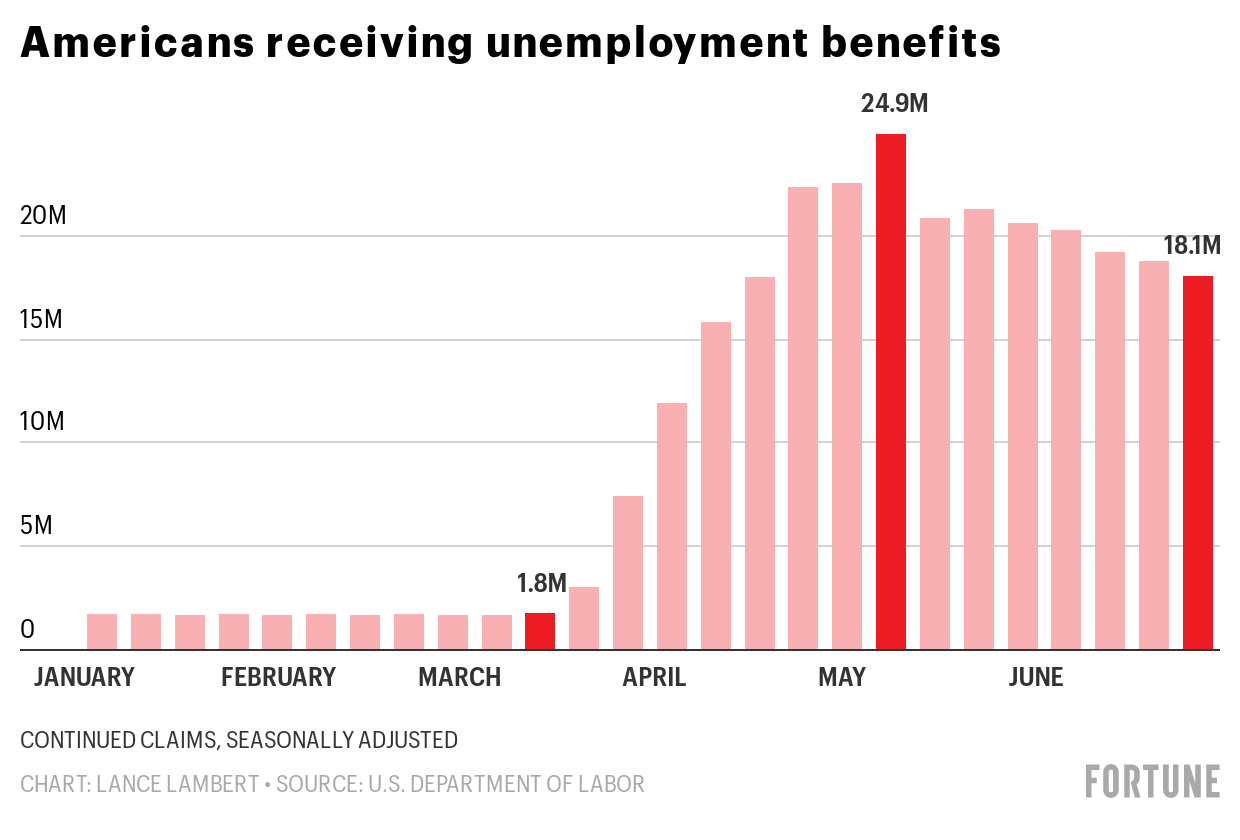
The total number of Americans currently receiving unemployment benefits—called “continued claims”—came in at 18.1 million in the week ended June 27, according to data published Thursday by the U.S. Department of Labor. And state unemployment rolls are down 6.8 million from their 24.9 million peak on May 9.
This points to employers rehiring staff. And it pushes back at the economic theory that the generous extra $600 in unemployment benefits would discourage jobless Americans from returning to work.
State-by-state unemployment rate
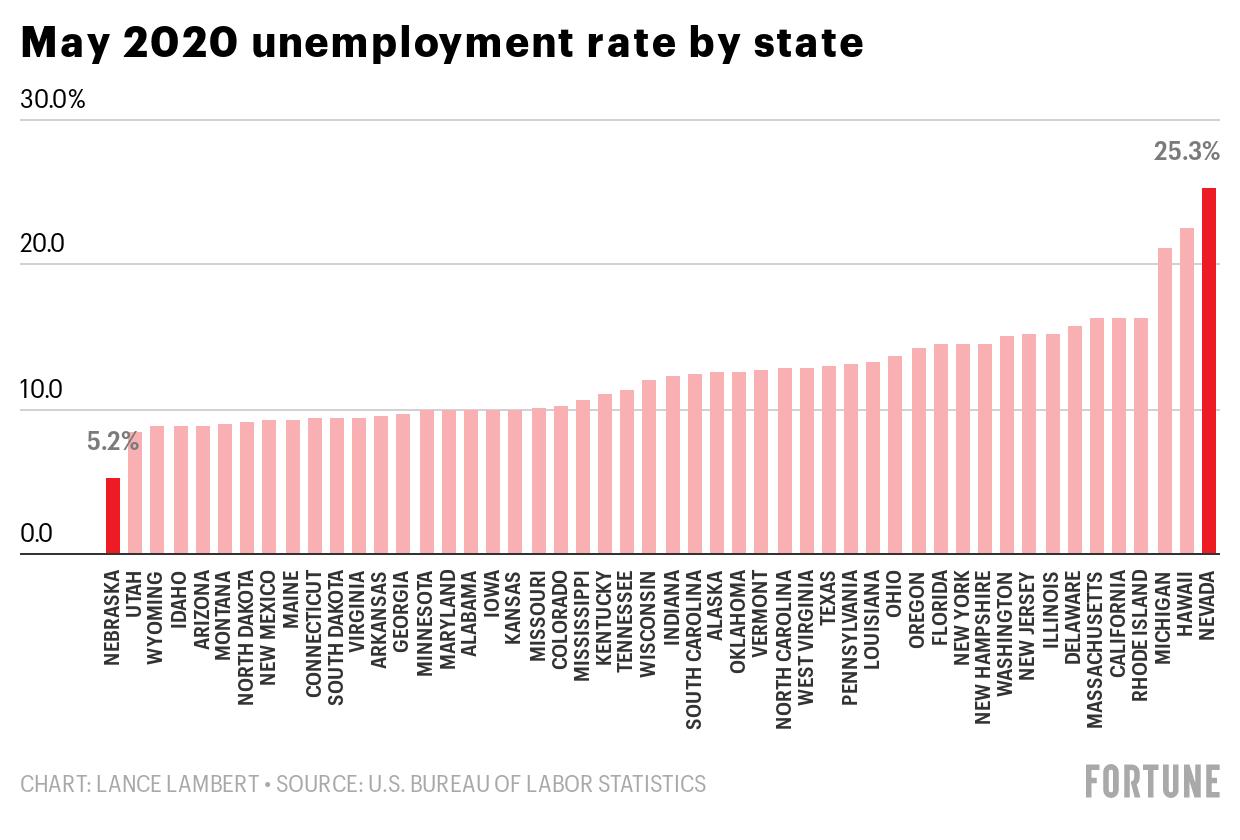
The economic fallout of the pandemic has hit some regions harder than others. In Nevada, where tourism has been battered, the unemployment rate sits at 25.3%—just under the 25.6% U.S. jobless rate during the Great Depression.
Just behind Nevada is Hawaii (22.6%), Michigan (21.2%), Rhode Island (16.3%), Massachusetts (16.3%), and California (16.3%).
The good news? The jobless rate fell in 35 states in May, including in Nevada where it fell from its 28.2% April peak. The rate was flat in three states, and rose slightly in 12 more.
Racial unemployment gap

The unemployment rate in June among white workers was 10.1%, compared with 13.8% for Asian workers, 14.5% for Hispanic workers, and 15.4% among Black workers. The economic impact of the pandemic has absolutely been uneven.
But this disparity also highlights the fact that the job market has always been unequal for Black Americans.
The pandemic’s 11.1% unemployment rate for white workers is just below the average unemployment rate for Black workers since 1972 of 11.4%. During that period the white unemployment rate topped double digits just three times—all since onset of the 2020 pandemic. For Black workers that occurred a staggering 405 times.
Manufacturing
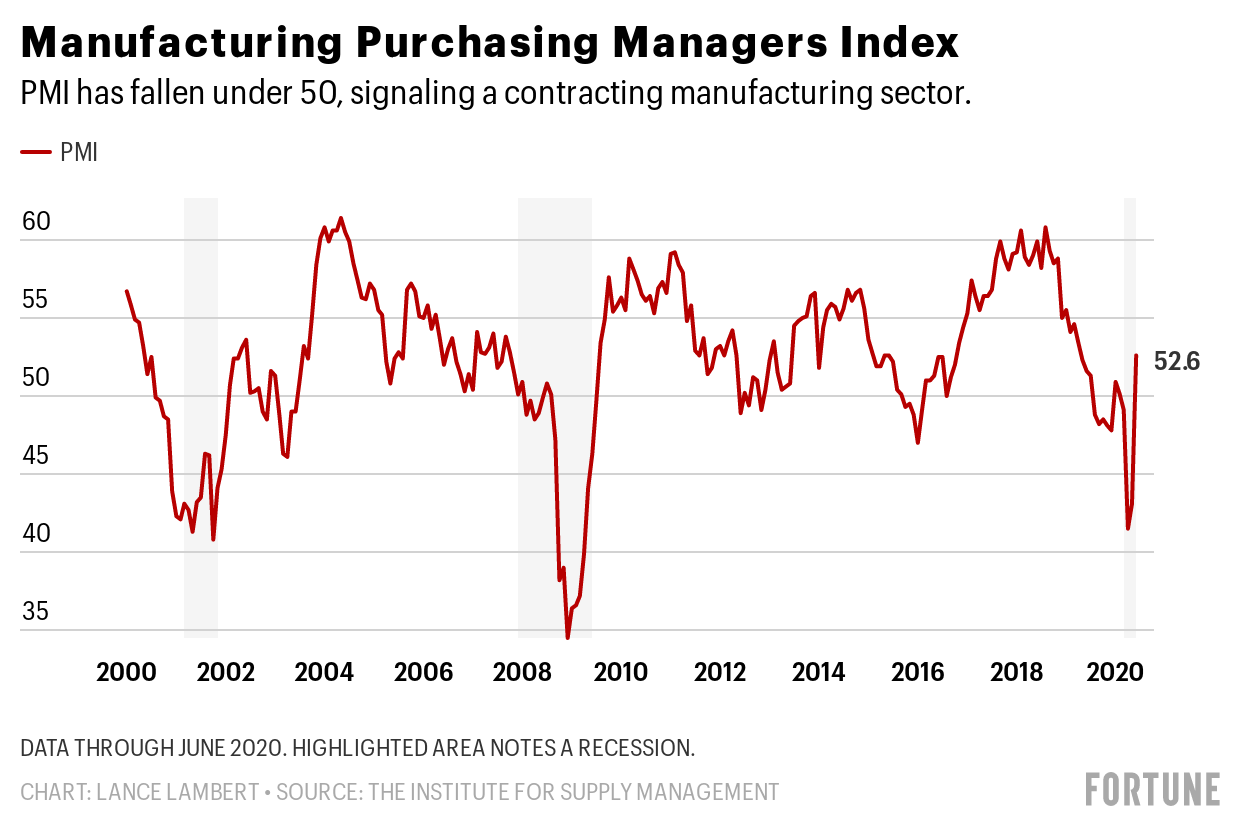
The Institute for Supply Management’s Purchasing Managers Index (PMI) came in at 52.6% in June, up from 43.1% in May and 41.5% in April. A PMI below 50% signals a contracting manufacturing sector. So that means U.S. manufacturers are growing again.
The contraction in manufacturing in 2020 was both more mild and quicker than what the industry experienced from 2008 to 2010.
What does all this mean?
“The economy has improved from a few weeks ago,” says Mark Zandi, chief economist at Moody’s Analytics. He argues the recession is over, however, we could double dip. “We may have reopened too fast and reinvigorated the virus. The economy is starting to suck some wind again.”
More must-read finance coverage from Fortune:
- 5 theories on why the stock market is up 42% since March—ranked by likelihood
- What the GOP has in mind for a second round of stimulus checks
- Are we seeing a ‘reverse square root’ symbol economic recovery?
- Why does Wall Street fear a Democrat in the White House? The data just doesn’t add up
- Face masks may have killed off the ‘lipstick index.’ What’s the lipstick index?
- Why Berkshire Hathaway is partly to blame for the S&P 500 being in the red this year