Subscribe to Outbreak, a free daily roundup of stories on the coronavirus pandemic—and its impact on global business.
The economic collapse of 2008 triggered some of the most high-profile bankruptcies in U.S. history, including those of Lehman Brothers, General Motors, and Washington Mutual. Now, in the face of the even larger crisis brought about by the coronavirus, other big companies are bracing for a similar fate.
“Bankruptcy lawyers across the country and the world are preparing for an onslaught,” says Marc Levinson, senior counsel at the law firm Orrick.
The full onslaught is several months away, predict Levinson and other experts, who say companies and lenders are still trying to assess the magnitude of the current crisis, as well as the government response to it. But the nature of the coronavirus means financial catastrophe is inevitable for many companies in sectors like travel, hospitality, and entertainment.
Some of the hardest-hit companies may be forced to liquidate. But more are likely to opt for Chapter 11 bankruptcy. Under Chapter 11, a company can renegotiate the terms of its debts and contractual obligations with suppliers and employees, through a process overseen by a federal bankruptcy judge. A successful Chapter 11 reorganization can prevent a company from having to go out of business if its revenue plummets—making it a potentially invaluable tool during a crisis like the current one.
The good news is that government policymakers and the U.S. bankruptcy regime are better prepared than in 2008–09 to weather the impending wave of business failures. But the current crisis will also present political leaders with hard choices about whether to bail out certain industries with grants and loans—as Congress is set to do for the airline industry—or instead rely on Chapter 11 in hopes of restoring them to financial health.
Different from Lehman
The sudden bankruptcy of the investment bank Lehman Brothers on Sept. 15, 2008, became one of the signature moments of the financial crisis, casting shocked traders in expensive suits abruptly onto the streets of Manhattan. Lehman’s chaotic collapse also helped spur the broader economic upheaval that became known as the Great Recession.
“The consensus among most bankruptcy scholars is the handling of Lehman was bungled,” says Ed Morrison, a law professor at Columbia University. “It was allowed to fail in a spectacular way, and created uncertainty about the other banks.”
Morrison says the chaos of Lehman’s collapse came about because policymakers were slow to address the underlying cause of the bank’s distress—the seizing up of credit facilities, which created a liquidity crisis that meant Lehman couldn’t meet its borrowing obligations. Government dithering also produced a climate of uncertainty that exacerbated the economic fallout.
Eventually, the Federal Reserve and the Treasury Department devised tools—primarily in the form of backstops for lending—to prevent the collapse of other banks, and to ensure liquidity in the markets. But by the time those tools were deployed, the wider economy had been battered.
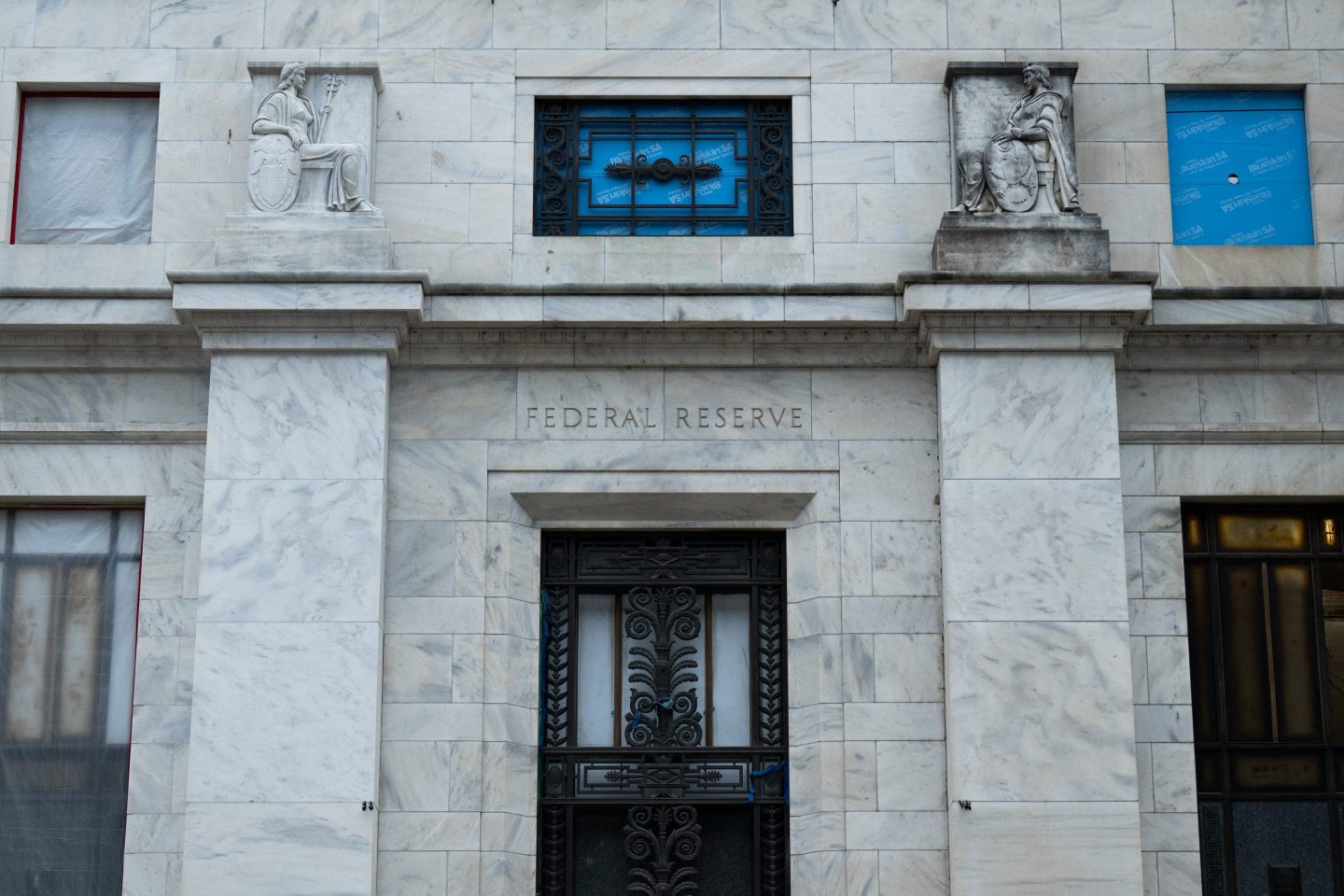
In the present crisis, the Federal Reserve has been nimble in deploying the policy tools it developed in 2008 to mitigate the economic fallout. These include emergency lending facilities that will buy up student and corporate debt, as well as mortgage-backed securities.
All of this—along with post-2008 “stress tests” that have required banks to maintain larger cash reserves for emergencies—have helped forestall a Lehman-style meltdown in the financial sector.
This has been doubly important since some Chapter 11 “safe harbor” provisions, which prevent creditors from seizing a bankrupt company’s assets, don’t extend to financial firms. “The bankruptcy code is not very good for saving banks. When Lehman filed, bankruptcy offered little shelter, and creditors were free to rip it apart,” Morrison says.
This is not the case for the likes of retailers, movie theaters, casinos, and vacation providers—all of which face exposure to bankruptcy in the coming months if they are unable to source new liquidity, according to Gary Holtzer, who cochairs the restructuring practice at Weil Gotshal & Manges.
Holtzer says his phone is already ringing constantly with big companies inquiring about how to terminate contracts, deploy lines of credit, and, more generally, brace for what’s to come.
The case for bankruptcy
Congress has prepared a $2 trillion rescue package for the U.S. economy, which includes hundreds of millions of dollars in aid for airlines and other distressed industries. While the plight of these businesses is obvious, not everyone believes aid from Congress is necessary.
“It’s a mistake for policymakers to be as averse to bankruptcy as they seem to be,” says Morrison, the Columbia law professor. “Why do we need bailouts when we have a ready-made solution to airline distress called Chapter 11?”
Morrison notes that an orderly bankruptcy allows firms to maintain operations and clean up their balance sheets and, in many cases, become profitable in the future. He cites the 2009 bankruptcy of General Motors as the “poster child” for Chapter 11, notwithstanding the influence of politicians and unions on the process.
Jared Ellias, a bankruptcy scholar at UC Hastings College of the Law, points to another Chapter 11 filing from 2009—that of mall operator General Growth Properties—as particularly instructive for the present crisis. He describes GGP at the time as a “best in class” company and explains that its $30 billion bankruptcy filing shielded it from opportunistic creditors who hoped to foreclose on its properties and sell them for a markup when the financial crisis passed. Instead, GGP weathered the crisis by means of Chapter 11, reducing its debt load and spinning off some of its assets into a new company.
In the current crisis, Ellias suggests that GGP’s successful bankruptcy process could provide a road map for ski resorts, cruise operators, hotels, and other industries facing devastating financial losses. Meanwhile, recent changes to the bankruptcy code mean a streamlined version Chapter 11 is available to many more small businesses. According to Levinson, the Orrick attorney, the small-business regime is available to companies that don’t report to the SEC and have less than $2 million in debt.
In the case of big companies, there may also be a moral case for using Chapter 11 rather than government bailouts to weather the coronavirus shock. Morrison points out that government-backed rescues for the airlines and other industries would stick every American taxpayer—including low-income ones—with any losses that arise. By contrast, a bankruptcy filing typically means it is shareholders who absorb the losses. Morrison suggests the latter outcome is more fair, since shareholders signed on for such a risk in the first place.
Morrison and others also point out that airlines, casinos, and other companies currently facing the coronavirus shock have gone through bankruptcy before and could do so again.
But despite the practical and moral arguments in favor of letting big companies go bankrupt, there are powerful political ones against doing so. These include the job losses and other disruptions that Chapter 11 typically entails. Meanwhile, Morrison notes that the current President has pegged much of his administration’s success to the stock market indexes—and that those indexes would decline if a series of major American companies were to file for bankruptcy.
What lies ahead
While the bankruptcies of the last financial crisis provide lessons for the current one, experts note that there is simply too much uncertainty right now to make confident predictions. Part of this uncertainty, of course, relates to the extent of the economic damage the virus will inflict, while part of it surrounds the response of the U.S. government—though details of that response, including the massive stimulus package, have become clearer in recent days.
There is a further source of uncertainty, however, that makes the future fate of troubled companies even harder to predict. This relates to the possibility that some of the changes wrought by the pandemic and social distancing will permanently alter how consumers live, work, and shop.
Ellias, the UC Hastings professor, notes that demand for everything from office space to seats at restaurants could be very different once the coronavirus has passed. This means that creditors and restructuring experts, who rely on evaluating the future value of assets, will be skittish about pushing companies to enter bankruptcy until they can assess what their revenues might look like after the crisis.
Another factor that makes the current crisis different from the last one is the degree to which big companies have globalized their operations, says Holtzer, the Weil lawyer. He predicts the coronavirus crisis could lead firms to consolidate production in parts of the world where governments offer favorable economic terms and declare bankruptcy, or simply pull out of other regions.
A combination of bailouts and bankruptcy are likely to help most of the hardest-hit companies survive the coronavirus crisis. But their businesses may also look very different in the future.
“It’s hard to know what’s on the other side. History teaches us that when things are snapped together, they won’t look like they did when all this began,” says Ellias.
More must-read stories from Fortune:
—Everything you need to know about the coronavirus stimulus checks
—Coronavirus economic relief proposals are overlooking the 57 million self-employed
—How does America pay for the coronavirus relief bill? With two shiny coins
—The world’s largest coronavirus lockdown is off to a rocky start
—The quickest way to boost the economy isn’t even being considered. Why?
—Listen to Leadership Next, a Fortune podcast examining the evolving role of CEOs
—WATCH: The greatest designs of modern times
Subscribe to Outbreak, a daily roundup of stories on the coronavirus pandemic and its impact on global business.