This is the web version of Business x Design, a newsletter on the power of design. Sign up here to get it in your inbox.
Fortune’s recent list of the greatest modern designs didn’t mention Forrest M. Bird, but perhaps it should have.
The aviator and inventor’s early research into high-altitude breathing problems of World War II pilots led to the world’s first reliable mechanical ventilators. He built prototypes out of strawberry-shortcake tins and doorknobs, but rounds of improvements ultimately resulted in a portable cardiopulmonary marvel widely used in homes and hospitals. Bird’s innovations helped millions who suffered from acute and chronic heart and lung conditions, and made cumbersome, expensive contraptions like the iron lung obsolete.
The COVID-19 pandemic has already led to a ventilator shortage. Last week, New York governor Andrew Cuomo said his state has fewer than 6,000 ventilators but likely needs 30,000 of them. A report by the Center for Health Security at Johns Hopkins University said U.S. hospitals have about 160,000 ventilators, with another estimated 12,700 coming from the federal government’s emergency stockpile. But James Lawler, an infectious disease specialist at the University of Nebraska, warned American hospitals that up to 96 million people could contract the virus. About one million of those people will need ventilator support. That said, a study in Wuhan found that 2.3 percent of those infected required ventilators—more than double the rate Lawler posits. And that’s just in the United States.
Over the next three months, access to ventilators could mean the difference between recovery and death for thousands, if not millions, of patients. This makes the question of how to build them quickly and cheaply one of the world’s most urgent design challenges.
British officials have rushed ventilator blueprints to Rolls-Royce and Jaguar Land Rover. Fiat Chrysler are in talks with Siare Engineering, Italy’s largest ventilator manufacturer. On Sunday, President Trump challenged Ford, General Motors, and Tesla to begin producing ventilators, tweeting “Go for it auto execs, let’s see how good you are?”
GM says it is exploring the feasibility of building ventilators for Ventec Life Systems at one of its plants in Indiana. Musk says Tesla is working on producing ventilators at its factories, and is in discussions with Medtronics. Over the weekend, Musk air-freighted 1,225 ventilators to Los Angeles, saying the machines were sourced from China, which now has an “oversupply.” Bloomberg Intelligencereports Chinese manufacturers could produce about 14,000 non-invasive ventilators by April, for patients in Milan and New York.
Meanwhile, two leading hospitals in Montreal have offered a $200,000 prize for anyone who can come up with a simple and efficient design for building ventilators. Britain’s Daily Mail says engineers the world over are using Google Docs and Github to exchange designs for homemade ventilators.
But ventilators have come a long way since Bird’s prototypes. Robert Chatburn, an associate professor of medicine at Case Western Reserve University, scoffs at the notion car makers, gifted designers, or brilliant hackers will be able to magically ramp up ventilator production in a matter of months. “It’s laudable that car manufacturers would want to help,” he toldNew York magazine. “But there’s only a handful of people in the world who know how to design a ventilator, much less manufacture one safely at scale.”
These are complicated machines, made from hundreds of small parts produced by companies all over the world. Even if manufacturers succeed in producing thousands of safe ventilators quickly, hospitals will need to distribute them efficiently to severe outbreak areas and train people to use them properly. It’s not just a design quandary, but a supply-chain problem. Nevertheless, it’s often said that designers love wicked problems. This is about as wicked as they come.
More design news below.
Clay Chandler
@ClayChandler
Clay.Chandler@Fortune.com
NEWS BY DESIGN
This edition of Business By Design was curated by Margaret Rhodes.
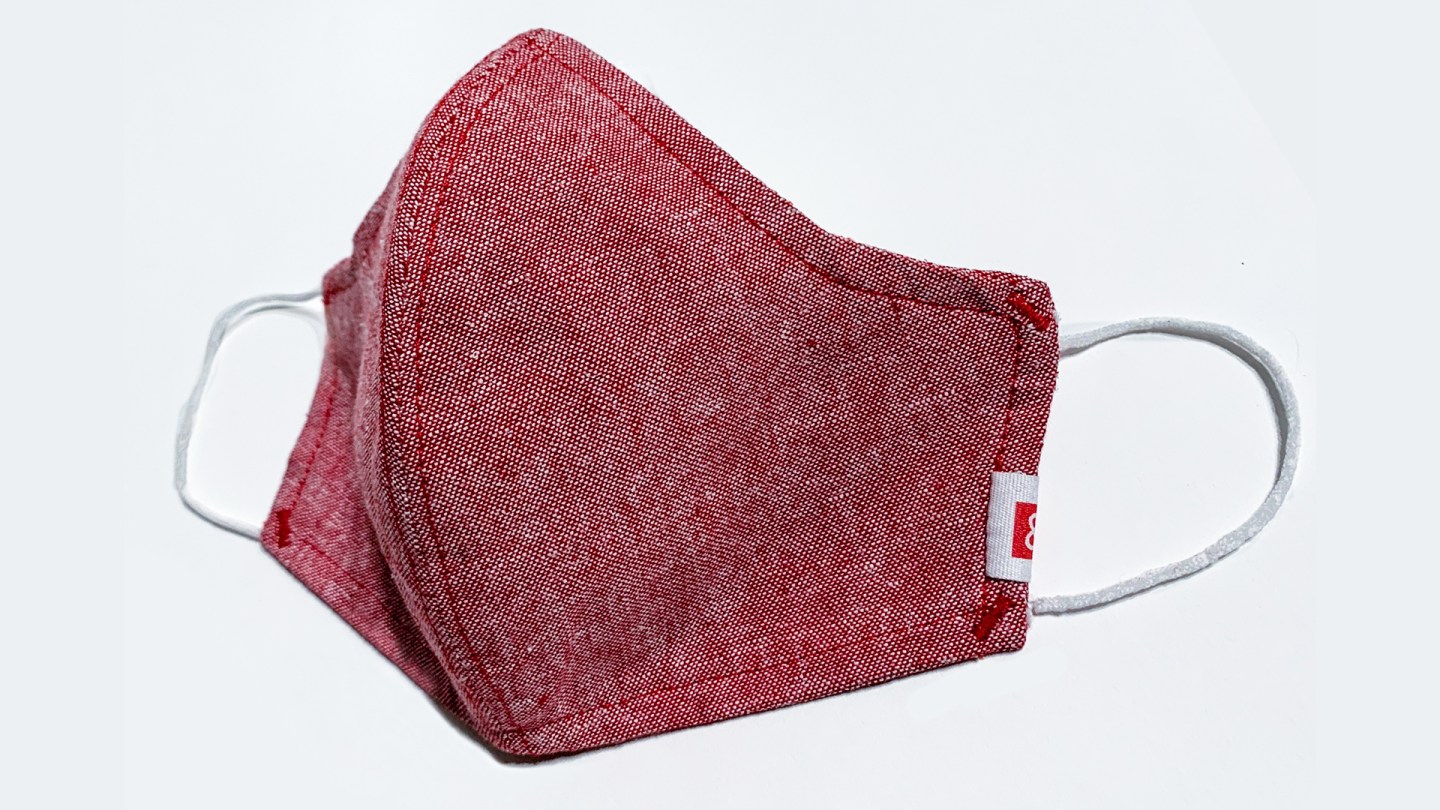
Masks on. As retail slows down, the fashion industry is dedicating resources to fight the spread of COVID-19. Fashion designer (and Project Runway co-host) Christian Siriano and Los Angeles Apparel CEO (and disgraced former American Apparel CEO) Dov Charney will use their factories to make protective masks. They’re inspiring other brands to do the same.
Testing, testing. Health startup Everlywell plans to start selling at-home coronavirus test kits to healthcare companies, but the FDA recently said the tests weren’t authorized. Designed to complement telemedicine, the tests mimic the nose swabs used by doctors, and ship to and from patients who receive diagnoses online.
The Internet of diapers. MIT’s Auto-ID Lab developed a sensor that responds to moisture and can trigger an alert when a diaper needs changing—an innovation that could help parents as well as busy nurses in neonatal units.
The new normal. Some businesses are booming during the pandemic: Twelve million new users joined the chat and collaboration app Microsoft Teams. (For a survey of the big teleworking players, check out last week’s newsletter; it’s also worth reading up on certain stealthy features built into remote working platforms.)
Patient zero. A fashion designer is believed to have sparked a coronavirus outbreak in Uruguay. Carmela Hontou, who attended a 500-person wedding after flying back from Spain and contracting the virus, may face legal charges.
Work, life, balance.Bill Burnett and Dave Evans—professors at the Stanford d.school and authors of Designing Your Work Life—stopped by the Hello Monday podcast to talk about how anyone can leverage design thinking to optimize their work life.
EXECUTIVE SUMMARY
Here’s a timely book: Health Design Thinking: Creating Products and Services for Better Health came out this week. By Bon Ku, an emergency physician and director of the Health Design Lab at Thomas Jefferson University, and Ellen Lupton, senior curator at Cooper Hewitt, Smithsonian Design Museum, the book considers how principles of design thinking might transfer to improving services and products in healthcare. Ku and Lupton chart methods (such as design workshops and spatial data mapping) and case studies (such as iBreastExams and sensory art gardens) around the idea that exploratory problem-solving could lead to more thoughtful healthcare experiences. From the book (bolded for emphasis):
“Design for health care extends beyond improving the layout of lobbies and treatment rooms and creating more ergonomic medical equipment. Many opportunities for design intervention arise from the area of service design. Such projects can include anything from improving the process of obtaining informed consent to building awareness of treatments that are available but underutilized in a community.”
BRAINSTORM SESSION
Who is AI, really?
As technologists build and improve upon AI-powered assistants, they might be designing their own biases into the chatbots. A study by the Proceedings of the National Academy of Sciences found that speech recognition technology from Amazon, Apple, Google, IBM, and Microsoft transcribed audio more accurately from a white person than it did from a black person. The study offers “another cautionary sign for A.I. technologies rapidly moving into everyday life,” writes New York Times writer Cade Metz.
Meanwhile, most popular voice assistants sound female while fulfilling stereotypically gendered housekeeping or secretarial roles, and deliver coy scripted responses to rude remarks. Could designers move away from that anachronistic approach while still developing intuitive technology? Concerns over gendered AI have led some to experiment with more nuanced, politically-aware voice technology.
In AIGA Eye on Design, journalist Madeleine Morley looks at some alternatives: There’s Q, a genderless voice assistant, as well as F’xa, a chatbot built from feminist principles. But the most interesting approach might just be doing away with personification altogether. A developer who works in computational technology told Morley that personification of voice assistants is akin to skeuomorphism: “Both wrap products in representations that mimic different mechanisms, and thus hide their underlying logics.” Companies might find themselves better off training voice technology to recognize users of all identities, and then not tricking consumers into thinking a sympathetic female ear is listening—a shift that sounds like responsible AI.
QUOTED BY DESIGN
On building tomorrow
“What’s the most pressing issue facing the species? I ask this question every week. Sometimes every day, [when] I meet someone. Oh, what is the most pressing issue do you think facing our species? How do we figure out how to work together across economic, political, geographic, religious divides? If we can get rid of those divides somehow and just work together, then figuring out how to make every air conditioner in a developing country have a lesser carbon footprint will be easy. How to get away from fossil fuels faster will be tenable … It’s not about the technology, really, anymore. It’s not about anything else [other] than figuring out how to get eight or ten billion people with a shared worldview. That’s where culture—and again, science—plays the role of steward.”
— Artist and Pioneer Works founder Dustin Yellin, on the latest episode of the Time Sensitive podcast.