The judge overseeing the bankruptcy of OxyContin maker Purdue Pharma warns that real-life court cases don’t unfold like “Perry Mason.” But he’s afraid this one might come to resemble “Dr. Strangelove.”
U.S. Bankruptcy Judge Robert Drain of White Plains, New York, has a reputation for thorough preparation, deep experience handling big, complicated corporate cases, a sometimes forceful manner from the bench — and a fondness for pop-culture references, some of them of baby boomer vintage.
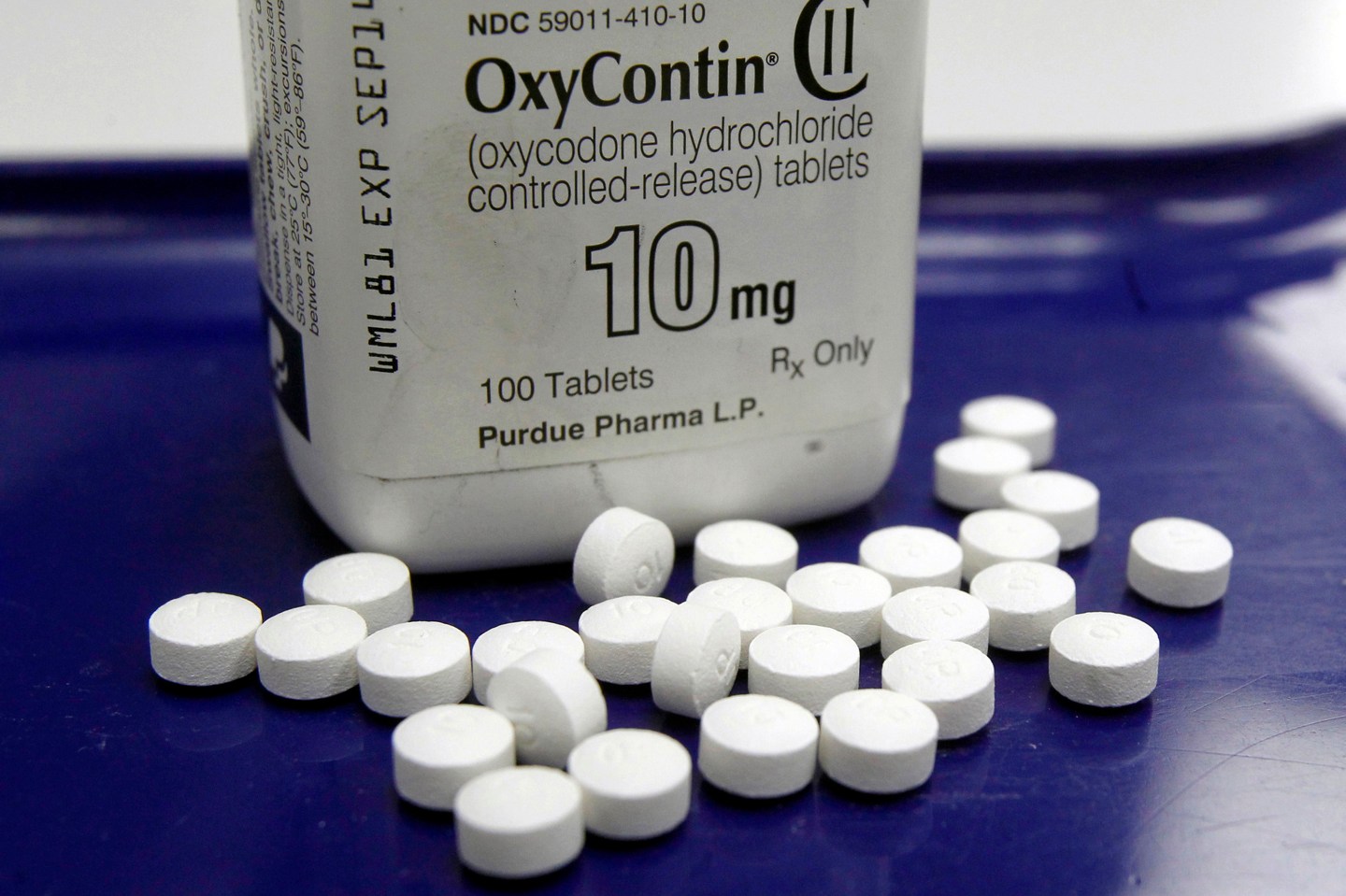
It will be up to him to decide whether to approve a potentially $12 billion plan by Purdue Pharma to settle more than 2,700 lawsuits over its role in the opioid crisis that has killed 400,000 people in the U.S. over the past two decades.
The proceedings are all but certain to be complex and acrimonious: Nearly half of the nation’s state attorneys general and many victims have come out against the plan and vowed to press on with their lawsuits, arguing that the deal on the table does not wring enough money from members of the billionaire Sackler family who own the company and does not contain an admission of guilt over one of the gravest public health crises in U.S. history.
At a hearing in October, Drain cautioned that that’s not necessarily how the real legal world works: “There are trials where people stand up and say, `I did it’ — and that usually happens on `Perry Mason’ only.”
At the same time, he warned that pressing ahead with individual lawsuits — a risky strategy that could torpedo a global settlement and result in plaintiffs coming up empty-handed — reminded him of the “doomsday machine” in the 1964 movie “Dr. Strangelove.”
Drain graduated from Yale and got interested in bankruptcy law in the 1980s, when he was in law school at Columbia University. He told Federal Lawyer magazine in 2013 that he found its complexities, the overlap with other areas of law and “the strong and often odd personalities” of the clients and practitioners “strangely compelling.”
The judge, who declined to be interviewed or photographed for this story, was a bankruptcy lawyer for nearly two decades before being appointed to his current position in 2002 by the federal appeals court in New York. For the past decade, his courtroom has been in White Plains, where he is the only bankruptcy judge handling big business cases.
He has presided over the cases of Hostess, Sears, Reader’s Digest, auto parts maker Delphi and the grocer A&P. In some of the highest-profile matters before him, he has done what the companies seeking bankruptcy protection asked.
Over some objections, he approved Delphi’s restructuring in 2009 in a way that would keep it operating with new owners; shutting it down could have brought production at its largest customer, General Motors, to a virtual halt.
In 2012, he let Hostess shut down over the objections of employee unions. Earlier this year, he allowed Sears to be sold to a hedge fund despite opposition from creditors and landlords who wanted it liquidated.
“If he thinks the debtor is in good faith attempting to reorganize, he will, on balance, support that when he can,” said Jonathan Lipson, a law professor at Temple University who worked for Drain in private practice at the start of his legal career. “The tie goes to the debtor.”
Drain doesn’t always side with corporate interests; in foreclosure cases, he often has ruled against big banks.
So far, Drain’s major rulings in the Purdue case have been what the drugmaker has wanted, though they have come after some compromise. He put lawsuits against the company and the Sacklers on hold until at least April. He also allowed Purdue to pay bonuses to its employees, though he left open for now the question of whether CEO Craig Landau should get $1.3 million on top of his $2.6 million salary.
But he has also been attentive to the victims, noting at one point in court, “What we’re talking about here is flesh and blood.” While opioid victims are assured a role in the proceedings through several seats on an official committee of unsecured creditors, Drain went further and told an advocate for victims to coordinate with state attorneys general.
In fact, addiction — the scourge at the center of the Purdue case — is something he was thinking about well before the case arrived in his courtroom. In 2013, he self-published a 460-page piece of fiction titled “The Great Work in the United States of America,” about the adventures of a 19th-century founder of a new religion.
One of the novel’s main characters is addicted to opium. Another character blames pharmacies that keep selling the drugs because the market for them is so lucrative.
In the hearings he has held so far in the case, Drain has been particularly hard on state attorneys general and their representatives, though he stopped a Purdue lawyer at a hearing this month from chastising states over a court filing that asked whether the company should be forced to pay for drug treatment or stop selling its most powerful OxyContin dosage.
At the proceeding in October, he was impatient with a lawyer for Arizona who argued that Drain should let the state’s case against the Sacklers move ahead in the U.S. Supreme Court. Drain, raising his voice, said: “Come on, give me a break. … You can raise that argument on appeal.” The high court later refused to hear the Arizona case.
During that same hearing, the judge sternly warned a lawyer for a group of 24 states that wanted to move forward with their own lawsuits that going to trial doesn’t always work out the way you hoped.
He pointed to the 1912 trial over the Triangle Shirtwaist factory fire in New York that killed 146 workers. The business owners were acquitted of manslaughter despite evidence that exit doors were locked.