This is the web version of raceAhead, Fortune’s daily newsletter on race, culture, and inclusive leadership. To get it delivered daily to your inbox, sign up here.
Code-switching has become a natural part of how underrepresented groups, particularly people of color, operate in a predominantly white workplace. But at what cost?
Five researchers, Courtney L. McCluney, a postdoctoral fellow in the Darden School of Business at the University of Virginia, Kathrina Robotham, a PhD candidate in psychology at the University of Michigan, Serenity Lee, a research associate at Harvard Business School, Richard Smith, a PhD candidate in psychology at the University of Michigan, and Myles Durkee, an assistant professor in psychology at the University of Michigan have put together a lengthy analysis that’s a must read and share.
They begin by defining code-switching in a way that helps explain exactly what’s at stake.
“Code-switching involves adjusting one’s style of speech, appearance, behavior, and expression in ways that will optimize the comfort of others in exchange for fair treatment, quality service, and employment opportunities.”
Their latest working paper suggests that the perceived need for code-switching exemplifies the complexity faced by Black employees in the workplace.
“While it is frequently seen as crucial for professional advancement, code-switching often comes at a great psychological cost,” they write. “If leaders are truly seeking to promote inclusion and address social inequality, they must begin by understanding why a segment of their workforce believes that they cannot truly be themselves in the office.”
They examine the pros and cons of code-switching at work, and how it can exhaust Black employees as they navigate thorny power dynamics and risk alienating their Black peers.
Through a survey of 300 Black college-educated employees, they identified four times when respondents tended to rely on code-switching as a workplace strategy: When they aspired to leadership and promotion; when they wanted to show that they “fit” within their organizations; when they felt they needed to be vigilant against the potential of discrimination, and ironically, when they were working in “diverse” organizations.
It gets complicated pretty quickly.
From their research:
“While we know that black employees code-switch when they aren’t well represented in companies, we also uncovered evidence that they downplay their racial identity and promote shared interests with others even when they are equally represented… It is possible that the stigma associated with black racial identity affects how larger groups are perceived, especially if they are seen as (or actually are) low performing. In these situations, black employees may downplay their race and try to reduce the stigma attached to it in the presence of others. Another theory is that non-black coworkers may be more likely to promote shared interests with others outside of their own racial group when black employees are equally represented. This may increase the likelihood of black employees code-switching in return.”
Here’s the rub: Additional research also shows that white executives tend to rate code-switching behavior as “professional,” while Black executives tend to evaluate peers who intentionally use code-switching behaviors as less so.
“Nothing is wrong with ‘ethnic’ names,” said one respondent when faced with a scenario in which a hypothetical new hire name La’Keisha changed her name and adopted a Eurocentric hairstyle to better fit it. “My name is my name. If they can pronounce every other name they can pronounce mine… But to pretty much change her whole identity for a job isn’t right.”
Another described the deeper issue. “[W]hen a person is able to be themselves in a professional setting, they are more productive because they are able to focus on work instead of being distracted by keeping up a specific professional façade.”
They end with a set of suggestions for how Black people can think about strategically code-switching, which will offer interesting insights for majority culture executives who may not understand the mental gymnastics that some Black and brown employees go through to manage their careers.
But there are plenty of people who are consciously opting-out.
At work my goal is to be professional—not to assimilate,” one 30-year-old research nurse says. “I dress, talk, and behave in a way that I feel instills confidence in my patients and coworkers. I don’t go out of my way to make my white coworkers [more] comfortable with my presence because it’s not my job to make them comfortable.”
Ellen McGirt
On Point
McKinsey & Company under fire for its role in optimizing ICE’s role in speeding up migrant deportations It’s a tough look for the global consultancy, particularly as it attempts to frame itself as a champion of gender equity. According to documents obtained by ProPublica, and co-published with the New York Times, the Immigration and Customs Enforcement (ICE) agency tasked McKinsey with finding ways to more efficiently execute on the administration’s mandate to address immigration at the border. The recommendations were so draconian that they alarmed longtime ICE officials, they report. “The consultants… seemed focused solely on cutting costs and speeding up deportations—activities whose success could be measured in numbers—with little acknowledgment that these policies affected thousands of human beings.” A must read.
ProPublica
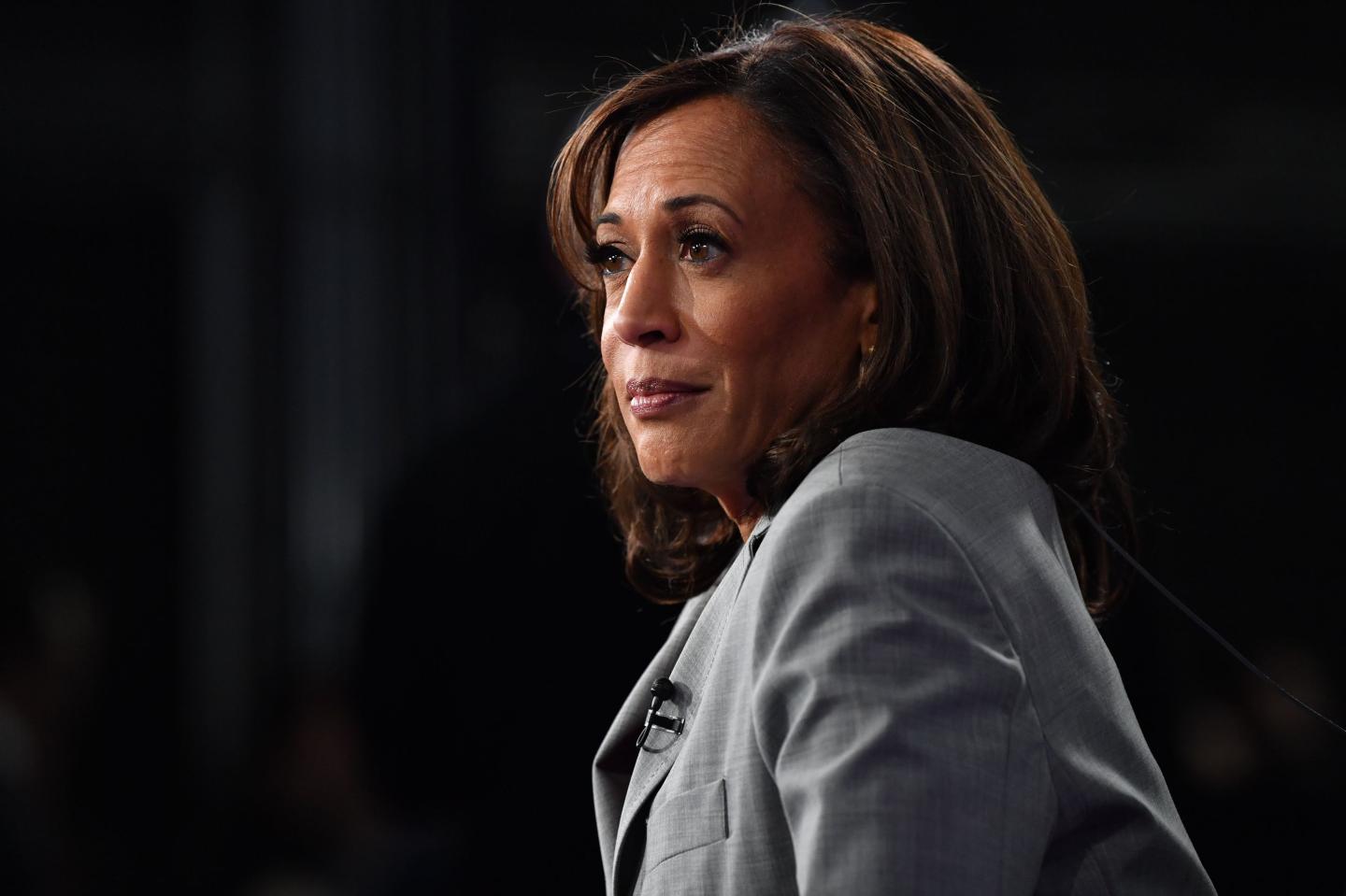
Kamala Harris ends her presidential bid Citing financial shortfalls, the once promising Democratic hopeful suspended her campaign yesterday. "I’m not a billionaire," she said in a statement. "I can’t fund my own campaign. And as the campaign has gone on, it’s become harder and harder to raise the money we need to compete." While she promised to "keep up the fight" on the many issues she raised, her exit now sets the stage for an all-white next debate—despite the presence of Cory Booker, Julián Castro, Tulsi Gabbard, and Andrew Yang. The Washington Post’s Philip Bump has an excellent breakdown of how the once diverse field became so artificially narrow. It’s partly party rules designed to keep the debate sizes manageable, but also this: "one reason that the field is narrowing to mostly white candidates is Democratic voters overwhelmingly support white candidates."
Washington Post
Black victims are underrepresented in “namesake laws” These are laws that aim to honor the victims of the crimes they’re trying to address (the AMBER alert, for instance, was named for nine-year-old Amber Hagerman). But the AP has found that such laws overwhelmingly carry a name only when a white victim is involved—since 1990, eight out of 10 namesake laws followed that trend. While not an indication that “people of all races don’t benefit,” says assistant criminology professor Teresa Kulig, it does show "who is highlighted in these laws." In Ohio, for instance, Reagan Tokes, 21, and Alianna DeFreeze, 14, were both killed the same year, both by crimes that had many similarities. But a namesake law was only created for Tokes, who was white.
AP
On Background
Taking on the X in Latinx Writer Daniel Hernandez does a deep dive into the origin of “Latinx,” a term that has become popular way to make the binary Latino/Latina more inclusive for people of all genders, and removing gendered identifiers that often make the male the default. There is a bigger issue to confront, he says. “One of the most stubborn aspects of America’s racial imagination is the insistence on having a term to separate and identify people of Latin American descent.” Most people prefer to identify themselves by their family’s country of origin anyway. The term Latin American, which later turned into the vaguely Spanishistic “Latino,” was invented by French colonists to distinguish various colonial efforts. So, why build on an already imperfect term?
Los Angeles Times
If you’re feeling good about yourself, read this It certainly took me down a peg. Christian Jarrett, a cognitive neuroscientist turned science writer, has weighed with ten ways science has proven that human beings are insufferable bigots by nature. Yay! Start with brain scans that show our tendency to dehumanize low-status, minorities, and vulnerable people (homeless, addicted, etc.), and then blame them for their plights. Schadenfreude is encoded in our brains before kindergarten, and my personal favorite, a bunch of us would rather give ourselves unpleasant electric shocks then spend time in quiet reflection. Oh, and we’re vain, overconfident, and dogmatic. It’s not a McSweeney piece, I triple-checked.
Aeon
A new, interactive tool can help you craft a better apology If you have just discovered that you’ve run roughshod over the feelings of someone else (see above) game designer and activist Elizabeth Sampat has created an elegant, interactive tool that can help anyone not only craft a better apology, but become a more emotionally aware person. Called, "Am I Part Of The Problem?", it takes a player through a step-by-step process of introspection, helping them understand what they did, understand the difference between intent and impact, and ultimately how to apologize and make amends. It’s a very good tool.
Lifehacker
Tamara El-Waylly helps write and produce raceAhead.
Quote