• Home
  • Latest
  • Fortune 500
  • Finance
  • Tech
  • Leadership
  • Lifestyle
  • Rankings
  • Multimedia
Arts & Entertainmentquibi

Exclusive: Quibi Taps Mellody Hobson, Roger Lynch for Board of Directors

Andrew Nusca
By
Andrew Nusca
Andrew Nusca
Editorial Director, Brainstorm and author of Fortune Tech
Down Arrow Button Icon
Andrew Nusca
By
Andrew Nusca
Andrew Nusca
Editorial Director, Brainstorm and author of Fortune Tech
Down Arrow Button Icon
June 13, 2019, 5:00 AM ET

Its namesake service isn’t slated for North American launch until April 6, 2020, but Quibi, the short-form media startup founded late last year by Hollywood kingpin Jeffrey Katzenberg and led by Silicon Valley skipper Meg Whitman, is well on its way to building a star-studded team.

Over the last eight months Quibi—once known as “NewTV”—hired former Hollywood Reporter editor Janice Min, former DC Entertainment president Diane Nelson, former Viacom Music and Entertainment Group president Doug Herzog, and CAA agent Jim Toth, among others, for the content side of the Los Angeles company. It brought on Tom Conrad (Pandora) for its product department. Rob Post, Hulu’s former engineering VP, leads engineering. Talent from CBS, Funny or Die, Google, Instagram, Lionsgate, NBCUniversal, Netflix, Makeready, OpenTable, Snap, TBS, and Vice round out a pack of about 135 employees.

And now the company’s board of directors is set.

Fortune has learned that Quibi has selected the following executives for its board: Mellody Hobson, president of Ariel Investments and former chairwoman of DreamWorks Animation; Roger Lynch, CEO of Condé Nast and former CEO of Pandora; Ann Daly, co-founder at WndrCo Holdings and former president of DreamWorks; Harry “Skip” Brittenham, founding partner of Ziffren Brittenham LLP and a top entertainment industry attorney; Greg Penner, founder of Madrone Capital Partners and chairman of Walmart; Meg Whitman, CEO of Quibi and former CEO of Hewlett-Packard and eBay; and Jeffrey Katzenberg, founder and chairman of Quibi and co-founder of WndrCo and DreamWorks.

In a statement, Katzenberg called the executives “innovative thinkers” from the tech and entertainment industries who understand that people are consuming video in new ways: “They understand how both worlds can come together to reimagine how we tell original stories and create the next era of entertainment.”

As Sheila Marikar wrote in the February 2019 issue of Fortune magazine, Quibi raised $1 billion from investors in a bid to build a high-quality, original, short-form video platform for mobile devices—a Netflix of sorts that’s native to the handheld format and backed by Hollywood’s major movie studios. (Imagine episodic series from directors such as Guillermo del Toro, Seith Mann, Antoine Fuqua, Catherine Hardwicke, and Sam Raimi—all of which are actively working on material for Quibi—that are two to four hours in total length but delivered in chapters or segments no more than 10 minutes long.)

“Quibi” is a portmanteau of “quick bites.”

The three key questions dogging the young media company: Whether anyone will pay for high-quality mobile content offering (it’s tentatively priced at $5 per month; an ad-free version costs $8 per month); whether it can grow large enough to outpace its considerable launch spending; and whether it can make enough progress to outpace competing efforts by Apple, Google’s YouTube, Disney, and others.

In an interview with Fortune last weekend at the Producers Guild of America’s Produced By conference at Warner Bros. Studios in Burbank, Calif., Katzenberg and Whitman offered further detail on Quibi and its business model and waved away comparisons with competitors. The startup plans to spend $1 billion on content and another half billion on marketing, Whitman told me. It’s primarily aiming for users 25 to 35 years old; more broadly, ages 18 to 44, Katzenberg said. It’s working with advertisers to create serialized, short-form ads to match the content—for example, there will be just one 15-second preroll ad for every five to 10 minutes of content, and a five-second version for clips less than five minutes long.

Production companies meanwhile benefit from Quibi fronting the money for their creations. After two years, creators can repackage Quibi’s segmented content into complete series for distribution on other platforms; after seven, they’ll own the intellectual property outright, Katzenberg said.

Quibi has no desire to be a movie studio, Katzenberg said—it’s a platform for a new kind of video product. Which is why its board draws equally from the power corridors in northern and southern California. Or as Whitman told me on Saturday: “We’re trying to bring the very best of Silicon Valley and Hollywood together.”

This story has been updated with additional information.

More must-read stories from Fortune:

—Manufacturers are leaving China—for reasons beyond the trade war

—Cruises to Cuba are banned, but the ships sail on

—This is the one subject in the U.K. that’s as toxic as Brexit

—German security chiefs say Alexa should provide evidence in court

—Listen to our new audio briefing, Fortune 500 Daily

Catch up with Data Sheet, Fortune‘s daily digest on the business of tech.
About the Author
Andrew Nusca
By Andrew NuscaEditorial Director, Brainstorm and author of Fortune Tech
Instagram iconLinkedIn iconTwitter icon

Andrew Nusca is the editorial director of Brainstorm, Fortune's innovation-obsessed community and event series. He also authors Fortune Tech, Fortune’s flagship tech newsletter.

See full bioRight Arrow Button Icon

Latest in Arts & Entertainment

Sarandos
Arts & EntertainmentM&A
It’s a sequel, it’s a remake, it’s a reboot: Lawyers grow wistful for old corporate rumbles as Paramount, Netflix fight for Warner
By Nick LichtenbergDecember 13, 2025
8 hours ago
Sarandos
CommentaryAntitrust
Netflix, Warner, Paramount and antitrust: Entertainment megadeal’s outcome must follow the evidence, not politics or fear of integration
By Satya MararDecember 12, 2025
1 day ago
Sam Altman
Arts & EntertainmentMedia
‘We’re not just going to want to be fed AI slop for 16 hours a day’: Analyst sees Disney/OpenAI deal as a dividing line in entertainment history
By Nick LichtenbergDecember 11, 2025
2 days ago
Iger
AIDisney
‘Creativity is the new productivity’: Bob Iger on why Disney chose to be ‘aggressive,’ adding OpenAI as a $1 billion partner
By Nick LichtenbergDecember 11, 2025
2 days ago
Sam Altman, CEO of OpenAI, speaks to the media as he arrives at the Sun Valley Lodge for the Allen & Company Sun Valley Conference on July 11, 2023 in Sun Valley, Idaho.
AIOpenAI
OpenAI and Disney just ended the ‘war’ between AI and Hollywood with their $1 billion Sora deal—and OpenAI made itself ‘indispensable,’ expert says
By Eva RoytburgDecember 11, 2025
2 days ago
AIOpenAI
Bob Iger says Disney’s $1 billion deal with OpenAI is an ‘opportunity, not a threat’: ‘We’d rather participate than be disrupted by it’
By Marco Quiroz-GutierrezDecember 11, 2025
2 days ago

Most Popular

placeholder alt text
Economy
Tariffs are taxes and they were used to finance the federal government until the 1913 income tax. A top economist breaks it down
By Kent JonesDecember 12, 2025
1 day ago
placeholder alt text
Success
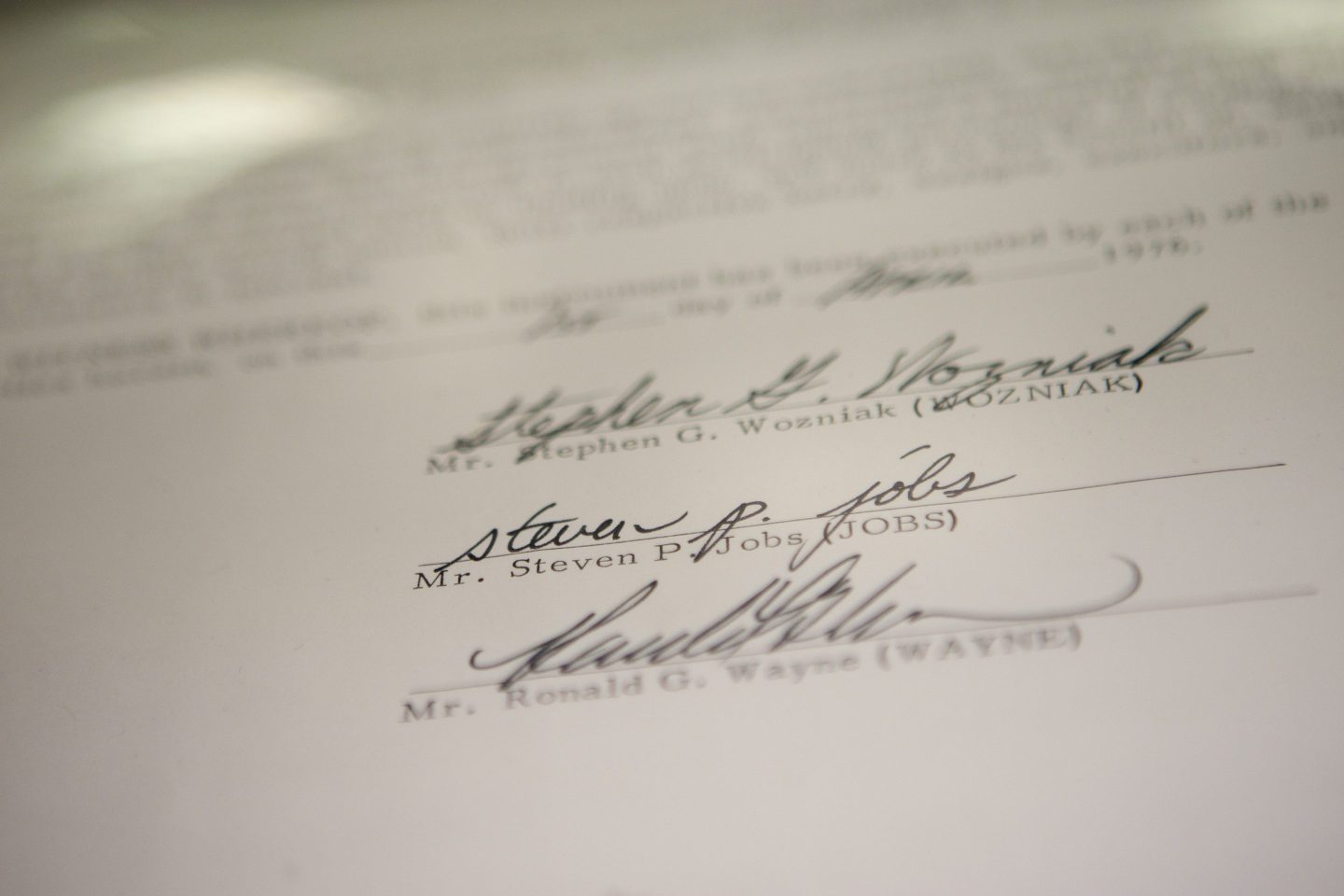
Apple cofounder Ronald Wayne sold his 10% stake for $800 in 1976—today it’d be worth up to $400 billion
By Preston ForeDecember 12, 2025
1 day ago
placeholder alt text
Success
40% of Stanford undergrads receive disability accommodations—but it’s become a college-wide phenomenon as Gen Z try to succeed in the current climate
By Preston ForeDecember 12, 2025
1 day ago
placeholder alt text
Economy
The Fed just ‘Trump-proofed’ itself with a unanimous move to preempt a potential leadership shake-up
By Jason MaDecember 12, 2025
21 hours ago
placeholder alt text
Economy
For the first time since Trump’s tariff rollout, import tax revenue has fallen, threatening his lofty plans to slash the $38 trillion national debt
By Sasha RogelbergDecember 12, 2025
23 hours ago
placeholder alt text
Success
At 18, doctors gave him three hours to live. He played video games from his hospital bed—and now, he’s built a $10 million-a-year video game studio
By Preston ForeDecember 10, 2025
3 days ago
Rankings
  • 100 Best Companies
  • Fortune 500
  • Global 500
  • Fortune 500 Europe
  • Most Powerful Women
  • Future 50
  • World’s Most Admired Companies
  • See All Rankings
Sections
  • Finance
  • Leadership
  • Success
  • Tech
  • Asia
  • Europe
  • Environment
  • Fortune Crypto
  • Health
  • Retail
  • Lifestyle
  • Politics
  • Newsletters
  • Magazine
  • Features
  • Commentary
  • Mpw
  • CEO Initiative
  • Conferences
  • Personal Finance
  • Education
Customer Support
  • Frequently Asked Questions
  • Customer Service Portal
  • Privacy Policy
  • Terms Of Use
  • Single Issues For Purchase
  • International Print
Commercial Services
  • Advertising
  • Fortune Brand Studio
  • Fortune Analytics
  • Fortune Conferences
  • Business Development
About Us
  • About Us
  • Editorial Calendar
  • Press Center
  • Work At Fortune
  • Diversity And Inclusion
  • Terms And Conditions
  • Site Map

© 2025 Fortune Media IP Limited. All Rights Reserved. Use of this site constitutes acceptance of our Terms of Use and Privacy Policy | CA Notice at Collection and Privacy Notice | Do Not Sell/Share My Personal Information
FORTUNE is a trademark of Fortune Media IP Limited, registered in the U.S. and other countries. FORTUNE may receive compensation for some links to products and services on this website. Offers may be subject to change without notice.